
Enclosure 3-D (2022)
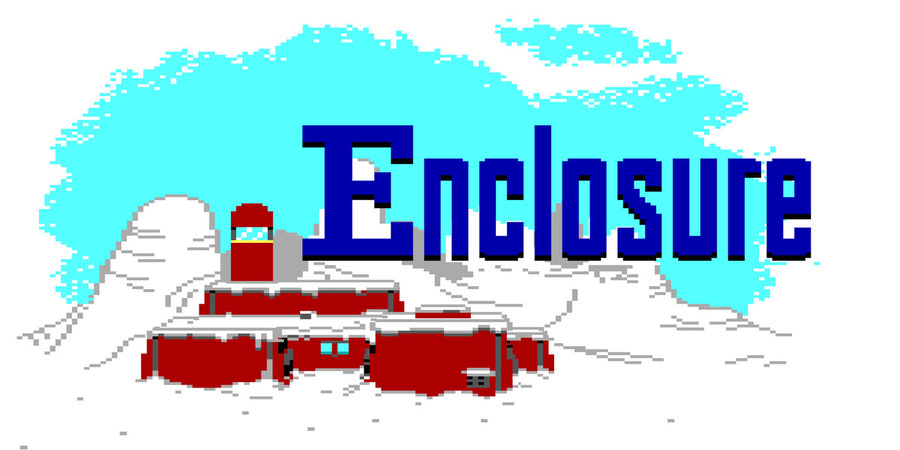
Following in the wake of Leisure Suit Larry, I was reminded of the 2004 graphical text adventure Enclosure, which uses the same Sierra AGI engine as the original Larry 1. In 2022, Enclosure received an update where the pixels were turned into voxels — resulting in a kind of retro 3D. The change isn’t dramatic but clearly noticeable. The graphics seem to lift off the screen, less flat than before; to my eyes, the characters now look more like LEGO figures than pixel sprites. Enclosure is a lovingly made fan project, available for free. What originally drew me to it was the premise: a pair of fraudulent mediums invited to a haunted Arctic station.
It Came from the Desert (1989)
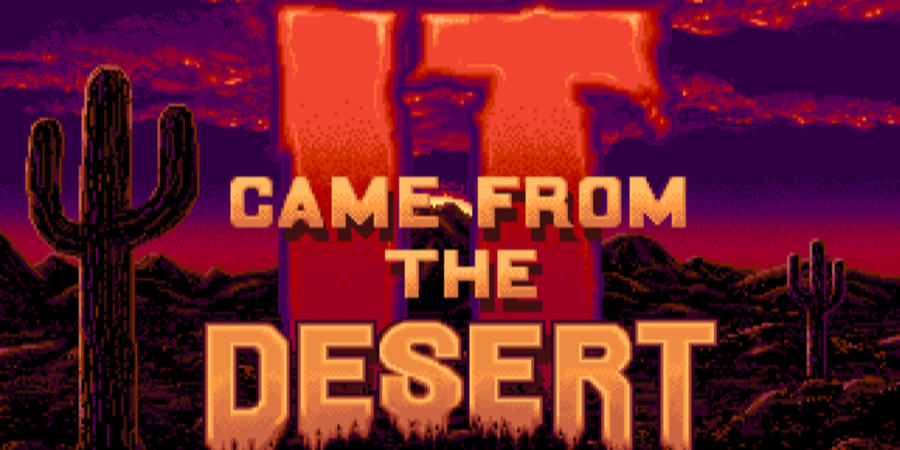
The action-adventure game It Came from the Desert from 1989 offers not only a retro Amiga experience but also a time warp into the science-horror films of the 1950s. A radioactive meteorite crashes into the small Californian town of Lizard Breath, causing the local ants to mutate. The geologist who arrives to examine the crater — the character controlled by the player — recognises the danger, but no one believes him. The geologist becomes an unlikely action hero whose mission is to collect evidence of giant ants and fight them. The game has an intriguing atmosphere and the makings of a cult classic, but it is also too rushed for leisurely enjoyment because everything plays out in real time. It Came from the Desert can be played not only on an original Amiga and via emulators but also on a modern Windows PC, as it is included in the Cinemaware Anthology Collection.
Black Mirror II: Reigning Evil (2009)
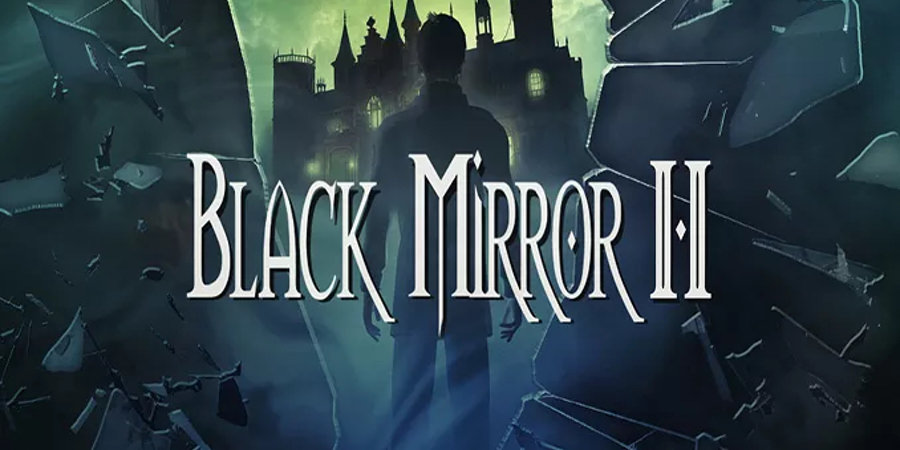
Time really does fly by. I wrote about the adventure game series The Black Mirror on Samooja seven years ago. I have not forgotten it, because at some point I set aside parts two and three with the serious intention of playing them. When I first started Black Mirror II: Reigning Evil, however, it somehow failed to draw me in and was left unfinished. Now, many years later, I returned to it and pushed myself to see the story through to the end — emphasis on the word “story”. Just like in the first game, the narrative is the strongest and most memorable element. Black Mirror II improves on its predecessor audiovisually, mechanically, and in terms of usability, while still preserving a clear sense of continuity.
The Excavation of Hob's Barrow (2022)
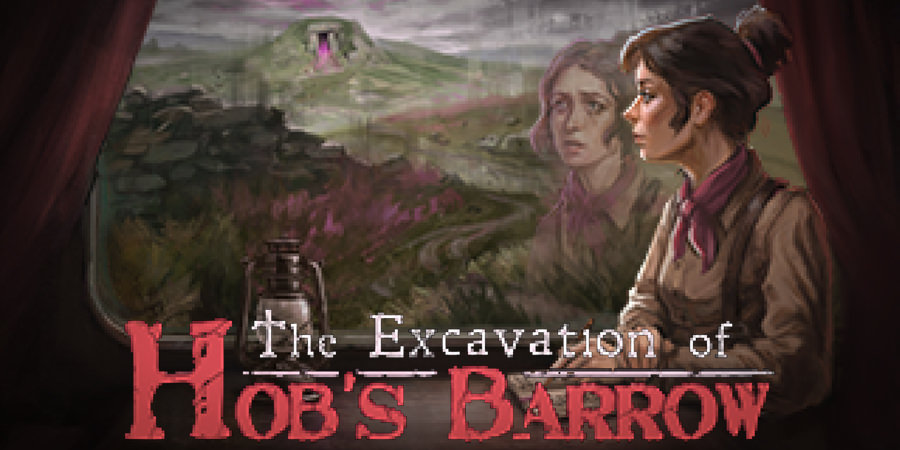
Released in late September, The Excavation of Hob’s Barrow returned me to the comfort of old-school point-and-click adventures. It is the seventh adventure by the small studio Cloak and Dagger Games, and it is published by a true genre icon, Wadjet Eye Games. That partnership ensures excellent voice acting, and the characters left a favourable impression more broadly. Built on ancient belief and folklore, the story is a horror piece set in 19th-century northern England. A young archaeologist arrives in a small remote village to investigate an ancient barrow and is met with conflicting attitudes. Who is who, and who can be trusted? The Excavation of Hob’s Barrow does not settle for a happy ending; instead, it leaves the player wounded, alone with their troubled thoughts.
The Curse of Rabenstein (2020)
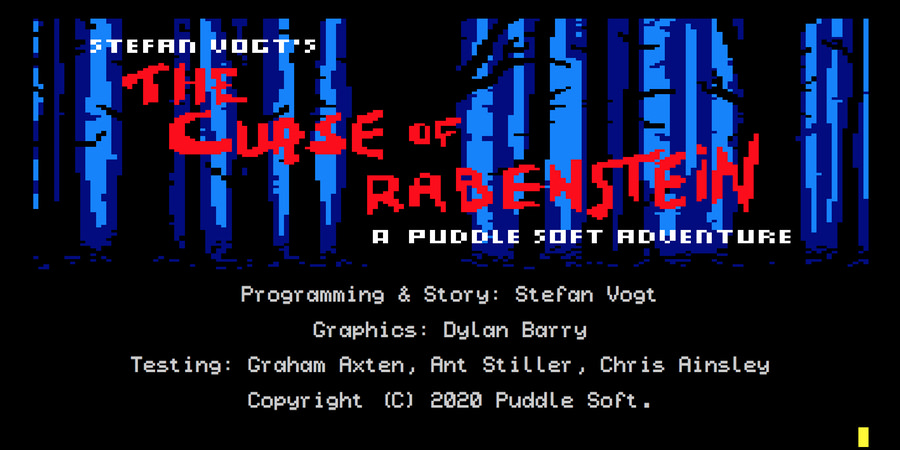
Released in 2020, the text adventure The Curse of Rabenstein caught my attention when a point-and-click version for the Commodore 64 appeared a couple of weeks ago. I did not, however, play that C64 version. Instead, I launched the original game in its modern browser form, which runs effortlessly on a contemporary computer without the need for an emulator. The game is available on a wide range of platforms, from 8- and 16-bit Commodore machines to the ZX Spectrum, Atari, MSX, and DOS, so it can be experienced in a fairly authentic retro form. In practice, however, the browser version is essentially the same game. For me, The Curse of Rabenstein was a pleasant and light experience. The parser felt friendly and straightforward, and I never found myself banging my head against a wall. It felt like a warm-up before heavier parser-based encounters. The Curse of Rabenstein offers a classic horror story that lasts under an hour.
Mystery Case Files: Shadow Lake (2012)
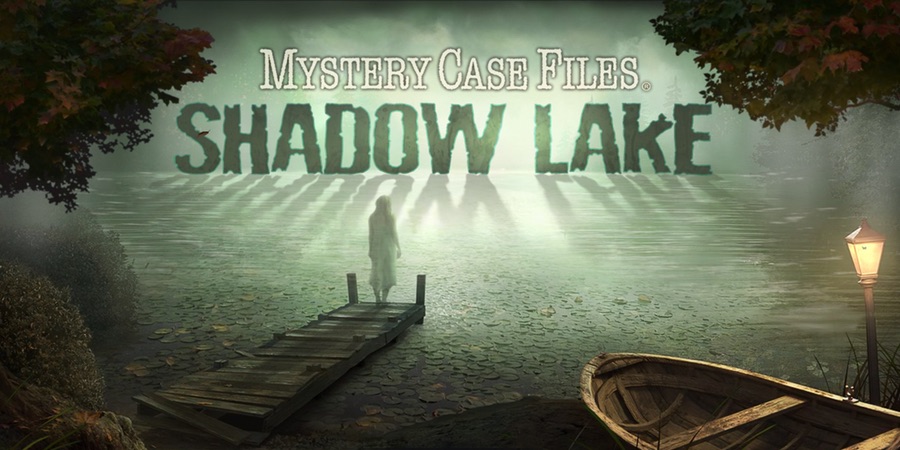
Released in 2012, Shadow Lake is the final entry in the Mystery Case Files series developed by Adrian Woods and Big Fish Games’ in-house studio. Subsequent instalments have been produced by other studios, although the brand has remained with Big Fish Games, which continues to publish the series. I started playing Shadow Lake almost immediately after Escape from Ravenhurst, and my first reaction was that it looked ugly and rather bleak. Stylistically, Shadow Lake is realistic and structurally quite simple. After the fantastical Escape from Ravenhurst, it feels like a return to earth, even though the story itself is supernatural, with mediums and cursed horns. It felt as if they’d squeezed the last drops out of Adrian Woods and then simply slipped through the fence instead of climbing it. Still, it is a perfectly decent game, very casual in nature, and my experience was by no means miserable.
Mystery Case Files: Escape from Ravenhurst Collector's Edition (2011)
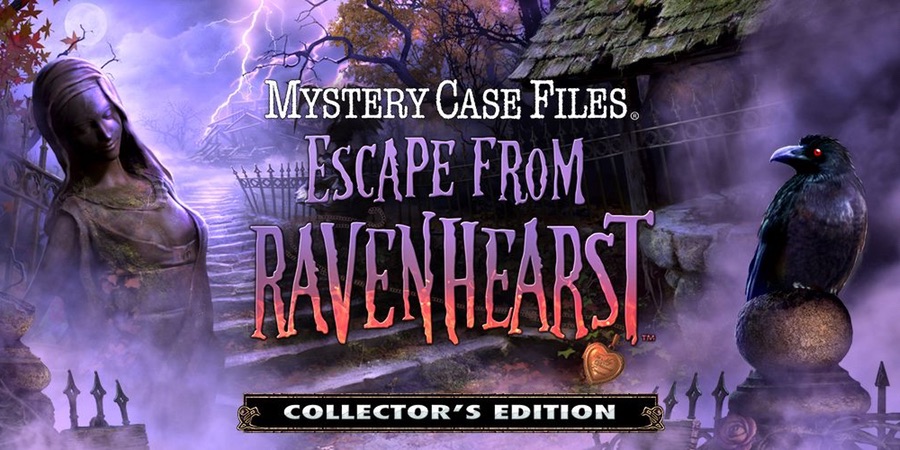
The eighth instalment in the Mystery Case Files series — and the third chapter in the Ravenhurst arc — Escape from Ravenhurst sends your agent back to the Ravenhurst Manor, even though it has already burned to the ground. Its master, the vampiric psychopath Charles Dalimar, is still very much alive. Emma, Rose and her twin daughters from the late 1800s remain imprisoned by him, and Dalimar is now draining paranormal energy from other villagers as well. This entry embraces the full extremity of Charles Dalimar’s madness. At times the grotesqueness of the visuals and some task instructions genuinely made me feel sick — which must be considered a success in terms of design and execution. Escape from Ravenhurst is an exceptionally high-quality hidden object game. Classic search scenes based on word lists have stepped aside as the main task type, replaced by morphing objects. This captivating mechanic is now given ample room to shine. The game also introduces a brand-new kind of search puzzle based on finding counterparts for small image fragments in the environment.
Mystery Case Files: 13th Skull (2010)
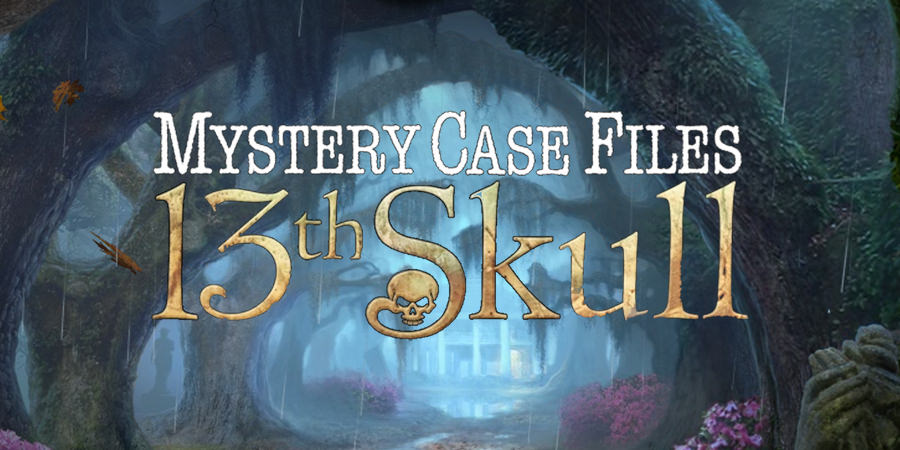
The seventh entry in the popular hidden object series, Mystery Case Files: 13th Skull, was released in late 2010. It is a standalone pirate-themed story set in the “Deep South” of the United States, in Louisiana. The player-controlled agent arrives at a dilapidated manor to investigate the disappearance of a man. It appears that the family's father has been abducted by a ghost, and the manor holds clues pointing to a hidden pirate treasure. But not everything is quite as it first seems. 13th Skull offers, so far, the most mature story in the Mystery Case Files series. New features include the ability to converse with characters portrayed by live actors in order to gather information. Alongside the familiar word-list-based hidden object scenes, the game also introduces a new type of search task: chores.
Mystery Case Files: Return to Ravenhurst (2008)
I continued my playthrough of the Mystery Case Files series with its fifth instalment, Mystery Case Files: Return to Ravenhurst, released in 2008. The game is a direct narrative continuation of the series’ third entry, Ravenhurst. This time, the series makes a decisive leap into adventure-game territory. Free exploration of the manor grounds and the use of an inventory are now woven into a single, continuous story arc. At the same time, the player character moves to the centre of the experience as its primary subject. Whereas in Ravenhurst the task was to recover missing pages of a lost woman’s diary, here those pages are written dynamically into the player character’s own journal. The series’ earlier humour is replaced entirely by horror, and stereotypical characters give way to overtly psychopathological figures. Haunting no longer relies on looping sound effects alone: ghosts appear as animated characters who speak directly to the player. The series thus takes a major step forward — but is its new direction a sound one?
Mystery Case Files: Ravenhurst (2006)
I continued my exploration of the Mystery Case Files hidden object series with its third entry, released in December 2006: Ravenhurst. Within the series, Ravenhurst forms its own five-part mini-series, indicating that its setting proved fertile ground both narratively and commercially. Among fans of Mystery Case Files, Ravenhurst holds a particular status. It won me over as well, and the fatigue I experienced while playing Prime Suspects was entirely absent. What distinguishes Ravenhurst from the series’ first two games is its strong narrative cohesion. The story binds the mechanical elements together and gives the experience a clearer sense of purpose. This is where one can observe hidden object games edging closer to adventure games. I also suspect that Ravenhurst, unintentionally, marked the beginning of the genre’s later obsession with locks.