
Sam & Max Hit the Road (1993)
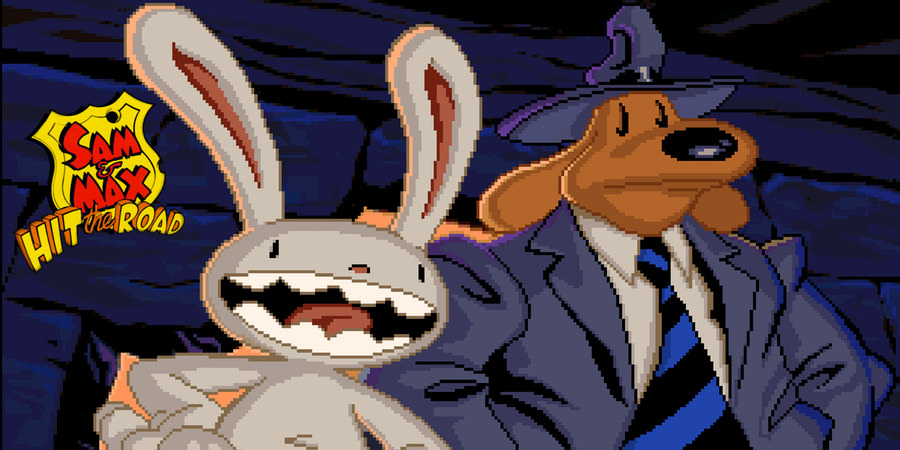
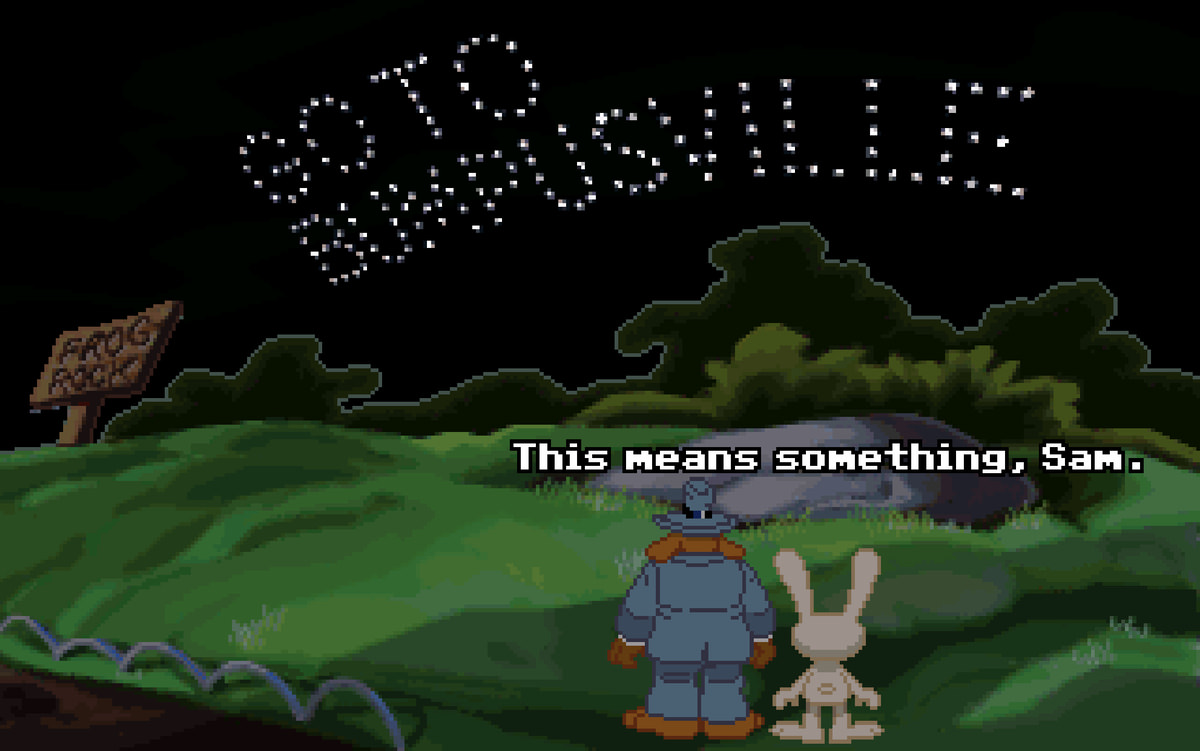
Following Leisure Suit Larry, I was reminded of another classic — the adventure game Sam & Max Hit the Road, based on Steve Purcell’s comic. Released in 1993, it belongs to the golden era of LucasArts, standing alongside The Secret of Monkey Island and Indiana Jones and the Fate of Atlantis. The anthropomorphic dog and rabbit duo, Sam and Max, work as freelance police, solving bizarre cases. The game overflows with witty dialogue, eccentric characters and absurd twists. Like Leisure Suit Larry, it requires a solid grasp of American pop culture for all its jokes to land. It also references earlier LucasArts titles. Even if not every pun hits home, the humour still works — Max’s inappropriate remarks are easy enough to grasp, and the puzzles are wildly imaginative. The game offers gorgeous pixel art, superb voice acting and animation that clearly received great care.
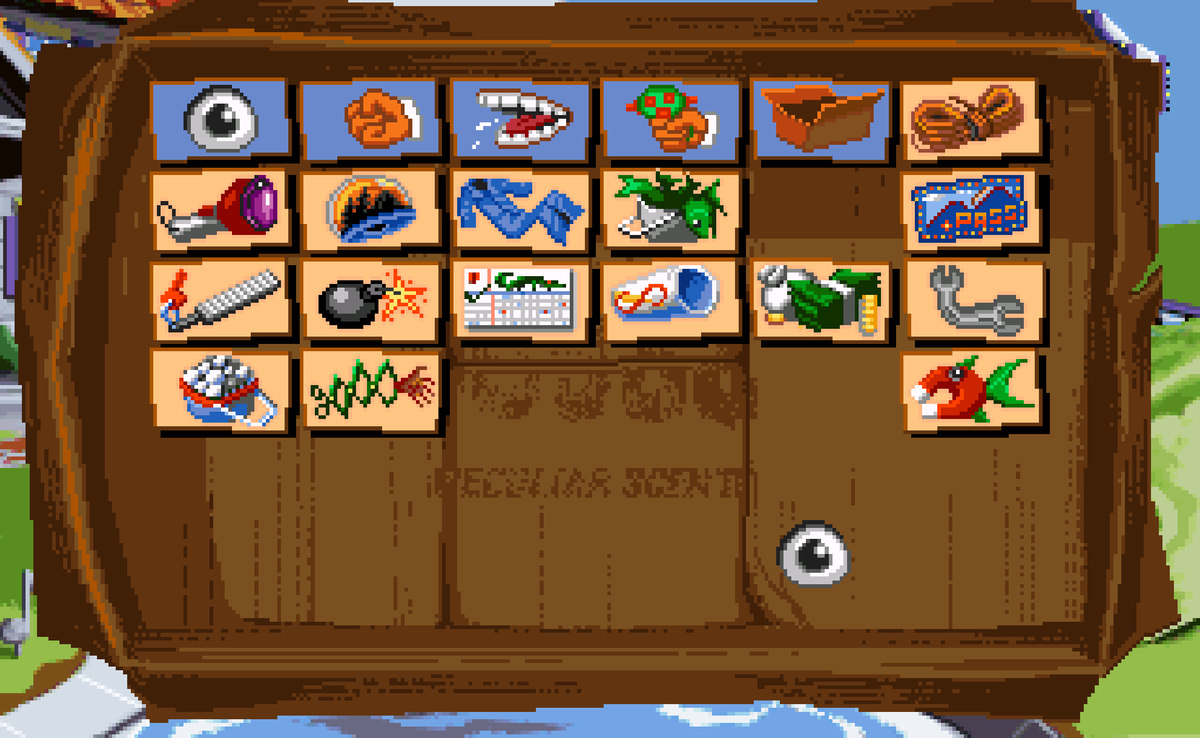
Sam & Max Hit the Road was built on the sixth version of the SCUMM engine, developed by LucasArts. Its mechanics show a clear refinement over earlier SCUMM titles. The text parser has been abandoned entirely — now the player simply clicks the images. Much like Sierra’s Leisure Suit Larry 1: In the Land of the Lounge Lizards from 1991, Sam & Max Hit the Road employs a radial command system attached to the mouse cursor, where right-clicking cycles through available actions. LucasArts has also reduced the number of verbs to a practical minimum: walk, look, pick up, talk, use and use the selected item. Dialogue is icon-based: once a conversation starts, a set of icons appears at the bottom of the screen, representing possible topics. This prevents lines from being revealed prematurely — the player only hears Sam’s response when it is actually spoken.
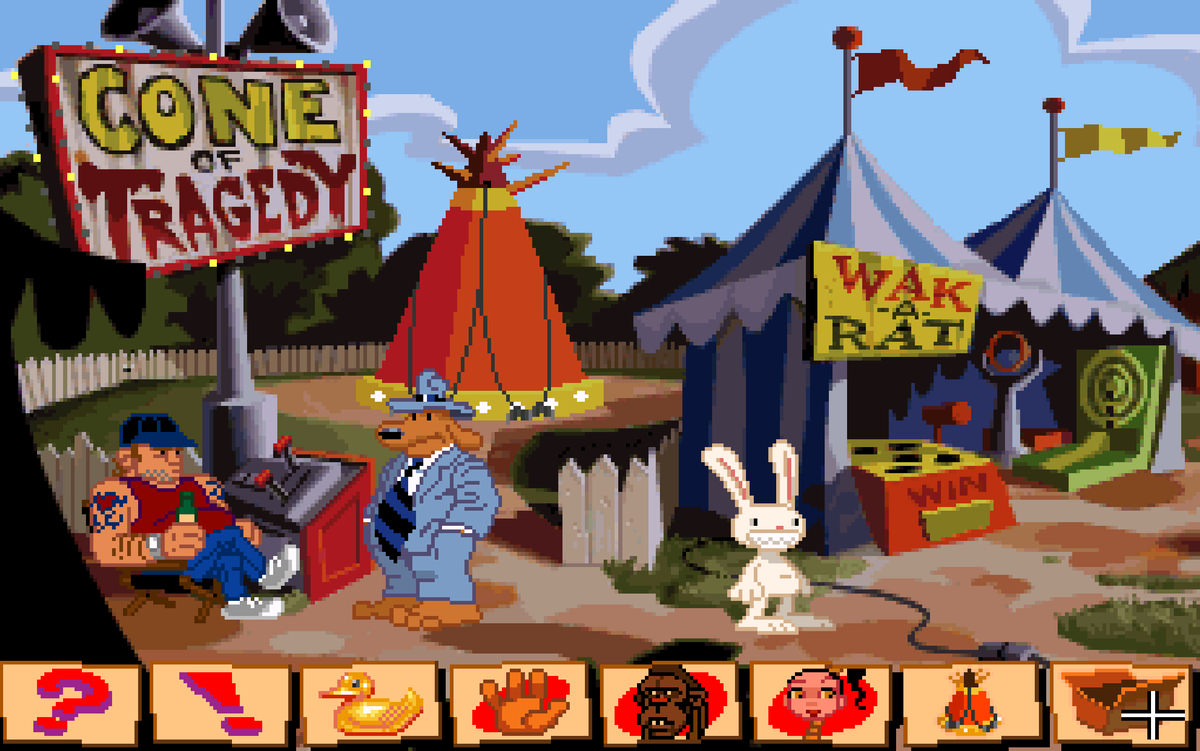
The original release of Sam & Max Hit the Road came out for MS-DOS in two editions: floppy disk and CD-ROM. The floppy version lacked full voice acting and some of the music, and yet still required seven diskettes, whereas the complete CD version fits on a single disc. The modern commercial edition corresponds to the CD-ROM release and includes digital versions of the original manual and hint book in PDF format. The colouring book is missing, but it can be found scanned online from Internet Archive.
The duo on the case: a comic detective story
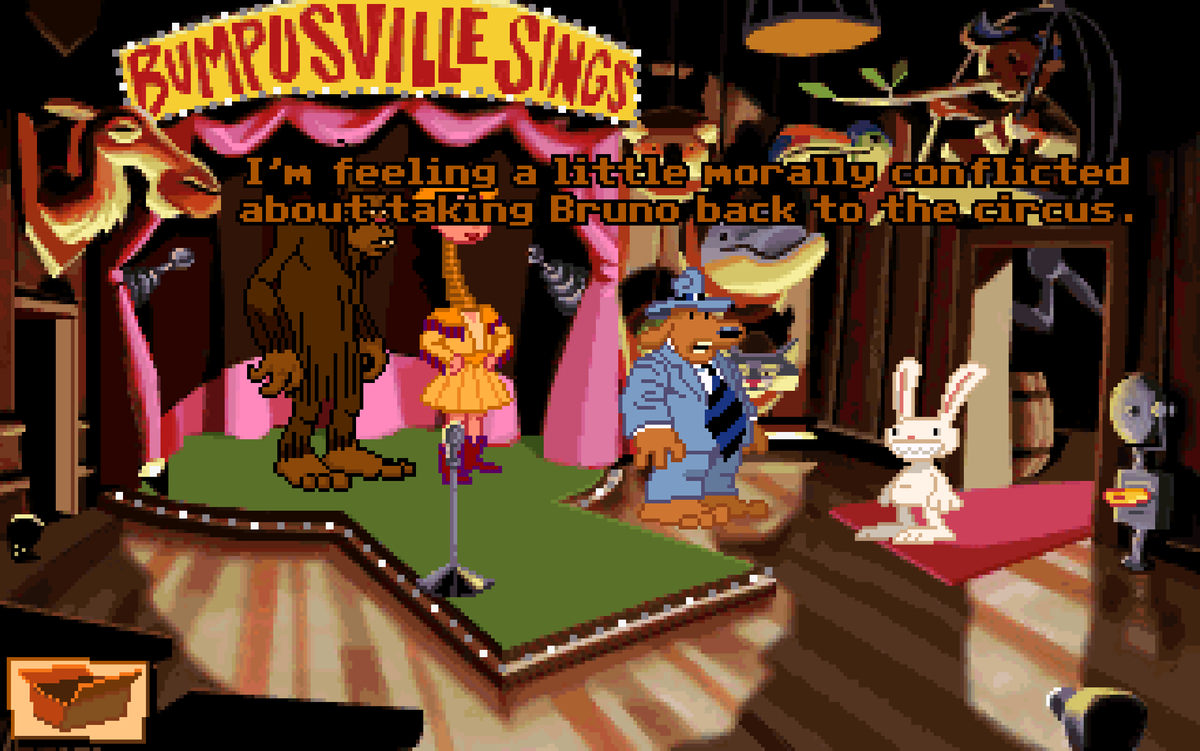
Sam and Max eagerly take on their next assignment, delivered in a suitably bizarre fashion. That alone promises chaos — and the game delivers. A carnival’s freak-show star, Bruno the Bigfoot, has disappeared. Along with him, Trixie the Giraffe-Necked Girl is also missing, and suspicion arises that Bruno has kidnapped her. Sam and Max are hired to track down both attractions and return them to the fairground.
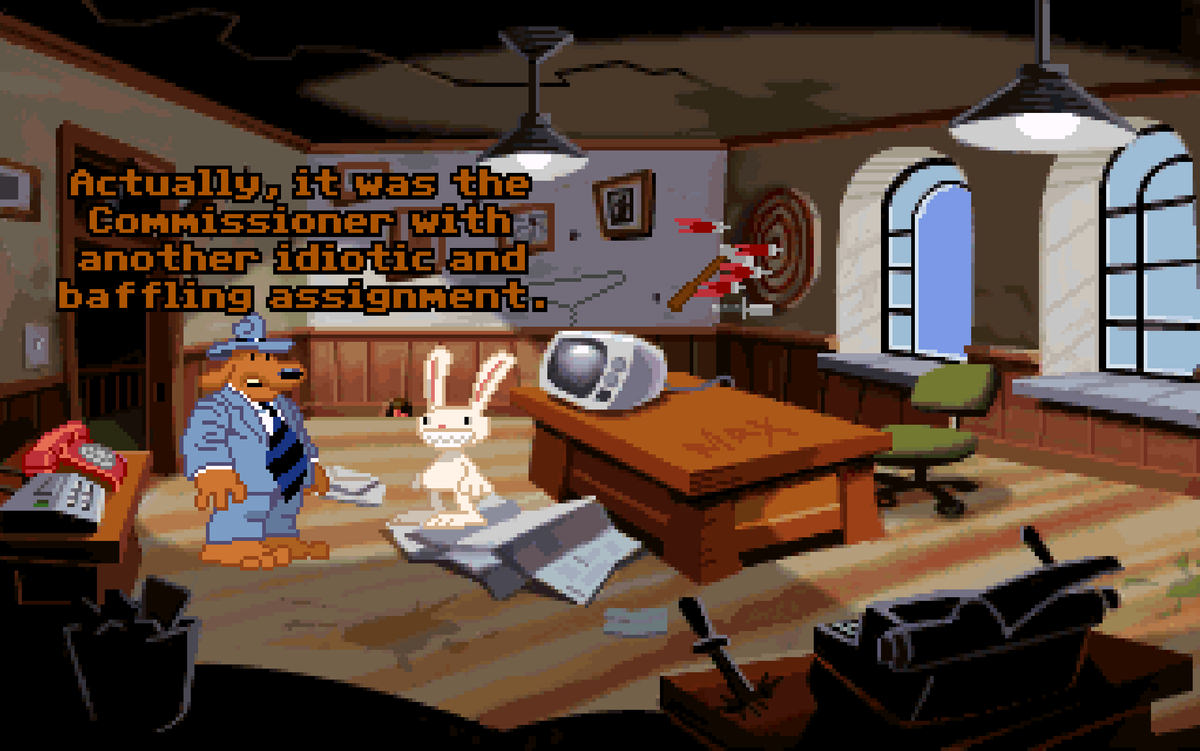
Their road trip takes them across the United States, racing from one roadside attraction to another. These locations parody real-world tourist traps, and Purcell has mentioned that they were inspired by car trips from his own childhood. Compared to reality, everything here is over the top — though perhaps not by much. The humour in Sam & Max Hit the Road relies as much on its setups as on Max’s manic one-liners. Every character is ridiculous, yet blissfully unaware of it, which makes them strangely endearing.
The player controls Sam the dog. Hyperactive Max never stays still — he scurries across the screen, blurting obscenities and questionable comments. Yet despite his reckless nature, he remains oddly cute, while Sam plays the calm adult. Amusingly, Sam can “use” Max as if he were an item. Max functions like an object in the inventory — a pretty multipurpose tool he is.
Lightweight but challenging
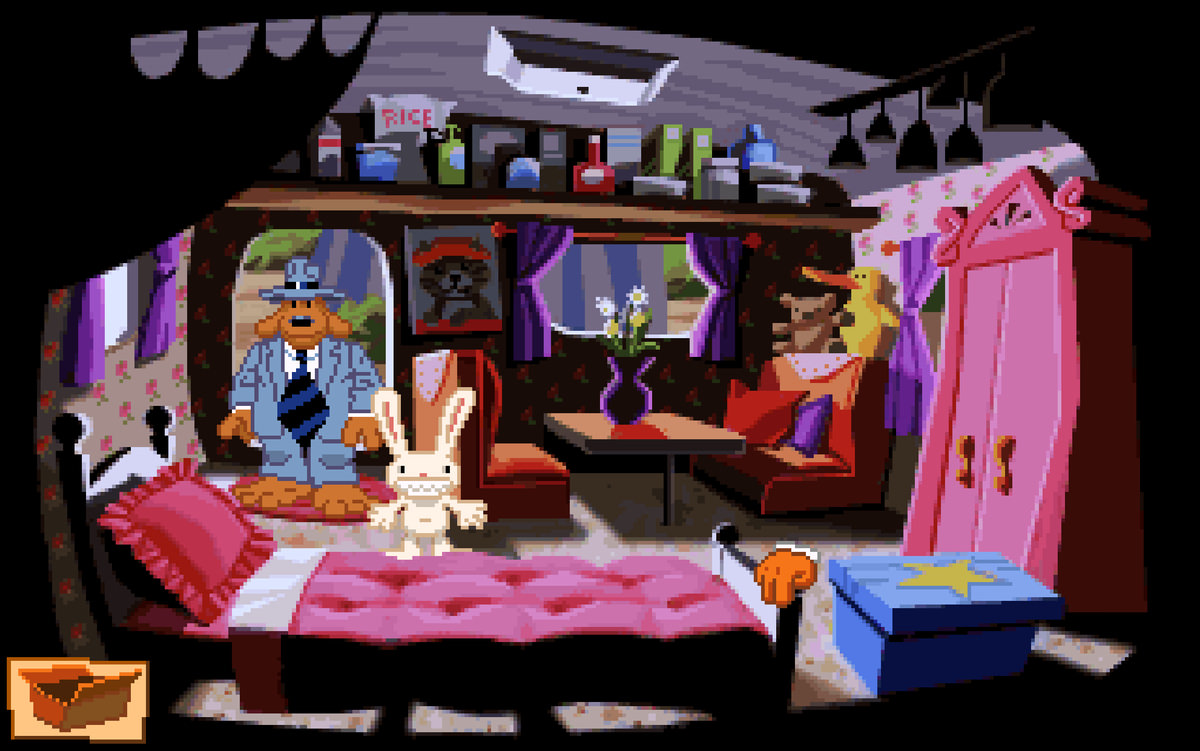
The puzzles demand wit — or simply reckless experimentation. Many are multi-step and require combining or using several items in sequence. I wouldn’t call the game easy: I often failed to notice exits or interactive spots, though in retrospect, the hints were there. Exploration and trial-and-error are key.
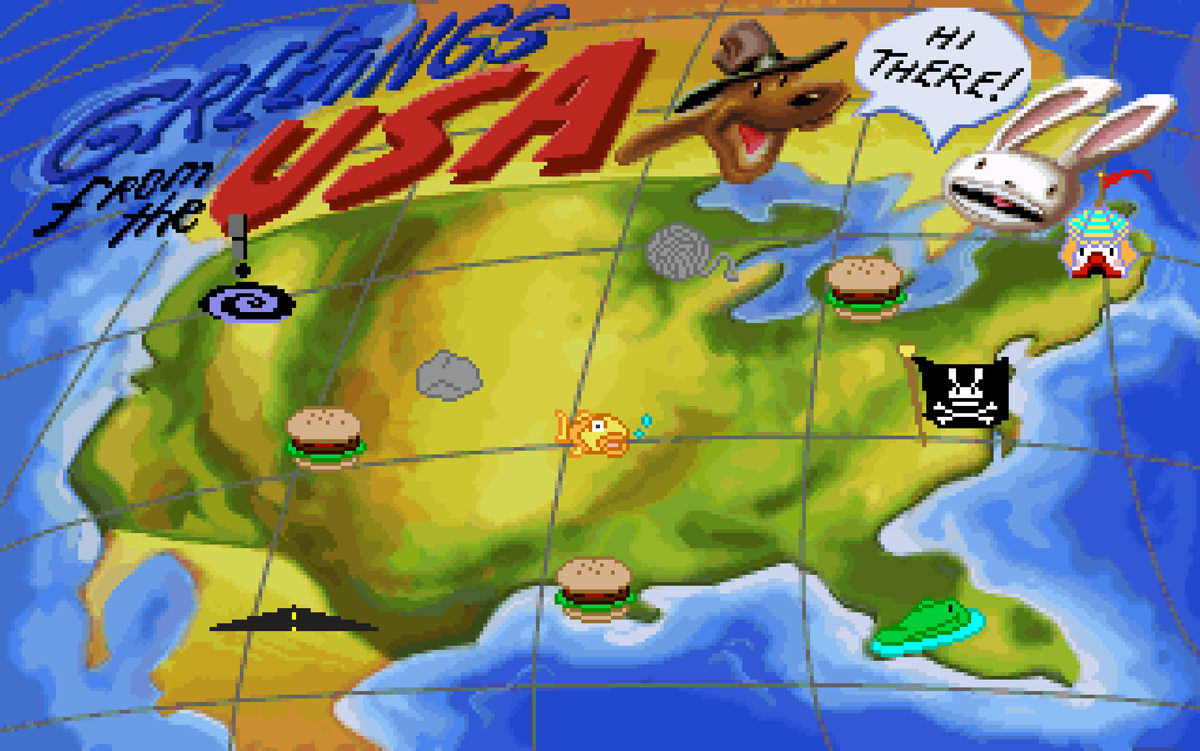
Each area can be revisited freely as often as needed to uncover every clue. Structurally, the game gives the illusion of openness, but storywise it remains linear. The map updates gradually — Sam and Max must first learn of a location before it becomes accessible. This information is cleverly embedded in inventory items that must be examined for clues.
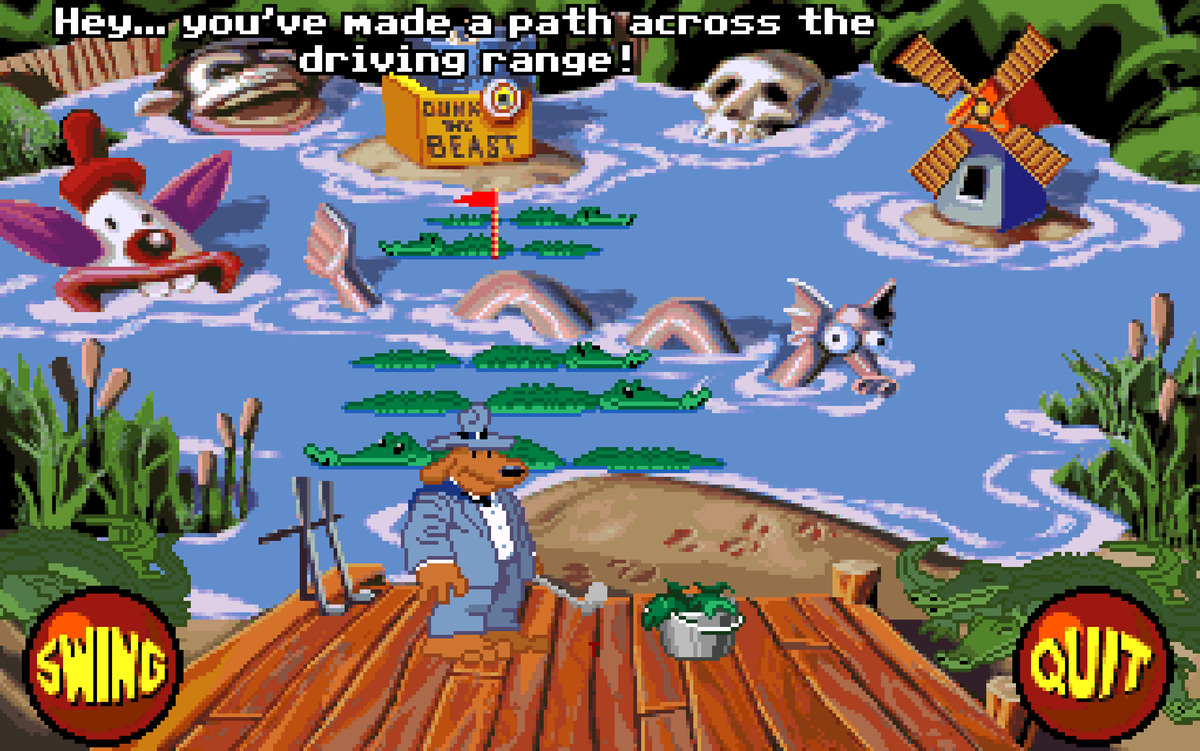
Beyond inventory puzzles, Sam & Max Hit the Road also includes more active segments and mini-games — some purely optional diversions offering a break from the main story.
My playthrough took about four and a half hours, with some guidance from the included hint book. The booklet deserves a special mention: it provides clues in a humorous, gradually escalating way, accompanied by comic strips. This PDF is included in the modern digital package and is worth using instead of online walkthroughs.
Wow and not so
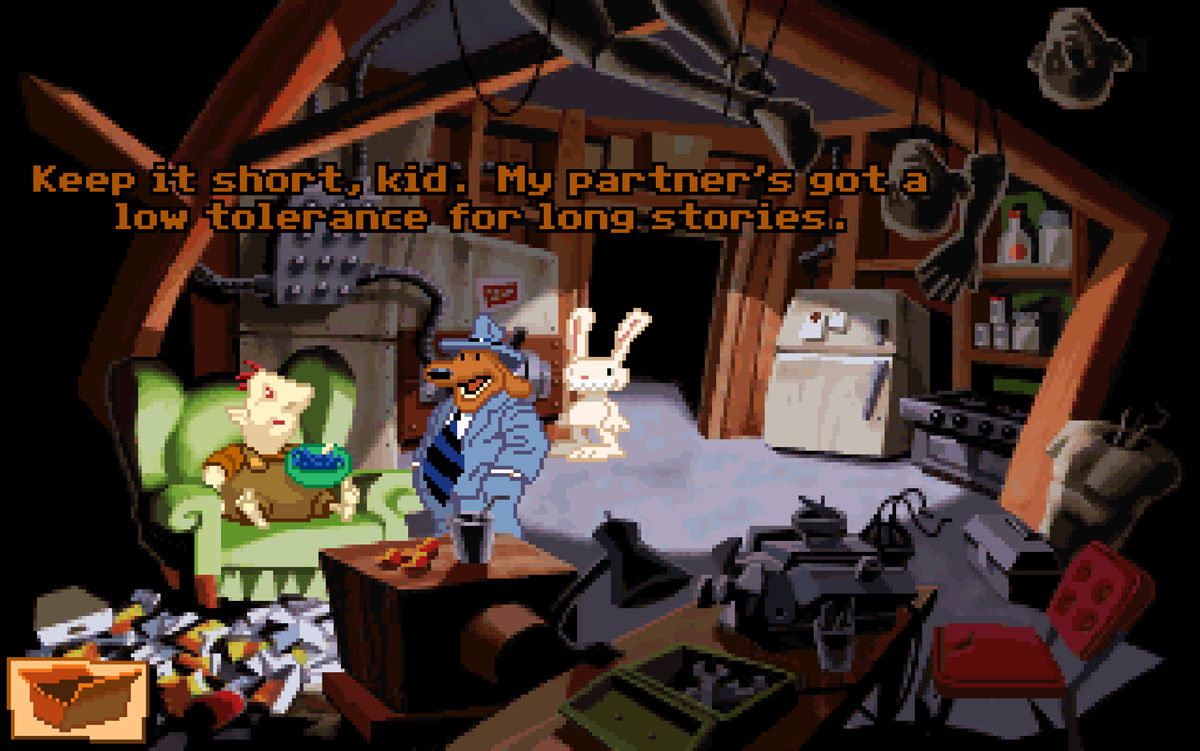
Seen from today’s perspective, Sam & Max Hit the Road still looks stunning. Its abundant animation is impressive, and Steve Purcell’s comic-book style translates beautifully into pixel art. The 256-colour VGA graphics leave no sense of limitation. Every character is voiced, and the casting is perfect — Sam and Max couldn’t have been performed better. The jazzy soundtrack suits the mood well, with no real complaints about quality or quantity. The sound effects, however, are poor and synthetic, which surprised me. Perhaps it's a result of time, budget or disk-space constraints — after all, the game was completed in just eight months.
The saga continues
For me, Sam & Max Hit the Road was a nostalgic journey — though I didn’t actually play it in the early 1990s but likely around the turn of the millennium. I used to think I had played it on the Amiga, but it was never released for that platform. It simply looks like an Amiga game. Anyway, Sam and Max have stuck in my memory as a likeable, inseparable pair. It’s hard not to be fond of them.
Their story continued only in the 2000s. I haven’t yet played the newer 3D instalments. The franchise was revived twice unsuccessfully before the rights finally left LucasArts in 2005 and were acquired by Telltale Games. That led to three episodic titles: Sam & Max Save the World (2006), Sam & Max Beyond Time and Space (2007) and Sam & Max: The Devil’s Playhouse (2010).
Verdict
Sam & Max Hit the Road looks and sounds great — apart from the sound effects. It’s a harmlessly outrageous adventure classic whose twisted humour is embodied in Max the rabbit. The inventory puzzles stimulate parts of the brain players may not know they have. The freelance police duo takes us on a joyride across a hilariously distorted America. Every character is eccentric and funny, and the jokes never stop. The story is delightfully silly, yet everything turns out fine in the end. I rate this experience 80 out of 100.
Availability
Sam & Max Hit the Road is available for Windows and macOS from GOG.com and Steam. The game runs on the ScummVM platform and can also be found as a standalone data file playable through it.