
Valhalla and the Lord of Infinity (2002)
Appearing for the Amiga in the mid-1990s, the Valhalla adventure game series is something of a cult classic. It is a genuine gem and, despite being available for modern Windows computers, still surprisingly hard to find. The series features an entirely unique mechanic based on the transformation of objects. Its world and graphics have a charmingly naïve aesthetic, and the voice acting has become outright legendary.
The first title in the Valhalla series, The Lord of Infinity, was released for the Amiga in 1994 and re-issued for Windows PCs in 2002. The Windows version features an updated interface along with improved graphics and sound.
Beautifully made by two
The British developer Vulcan Software produced a total of nine games. Besides the Valhalla titles, its original puzzle game Timekeepers is also available for Windows. The studio still exists, though only its founder, Paul Hale Carrington, remains. In fairness, Vulcan Software was never large to begin with. The Valhalla games were created by just two people: Lisa Tunnah handled design and writing, while Carrington was responsible for programming, graphics, and sound. For me, Vulcan feels like a great love from my youth.
The prince’s mission
The Lord of Infinity tells the story of a conflict over succession. The player controls a young prince who has returned to claim the crown that is rightfully his. His uncle, now in power, overthrew the prince’s father and ordered the then two-year-old heir to be drowned. A bishop saved the boy, who has since grown up in exile.
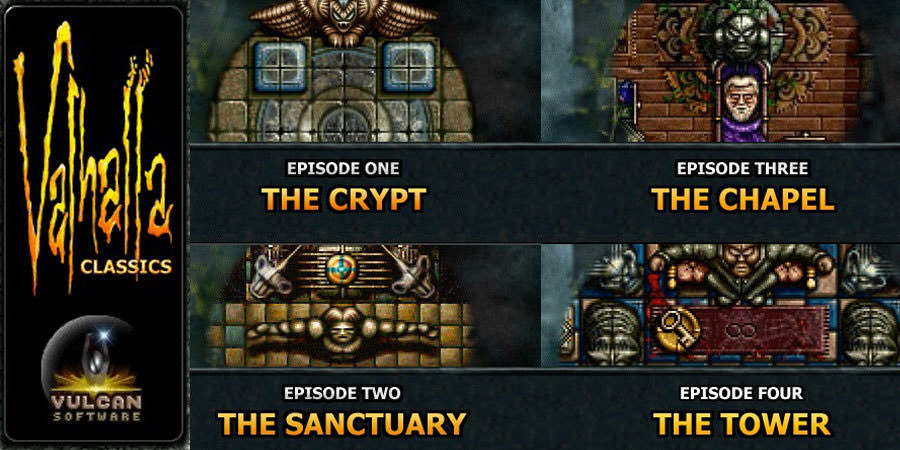
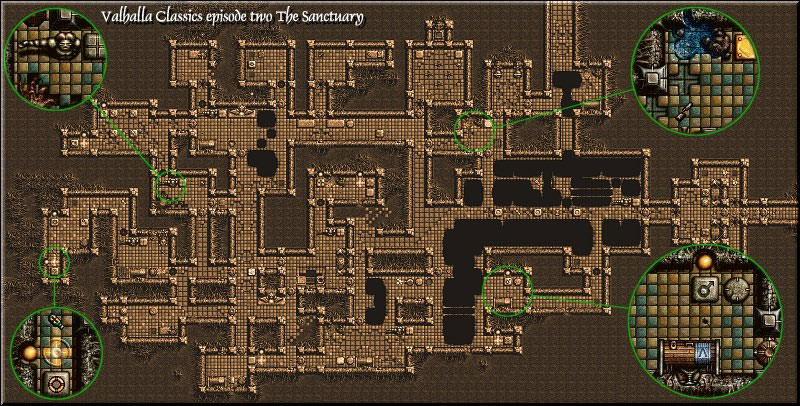
The Lord of Infinity consists of four chapters, each containing its own labyrinthine area. The prince must make his way through all of them to confront the cruel and unjust ruler at the end. The progression moves from the crypt to the sanctuary, from the sanctuary to the chapel, and from the chapel to the tower. In the tower sits the tyrant whom the prince must defeat through cunning. Each chapter takes roughly two hours to complete.
The world of Valhalla operates under its own peculiar logic. Strange and wonderful things occur as a result of the player’s actions, often leaving even the protagonist astonished.
The marvellous metamorphosis of objects
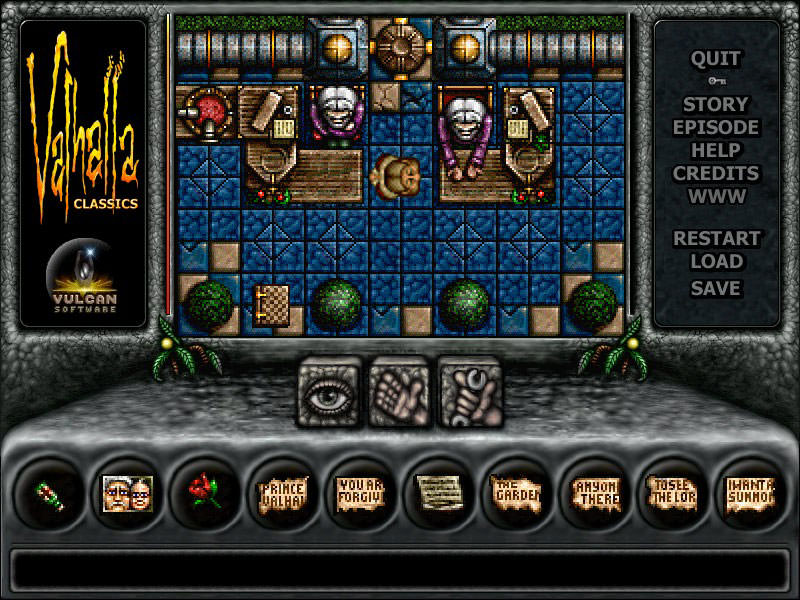
How does one actually progress in the game? By fighting guards? Not at all. Valhalla functions more like a puzzle game. The player’s task is to find and place the correct object in the correct location — which might be an altar, a piece of furniture, or another fixed object. The logic behind which item belongs where is difficult to describe: it blends reasoning based on natural associations with playful word connections. It feels childlike, but never childishly easy.
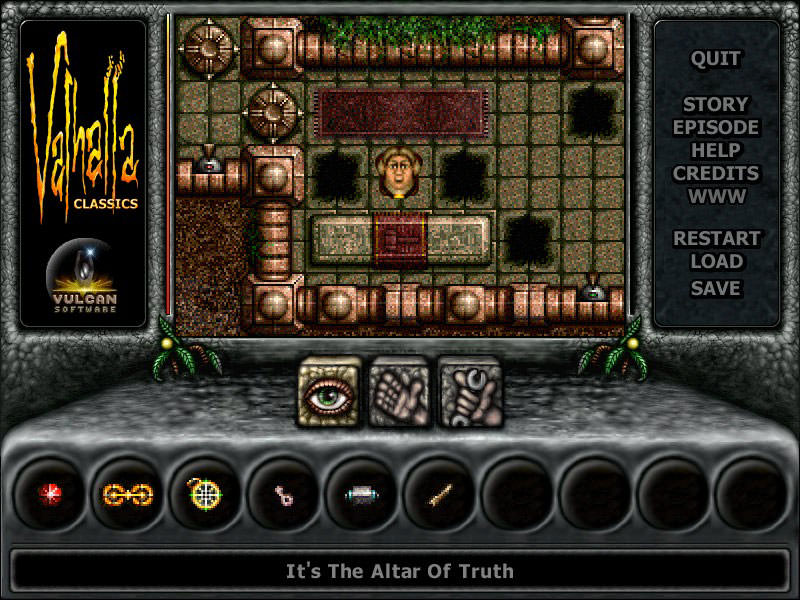
When the right object is placed in the right spot, it transforms into another item (or a new one appears in its place). This new item then belongs somewhere else, forming a chain of object exchanges. Occasionally an object does not transform but vanishes instead, triggering events such as opening a previously locked door or fulfilling part of a character’s request.
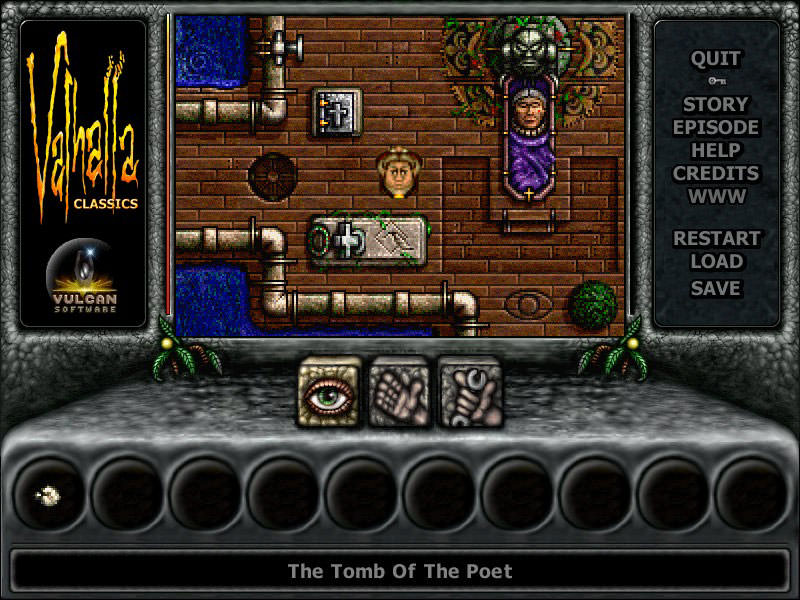
The game also includes potions that temporarily grant the prince special abilities. Another distinctive mechanic is spoken identification: when the player makes the character look at an item in the inventory, he says aloud what it is or reads out what is written on a note. This creates entertaining password and dialogue puzzles.
Audio-visual presentation
Paul Hale Carrington provided all the voices himself. The speech was processed through various filters. A Scotsman, Carrington has said he had to make an effort to act in an English accent — with delightful results. The lines are entertaining and form a major part of the overall experience.
The old Amiga versions had their flaws – initially, subtitles were missing, and the audio quality made the dialogue hard to discern – but these issues were fixed in the later Windows editions.
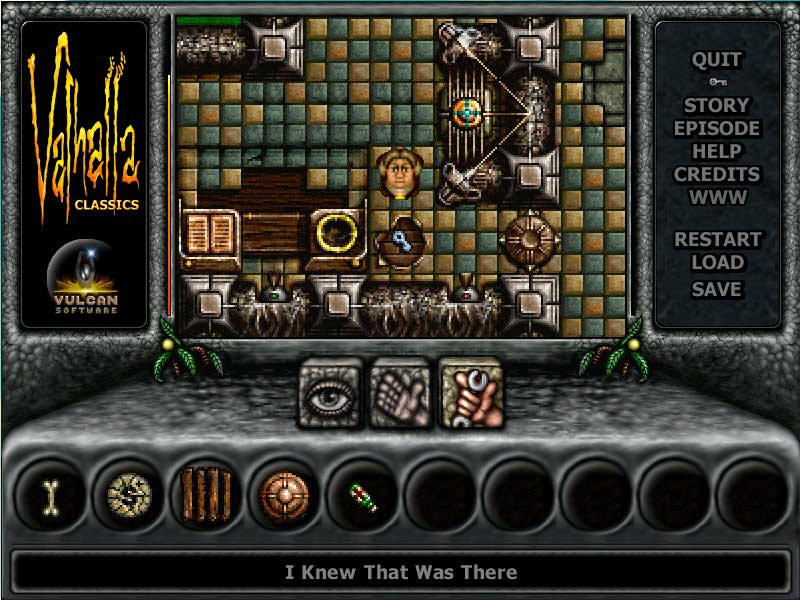
The simple sound effects suit the game perfectly. The muffled music at the beginning and end borders on underground – an experience in itself.
The smooth Amiga graphics have been sharpened and made more colourful in the Windows versions. The change is not quite in the direction I would have hoped for, yet it shows progress. The style remains endearingly clumsy – perhaps even amateurish – but that is precisely what makes it a cult classic. Nothing is perfect, yet because everything is exactly as it is, it becomes perfect.
The sequels
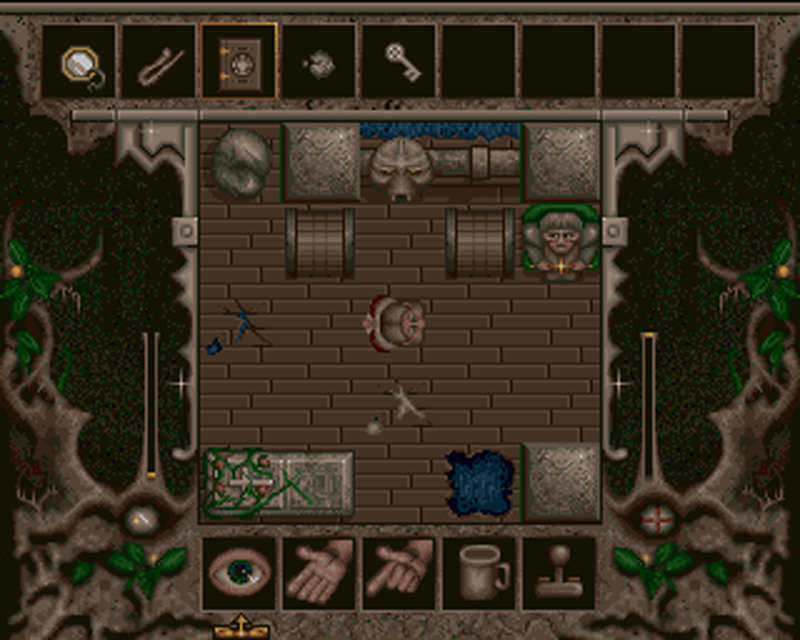
In the second game, Valhalla Before the War, the story turns back to the time before the prince’s return, letting the player experience the role of the power-hungry and ruthless Lord Infinity. The third entry, Valhalla & the Fortress of Eve, follows the prince in his search for a bride.
Verdict
For me, the Valhalla series has been a joyful gaming experience. Ferrying items back and forth and watching them transform feels remarkably rewarding. As an impatient modern player, I only complain that too much walking is required. Everything could have been more compact – items placed closer to where they belong, and the mysteriously “somewhere” doors that open could just as well appear nearby.
I doubt I am entirely objective toward The Lord of Infinity, yet I know of no other adventure game that works with a mechanic like this. The fact that no one else has used it does not mean it is bad – in this game, it works brilliantly. The Valhalla series differs from the mainstream adventure form as much now as it did at birth.
My overall rating for the eccentric Valhalla and the Lord of Infinity is 94 out of 100.
Availability
Valhalla and Timekeepers are available for Windows exclusively through Vulcan Software’s own website, and purchases can be made only via Internet Explorer. This ensures that few people even know about these treasures! The Vulcan site has been broken for years, its redesign perpetually “in progress”. The links in this article point directly to pages of the old site.
I played The Lord of Infinity on Windows 7; regarding compatibility with newer systems I cannot say, but trying the demo will quickly reveal the answer. The same applies to Timekeepers.
The first chapter of The Lord of Infinity is available for free, while the other three can be unlocked by purchasing key codes. It is not a cheap game – its price alone shows that the Vulcan website lives firmly in the past. Frustrating, yes – but in a curious way, rather fascinating.