
7 Grand Steps: What Ancients Begat (2013)
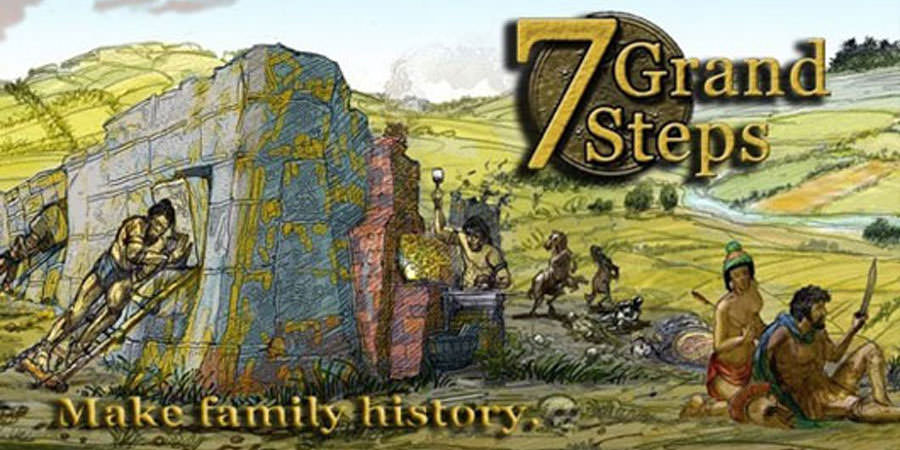
Diverging from the usual focus of this blog, 7GS: What Ancients Begat is not an adventure game. It is a historical simulation that resembles both a board game and a coin-operated machine. The goal is to ensure that one’s bloodline prospers across the ages. The experience was strange, addictive and mechanical at the same time. I was suffering from (probably temporary) adventure-game fatigue, but this title hit the vein of a game addict.
Released in 2013, What Ancients Begat is the first entry in what was planned as a seven-part series. Behind it is a veteran game designer now working through an independent studio, Mousechief. According to Keith Nemitz, the idea took shape after he spent a month playing Civilization IV and felt disappointed that everything ultimately revolved around warfare. He wanted to explore historical simulation from a different, more peaceful angle — emphasising descendants, inventions and social class — and this became the foundation for 7 Grand Steps.
The rise and ruin of the play experience?
I didn’t read any instructions or tips at all, so the rules and strategic aspects slowly revealed themselves through play. Because of that, my initial impression of the game as clumsy and confusing shifted into something much more sophisticated. I realised that the seemingly random events were backed by surprisingly thoughtful design.
You can play without understanding much, but once the mechanics click, the whole experience shifts to another level and tactics become possible. After enough tactical play, however, you may begin to suspect that everything is still just luck — or worse, tuned for eventual defeat.
To gain and to lose — the rhythm of life
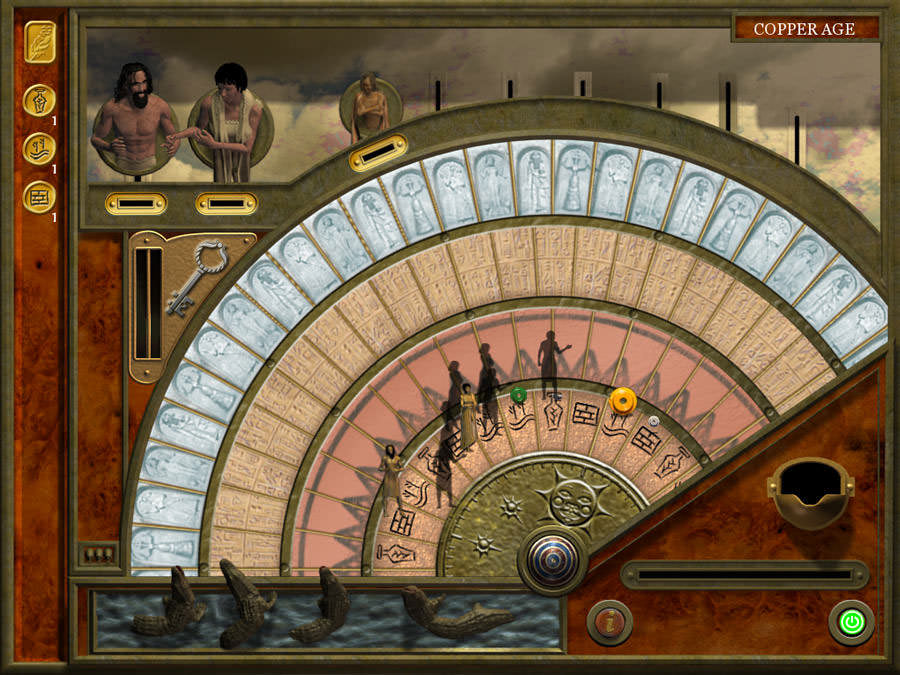
The game covers three eras: the Copper, Bronze and Iron Ages. The setting appears to be the Mediterranean region, on both the European and Middle Eastern sides. The age is reflected mainly in the inventions and major civilisational breakthroughs that are revealed during play.
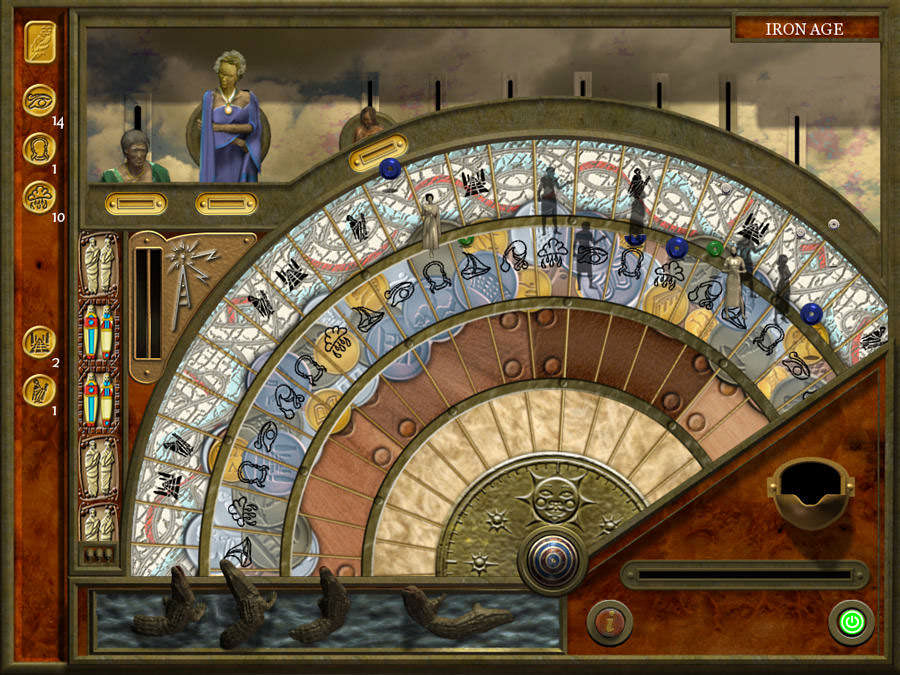
Inventions are actually the core of the gameplay, functioning as a form of currency. Invention-marked coins are spent to move along the wheel of life. At the end of each turn the wheel rotates counter-clockwise — sometimes a little, sometimes a lot. To avoid being dragged down and devoured by the crocodiles waiting at the bottom, it is necessary to stay clear of their jaws by “buying” distance with coins. Coins are also used to educate children.
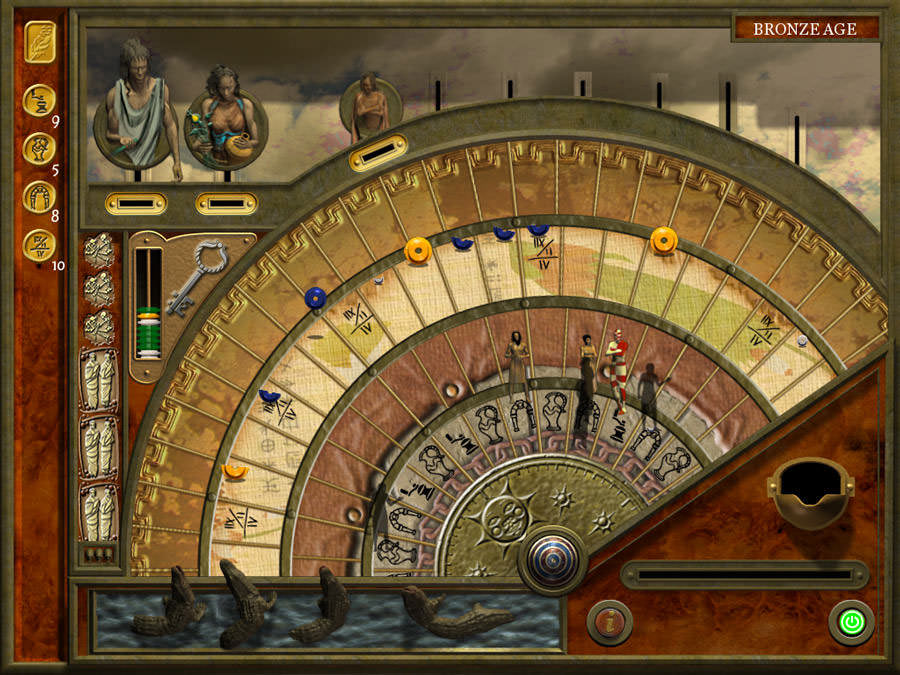
The player is responsible for spouses and children — depending on circumstances, between one and eight individuals. Only adults move on the wheel of life; children stay outside it. The goal is to collect more coins and use them wisely. Coins are obtained through “relationships” with other computer-controlled characters and with one’s own spouse. The latter comes with the risk of unwanted children. A large family becomes a problem because siblings can develop rivalry, keeping them happy costs many coins and you shouldn't have any clear favourite. This was, in fact, rather realistic and historically instructive.
Personal, familial and historical legends
To advance through each era and toward greater aspirations, legendary beads must be collected. When collecting them, the player can focus — in turns — on inventions, heroism or raising social status.
From time to time, the game narrates legends and presents text-based choices. These story interludes felt peculiar. Though dramatic and era-appropriate, they were often repetitive and mechanical: one had to learn which type of answer the game favoured.
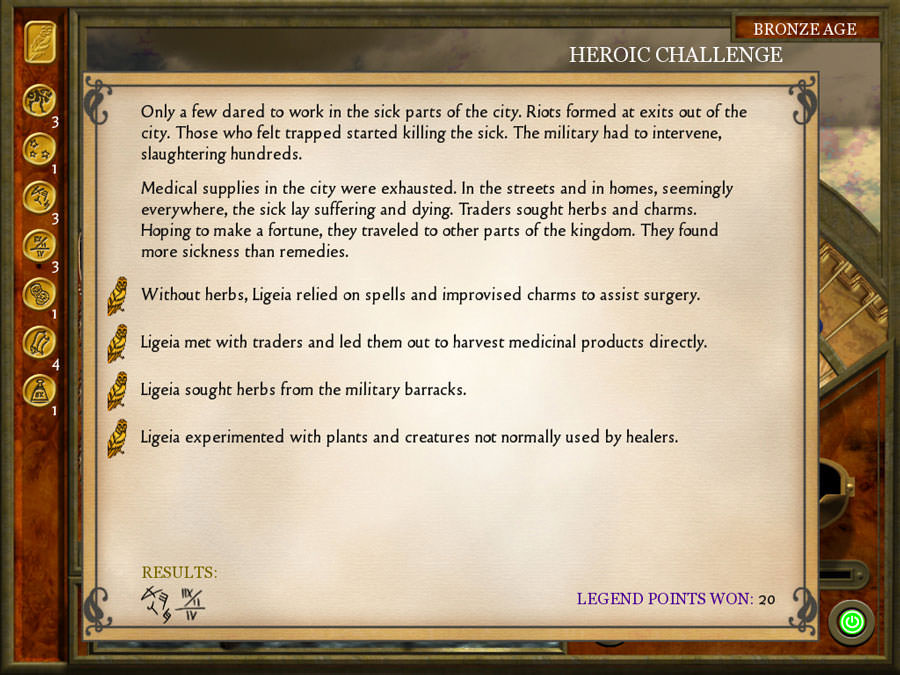
The game involves a fair amount of reading, though nothing is strictly mandatory. Nonetheless, exploring the legends deepens the sense of the era and the connection to the representatives of one’s lineage.
Absurd — and still irresistible
The crocodiles lurking at the nadir of the wheel will get their meal sooner or later. Eventually the parents die and a chosen child becomes the next generation’s parent. Each era includes more than ten generations.
The game makes it painfully clear how important it is to “marry well”, have exactly one (or maybe two) children — no more — educate the eldest as broadly as possible and leave behind an inheritance. Personal ambition, not to mention comfort, has no place — except at the very top of society, where access to power opens up. Otherwise the only focus is preparing the children for adulthood and, ultimately, keeping the lineage alive.
But when one distant descendant, after countless generations of sacrifice, is finally invited to become a senator, there is a brief moment when it feels like all those parents who lived and died for the lineage did not do so in vain. Entering the ruling class opens an entirely new dimension — political decision-making. After centuries of struggle for survival, this change genuinely feels like an achievement. Yet the summit is lonely, which can lead to impoverishment — and from the highest step, there is only one direction to fall.
The wheel of life is merciless, and it leaves one wondering whether any of this makes sense. By the time the Iron Age ends, and with it the first entry of the series, you have spent more than ten hours shaping that very question. However, the mere promise of the Middle Ages would have drawn me immediately into the next instalment — had it ever been released.
Audiovisuals
The interface borrows from imaginative old coin-operated machines. It has the mood of an early-20th-century fairground. The characters are slightly blurry, as if taken from unclear statue photographs, but they fit the overall aesthetic. The monochrome pencil-style illustrations on the coins and the board break that cohesion a little.
The main theme and insert themes resemble Balkan folk music. Each era has its own musical motif, but because each era lasts so long, the motifs become overly familiar. Repetition and mechanical structure are truly omnipresent — yet something about the mix of so many disparate elements was oddly compelling.
Verdict
What Ancients Begat is a strangely exhausting game that reduces human life to a desperate run ahead of death but still offers insight. Its historical aspect appealed to me clearly, and I find the mechanics functional and, in all their chaos, perceptive. I give the first entry of 7 Grand Steps a score of 80 out of 100.
Availability
What Ancients Begat is available for Windows and Mac OS X. A free demo can be downloaded from the Mousechief website.