
Enclosure 3-D (2022)
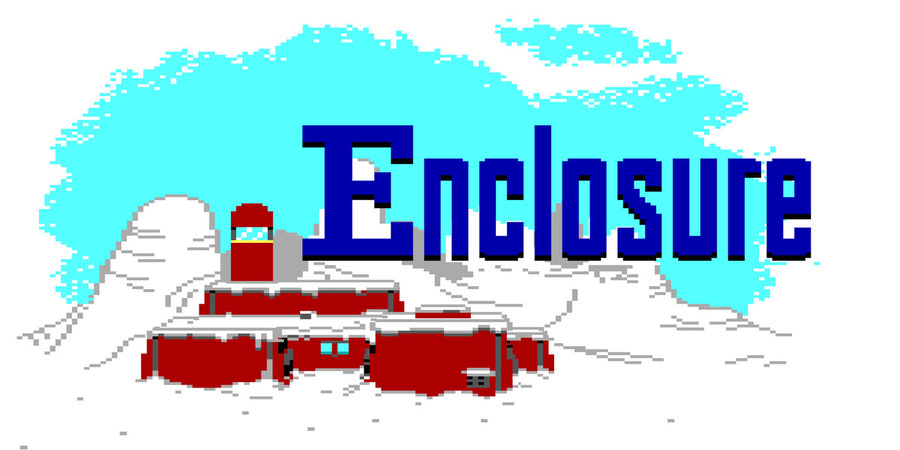
Following in the wake of Leisure Suit Larry, I was reminded of the 2004 graphical text adventure Enclosure, which uses the same Sierra AGI engine as the original Larry 1. In 2022, Enclosure received an update where the pixels were turned into voxels — resulting in a kind of retro 3D. The change isn’t dramatic but clearly noticeable. The graphics seem to lift off the screen, less flat than before; to my eyes, the characters now look more like LEGO figures than pixel sprites. Enclosure is a lovingly made fan project, available for free. What originally drew me to it was the premise: a pair of fraudulent mediums invited to a haunted Arctic station.
Black Mirror II: Reigning Evil (2009)
Time really does fly by. I wrote about the adventure game series The Black Mirror on Samooja seven years ago. I have not forgotten it, because at some point I set aside parts two and three with the serious intention of playing them. When I first started Black Mirror II: Reigning Evil, however, it somehow failed to draw me in and was left unfinished. Now, many years later, I returned to it and pushed myself to see the story through to the end — emphasis on the word “story”. Just like in the first game, the narrative is the strongest and most memorable element. Black Mirror II improves on its predecessor audiovisually, mechanically, and in terms of usability, while still preserving a clear sense of continuity.
Mystery Case Files: Escape from Ravenhurst Collector's Edition (2011)
The eighth instalment in the Mystery Case Files series — and the third chapter in the Ravenhurst arc — Escape from Ravenhurst sends your agent back to the Ravenhurst Manor, even though it has already burned to the ground. Its master, the vampiric psychopath Charles Dalimar, is still very much alive. Emma, Rose and her twin daughters from the late 1800s remain imprisoned by him, and Dalimar is now draining paranormal energy from other villagers as well. This entry embraces the full extremity of Charles Dalimar’s madness. At times the grotesqueness of the visuals and some task instructions genuinely made me feel sick — which must be considered a success in terms of design and execution. Escape from Ravenhurst is an exceptionally high-quality hidden object game. Classic search scenes based on word lists have stepped aside as the main task type, replaced by morphing objects. This captivating mechanic is now given ample room to shine. The game also introduces a brand-new kind of search puzzle based on finding counterparts for small image fragments in the environment.
Fahrenheit: Indigo Prophecy Remastered (2015)
The cinematic action-adventure Fahrenheit by Quantic Dream first appeared in 2005, and a revised edition titled Fahrenheit: Indigo Prophecy Remastered followed in 2015. I played the PC version with a keyboard-and-mouse setup, though controller support exists, as do console releases. This cult-labelled, bleak murder mystery managed to shake and move me even as I wrestled with its controls in frustration. The pull of the story was strong — no surprise that it is often counted among writer-director David Cage’s key works.
15 Days (2010)
The 2010 adventure game 15 Days follows a trio of ethical art thieves. Living in a shared London flat, they break into museums and steal paintings on commission, then donate the proceeds to charity. The moral question is present from the start, deepening and complicating itself as the story unfolds. Perhaps because of this, the ending left me unsatisfied. 15 Days received a cold reception upon release — and still does. Some criticism is outright devastating, yet I wanted to give the game a chance, and I don’t regret doing so.
Space: 1999 (2008)
The adventure game Space 1999 was developed for Oric computers and is based on the 1970s TV series of the same name. Orics are 8-bit home computers from the 1980s, today easily explored through emulators for anyone curious about retro hardware. Space 1999 itself is not from the 1980s; it was released in 2008. When I first saw a demo video, I was captivated. The isometric 3D graphics looked striking, and the overall presentation felt both ambitious and affectionate. It was as if the Oric had quietly been lifted to a new level.
Titanic: Adventure Out of Time (1996)
Released in 1996, Titanic: Adventure Out of Time conveniently anticipated the following year’s successful Titanic film and sold well in its wake. Just over a week ago, at the end of 2017, it was officially released for modern Windows computers — officially, it should be added, as the game had long been available under the false assumption that it was abandonware. Awareness of the ship’s inevitable sinking creates a particular tension in this adventure game. A four-part main objective, side tasks, and a large cast of characters make it fairly complex, and navigating the long, multi-deck ship is challenging. In terms of premise and period, it immediately brought The Last Express to mind, and I could not help comparing the two.
Sanitarium (1998)
Released in 1998, Sanitarium remains one of the strangest game journeys I have experienced. While it may not be a definitive horror classic, it certainly holds a cult reputation for its surreal tone. Time, however, has not been entirely kind to it. The most dated aspects today are its visuals and sound design, yet the narrative path stays unpredictable and the experience itself still feels fresh.