
The Secret of Monkey Island (1991)
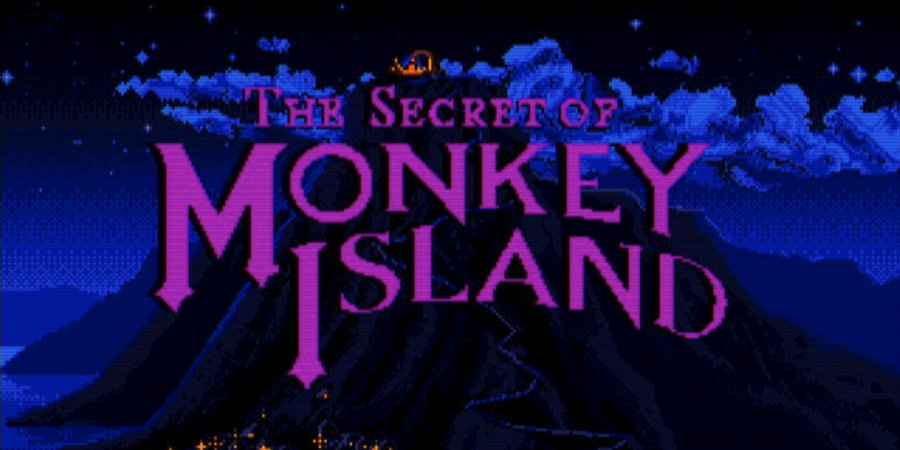
After the rather sombre The Longing, I needed something to lift my spirits and reached for the light-hearted adventure game classic The Secret of Monkey Island, which I originally played on the Amiga. First I played the 2009 remake, The Secret of Monkey Island: Special Edition, and then the original 1991 Amiga version to experience it again from a modern perspective. The very first version of the game, however, was for DOS PCs, and this archaic experience is included in the 2009 Special Edition, where you can switch to it on the fly. In this article I focus primarily on the Amiga version and compare it to the Special Edition. The game is a classic for a reason: as an adventure game, it still holds up very well today. I have nothing against the audiovisually updated version, but to my surprise I found the old version better in terms of playability. In this post I also answer, from my own point of view, the question of how to play Amiga games.
Behind The Secret of Monkey Island is LucasArts, a game studio founded in 1982 by film director George Lucas. The studio is famous not only for the Monkey Island games but also for its Indiana Jones and Star Wars titles. The Monkey Island games, however, are not based on films. Instead, their initial inspiration came from Disney’s Pirates of the Caribbean boat ride. In the same way, The Secret of Monkey Island takes place in a fictional Caribbean during the age of historical pirates.
Three pirate trials and a damsel to rescue
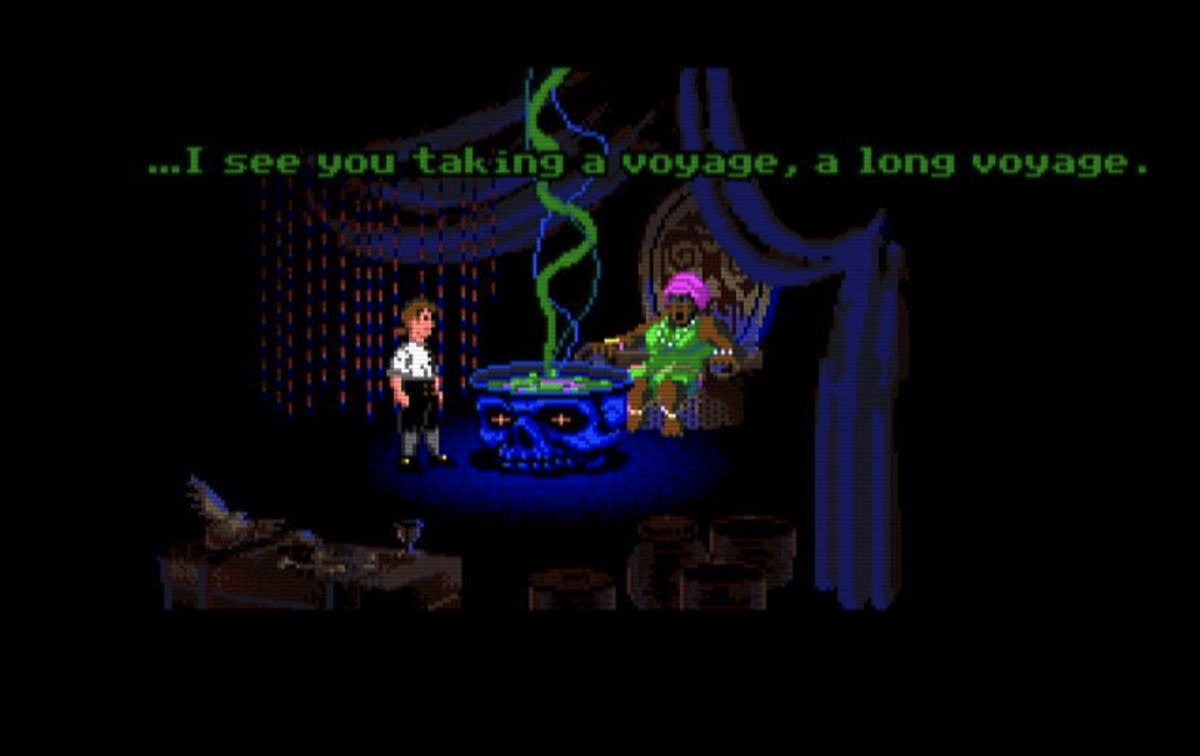
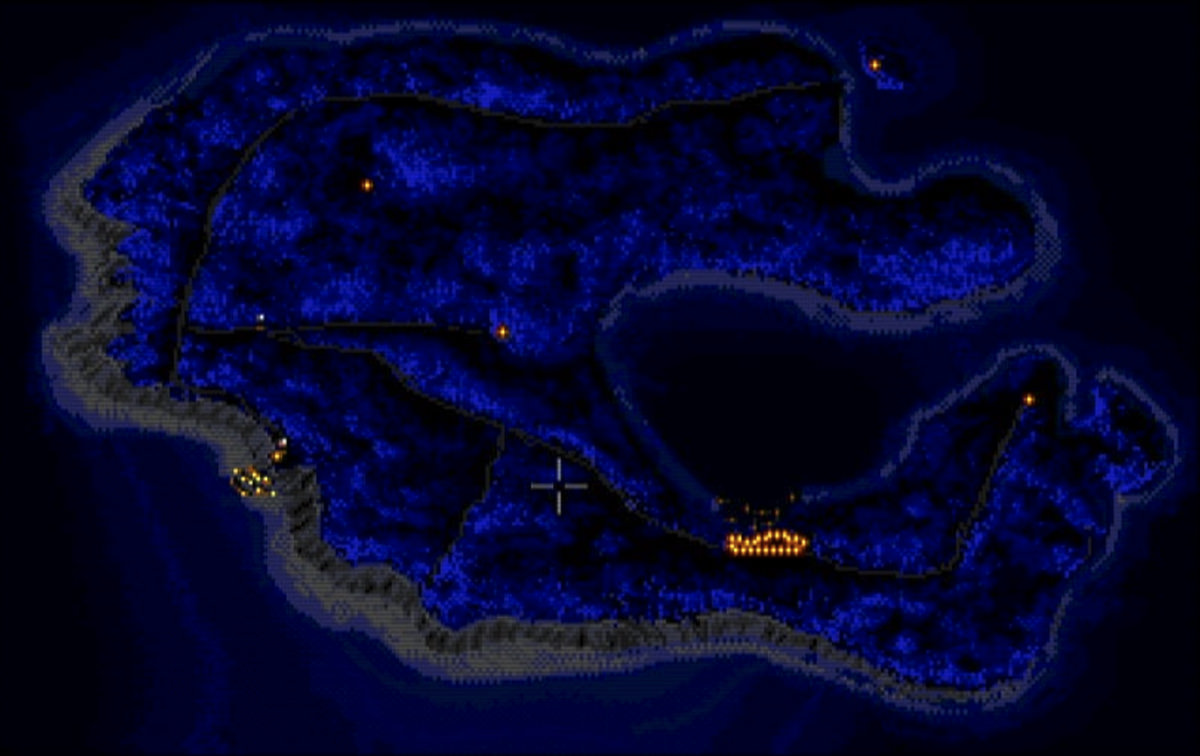
The player controls a young man called Guybrush Threepwood, a wannabe pirate who arrives on Mêlée Island to pursue his dream. To become a pirate, Guybrush has to prove his skills: he must defeat the sword master, find buried treasure and steal a valuable item. Something on the island is clearly wrong, though: the pirates no longer dare to go out raiding. The reason is Captain LeChuck, who, after his death, haunts the seas and leaves no room for other pirates.
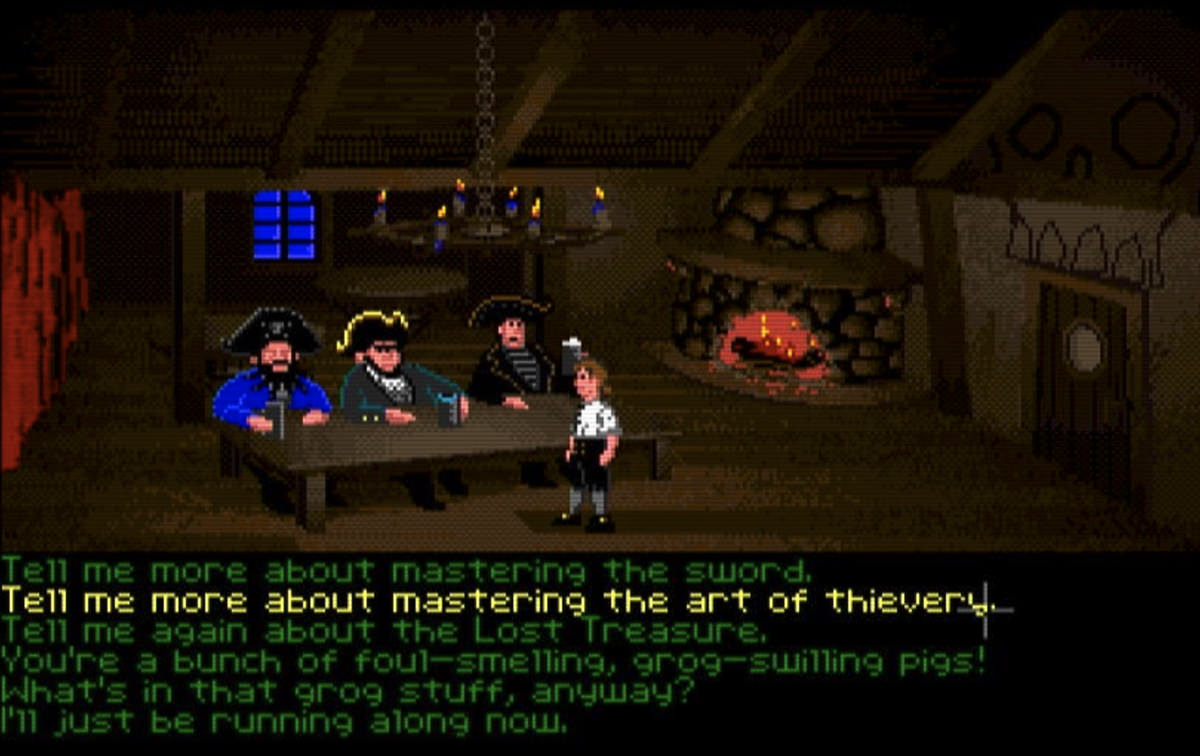
LeChuck is Guybrush’s ruthless and resentful antagonist, and they are both after the same woman: Mêlée Island’s governor Elaine Marley. To rescue Elaine from the clutches of ghost-LeChuck, Guybrush follows them all the way to hell on Monkey Island. The game is full of humorous twists and solutions.
An early but already polished graphic adventure
The Secret of Monkey Island uses LucasArts’ SCUMM engine. Four SCUMM games had already been released before it, and the developers seem to have learned what works in adventure games and what does not. Crucially, in The Secret of Monkey Island you cannot just die out of nowhere. As far as I know, there is only one way to die in the game, and most players probably never encounter it. I have often found that older games can be unreasonably difficult. These days the unwritten rule of adventure games is that there is no game over – or that “game over” simply means you have finished the game.
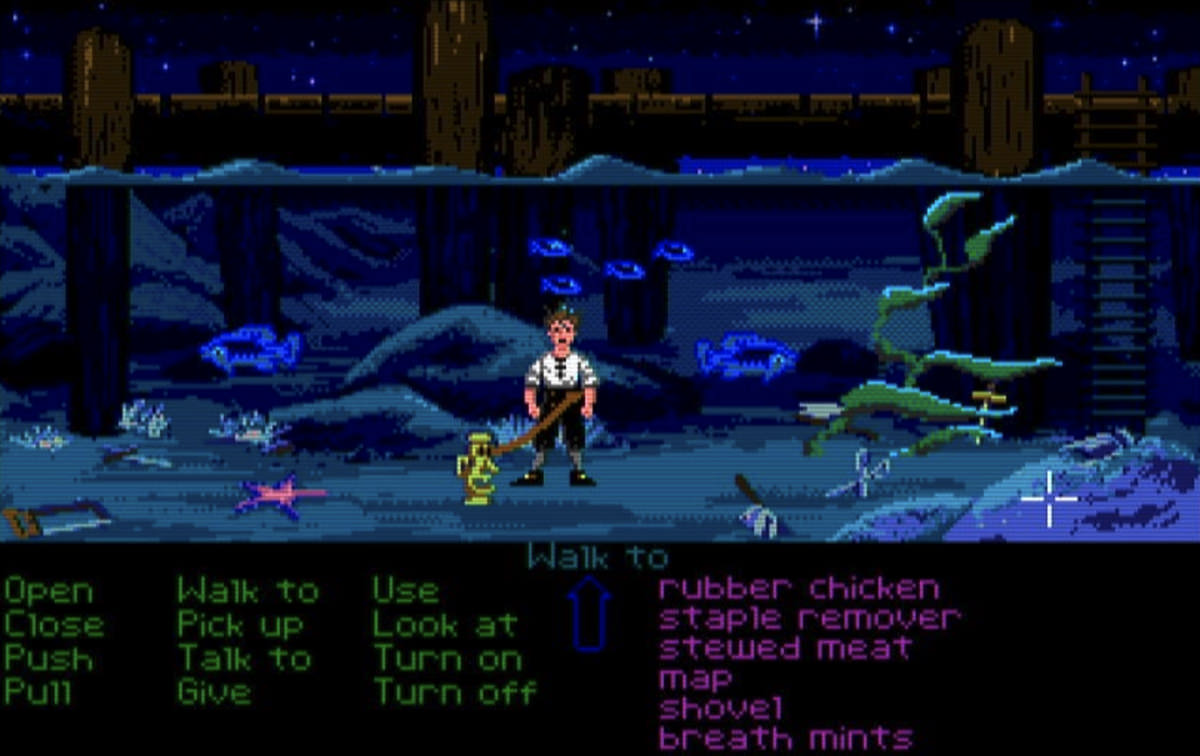
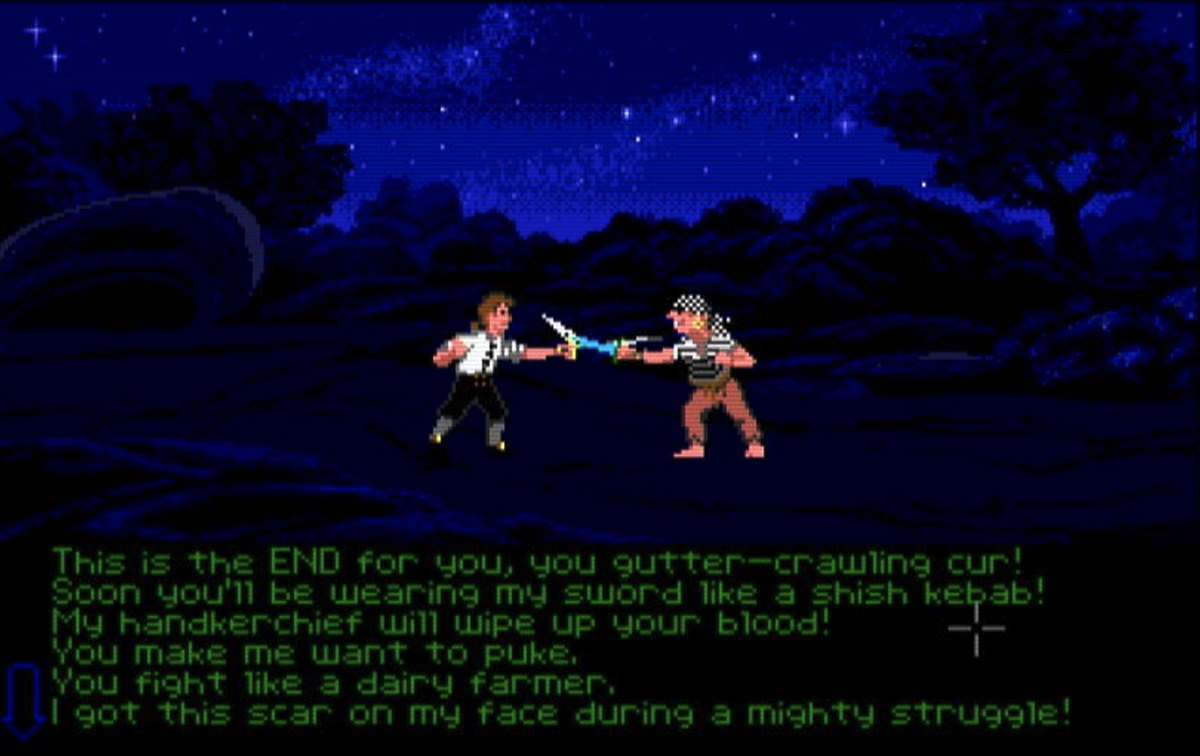
When the Special Edition was released, lead designer Ron Gilbert wrote a kind of belated post-mortem of The Secret of Monkey Island. In it he goes through design and implementation choices that, many years later – with the benefit of hindsight – now feel good or bad. It was interesting to notice that I had, as a player, reacted to precisely the same things. Pixel hunting, the labour-intensive sword-fighting practice and the long cutscenes were all on the edge of frustration, but they never quite went too far, and the humour they contained still came through.
This is a game to be taken at an easy pace – in fact, it needs to be. I never frowned; instead, I was smiling gently all the way through. The hilarious characters and character dynamics, along with good-natured comedic situations and setups, have earned The Secret of Monkey Island its place in the adventure game canon. The inventory puzzles are well designed and pleasantly absurd; there are plenty of surprises, and some of the multi-stage puzzles are genuinely clever. The Secret of Monkey Island is not, however, a complete walk in the park, and unfortunately I had to resort to a walkthrough towards the end. My playthrough took about five hours both in the Special Edition and in the Amiga version.
Differences between the Amiga version and the Special Edition
The Secret of Monkey Island was originally released in the early 1990s for Amiga, MS-DOS, Atari ST and Macintosh. The Special Edition, also published by LucasArts, followed in 2009. The scripts are almost identical. In the Special Edition I noticed only one moment that had been expanded or implemented directly instead of merely being referred to: Meathook’s animated, talking tattoo. All the puzzles and their solutions are otherwise exactly the same. Audiovisually, however, the versions differ – both the original releases from each other and the remake from the originals.
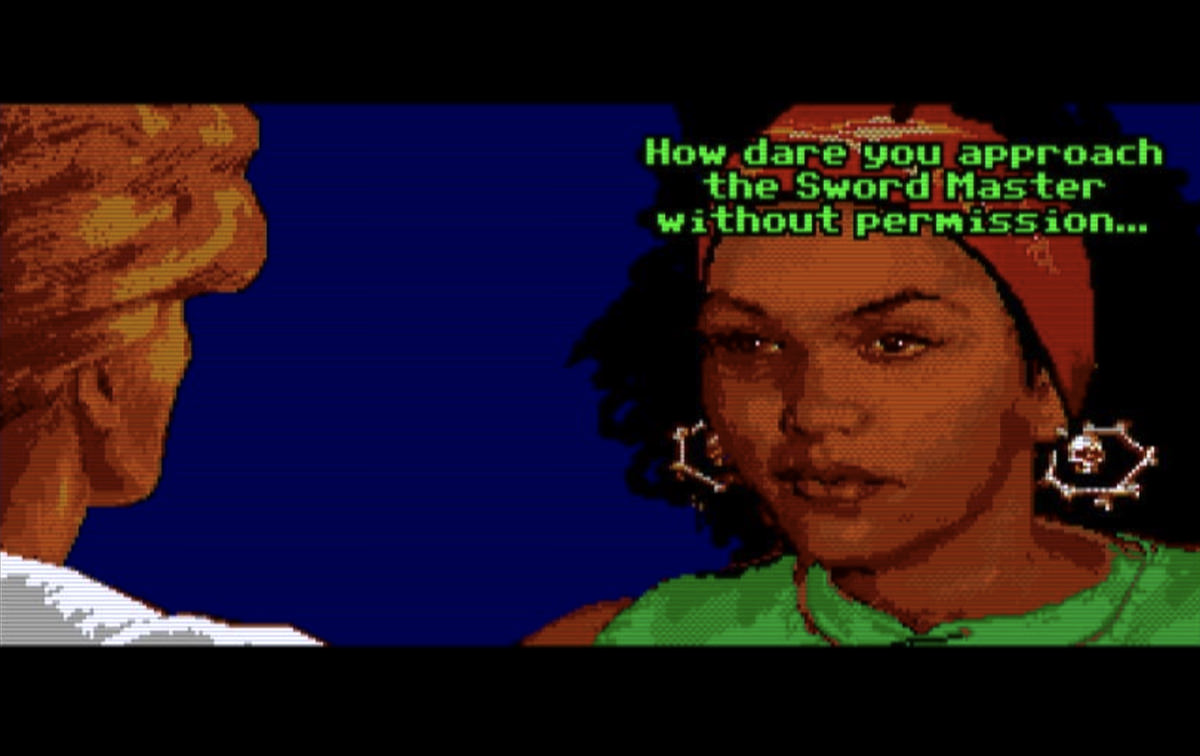
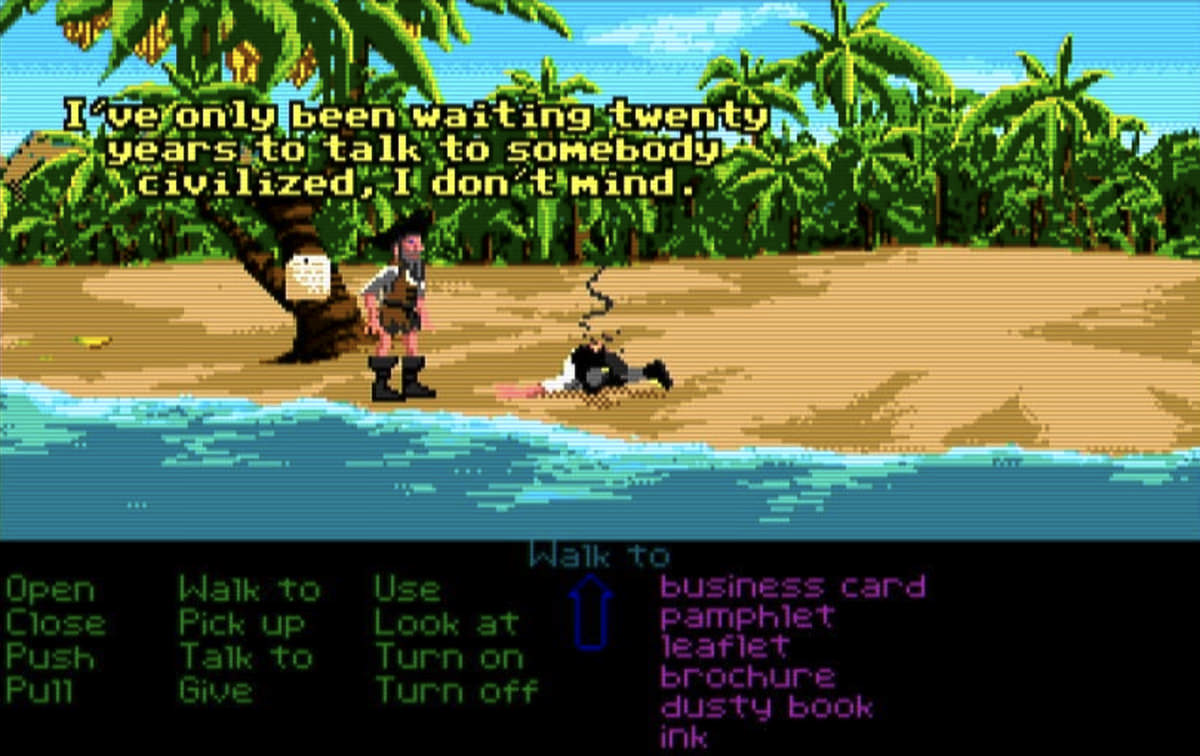
MobyGames has a screenshot gallery that shows the graphical differences between the Amiga, DOS, Atari and Macintosh versions. There are screenshots also from the SEGA CD and FM Towns versions, which came out a couple of years later. I find the Amiga version’s pixel art perfectly fine, and the limited colour palette does not bother me. Eighteen years later, the graphics in the Special Edition have, however, moved to a completely new level – thankfully not into 3D. The style is smooth, cartoony 2D, and I especially enjoyed the character animations. The animation is still a little jerky, but the characters now have facial expressions and, in general, recognisable faces.
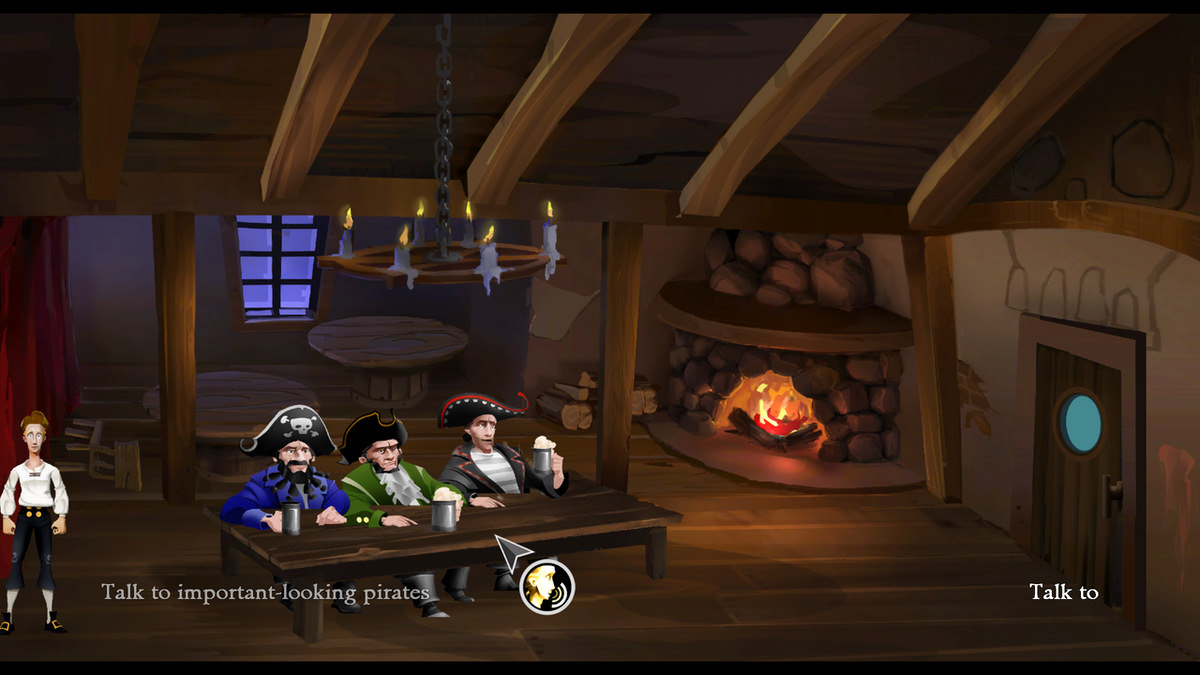
In the Special Edition, the music really comes into its own. I quite liked the arrangements, and the main theme even became an earworm for me. The Amiga version’s music is nothing special, and the sound effects, in particular, sound like beeps inside a plastic bucket. I was very disappointed by this, because I know the Amiga is capable of much more with its sampled audio. Apparently the developers simply ported the DOS version’s sounds over to the Amiga. In the Special Edition, by contrast, the sound effects are naturalistic. Even better than the sound effects and music, though, is the voice acting. Because I played the Amiga version after the Special Edition, it felt strangely mute without spoken dialogue, and I could hear the Special Edition voices echoing in my head. The voice actors are the same as in Monkey Island 3, that is, The Curse of Monkey Island.
Another difference between the Special Edition and the Amiga version (and the other original versions) is the way you interact with the game world and use the inventory.
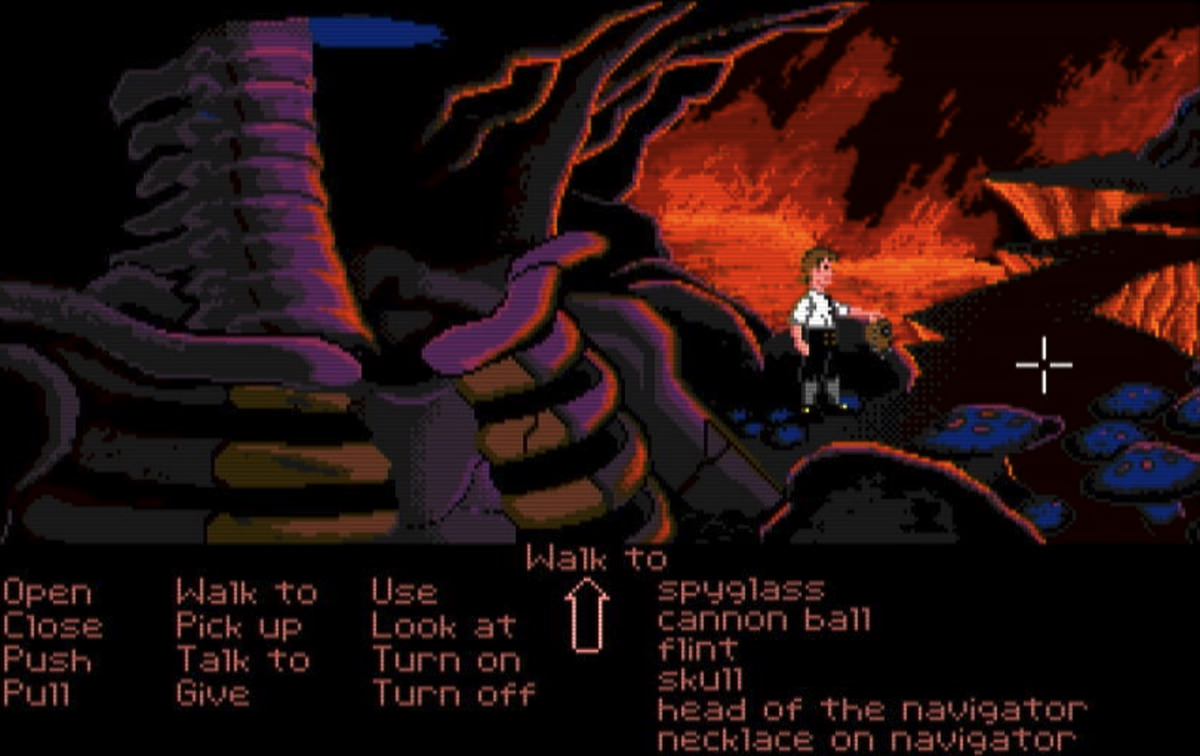
The Amiga version is played with a mouse in classic point-and-click fashion. By default, left-clicking means walking. Right-clicking performs the default action associated with an object, which is very convenient. You cannot, however, finish the game using only default actions; you also have to actively choose other verbs when needed.
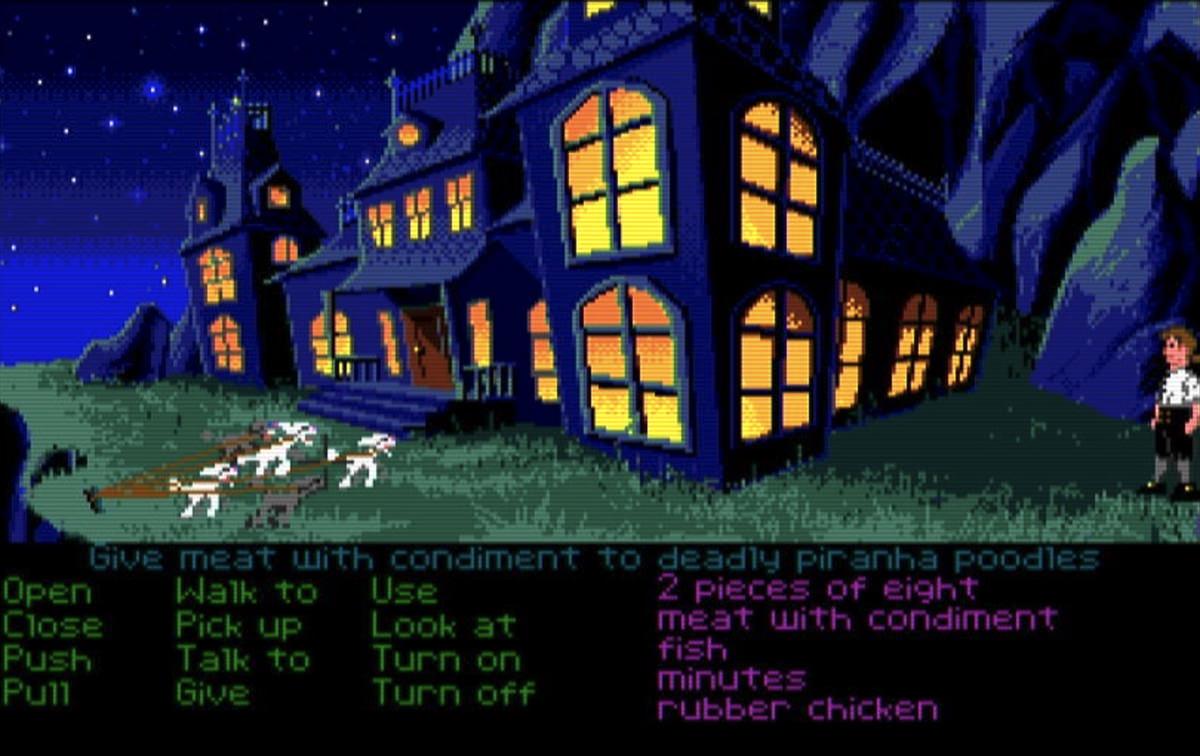
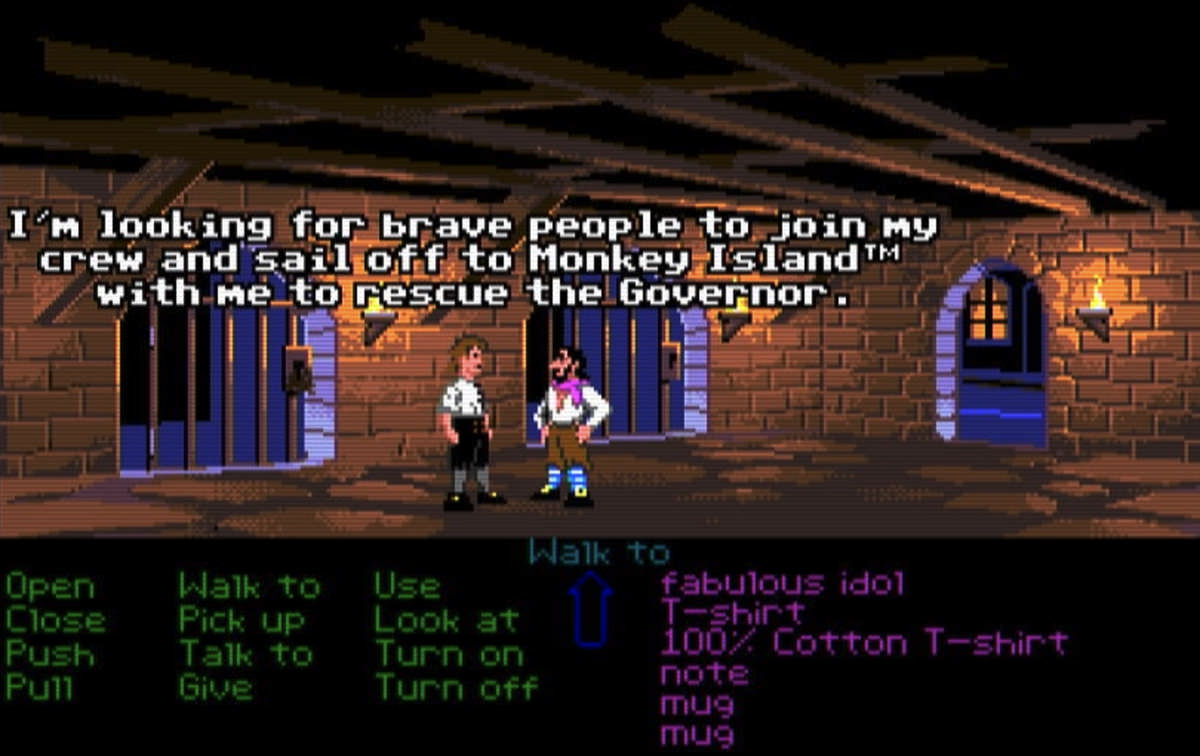
All actions available in the game – the verbs – are listed as text at the bottom of the screen. There are twelve of them in total, although I never used two of them at all. You choose an action by clicking its name and then an object in the inventory and/or in the game world, for example: “Use” (verb) “navigator” (item), “Push” (verb) “cannon” (world object), or “Give” (verb) “skull” (item) to “cannibals” (world object). You can also use verbs to combine items within the inventory. Like the verb list, the inventory is presented as a written list at the bottom of the screen. When the list becomes long, arrows appear so you can scroll it up and down. At the time the game was released, mice did not yet have scroll wheels.
The Special Edition can be played either with a mouse or a gamepad. Mouse controls also support keyboard shortcuts. The verb list and inventory are hidden by default and have to be brought up when needed. This makes it possible to display the game world as large as possible, filling the screen. Personally, though, I found the old textual verb list and inventory more convenient. I did not really warm to the need to constantly summon verbs and the inventory onto the screen. Keyboard shortcuts made using the verbs easier, but items always had to be picked from pop-up inventory icons. These pop-up windows actually date back to Monkey Island 3, which still used the SCUMM engine but had a new design and production team.
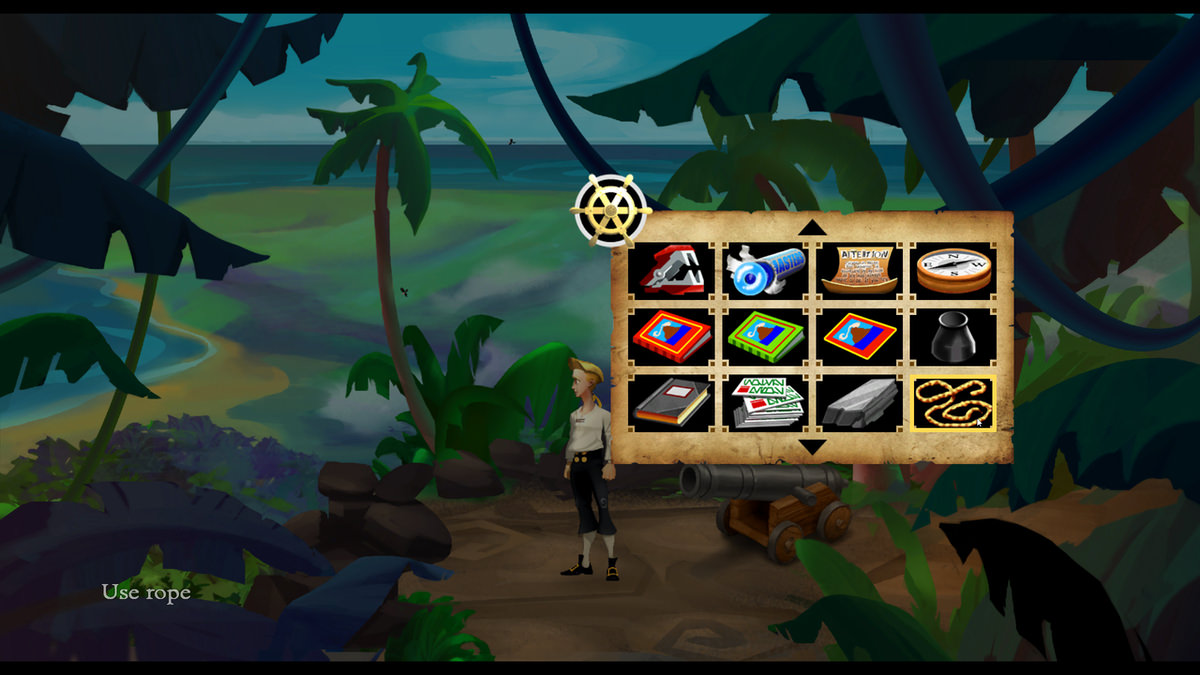
The Special Edition has the same right-click verb helper as the Amiga version: right-clicking performs the default action on an object. In addition, it includes a hint system. With mouse-and-keyboard controls, you can display a context-sensitive hint by pressing the H key, and in more difficult situations the hints can be shown in up to three stages.
How to play Amiga games?
I played The Secret of Monkey Island on the A500 Mini console, which I bought last year and later wrote about. The Amiga version of the game can be downloaded for free online, for example from the WHDownload site, and you can play it not only on the console but also with emulator software. However, tweaking the software settings – not to mention acquiring the ROMs – sets the entry threshold rather high. A dedicated console solves these problems, and the A500 Mini is still available. The console’s manufacturer, Retro Games, has even hinted that a full-size Amiga Maxi might be on the way.
I recently ordered a USB stick from the Netherlands, preloaded with thousands of Amiga games, demos and magazines. It is sold by Retro8BITshop. You could of course hunt down all of this material yourself online, but the stick gives it to you on a plate. It contains a massive 25 gigabytes of data – a lot, considering how small Amiga program files are by modern standards. The stick is compatible with the A500 Mini. The same shop sells other Commodore-related items as well.
The product description refers to the top 100 Amiga games, meaning the vote-based ranking on Lemon Amiga. By chance, The Secret of Monkey Island sits right at the top of that list. This gave me the idea of playing through the entire list and at least picking out the adventure games for Samooja. So, Amiga game write-ups are on the way – though I doubt I will stick to the list strictly, and other titles will inevitably sneak in between. Many of the games on the list can be played on modern Windows PCs as they are, meaning the package contains a working emulator setup and you do not have to install or configure anything yourself. The publisher that has especially distinguished itself in this area is GOG.com. The Windows versions are not necessarily based on the Amiga release, though; often they are based on the DOS version.
The free ScummVM program offers one route to playing some old Amiga games on modern computers. It is available not only for Windows, macOS and Linux, but also for consoles such as PlayStation and Nintendo platforms. I checked that the Amiga version of The Secret of Monkey Island runs under ScummVM. The aforementioned Retro8BITshop also sells a ScummVM USB stick containing a large collection of Amiga, Atari, DOS and other games. The same 100 GB collection can also be downloaded from the Internet Archive, and individual game versions can be found separately.
So the easiest route I can recommend to Amiga gaming is the A500 Mini or the upcoming full-size replica, combined with the Retro8BITshop USB stick. ScummVM offers a more limited catalogue, as it focuses on adventure and role-playing games only, but it makes cross-platform play on modern machines possible. There are also some individual Amiga games that have been brought to Windows as stand-alone releases.
Verdict
The early 1990s are not called the golden age of graphic adventure games for nothing, and The Secret of Monkey Island is a good example of why. The old Amiga version is still, by modern standards, very playable and well designed. It is an entertaining and warm-hearted, anachronistic pirate fantasy. The inventory puzzles are just absurd and comical enough without being illogical or impossible to work out. The pixel graphics are beautiful, if coarse compared to the 2009 Special Edition, where even the characters’ expressions are clearly visible. The Special Edition does the game justice audiovisually, but in terms of gameplay it is not better, at least when using mouse-and-keyboard controls. I can nevertheless recommend both versions without hesitation. I give the Amiga version of The Secret of Monkey Island an overall score of 88 points out of 100. I only wish more effort had been invested in the audio side.
Availability
The Amiga version of The Secret of Monkey Island can be played not only on a real Amiga and the A500 Mini, but also with emulators and ScummVM on various platforms. If you do not have a console and have no interest in fiddling with an emulator, ScummVM is a very good option for fans of adventure games. The Internet Archive’s The_Complete_ScummVM_Collection_v2 includes the game’s Amiga version in The_Complete_ScummVM Collection v2.0/Working/The Secret of Monkey Island (Amiga).zip. The Antstream Arcade streaming service also offers the Amiga version of The Secret of Monkey Island. The Secret of Monkey Island: Special Edition is available for Windows PCs as well as PlayStation and Xbox consoles. Earlier support for iOS and macOS has been discontinued.