
It Came from the Desert (1989)

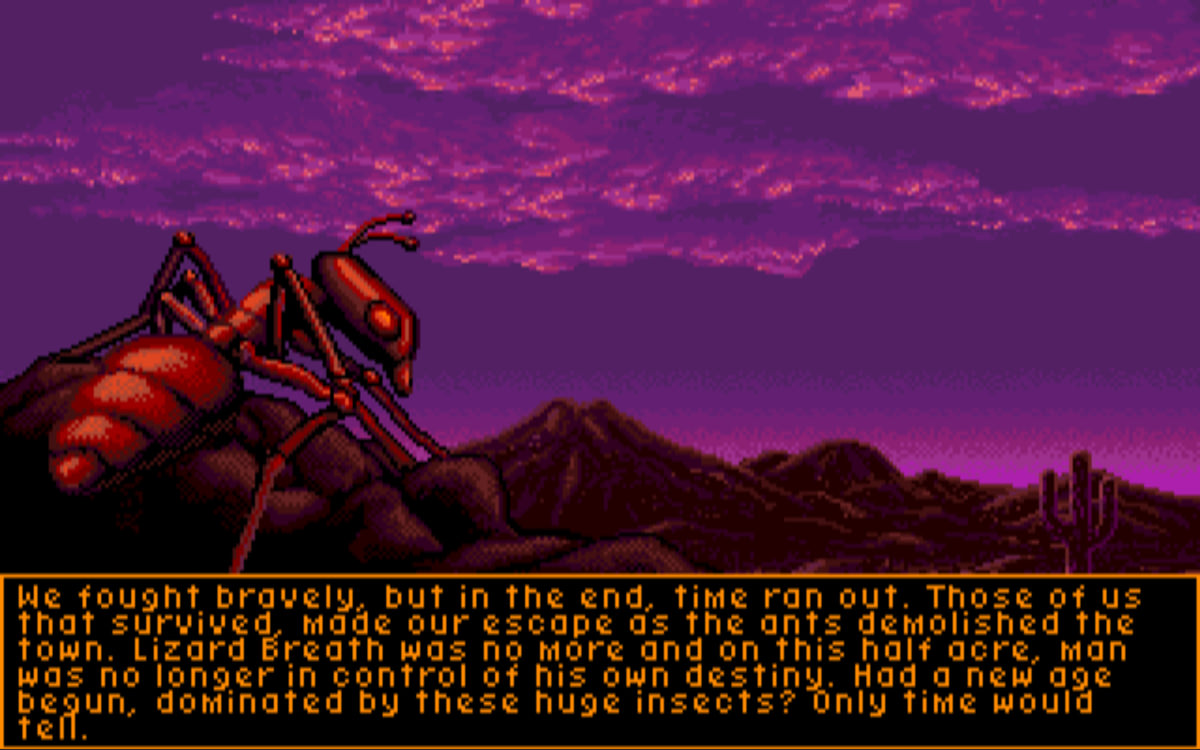
The action-adventure game It Came from the Desert from 1989 offers not only a retro Amiga experience but also a time warp into the science-horror films of the 1950s. A radioactive meteorite crashes into the small Californian town of Lizard Breath, causing the local ants to mutate. The geologist who arrives to examine the crater — the character controlled by the player — recognises the danger, but no one believes him. The geologist becomes an unlikely action hero whose mission is to collect evidence of giant ants and fight them. The game has an intriguing atmosphere and the makings of a cult classic, but it is also too rushed for leisurely enjoyment because everything plays out in real time. It Came from the Desert can be played not only on an original Amiga and via emulators but also on a modern Windows PC, as it is included in the Cinemaware Anthology Collection.
It Came from the Desert was developed by the American studio Cinemaware, active from 1985 to 1991, which produced several Amiga classics including the pioneering Defender of the Crown and the flight simulator Wings. The games were popular, but recession and piracy eventually drove Cinemaware into bankruptcy. Later the “brand” was revived and changed ownership several times. New versions of some classic titles have been published and old titles have also been re-released in their original form on modern hardware. Cinema was a major inspiration for many Cinemaware games, including It Came from the Desert, clearly inspired by the 1954 film Them!.
It Came from the Desert is clumsy and goofy from a modern standpoint, but in a charming way. The graphics and sound are excellent for their era, and the game even features speech in the opening sequence. This applies to the Amiga version — the 1991 MS-DOS version is considerably drabber. Console versions were released for the TurboGrafx-16 and Sega Genesis, but they differ so much that they are effectively different games. The Cinemaware Anthology Collection includes both the Amiga and MS-DOS versions.
A balance of three layers
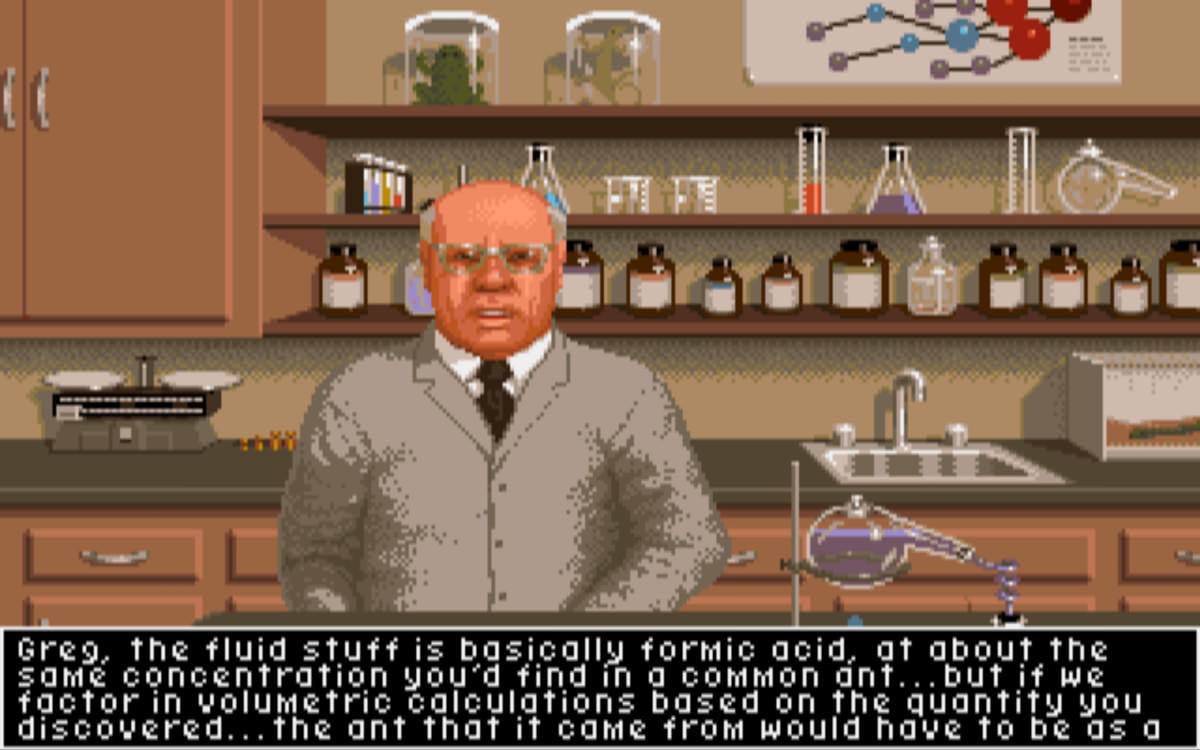
Beneath its awkward exterior, It Came from the Desert is surprisingly sophisticated. It has multiple layers, even though the outcome ultimately depends on action. It made me think of the Commodore 64 game Neuromancer, which expands impressively in depth despite the C64’s limitations. It Came from the Desert does not expand in that sense — it is simply layered.
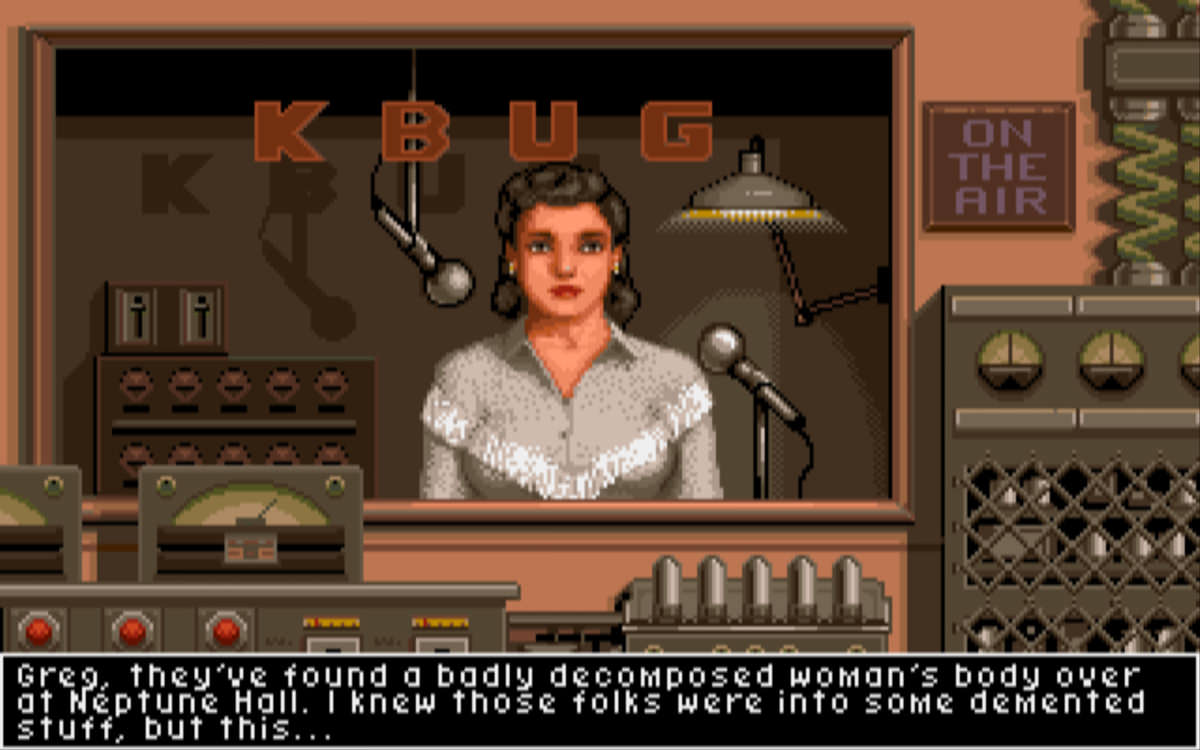
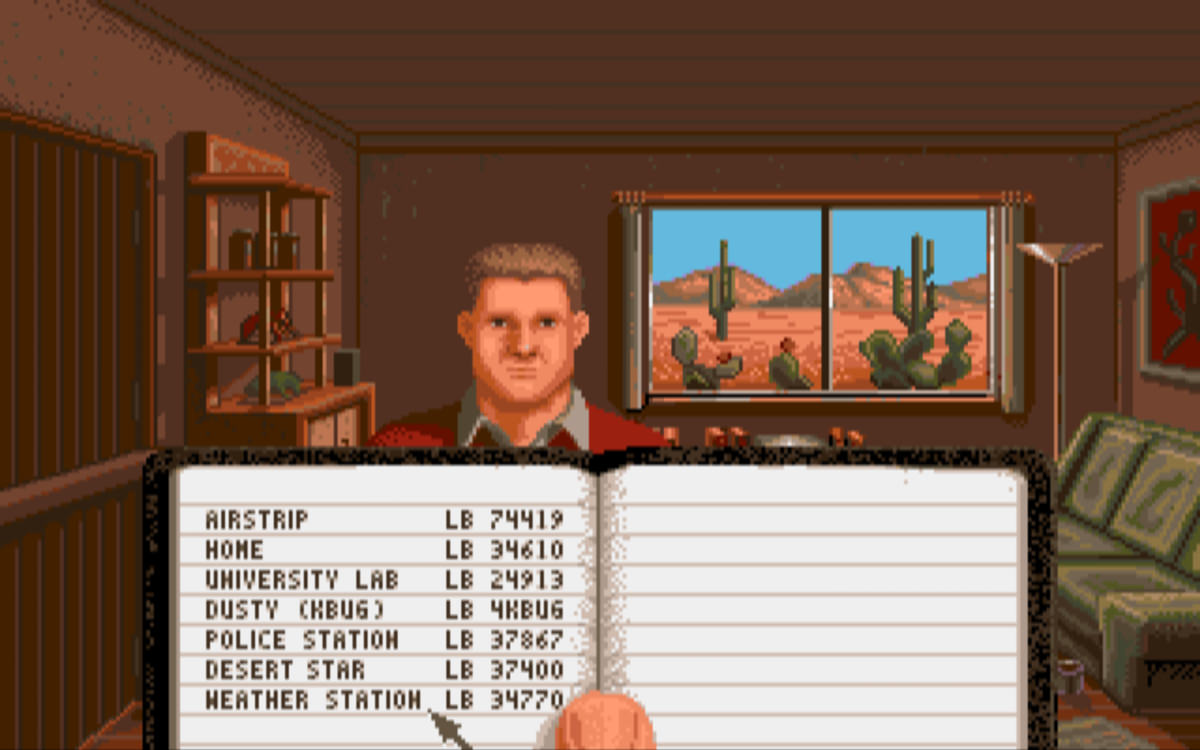
On one level it is a first-person adventure game in which the player visits locations, makes phone calls and speaks with different characters. The central thread of the story is collecting evidence of the giant ants, but as a side strand the player may either nurture or destroy relationships and learn the attitudes and personalities of the small-town locals.
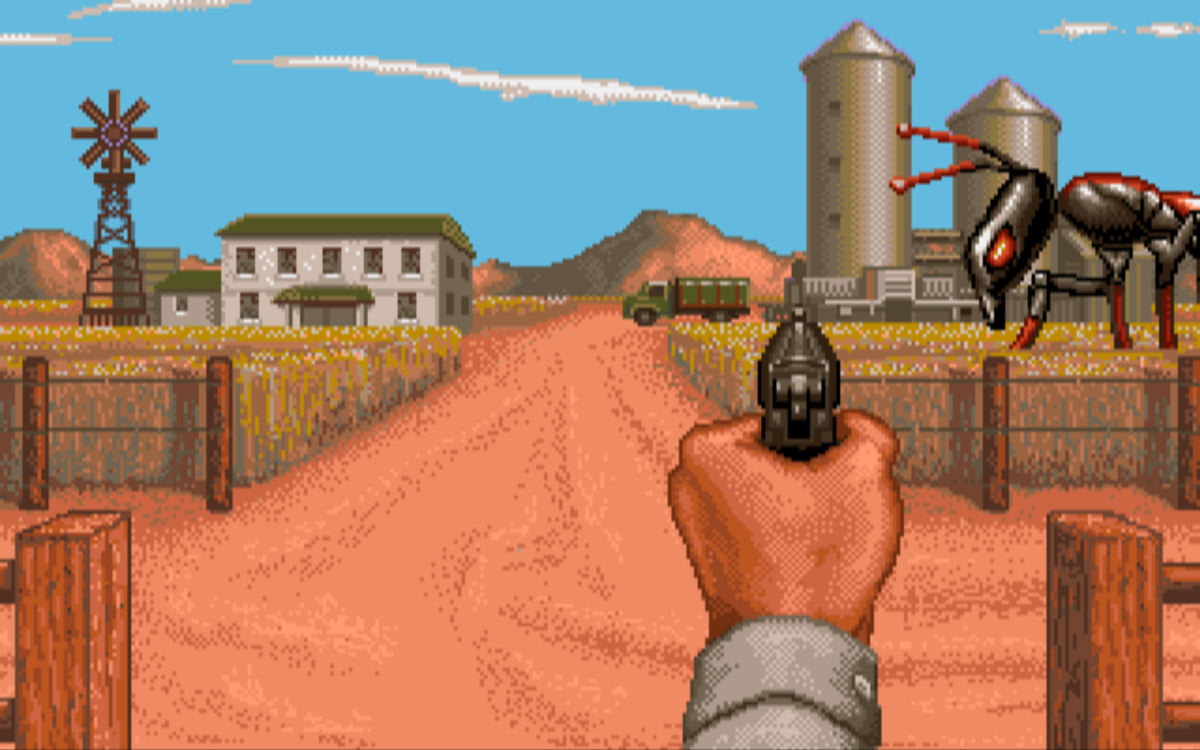
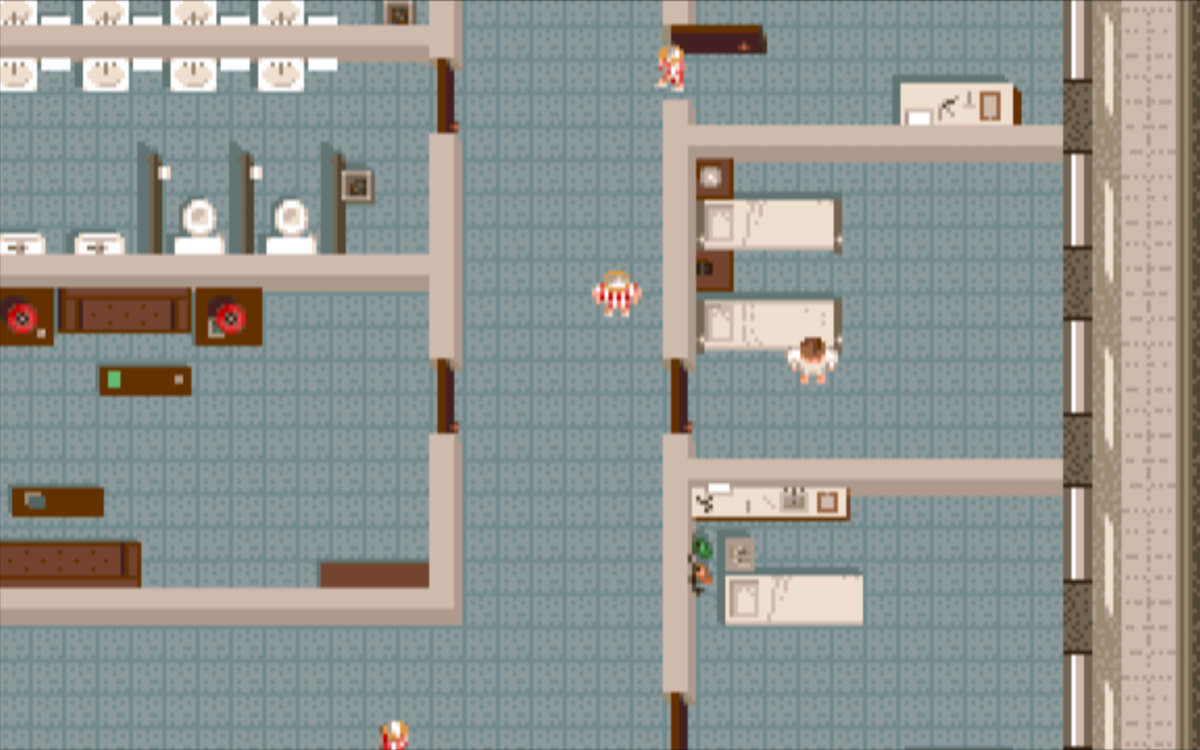
The second layer is “hard action”. Most of it consists of killing ants in various ways — which develops from tactical to strategic. Shooting a single ant is shown from a first-person perspective, while attacks by multiple ants are shown from above. It Came from the Desert also features several action mini-games: escaping from a hospital, extinguishing a fire, a knife fight and a car duel (the so-called “chicken” game, where two cars drive towards each other and the first to swerve loses).
Escaping from the hospital, with a top-down perspective, was amusing but difficult, and I still have not succeeded. A fire can break out at home. The geologist getting involved in a knife fight or accepting a high-speed duel felt out of character to me — why would he be provoked by the local youth? I assumed the geologist to be somewhat older and more mature. He even draws a knife during a major side plot, but there is also the option to flee.
It Came from the Desert takes place in early June, and the geologist has 15 days to save Lizard Breath — and perhaps the whole world. Time is the third layer and constantly demands attention. One real-world second equals one in-game minute. Different places — city hall, businesses, farms and so on — have opening hours, and the game cannot realistically be progressed 24/7. The geologist must also sleep at night, and if he gets too little rest, the risk of accidents increases. One night I slept only two hours and ended up driving off the road as a result.
The passage of time discourages aimless wandering. One can spend a day doing that, but time is limited and wasting it may destroy opportunities to trigger plot events or gather evidence. It is best to follow every hint and visit places accordingly. Not every lead is given and not everything can be anticipated, so the player must learn and optimise routes gradually. The ever-ticking time adds pressure that suits the theme of an approaching catastrophe.
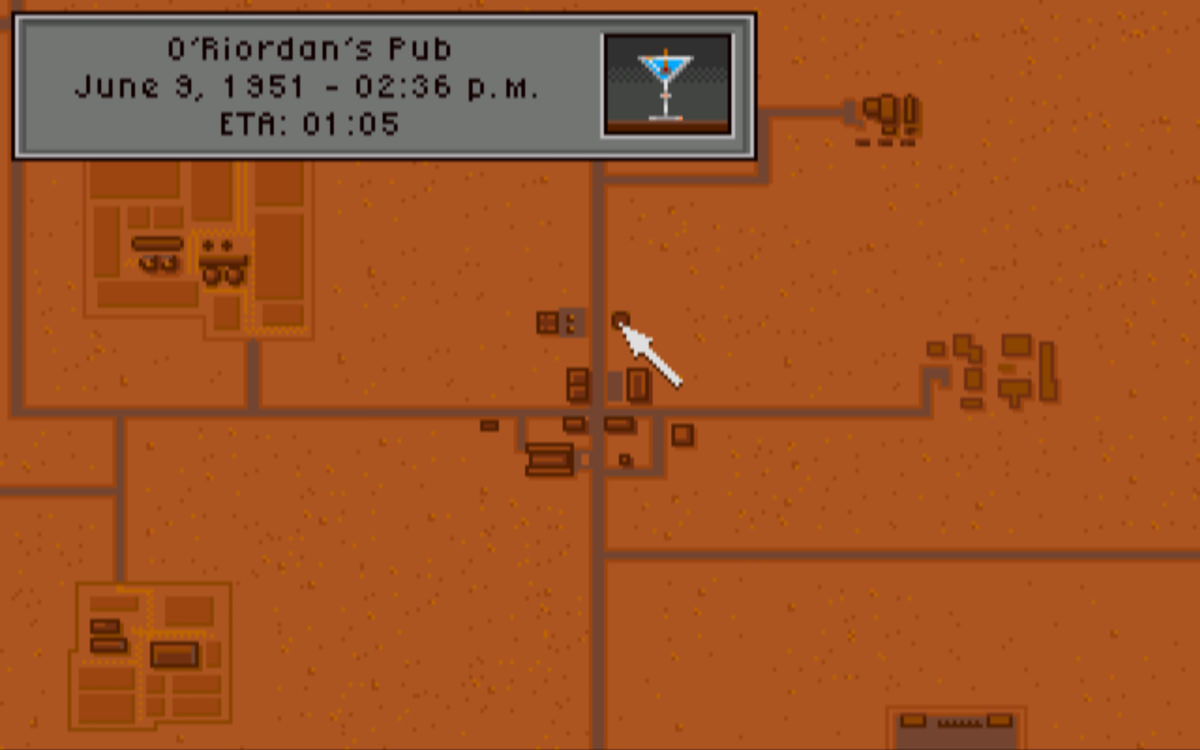
The urgency is heightened by the fact that once in the hospital, the geologist will want to escape — or rather, the player will want to escape because staying in the hospital consumes time. The geologist is sent to the hospital if he fails action sequences such as killing ants or loses a knife fight. It Came from the Desert does not allow the protagonist to die, not even at the end, which offers some comfort in the apocalyptic context.

Amiga was an advanced multimedia machine
Amiga music is not on the same level as Commodore 64 music, but it was created in a completely different way. The C64 could be considered an instrument of its own, whereas the Amiga uses samples — recordings of other instruments. Samples can come from acoustic instruments or synthesizers, and the Amiga does not have a distinct inherent sound. The illusion of a “typical Amiga sound” may have arisen from the widespread use of the same Soundtracker software and its sample packs. Originally, Amiga music used four channels and up to 15 samples, but the limitation could be bypassed by making a single sample polyphonic. In games the amount and quality of music were limited simply because everything had to fit on a single floppy disk.
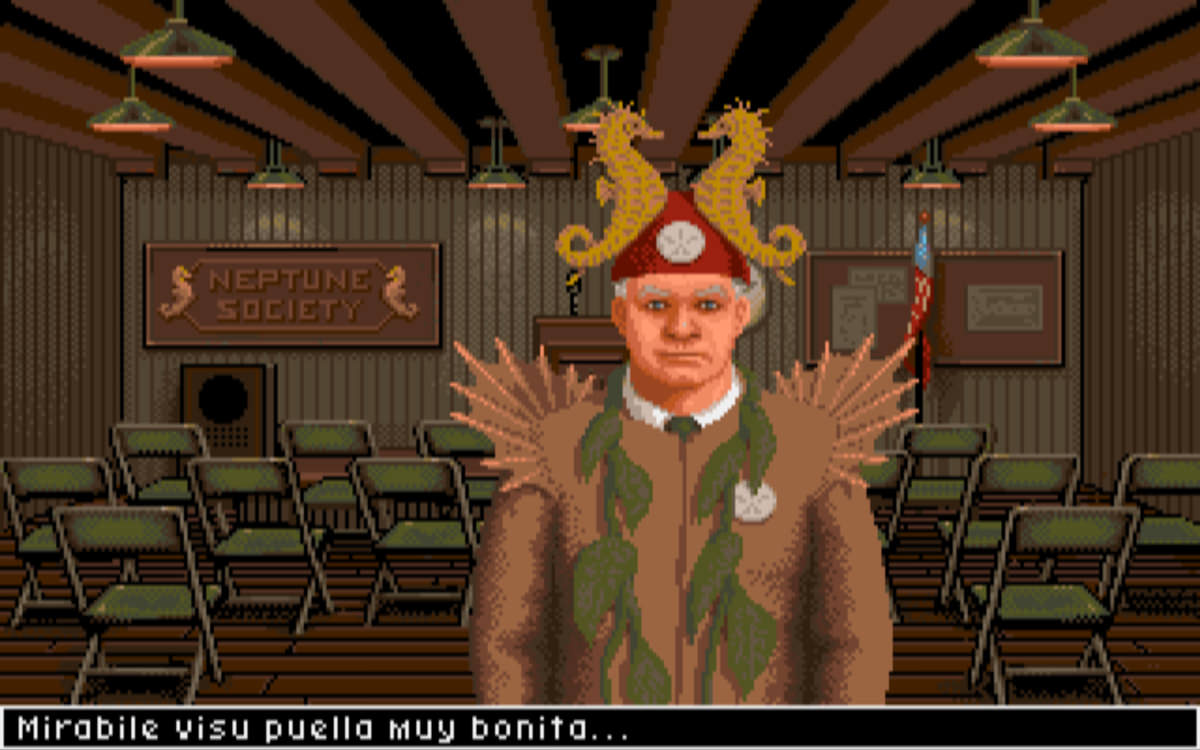
The game’s atmosphere is largely driven by the background music. In addition to the main theme, there are unique themes for different places. For a game that fits on three floppy disks, It Came from the Desert contains a surprisingly varied soundtrack. It sounds somewhat muffled — sometimes very much so — and the speech in the intro is downright unclear, but the weak quality adds a softness that is oddly pleasant. And of course, Amiga music sounds far better than the honking of a DOS PC.
As for graphics, the palette appears to use 16 colours. That is not much compared to today’s millions, but the Amiga represented a major step forward from 8-bit computers. All Amigas can display graphics using 2, 4, 8, 16, 32 or 64 colours — and in a special mode even 4096. The palette was not hardware-fixed, so the artist could choose the colours. Over time, hardware revisions increased the number of on-screen colours and developers learned to exploit these enhancements. The graphics of It Came from the Desert could be described as naive. Although it is pixel graphics, the shapes are blunt. To me, Amiga graphics are characterised by a certain softness and low contrast.
Controls = difficulty
The controls are not great. Except for the action sequences, mouse controls would suit the game well — for the map, dialogue and selection windows. However, the entire game is clearly designed for a joystick. The reason I ended up playing the version included in the Cinemaware Anthology Collection rather than on my A500 Mini is the controls — the anthology version allows not only joystick input but also any gamepad or keyboard. I played with a PlayStation-style controller with highly sensitive sticks, but keyboard controls were fine as well.
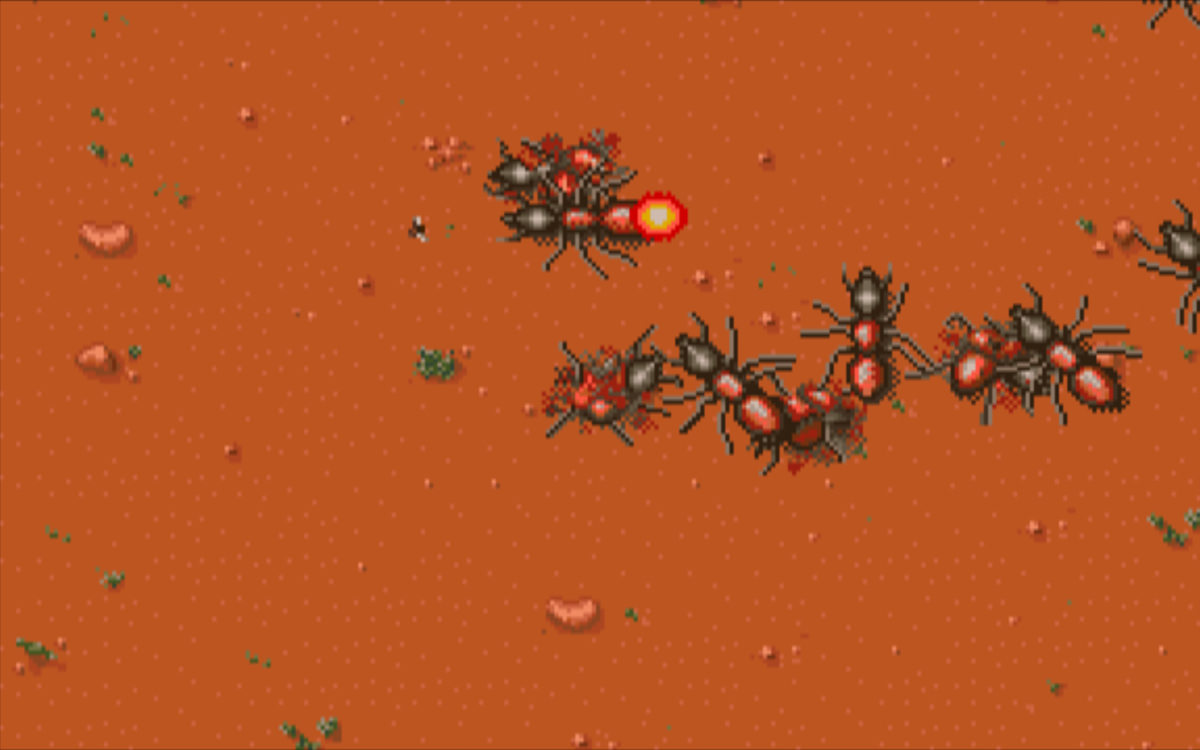
I spent roughly three hours on It Came from the Desert. That does not mean uninterrupted play or a happy ending. With save-scumming I corrected my mistakes and got very far in the endgame attempt, but once the action sequences escalated to the scale of a full war I was defeated. There is only one save slot (The A500 Mini expands this to four). It Came from the Desert is not long — an optimised run takes about an hour — but it will most likely require multiple playthroughs to understand the winning pattern. I would not call It Came from the Desert difficult, though it shows hints of old-school ruthlessness. Mastery of the controls determines much. It is worth reading some tips for the action sequences even if you do not want a full walkthrough: manual, hints.
Verdict
It Came from the Desert is an experience. To a modern player, its clumsiness can be both charming and frustrating. To me it is still something special, and it has its place in the canon of video game history. It gives the impression of depth and multi-layered complexity with a meandering plot. I did not care for the strict time system. The action sequences are crude by modern standards, but after some initial stumbling I even learned to enjoy them. I give my playthrough an overall score of 80 out of 100.
Availability
It Came from the Desert is available for Amiga computers and emulators, The A500 Mini console, MS-DOS and Windows as part of the Cinemaware Anthology Collection. There is also an expansion for It Came from the Desert, Antheads, which returns to Lizard Breath with a different theme and a different role. It is also included in the Cinemaware anthology.