
Roguecraft DX (2026)
In early February 2026, a deluxe version of the Amiga game Roguecraft was released, roughly a year and a half after the original. Roguecraft is a retro-inspired, accessible and smooth dungeon role-playing game focused on fighting monsters and collecting gold. The game’s graphics and soundscape made a strong impression on me — even more so in the DX version than in the original release. I am pleased to have new commercial-quality software to play on my A500 Mini. In this blog post I discuss both versions, as they are largely similar, while the improvements introduced in DX will naturally become clear.
Hero of the Kingdom III (2018)
I continued along the same role-playing adventure path and played the third entry in the Hero of the Kingdom series. The RPG elements have grown notably stronger, while the mechanics have become more structured and grind-oriented. Alongside hunting and gathering, character progression is now heavily emphasised. The story of Hero of the Kingdom III largely unfolds in non-interactive cutscenes. Your character experiences visions of past events even as he operates freely and efficiently within the real-time game world. Natural resources replenish quickly, and there is never a real risk of depletion.
Hero of the Kingdom II (2015)
The 2015 adventure-RPG Hero of the Kingdom II follows faithfully in the footsteps of the original, released a couple of years earlier. I played it soon after finishing the first game, and the pull was just as strong — perhaps even stronger. The world expands onto the sea and beneath the earth, and the visuals take a step forward with more variety in scenery and character portraits. At the same time, what worked before remains intact: relentless resource gathering, hidden-object searching, and a web of side quests woven around the main story. This corner of the fantasy realm is tormented by pirates kidnapping young women from the coasts — including the hero’s little sister. To save her, every stone must be overturned, and in the process one becomes a hero almost by accident — through a romantic twist of fate.
Hero of the Kingdom (2012)
The 2012 title Hero of the Kingdom by a small Slovak studio became a delightful surprise for me. It is charming, accessible, and unexpectedly addictive — a story-driven adventure-RPG with hidden-object elements threaded throughout. True to its name, the player rises from a humble farmer’s son to a hero of the realm, after bandits burn his home and abduct his father. While the main plot focuses on rescuing the father and ultimately the kingdom, there is ample room to hunt, gather, and complete numerous side tasks. The mechanics come together remarkably well, and the classical fantasy setting appealed to the childlike wonder in me.
The Curious Expedition (2016)
Released in September 2016 by a small German studio, The Curious Expedition has held me captive for nearly sixty hours. There is a thin line between enjoyment and compulsion, and the game is built precisely around that tension. It combines irresistible repetition with the thrill of discovery. Anthropology, archaeology, hunting and trade come together under an opportunistic spirit — and a proper explorer does not shy away from risk. Randomised events ensure frequent surprises.
Urban Pirate (2016)

Released in 2016, the retro- and underground-styled role-playing game Urban Pirate lets the player engage in social resistance — breaking taboos, if one chooses to see it that way. You steal and rummage through dumpsters in search of food, spray-paint trains, occupy buildings by your own self-declared principles, and smoke weed. The goal is to survive in an urban environment without any real job. It was entertaining up to a point, but the daily routines soon began to wear thin: stealing no longer felt like anything, and the parties were always the same.
This War of Mine (2014)
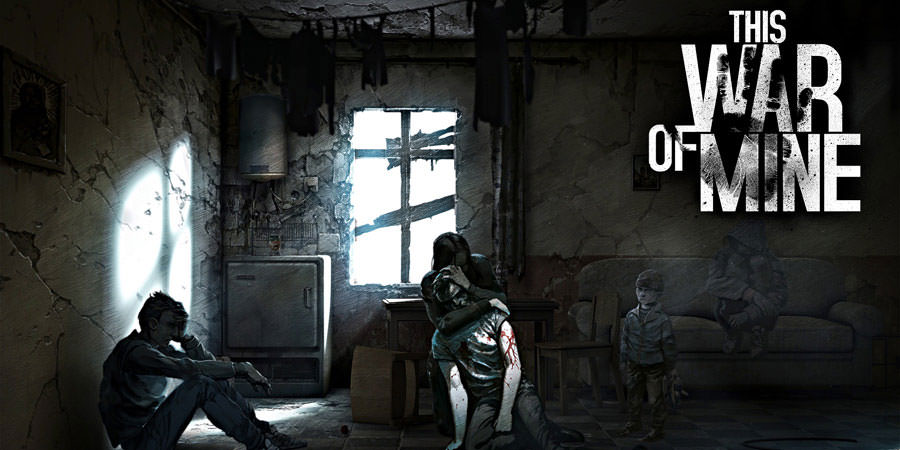
This game hardly needs an introduction or a recommendation from me, but in the name of certain honesty I still want to highlight it here. I’ve spent almost 40 hours with it, twelve of which just recently. Released in 2014, This War of Mine has been praised and awarded generously, and I can only confirm that it is both highly addictive and deeply moving. In the summer of 2016 the expansion The Little Ones arrived. The idea of children in the middle of war already broke my heart in advance, and I almost avoided installing it.
Always Sometimes Monsters (2014)
I made two indie discoveries in this summer’s GOG.com sale. They had never ended up on my radar before — perhaps because of their modest visibility, perhaps because of my own selective gaze. Both have nevertheless gathered a dedicated fanbase over the years, and I have to say that Always Sometimes Monsters from 2014 won me over as well. Beneath its naïvely cute exterior lies surprisingly serious thematic depth.
Shadowrun: Hong Kong (2015)
The third standalone entry in the Shadowrun Returns role-playing series arrived in late August 2015. It continues the legacy of the previous instalments with confidence. The story, setting and characters are all new, and there are new elements in character progression, yet the broader game structure and strategic depth remain recognisable. Shadowrun Hong Kong is a top-tier indie title — if one can still call it that; it is polished, mature and extensive.