
The Curious Expedition (2016)

Released in September 2016 by a small German studio, The Curious Expedition has held me captive for nearly sixty hours. There is a thin line between enjoyment and compulsion, and the game is built precisely around that tension. It combines irresistible repetition with the thrill of discovery. Anthropology, archaeology, hunting and trade come together under an opportunistic spirit — and a proper explorer does not shy away from risk. Randomised events ensure frequent surprises.
Maschinen-Mensch, based in Berlin, consists of Johannes Kristmann and Riad Djemili. Both handle the design, with Kristmann also in charge of visuals and Djemili responsible for programming. Having spent years in mainstream development, they shifted into a more marginal field — with a strong indie result to show for it. The Curious Expedition has gathered multiple nominations and finalist placements.
New historical worlds
The objective is to win a campaign of six expeditions. Victory goes to whoever accumulates the most fame. There are four competing explorers.
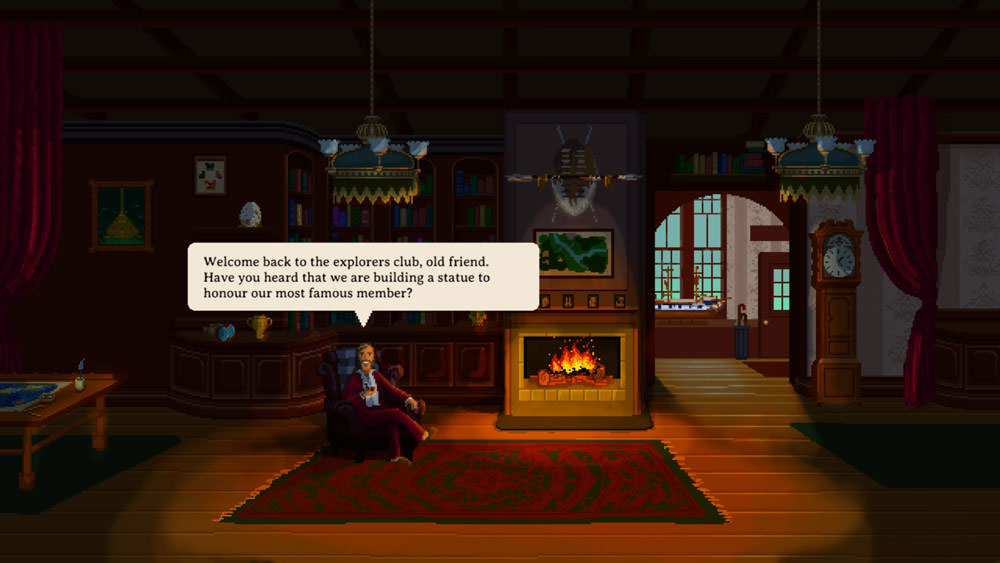
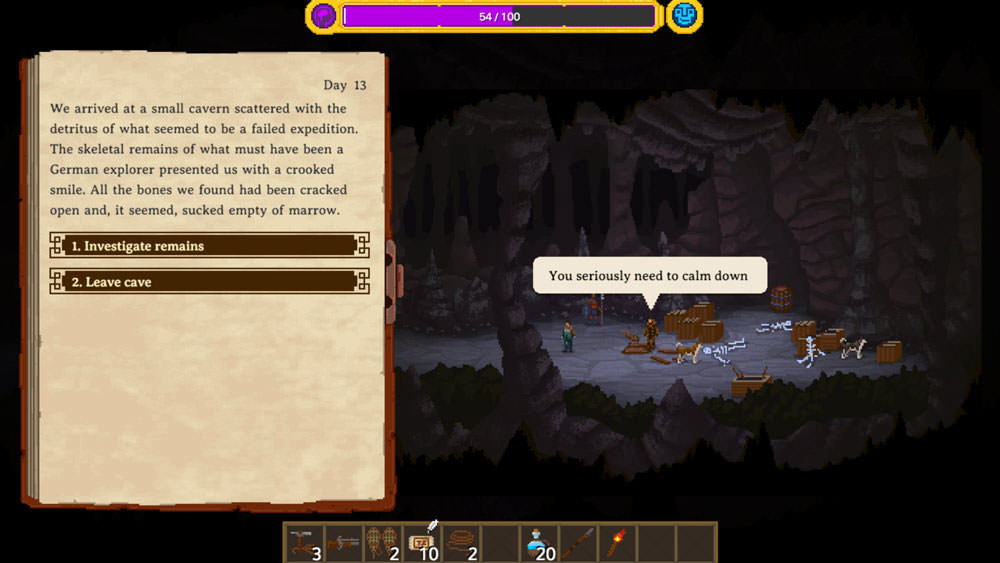
The game draws from the experiences of 19th- and early-20th-century expedition teams. You explore “wild” and previously uncharted regions across the globe. Each map is initially shrouded in fog, revealing villages, traders, missionaries, caves, oases, temples and countless treasures. Loot — such as ivory and artifacts — is limited by pack capacity, the wrath of local spirits and the temper of indigenous tribes. The final goal of each expedition is to locate the Golden Pyramid.
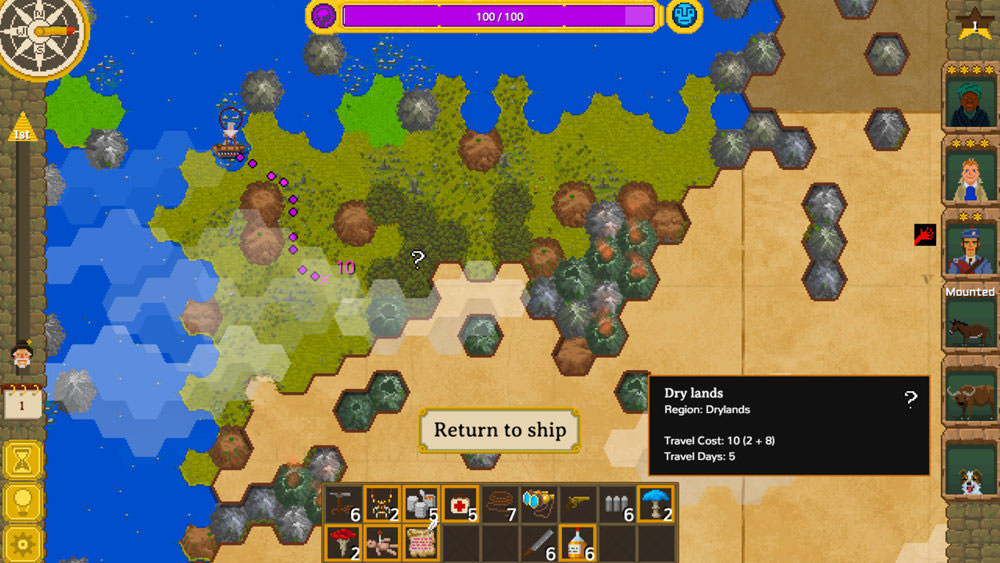
Procedural generation is central to how the game world and scenarios form. Despite some predictable patterns — the game grows harder over time — no two playthroughs are alike. A full successful run comprises six expeditions. After learning the mechanics, I found the first three easy and rarely failed before the fifth. I played on the middle of three difficulty settings. On the sixth expedition, luck felt disproportionately influential and sometimes unfair.
The studio has already announced its next title, The Curious Case, set in the 1920s and built once again upon procedural generation. Based on this experience, I am confident they can make it work.
Historical figures through fiction
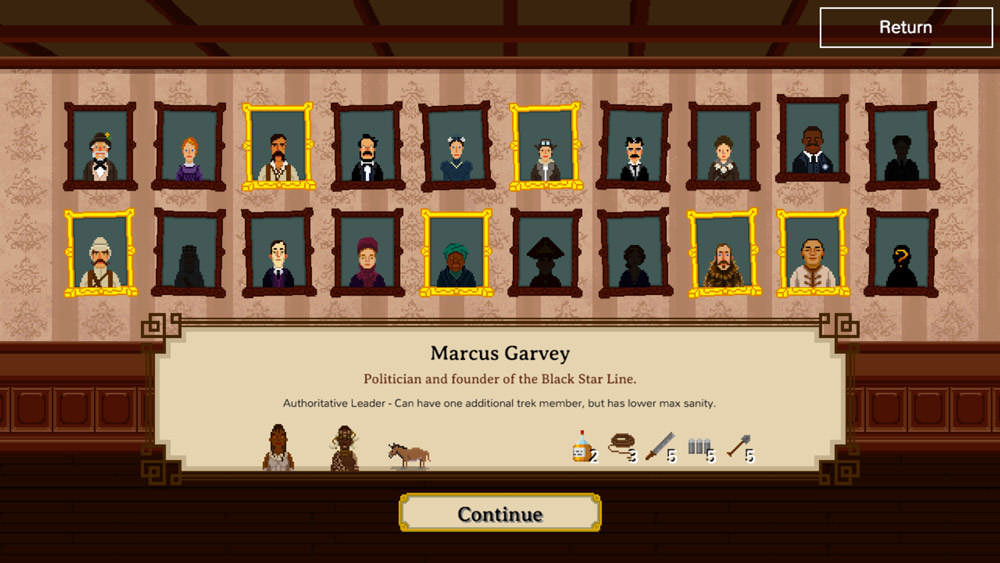
At the start, you choose one explorer from a wide character pool — from Charles Darwin to Roald Amundsen and Amelia Earhart. The selection is wildly anachronistic and profession-blind: Nikola Tesla, for instance, was hardly the outdoors type. Still, each character has mechanically meaningful traits and acquires more after each completed expedition.
An explorer needs a support team. Recruits come with strengths and weaknesses, mirroring the leader’s own. They are stereotypes in the best sense — varied enough to suit different plans.
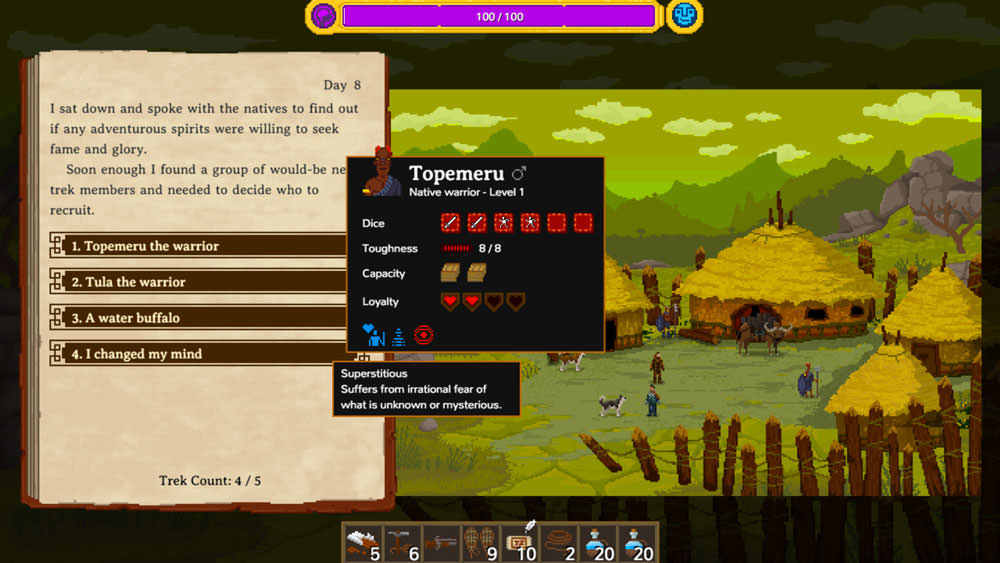
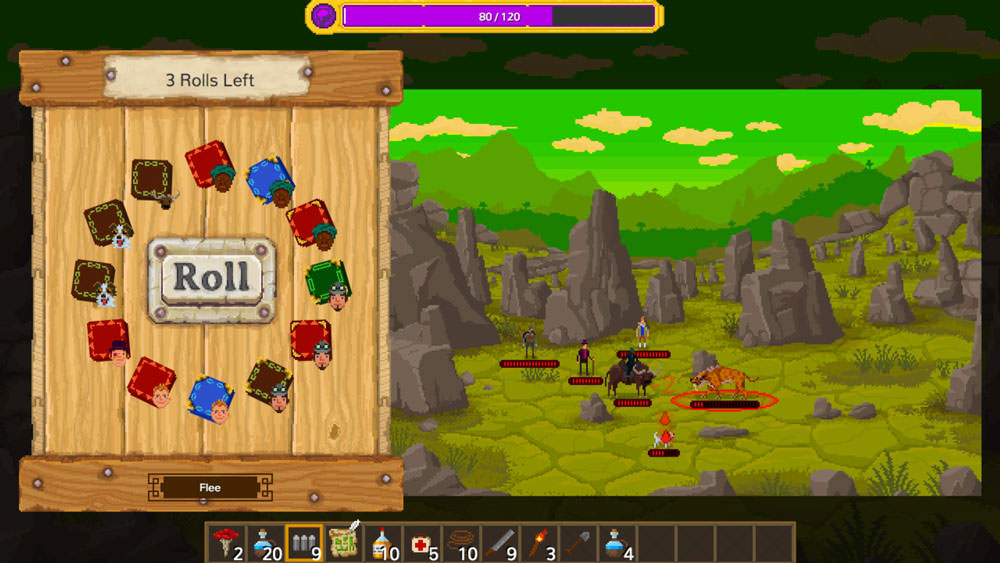
Besides personnel, equipment planning matters. Supplies must match the terrain, and food reserves require constant attention. Combat — whether defensive or deliberate — depends heavily on party strength and inventory. Survival is the core challenge, and setbacks are inevitable.
Verdict
History and fantasy merge cheerfully in The Curious Expedition, sometimes absurdly — talking dinosaurs, for instance. How should one judge a fame-seeking explorer, collector and looter of relics? Here, the 19th-century urge to conquer the world has been reduced to a toy-box diversion — and with that, lost its true meaning.
Whether or not it teaches anything about the past, I played with enthusiasm. There is always something to chase: raising every character to gold-frame status, filling the item gallery, setting a new fame record. One more run is always tempting — and usually short.
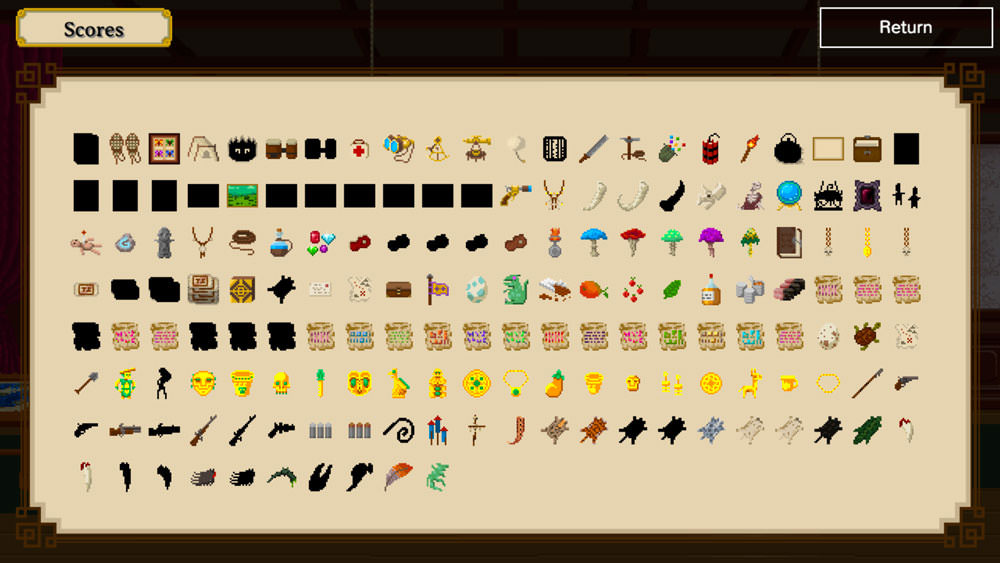
Procedural generation drew me back repeatedly. Strategy grows with experience, and progress fuels the desire to try again. A full session is short enough that it is easy to slip in “just one more.”
I score The Curious Expedition 73 out of 100.
Availability
The Curious Expedition has received multiple updates and community-influenced additions. I played the Arctic Expansion, which introduces the Chinese hero Wong Fei-hung. The game is available for Windows, macOS and Linux — and widely playable in browser form.