
Dark City: Vienna (2019)
I continued with the Dark City hidden-object game series by playing its third instalment, Dark City: Vienna, released in 2019. The Vienna Opera House has gained a ghost of its own, one that leaves threatening messages and its fiery emblem wherever it goes. The ghost clearly seems to have a serious grudge. Our detective is called in to investigate the case, which ultimately leads to the dark secrets of a toxic workplace. The premise is intriguing, but the story has its gaps. In terms of both audiovisual presentation and gameplay, the third entry is very similar to the first two games in the series.
Dark City: Munich (2018)
I played the second instalment of the Dark City series immediately after finishing the first one. The Munich-set sequel was released at the end of 2018 and centres on the hunt for a werewolf during Oktoberfest. The similarities to the first game are obvious. However, the case itself is new and distinct, and it actually takes an unexpected turn when our otherwise realistic detective witnesses something unbelievable. Compared to the more grounded drama of the first game, this pushes the series much further towards fantasy. The storytelling is also more experimental, and the villain is more convincing. In terms of gameplay, the foundations remain the same, the graphics feel cut from the same cloth, and the soundtrack is so similar that I even wondered whether parts of it had been recycled. Nevertheless, the differences were enough to make the sequel well worth playing.
Dark City: London (2017)
I returned to hidden object adventures with the Dark City series, which visits famous cities while drawing on local history and legends. Dark City: London, released in 2017, is the first instalment in the series. It is a promising beginning visually, atmospherically and mechanically, but its detective story painfully leaves some important questions unanswered. The game represents an early form of modern HOPA design (Hidden Object Puzzle Adventure), combining an adventure-game style narrative and inventory-based progression with hidden object scenes and mini-games. Compared to newer entries, it is fairly straightforward and contains less content.
Deja Vu Collector's Edition (2020)
While browsing the Adventure Games category on Big Fish Games, I came across a hidden-object adventure that looked somewhat different from the usual mainstream fare — Deja Vu. First I noticed the retro-realistic visual style, and then the promise of a journey through the remnants of the former Soviet Union. On Steam, the game’s description is downright confrontational: the mainstream hidden-object scene is dragged through the mud while promising a “different” experience. In practice, the gameplay does not deviate from the usual formula — the familiar hidden-object and puzzle sequences are embedded within an adventure-style narrative and inventory tasks. Yet the setting carves out its own thematic space: places frozen somewhere in the 1980s, unfashionable people, and systemic corruption. I couldn’t help thinking of Adam Wolfe, another atypical hidden-object title I have reviewed earlier on Samooja. Deja Vu does not reach the same level, but it remains a curious title worth a look.
The Forest Quartet (2022)
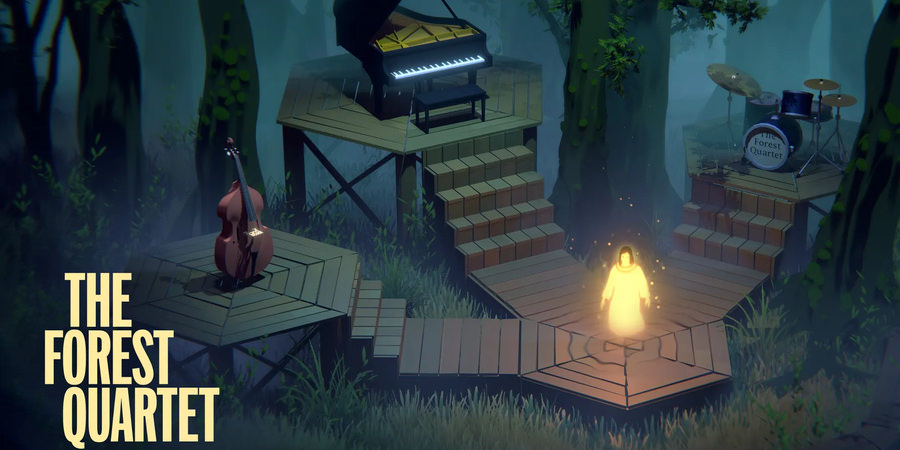
In the spirit of All Saints’ Day, I played the Danish indie title The Forest Quartet. The player controls the ghost of Nina, a deceased singer and saxophonist. After her death, her former bandmates struggle with mental health issues and a lack of creative drive. Nina must bring strength, light, and cooling to their lives so the memorial concert can take place. She appears as an ethereal human figure who can also transform into a swarm of butterflies. The Forest Quartet received the Independent Games Festival award for Excellence in Audio in 2023. It is a short and seemingly modest game, yet one that has been appreciated. I found it had potential and hope that its creator, Mads Vadsholt, continues creating puzzle-adventure games in the future.
Sam & Max Hit the Road (1993)
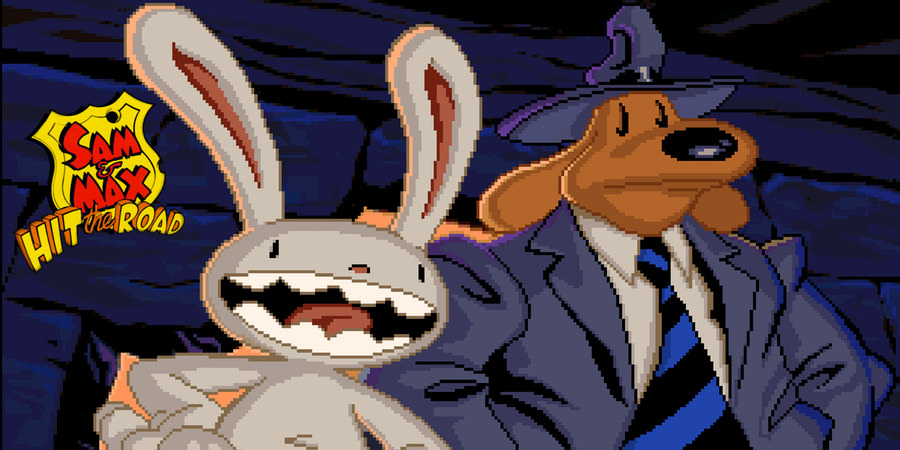
Following Leisure Suit Larry, I was reminded of another classic — the adventure game Sam & Max Hit the Road, based on Steve Purcell’s comic. Released in 1993, it belongs to the golden era of LucasArts, standing alongside The Secret of Monkey Island and Indiana Jones and the Fate of Atlantis. The anthropomorphic dog and rabbit duo, Sam and Max, work as freelance police, solving bizarre cases. The game overflows with witty dialogue, eccentric characters and absurd twists. Like Leisure Suit Larry, it requires a solid grasp of American pop culture for all its jokes to land. It also references earlier LucasArts titles. Even if not every pun hits home, the humour still works — Max’s inappropriate remarks are easy enough to grasp, and the puzzles are wildly imaginative. The game offers gorgeous pixel art, superb voice acting and animation that clearly received great care.
Enclosure 3-D (2022)
Following in the wake of Leisure Suit Larry, I was reminded of the 2004 graphical text adventure Enclosure, which uses the same Sierra AGI engine as the original Larry 1. In 2022, Enclosure received an update where the pixels were turned into voxels — resulting in a kind of retro 3D. The change isn’t dramatic but clearly noticeable. The graphics seem to lift off the screen, less flat than before; to my eyes, the characters now look more like LEGO figures than pixel sprites. Enclosure is a lovingly made fan project, available for free. What originally drew me to it was the premise: a pair of fraudulent mediums invited to a haunted Arctic station.
Leisure Suit Larry in the Land of the Lounge Lizards (1987)
Sierra On-Line's legendary Leisure Suit Larry in the Land of the Lounge Lizards is one of the first graphic adventure games where you can move your character in real time while other commands are still written into the text parser. The game is also interesting because of its remakes. The 1991 VGA version raises the graphics and sound from archaic to ’90s level, and the 2013 version brings them to modern HD level. I played all three versions back-to-back and intended to explore the game’s background and versions on Samooja, even though practically everything has likely been said about it and its reputation is great.
The Procession to Calvary (2020)
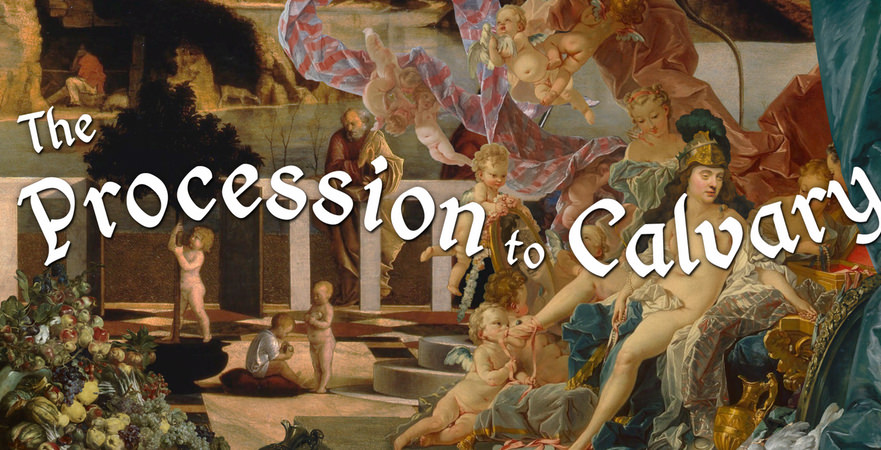
The 2020 point-and-click adventure The Procession to Calvary follows in the footsteps of Joe Richardson’s previous game, Four Last Things. It takes place in the same, or at least a similar, world collaged and composed from Renaissance paintings. However, both the protagonist and the driving force have changed. This time, the player controls a female warrior who uses a religious war as an excuse for her own bloodlust, while Christianity is subjected to cruel, carnivalesque satire. The Procession to Calvary is a journey to the dark side of Christianity and its obscure outskirts.
Adam Wolfe Complete Edition (2016)
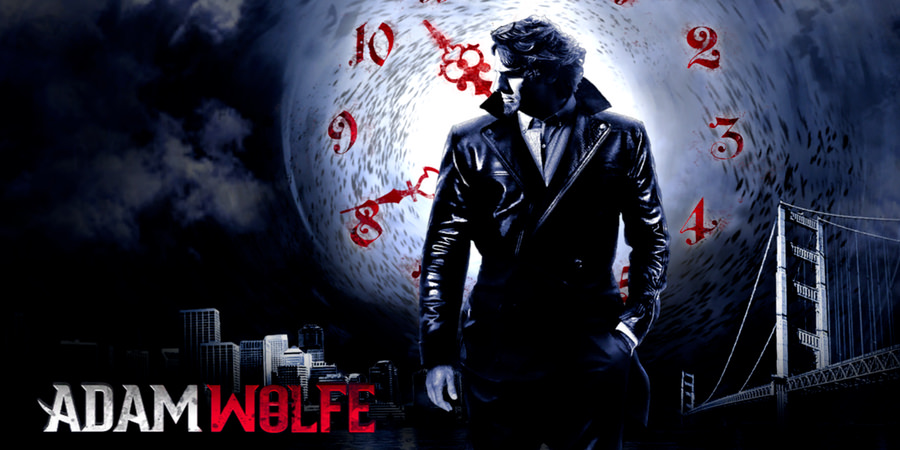
The 2016 hidden-object adventure Adam Wolfe separates itself from the mainstream of the genre in a convincing way. The title character, Adam Wolfe, is a private detective clad in a black leather jacket, specialising in paranormal cases. His attitude, however, is grounded and level-headed — not exactly sceptical, as he considers demons real enough to shoot. Adam is a striking, conflicted character, and his four-episode story is fairly complex — and far from happy. The game succeeds in welding hidden-object tasks into the storyline exceptionally well. It is both radical and mature.