
Adam Wolfe Complete Edition (2016)
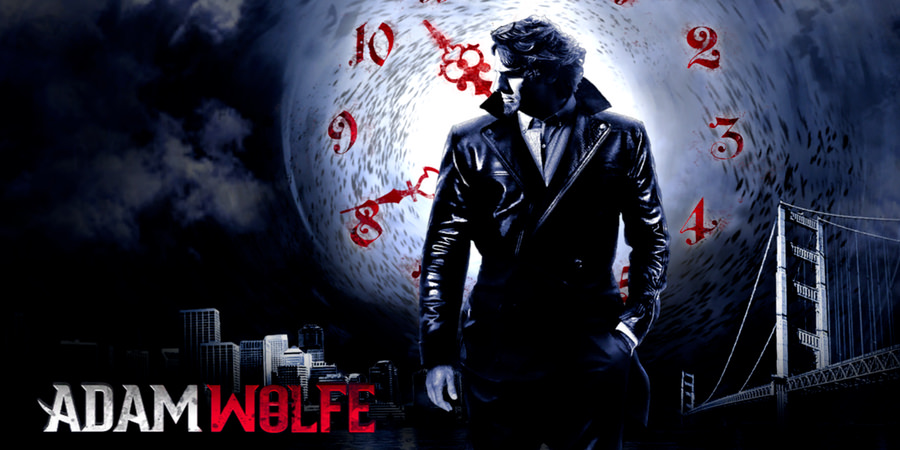
The 2016 hidden-object adventure Adam Wolfe separates itself from the mainstream of the genre in a convincing way. The title character, Adam Wolfe, is a private detective clad in a black leather jacket, specialising in paranormal cases. His attitude, however, is grounded and level-headed — not exactly sceptical, as he considers demons real enough to shoot. Adam is a striking, conflicted character, and his four-episode story is fairly complex — and far from happy. The game succeeds in welding hidden-object tasks into the storyline exceptionally well. It is both radical and mature.
Adam Wolfe was developed by the Serbian studio Mad Head Games. Since 2011 they have produced a large catalogue of hidden-object games, later shifting to 3D action titles. I don’t care for the latter, so I see the transition in a somewhat negative light. The studio considers the change so significant that all pre-2020 games have been pushed to the site’s legacy section, kept separate from their current output. On Steam’s discussion forum, players have been requesting an Adam Wolfe sequel and the developers have even responded, but no continuation has appeared — and most likely never will. I would say that’s a pity.
Struggling with fate and death
Adam Wolfe takes place in an alternate-reality San Francisco in the 2000s. Adam is a former police officer turned private investigator in his early thirties. He specialises in crimes and mysteries whose origins lie beyond ordinary logic — the inexplicable. He approaches magic and poltergeist phenomena with both astonishment and adaptation, treating them as if they were part of reality. Initial shock soon gives way to fearless action.
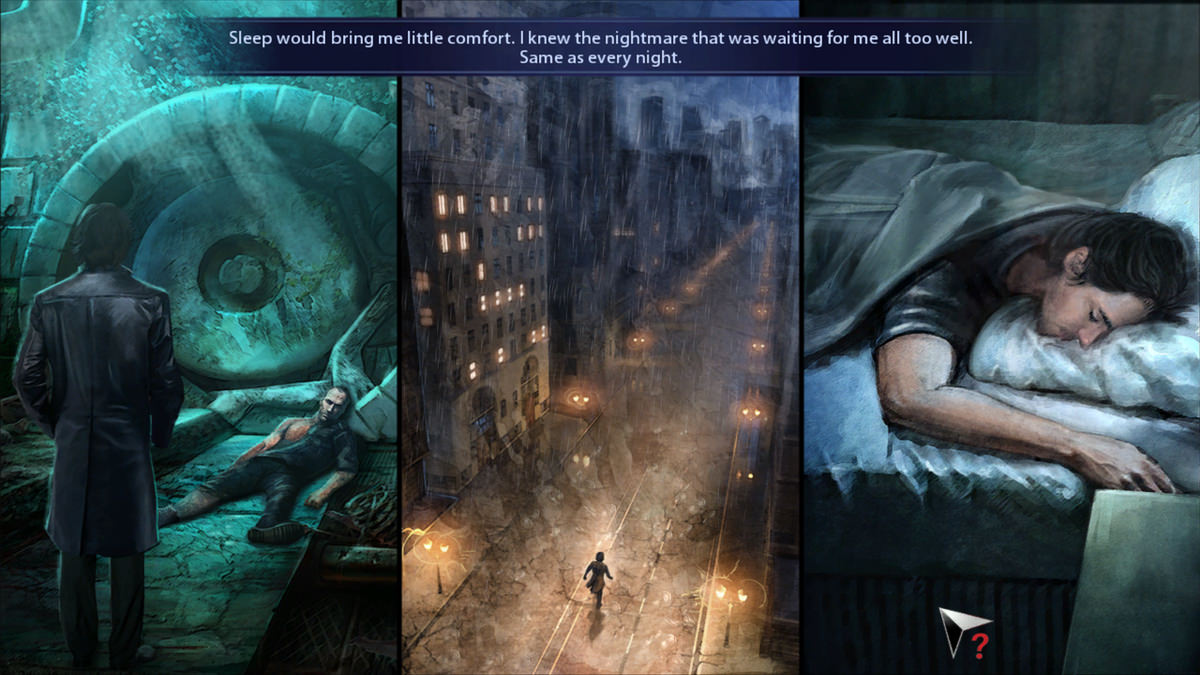
Adam is driven by the disappearance of his younger sister Allie two years earlier. He always dreams the same dream about her, and is convinced that the cases he encounters lead him closer to her. And indeed they do, as seemingly separate incidents are mysteriously linked: solving one gives a clue to the next. Adam’s life feels guided, even though he stubbornly fights against fate. While playing I took the story seriously and never questioned Adam’s sanity, yet in hindsight I can’t help but smile — perhaps everything was simply an elaborate hallucination. Either way, the journey was engaging.
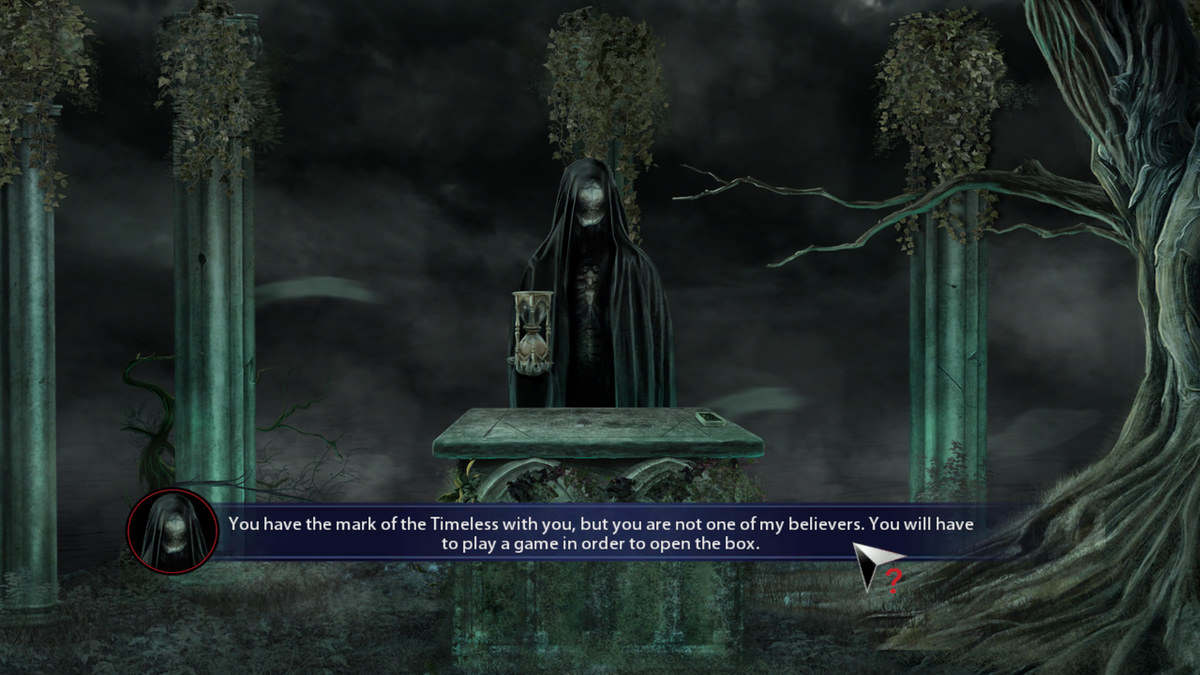
Adam was, in his own rough way, a character I could identify with. He is brave and open-minded but understandably mistrustful and clearly desperate about his sister. His descent into the world of demons and the trail of an ancient secret society is hallucinatory yet internally believable. Humanity’s dream of eternal life takes a caricatured form in the “timeless ones,” a group torn apart — unleashing hell in the process. Adam is too weak to defeat them, but he tries.
Adam is a lone warrior, though he does have two reliable friends: a former colleague and a bar owner. Other characters are suspicious, hostile, or simply bystanders whom Adam manipulates or exploits when necessary. His sister loves him and he loves her — but love proves destructive.
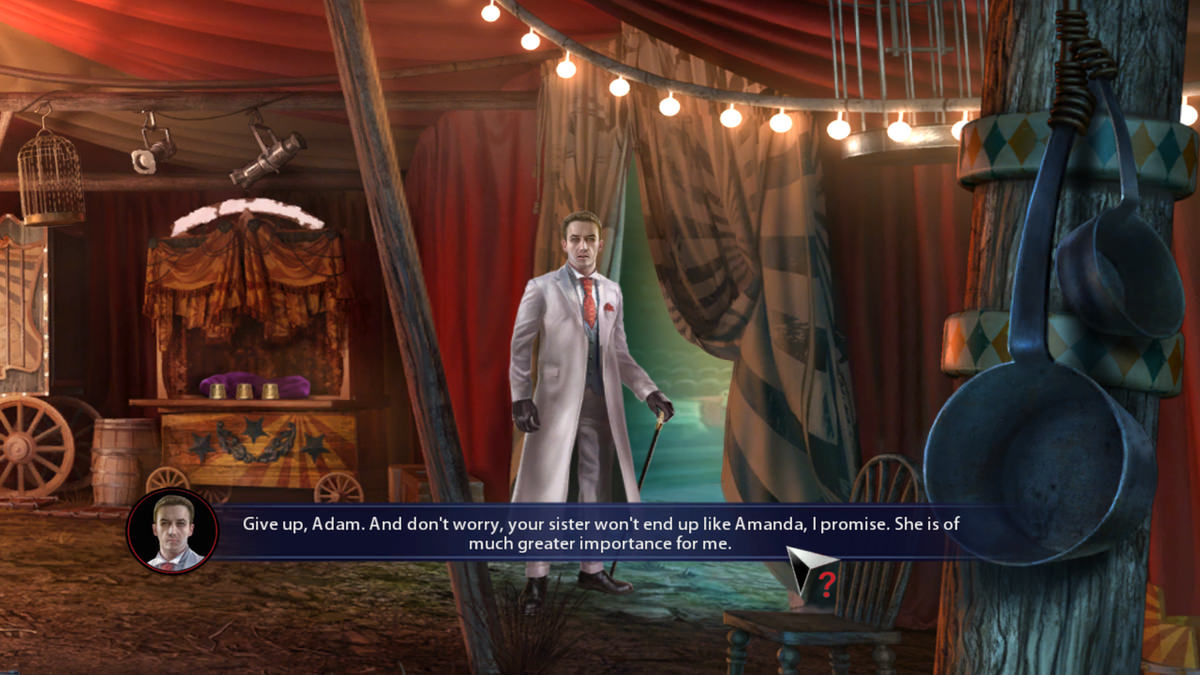
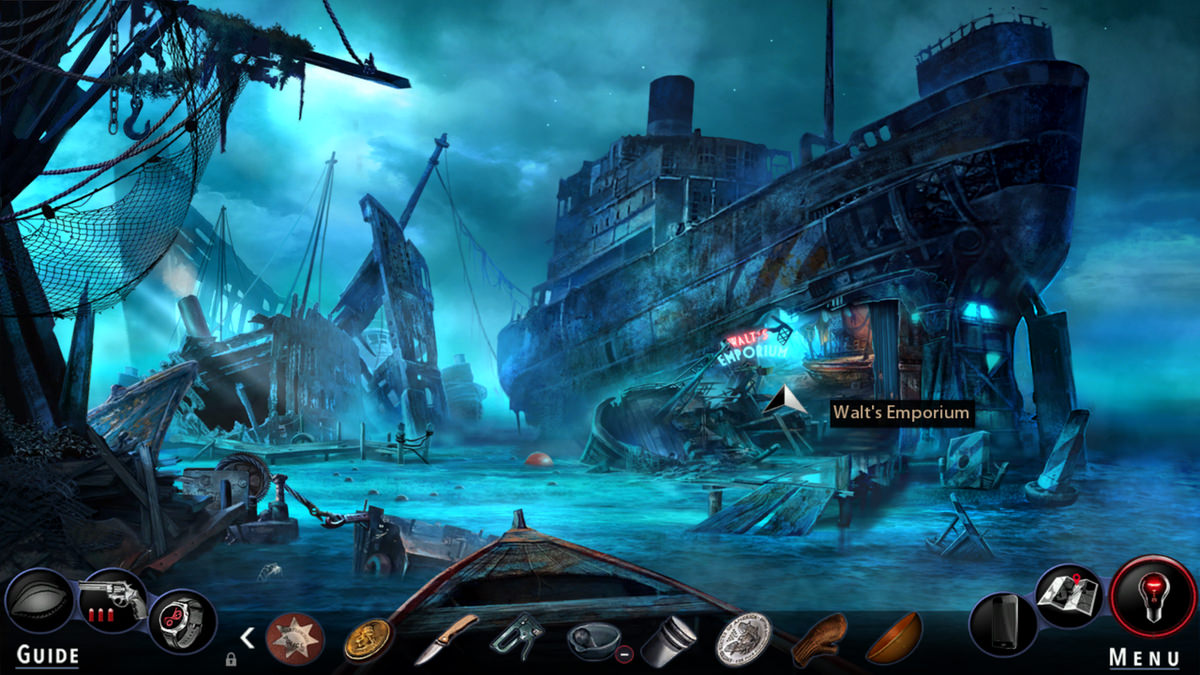
The game features recognisable locations such as the Golden Gate Bridge, Coit Tower, and the Mojave Desert. Adam travels on a motorcycle, though most gameplay takes place indoors or in otherwise enclosed spaces.
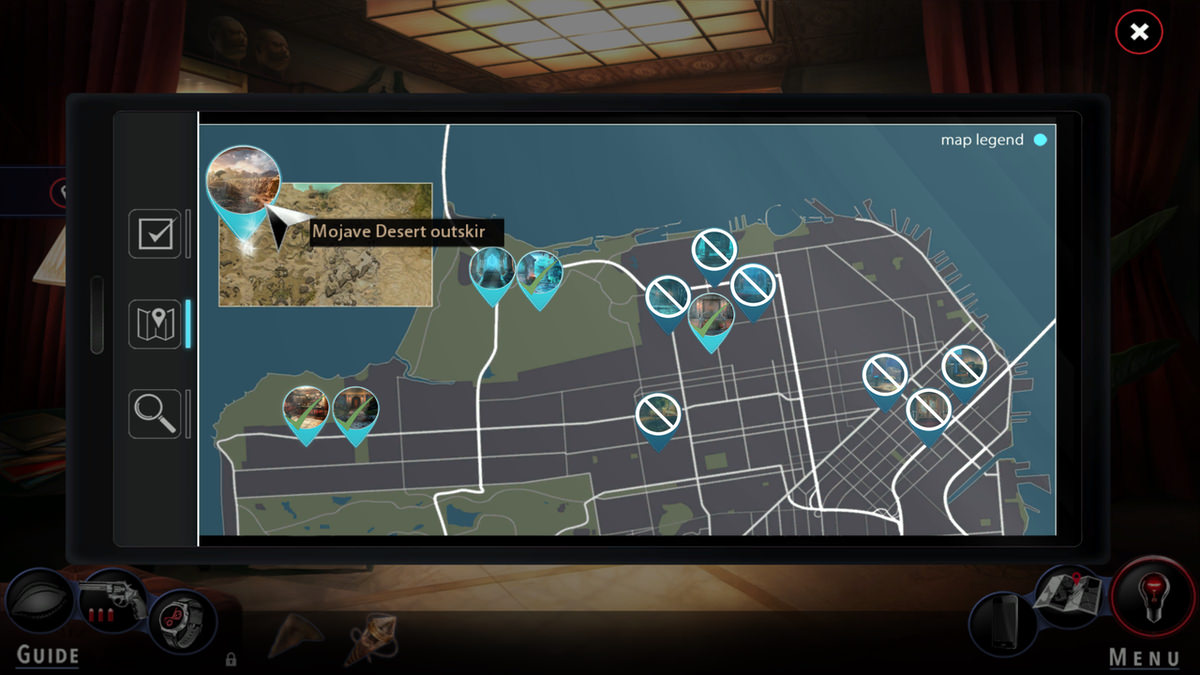
Tasks serving the story
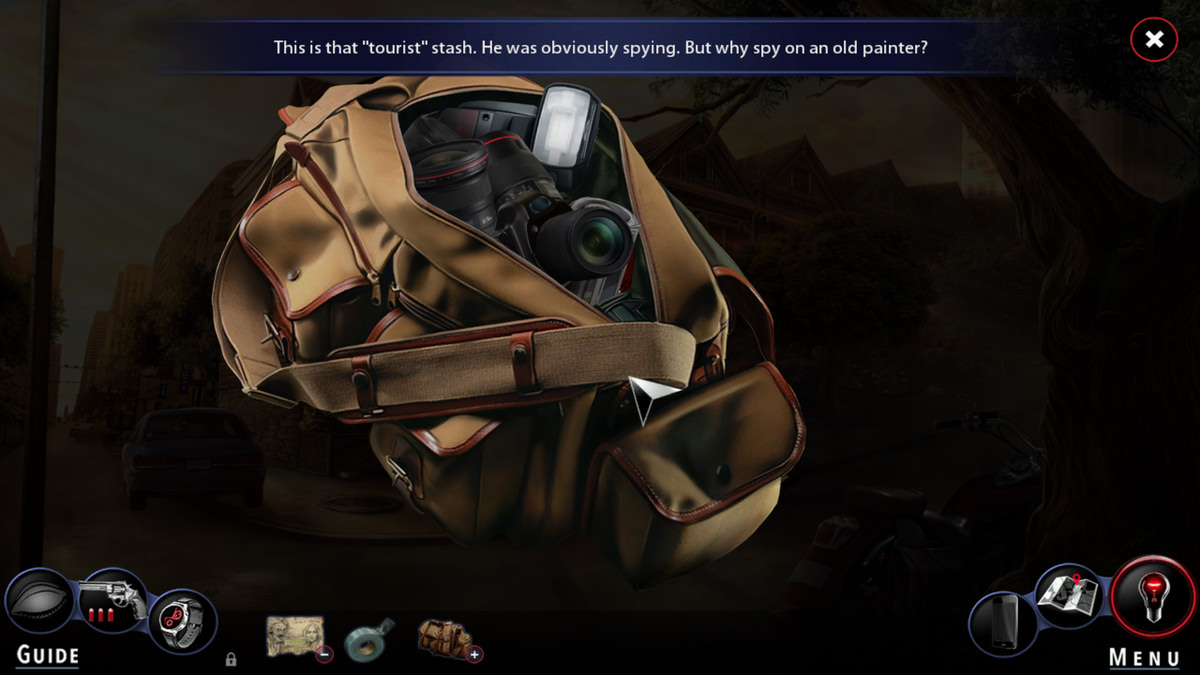
Adam Wolfe is a highly narrative-driven hidden-object game. It tells its story through an adventure-style inventory, various hidden-object tasks, and puzzles. The voice-over is first-person. It is Adam’s voice — serious and laconic, never melodramatic. In atmosphere, world, and narrative structure, I would describe Adam Wolfe as noir.
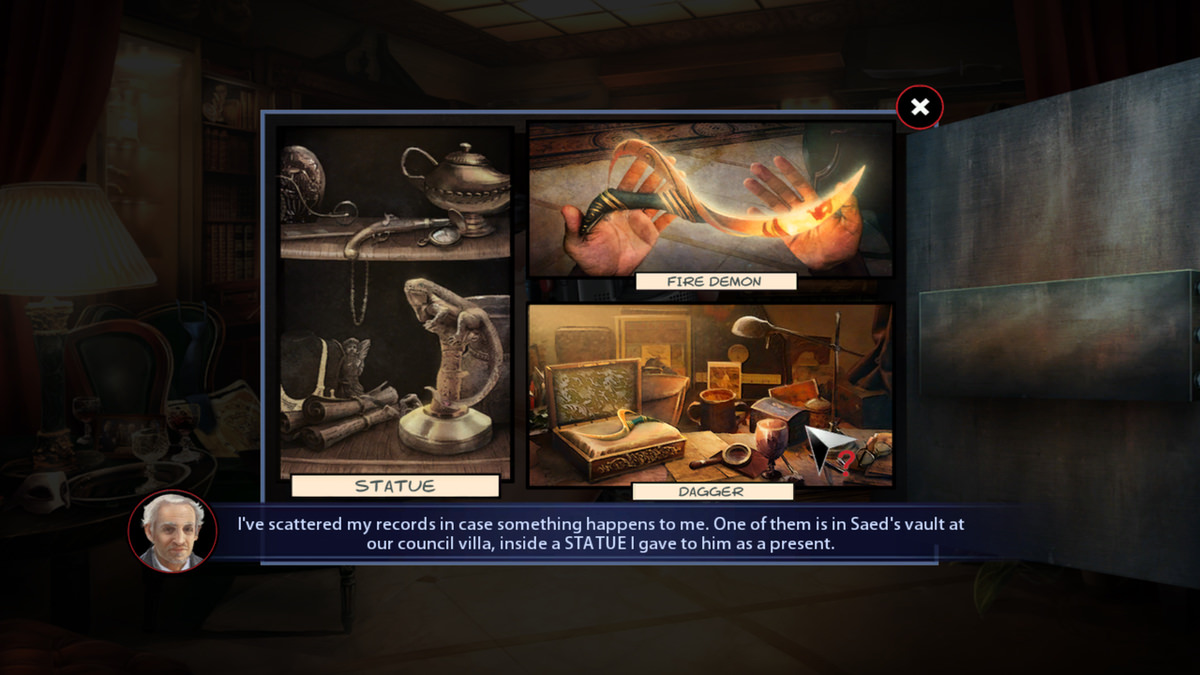
The primary viewpoint is first-person. Inventory actions happen from this perspective. The player never moves a 3D avatar around — instead, the graphics consist mostly of static backgrounds. Comic-style interludes occasionally break the perspective and may contain hidden-object or recognition tasks. These interludes are important for advancing the story. Other viewpoints and task types appear as well, giving the narrative a dynamic feel.
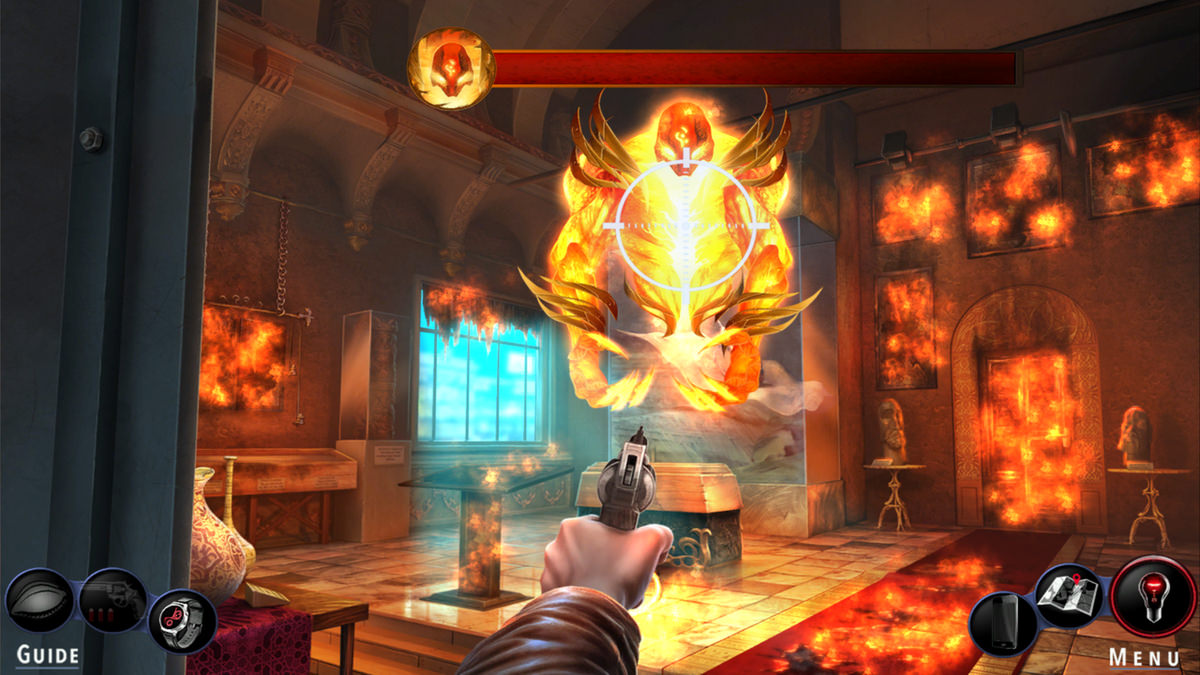
Right at the beginning the player encounters the action side of the game when Adam chases an arsonist. Adam has four main tools, one of which is a six-shot revolver. The player draws and aims the gun, though skill has no real effect. Adam also ends up in fistfights and other tight situations, but they are never stressful. Adam cannot die and the game cannot truly be failed.
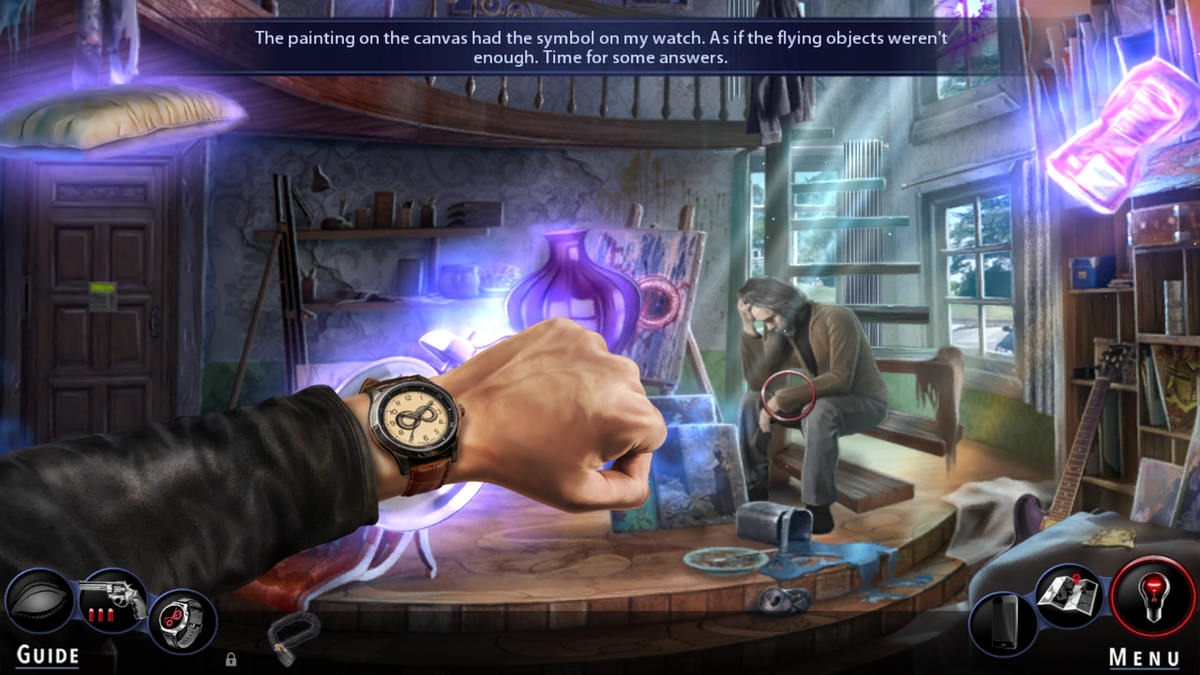
The other tools are intense focus, a time-altering wristwatch, and a smartphone. Intense focus represents Adam’s crime-scene analysis, a task type in which the player identifies anomalies or changes. The wristwatch shows past events when the hands are moved to the correct time, helping Adam reconstruct crimes. The smartphone contains notes, objectives, and the map — which enables fast travel. It also allows calls to Adam’s former police colleague Marv, whose help is invaluable.
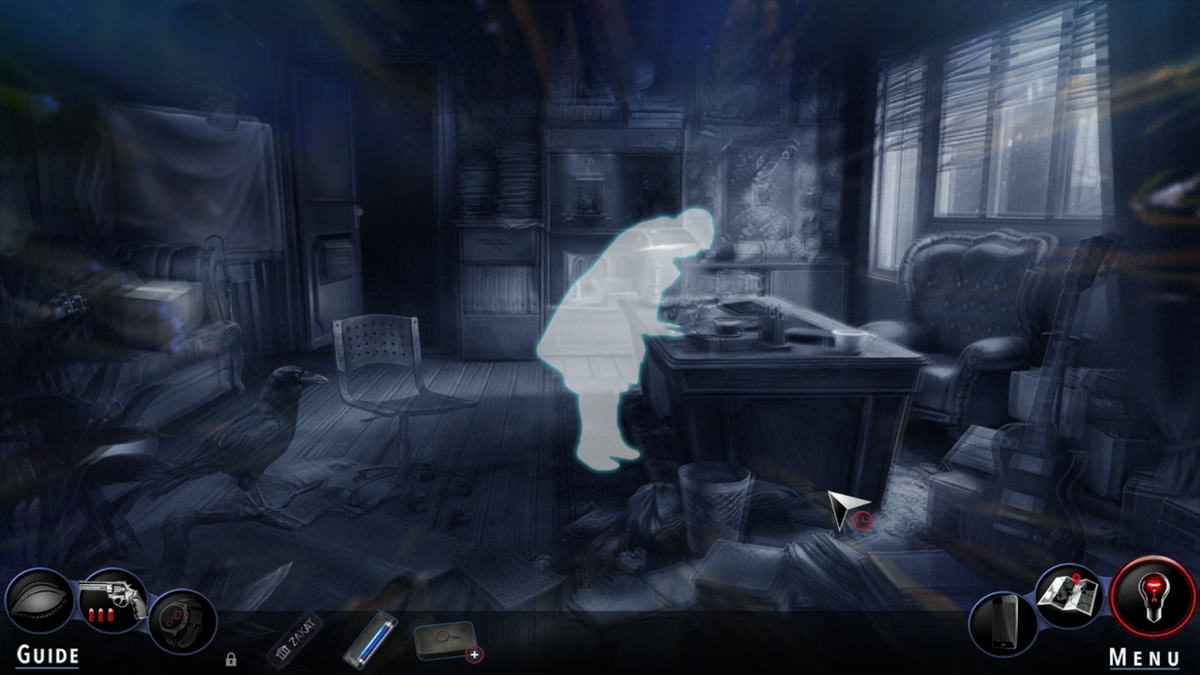
Easy — yet varied and balanced
Adam Wolfe has three difficulty levels: easy, normal, and hard. Additionally, individual features can be toggled on or off for custom difficulty. I played on easy, but I doubt hard mode is truly difficult. The appeal of Adam Wolfe does not lie in challenge — it lies in story and style. I also appreciate the variety of task types and how they mesh with the narrative. At times it felt more like reading an interactive story than solving puzzles.
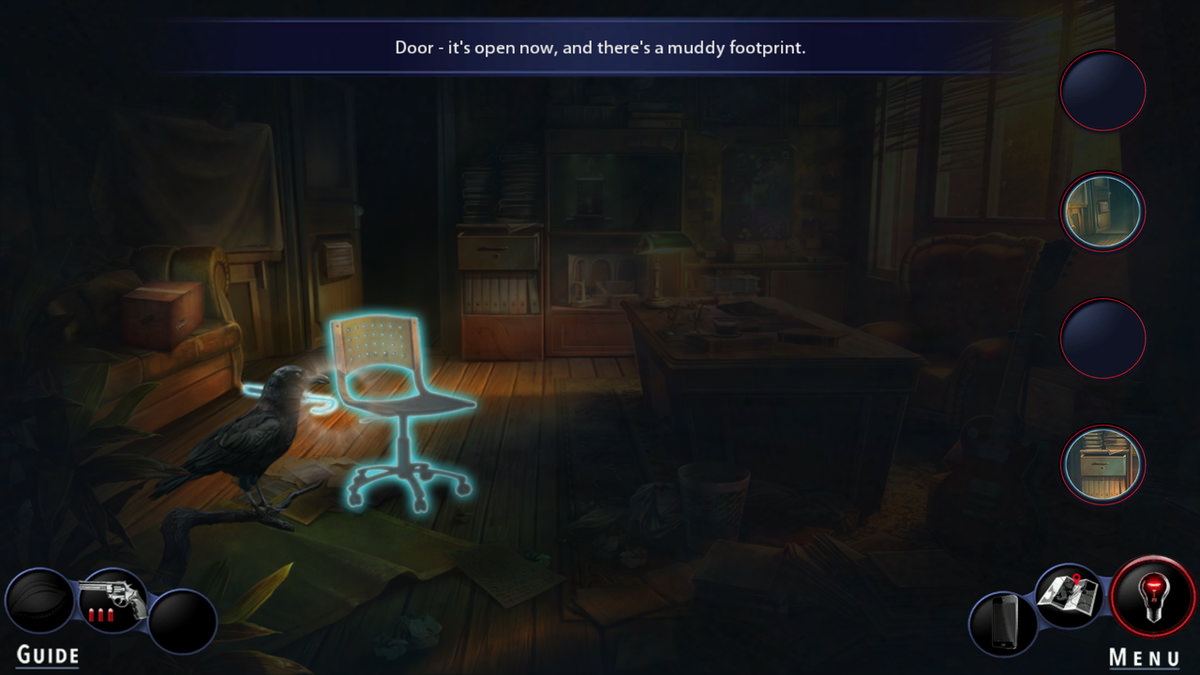
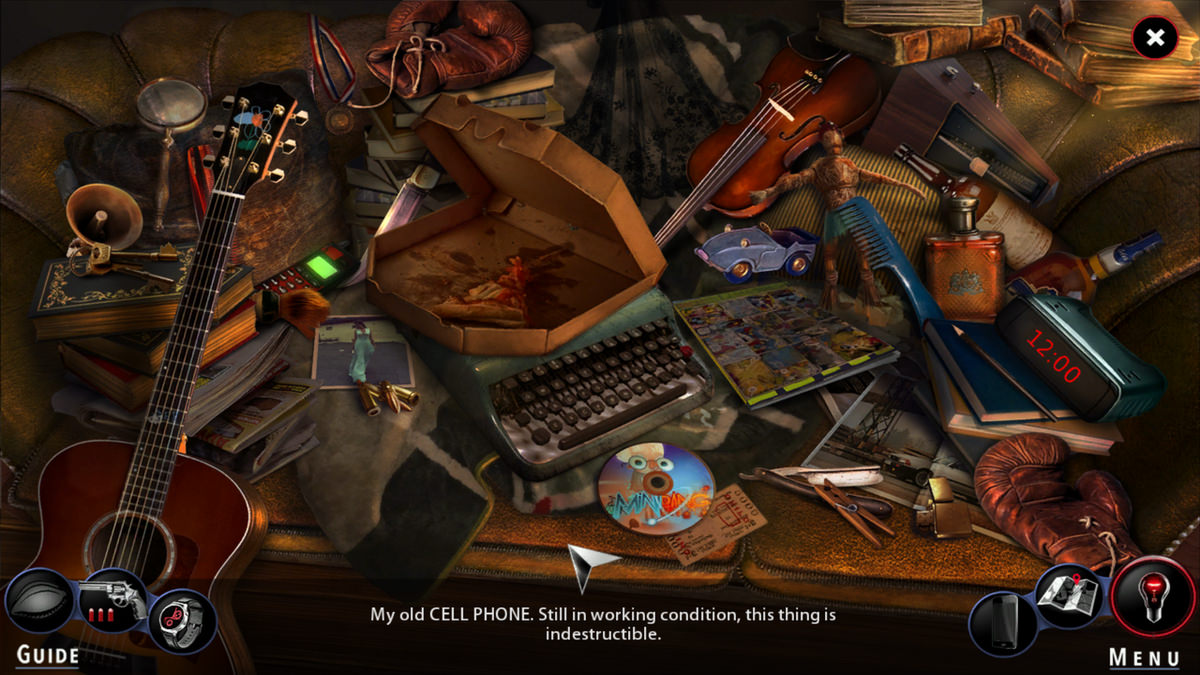
The forms of hidden-object tasks vary significantly. There are only a few traditional word-list scenes. More often, the player searches for objects mentioned verbally by Adam or others. Silhouette-based searching also appears — a good application for crime-scene reconstruction.
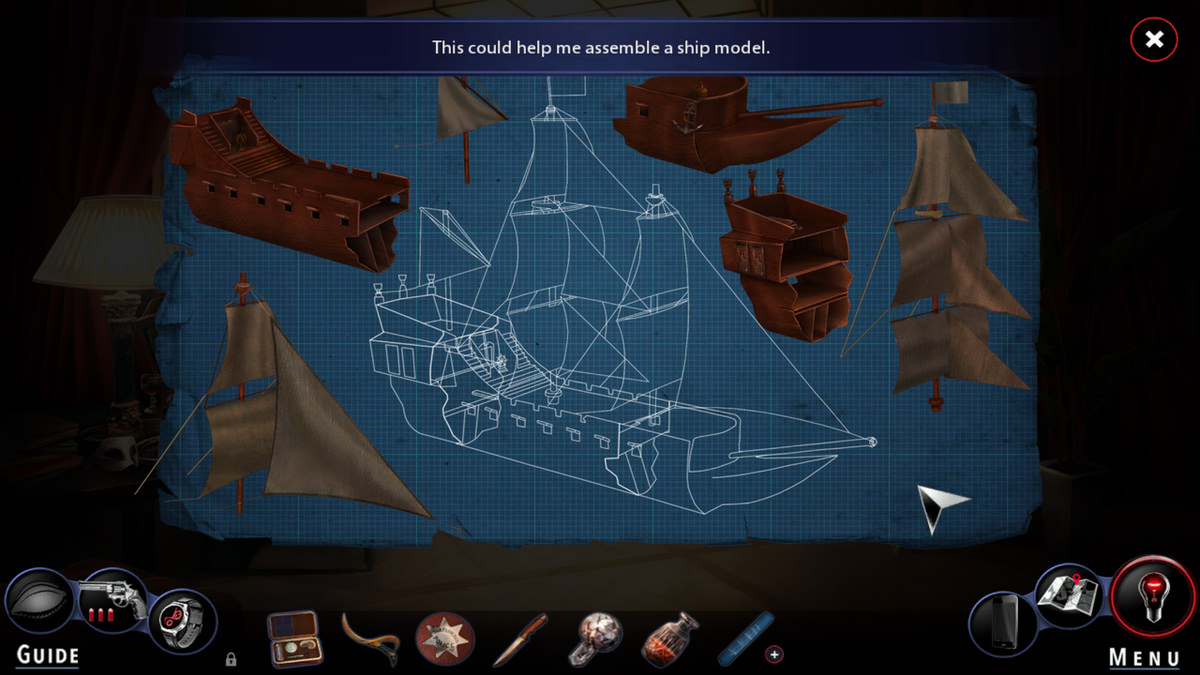
Puzzle-like minigames are less justified narratively and follow familiar hidden-object conventions: assembling shapes, pattern recognition, lock mechanisms, and so on. Still, they are integrated stylishly into the whole. These are never difficult, and on easy difficulty they can be skipped — though I never needed to.
Inventory use is practical and clear. Nothing mind-blowing, but nothing obstructive either. Overall, I am very favourable towards Adam Wolfe as a cohesive experience. Voice acting, music, sound effects, and graphics are all solid — not remarkable individually but essential to the whole.
My full playthrough took just over six hours.
Verdict
Adam Wolfe pulled me into a spiral of alternative reality — deeper and deeper. It has atmosphere and style; the story is serious though unbelievable, and it feels like it communicates more than hidden-object games usually do. Task types are varied and they serve the narrative well. Everything was smooth and effortless. Rather than playing a game, I felt as if I were reading an interactive story. Adam Wolfe has that certain something. My overall score for the experience is 73 out of 100.
Availability
Adam Wolfe is available for Windows, macOS, Android, and iOS. In some stores it is not sold in full but split into two two-episode parts, as on Big Fish Games. The game consists of four episodes in total, and the first episode is also available separately on platforms such as Steam. I own the Complete Edition (episodes 1–4) via IndieGala.