
The Forest Quartet (2022)
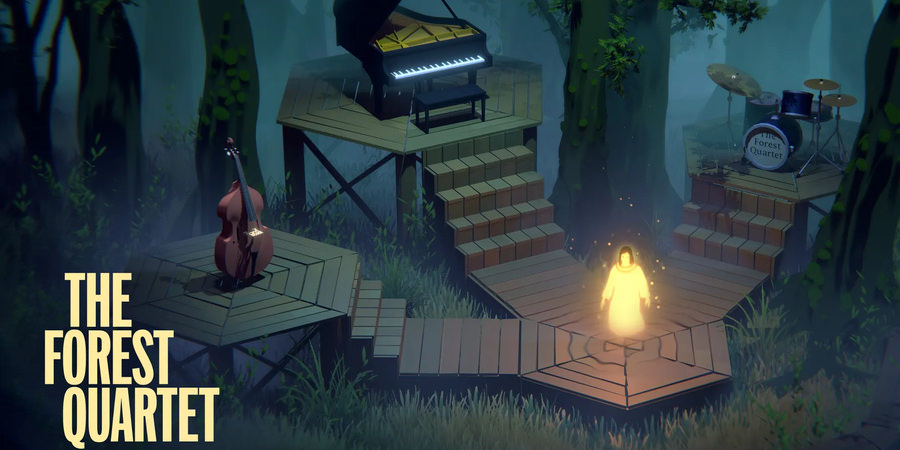
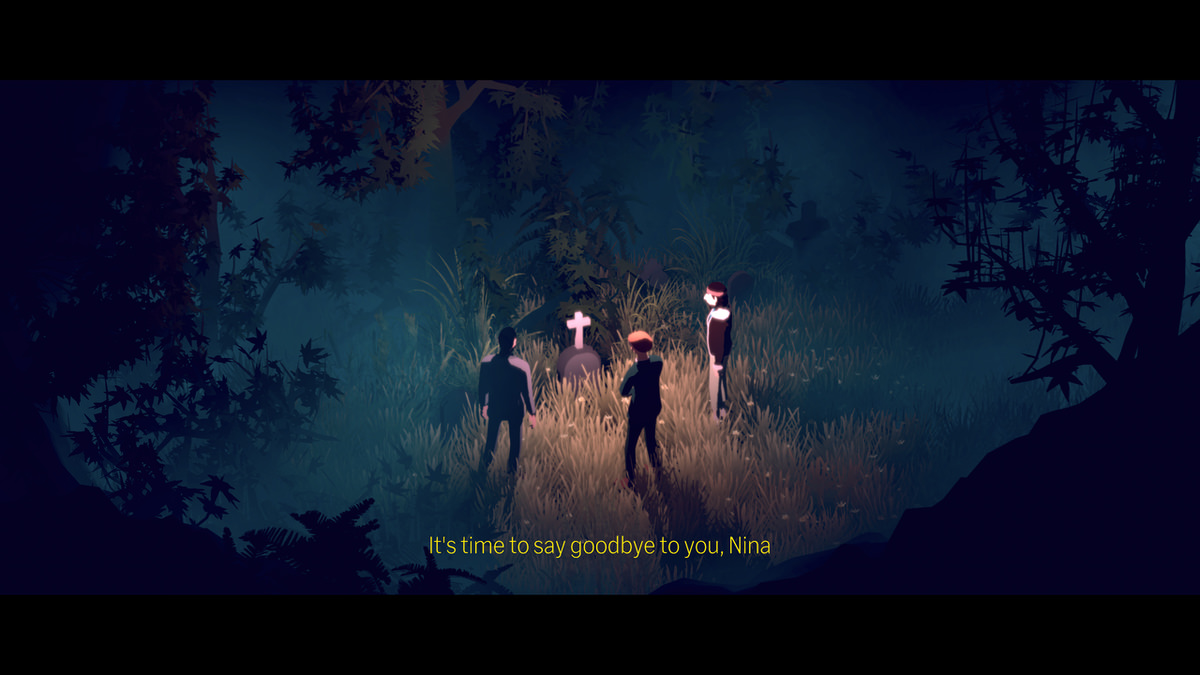
In the spirit of All Saints’ Day, I played the Danish indie title The Forest Quartet. The player controls the ghost of Nina, a deceased singer and saxophonist. After her death, her former bandmates struggle with mental health issues and a lack of creative drive. Nina must bring strength, light, and cooling to their lives so the memorial concert can take place. She appears as an ethereal human figure who can also transform into a swarm of butterflies. The Forest Quartet received the Independent Games Festival award for Excellence in Audio in 2023. It is a short and seemingly modest game, yet one that has been appreciated. I found it had potential and hope that its creator, Mads Vadsholt, continues creating puzzle-adventure games in the future.
The game’s developer, Mads Vadsholt, studied graphics and animation and began working on The Forest Quartet in 2016. He has described the project as deeply personal, reflecting his background as the child of a musical family and the loss of his mother a few years earlier. Supported by grants, Vadsholt was able to hire collaborators. His sister and father also contributed: his sister voices the main character, and his father, a jazz pianist, composed the game’s soundtrack.
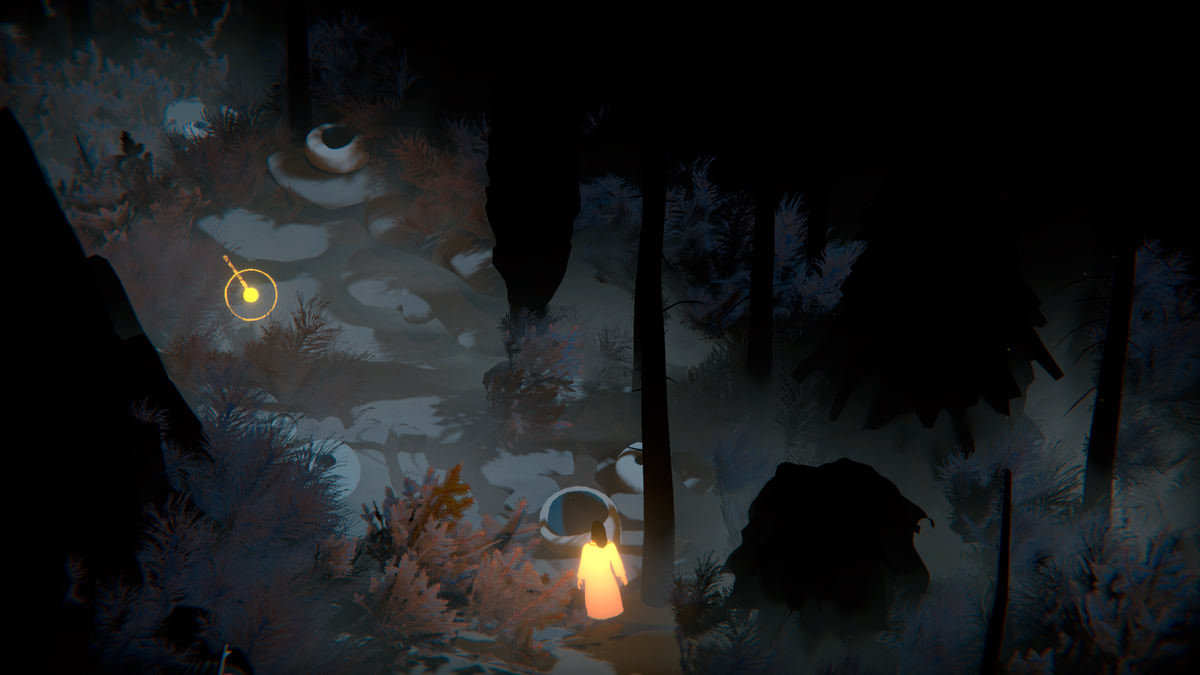
In a dark and stormy forest
At the start of the game, Nina’s spirit appears in the middle of a dark forest. The narration, in Danish, sets the background. Later, the voice-over includes interviews, conversations, and exchanges between the musicians in English. In the centre of the forest stands a three-part stage with instruments already in place — piano, double bass, and drums — but the players themselves are missing. Each instrument serves as a gateway to the life of its musician, and Nina must visit them all.
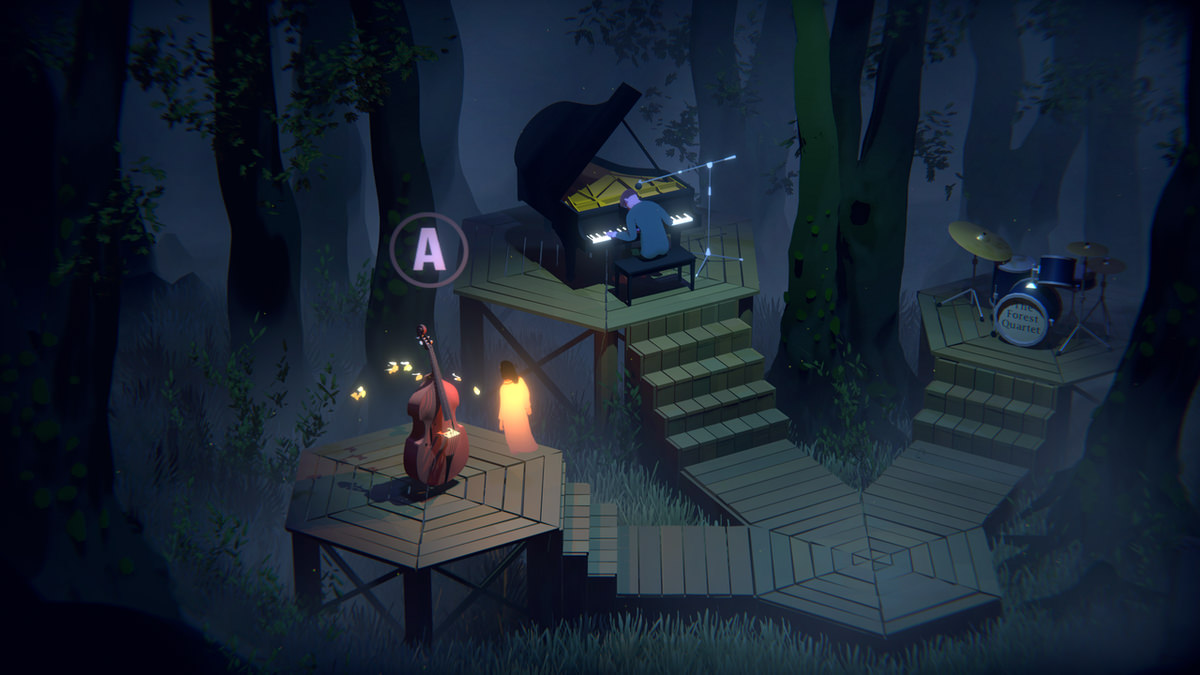
All sections of the game take place within the dark forest. The Forest Quartet resembles a walking simulator, where the player must find the path forward through the shadows. The forest itself is not realistic but conceptual, representing emotional and mental states. The puzzles are abstract expressions of the musicians’ minds.
The pianist is consumed by depression. He has lost interest in music and lives in disarray. In the background, an interview reveals how he views the forest as a kind of generator, a source of power. This gives shape to Nina’s task: she must get the generator working again. The player restores broken machinery hidden in the forest by finding missing components and activating them through Nina’s mystical voice. When the “power” is restored, the dark sludge surrounding the pianist’s home dissipates, and his desire to practise returns.
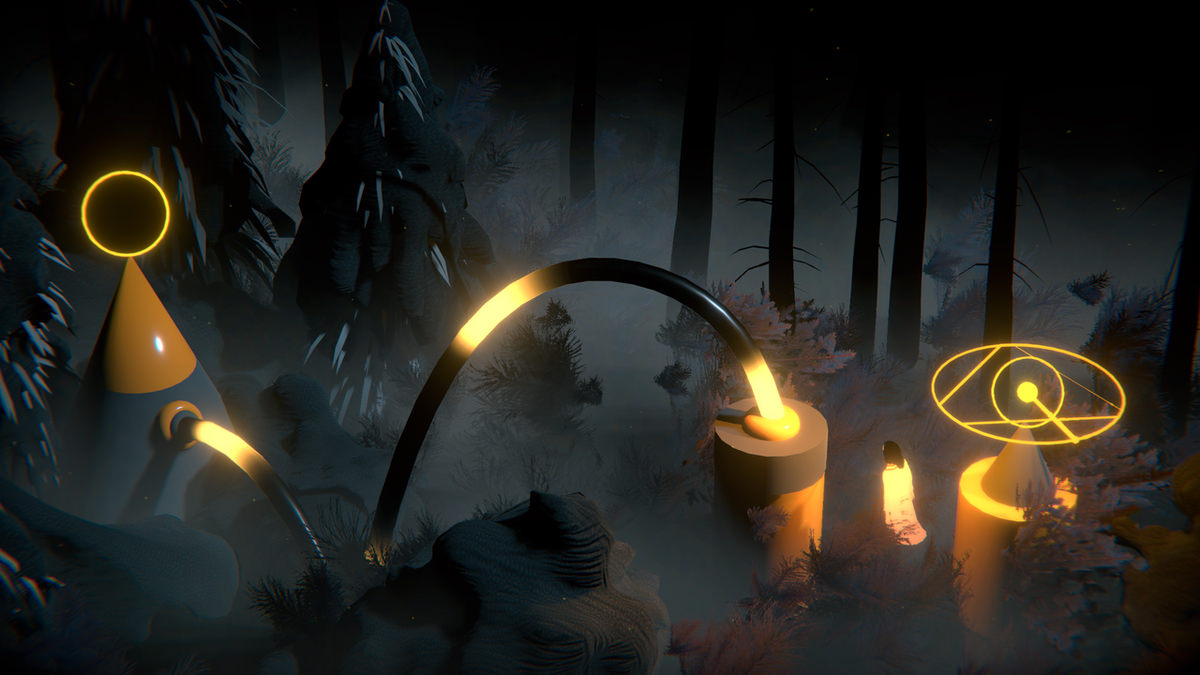
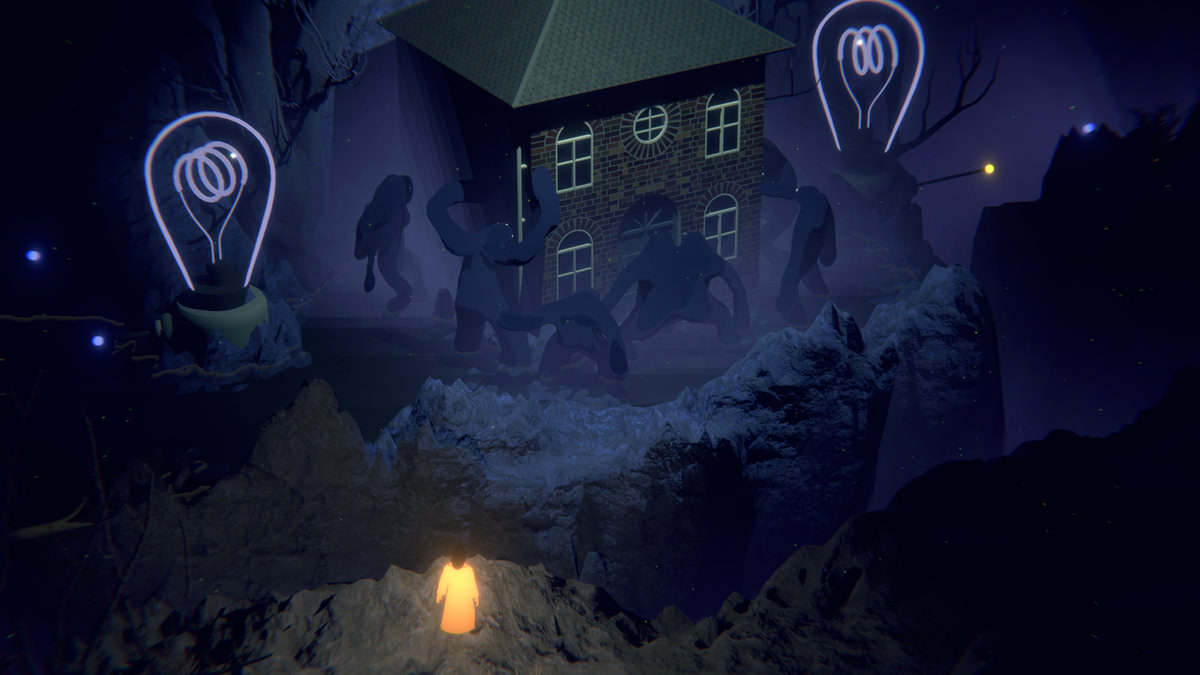
The bassist, meanwhile, lingers anxiously in his house. His anxiety has taken the shape of grey figures that follow Nina but shy away from her light. Nina must bring illumination back to the bassist’s forest by manipulating strings of lights and using the creatures themselves, which carry pieces of the solutions she needs.
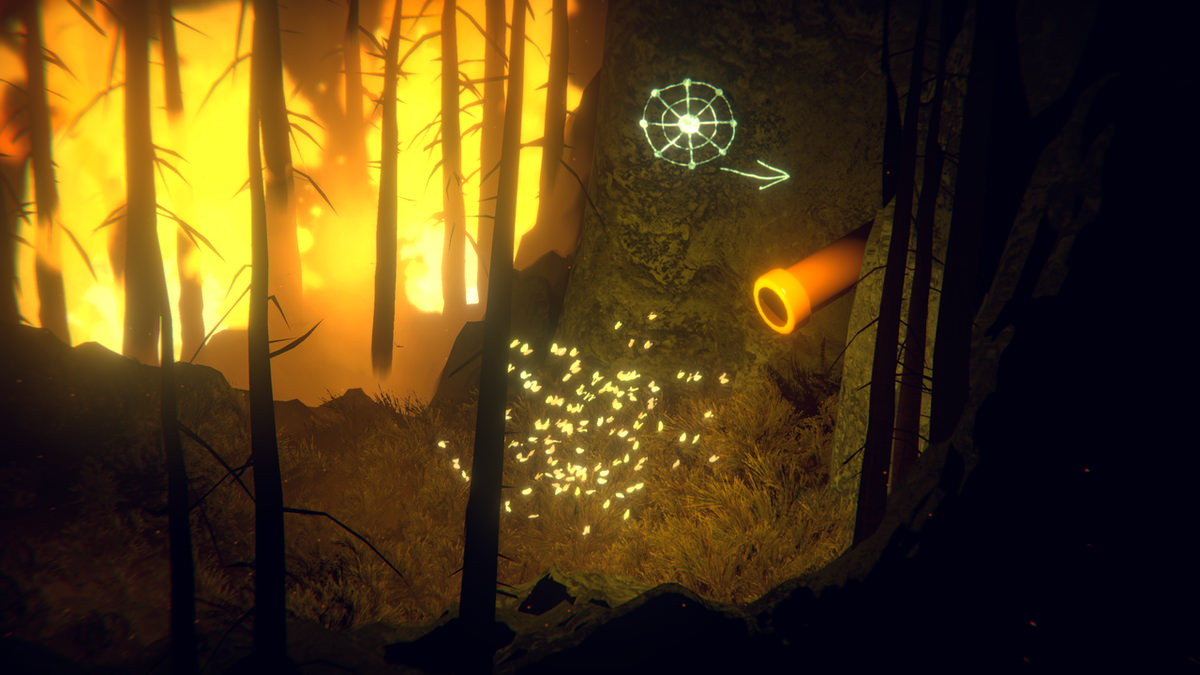
The drummer struggles with anger. He rages in his home, while the forest around him burns. Nina’s role is to put out the fire. In this chapter, she gains the ability to transform into a swarm of butterflies. In that form, she can move through pipes and reach places inaccessible in human shape. Working together — as woman and butterflies — she opens the water valves. Once the drummer’s blazing forest has been calmed, the bandmates can finally reach him for the concert.
Puzzle potential
The puzzles have been described as straightforward and easy, yet also as clever in their simplicity and varied. I agree with both views. They were never difficult; solutions were usually nearby and intuitive. My main challenge was technical — lighting the strings of bulbs sometimes took several attempts. The darkness of the forest gave a mild sense of disorientation, though each section is tightly bounded and prevents real wandering. My playthrough took about two hours.
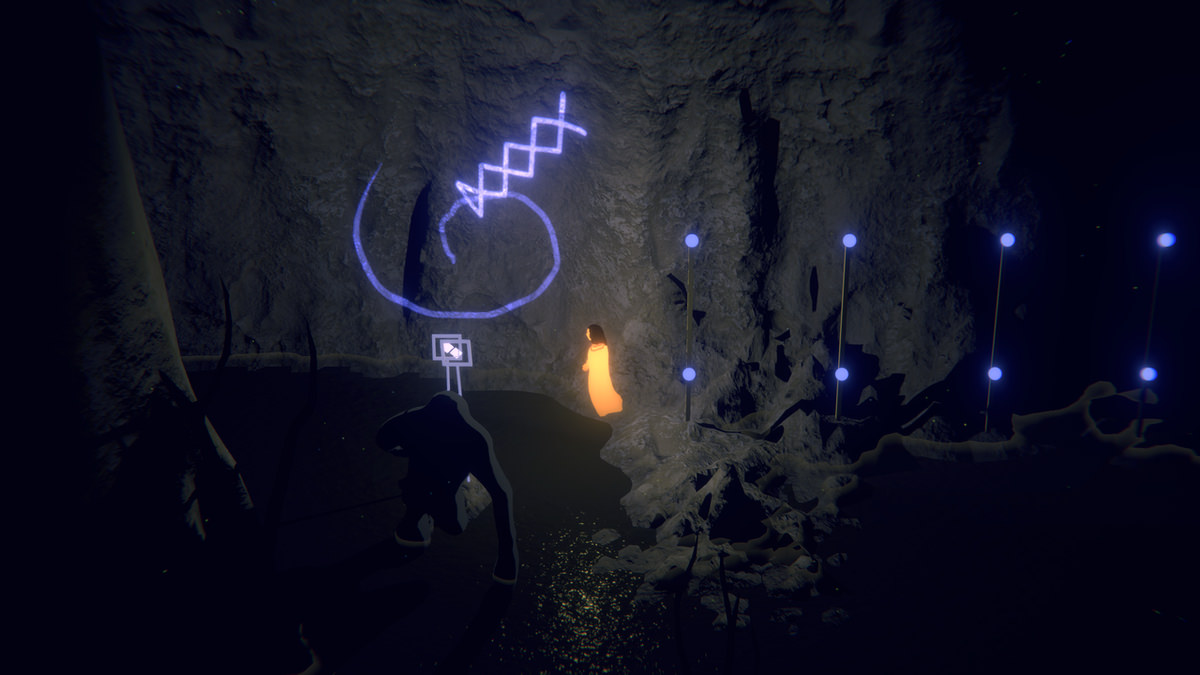
I see the puzzles as promising. Not because this game feels unfinished, but because its creator clearly has the potential to evolve and craft something even more refined. Notably, The Forest Quartet features no inventory; its puzzles rely on manipulating the environment through Nina’s unique abilities. Movement and actions are handled with either keyboard or controller — I used a controller myself.
An Audiovisually Coherent Abstract Forest
Generally, I am not fond of dark or grey games, yet The Forest Quartet felt warm and safe. Nina’s presence — her light, her voice, her animation — maintained a positive atmosphere. As an audiovisual experience, the game works remarkably well. The soundscapes merge seamlessly with the visuals, and the forest concert at the end feels like a worthy culmination.
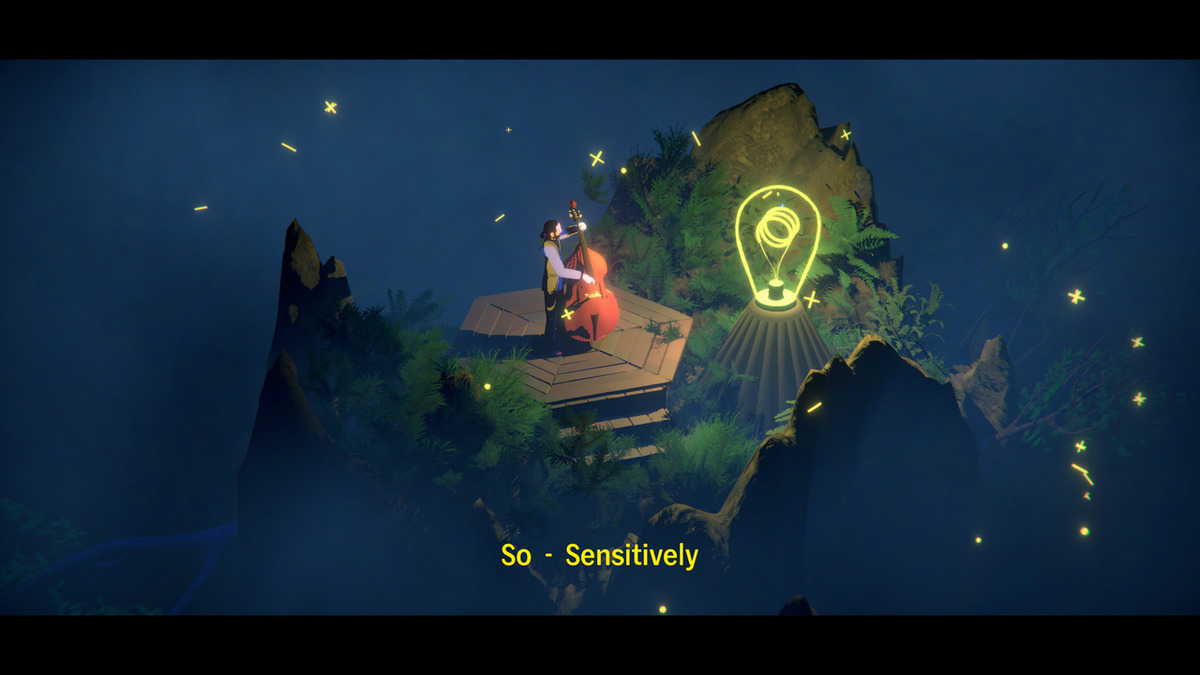
As for the acclaimed soundtrack, actual music appears only near the end, in one proper piece. Otherwise, the game relies on ambient sounds and effects so well integrated that one hardly notices them separately.
The abstract, unreal, and dark forest suits Nina’s ghostly perspective. It may well be how she perceives the concert and her old bandmates. The visuals and animation convey musicality — an attempt to translate music into imagery.
Verdict
The game touches on common mental health issues and grief over the loss of a loved one. In that sense, it feels somewhat naïve. That is not necessarily a flaw, though the topic could have been explored in greater depth. As a debut title, however, it is well-defined and competently realised.
I rate this cohesive audiovisual experience 53 out of 100.
Availability
The Forest Quartet is available for Windows PCs as well as Nintendo Switch and PlayStation consoles.