
Dark City: Munich (2018)
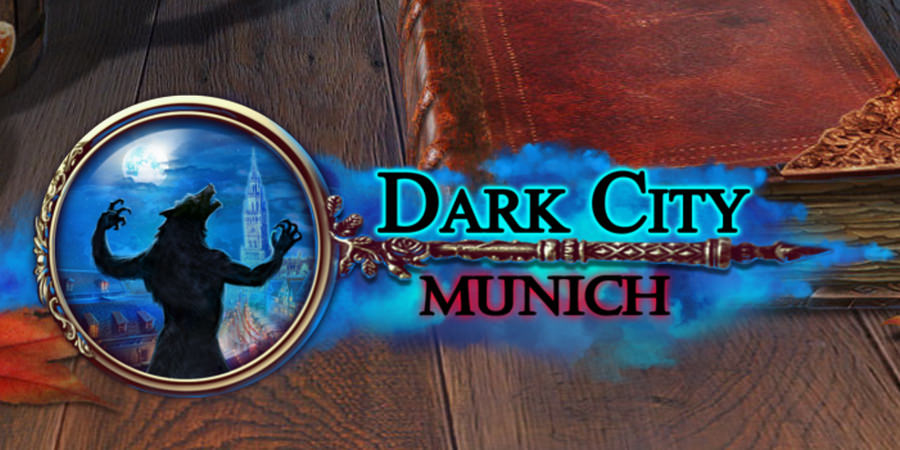
I played the second instalment of the Dark City series immediately after finishing the first one. The Munich-set sequel was released at the end of 2018 and centres on the hunt for a werewolf during Oktoberfest. The similarities to the first game are obvious. However, the case itself is new and distinct, and it actually takes an unexpected turn when our otherwise realistic detective witnesses something unbelievable. Compared to the more grounded drama of the first game, this pushes the series much further towards fantasy. The storytelling is also more experimental, and the villain is more convincing. In terms of gameplay, the foundations remain the same, the graphics feel cut from the same cloth, and the soundtrack is so similar that I even wondered whether parts of it had been recycled. Nevertheless, the differences were enough to make the sequel well worth playing.
Dark City: Munich was developed by the Ukrainian studio 4Friends Games, which later changed its name to Friendly Fox Studio. The series has been published by Big Fish Games, acting as a publisher-like partner responsible for quality assurance.
I have previously reviewed the first game in the series on Samooja: Dark City: London.
The Rise, Fall — and Rebirth? — of Big Fish Games
Big Fish Games was founded in 2002. In addition to publishing games by partner studios, it also maintained its own in-house development team, best known for the Mystery Case Files, Drawn, and Hidden Expedition series. The studio's final PC title was the ninth Mystery Case Files game, Shadow Lake (2012). Since then, the series has been continued by other developers.
In 2017, Big Fish Games was acquired by Aristocrat Leisure, a company best known for its gambling machines. Aristocrat immediately began scaling down Big Fish's PC business by laying off employees and reducing operations. Eventually, in February 2025, Aristocrat announced that no new games would be developed and that the company would focus solely on maintaining its existing catalogue. It seemed that Big Fish's chapter as a publisher of new casual games and a pioneer of hidden object adventures had come to an end.
Yet before the end of the same year, BFG Entertainment acquired the PC and Mac business and announced plans to establish a new in-house studio. At the same time, it ended its partnerships with at least GrandMA Studios and Elephant Games. What this will ultimately mean for the hidden object genre remains to be seen. I am particularly interested in the future of the Mystery Case Files series. Could it make a triumphant return to its roots? And might the Drawn series continue as well?
The fact is that since the ninth Mystery Case Files game, the hidden object genre has produced remarkably few genuinely new ideas. Adrian Woods, one of the designers at Big Fish Games' internal studio, introduced a fresh gameplay mechanic in every Mystery Case Files title. I have reviewed those early entries here on Samooja. After the series changed hands, however, it gradually settled into the familiar HOPA formula (Hidden Object Puzzle Adventure). It should be noted that this evolution had already begun during Woods' tenure, as the games increasingly combined adventure game storytelling and inventory puzzles with hidden object scenes and mini-games. Woods could even be blamed for introducing the genre's increasingly elaborate lock mechanisms — originally justified by the story, but later turned by other developers into an absurdly overused cliché.
In any case, hidden object games have now become highly standardised. On the one hand, players know exactly what to expect. On the other hand, they are rarely challenged or surprised anymore. Perhaps HOPA has simply become an overripe genre. Within an individual series, it almost feels appropriate to expect each instalment to follow the established formula. My intention is not to criticise 4Friends Games' — later Friendly Fox Studio's — Dark City series, but rather to observe how it continues to evolve over its long run. And there is no doubt that it does evolve.
Startling Transformations
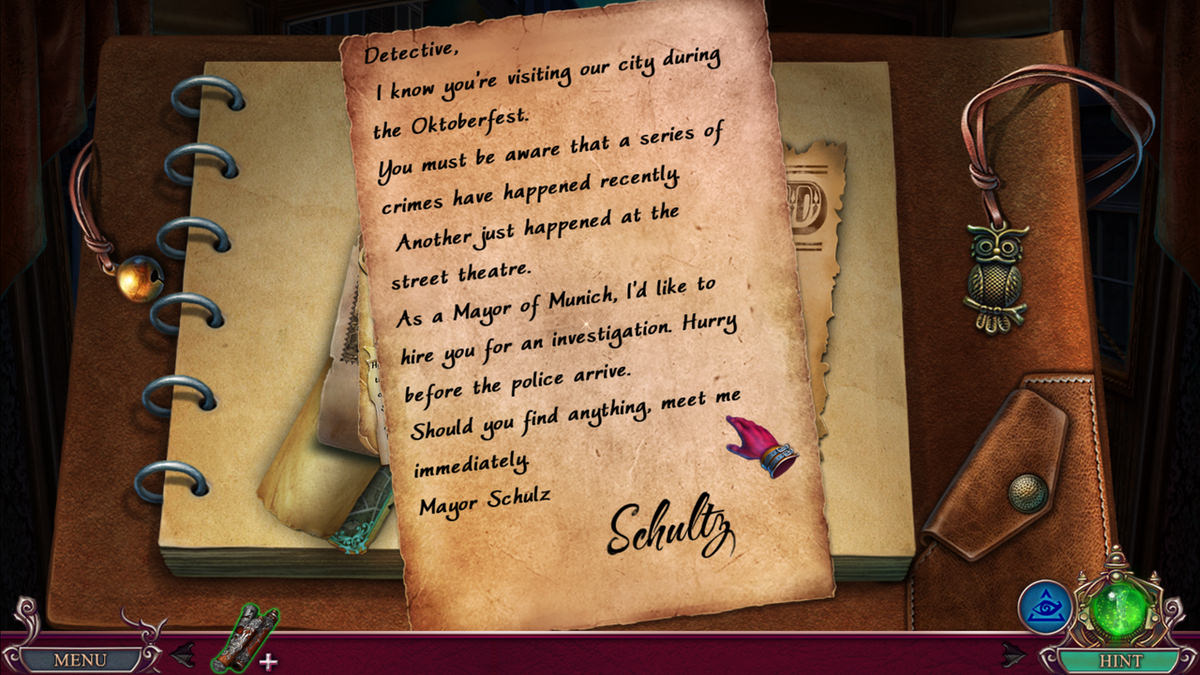
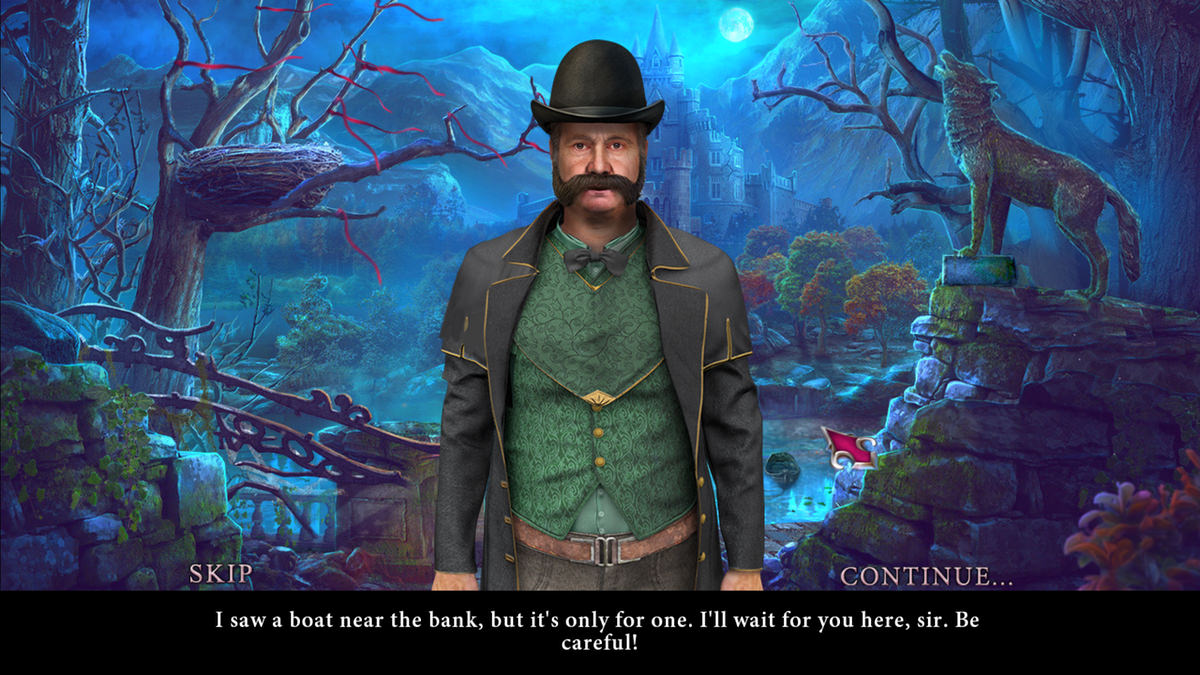
In Dark City: Munich, our Sherlock Holmes-inspired detective has travelled from England to Germany together with his horse carriage driver. Pleasingly, the driver now has a name — Vince — and over the course of the game he develops a genuine personality as the detective's trusted companion. This time, the detective is summoned by the Mayor of Munich. Oktoberfest itself is under threat as a werewolf stalks the festivities, endangering one of the performers while terrifying the public.
The story opens in the present before shifting into an extended flashback, eventually returning to the opening scene. As the detective reports his findings to the mayor, the player witnesses the events that unfolded twenty-four hours earlier. It is an unusual narrative device, and I am not entirely convinced it was necessary. Nevertheless, it demonstrates a degree of storytelling ambition — or at least a willingness to experiment. In effect, the investigation is divided into two distinct phases: one grounded in realism and the other embracing fantasy. At first, the detective assumes the werewolf is merely a disguised human. Later, however, he is forced to accept that something truly extraordinary lies behind the case.
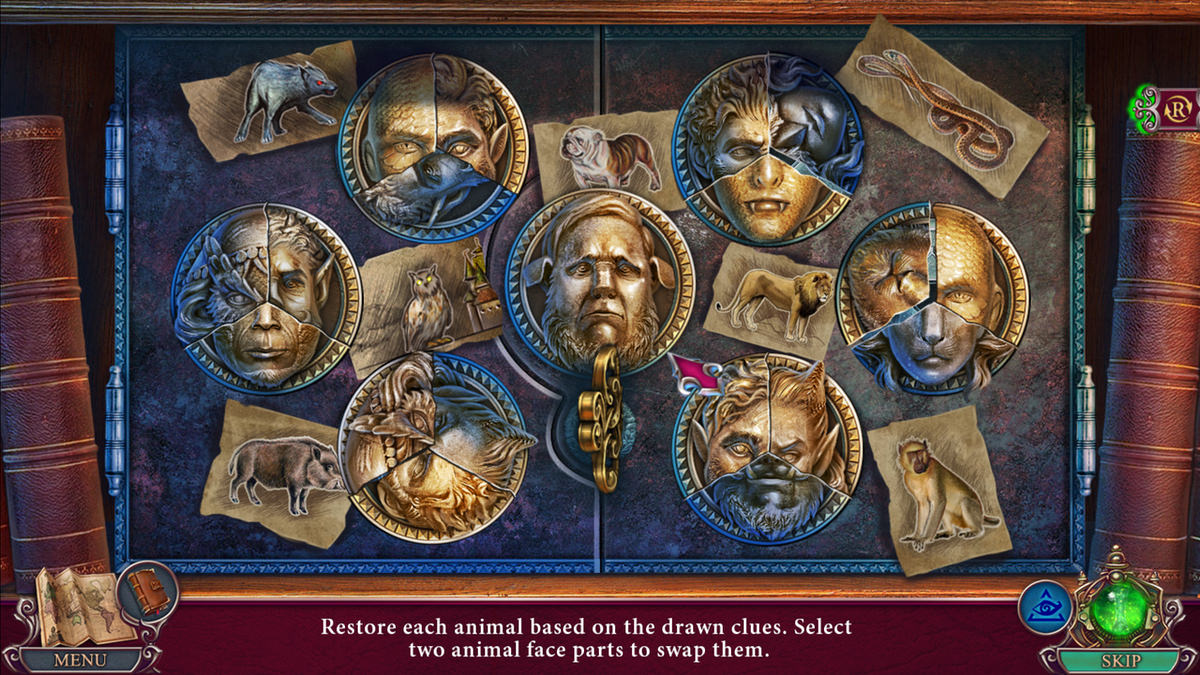
Dark City: Munich revolves around chimeras, beings that combine human and animal traits. The werewolf is one example, but the game introduces several different kinds of chimeras. The detective soon realises that they are everywhere, representing virtually every profession. He becomes aware of this hidden minority, whose members live in fear of being exposed to ordinary people. Most of the time they appear completely human, yet they can transform into part-animal creatures whenever they choose. Unfortunately, an ordinary human has uncovered their secret and has become obsessively fixated on them. That obsession becomes the central threat the detective must eliminate.
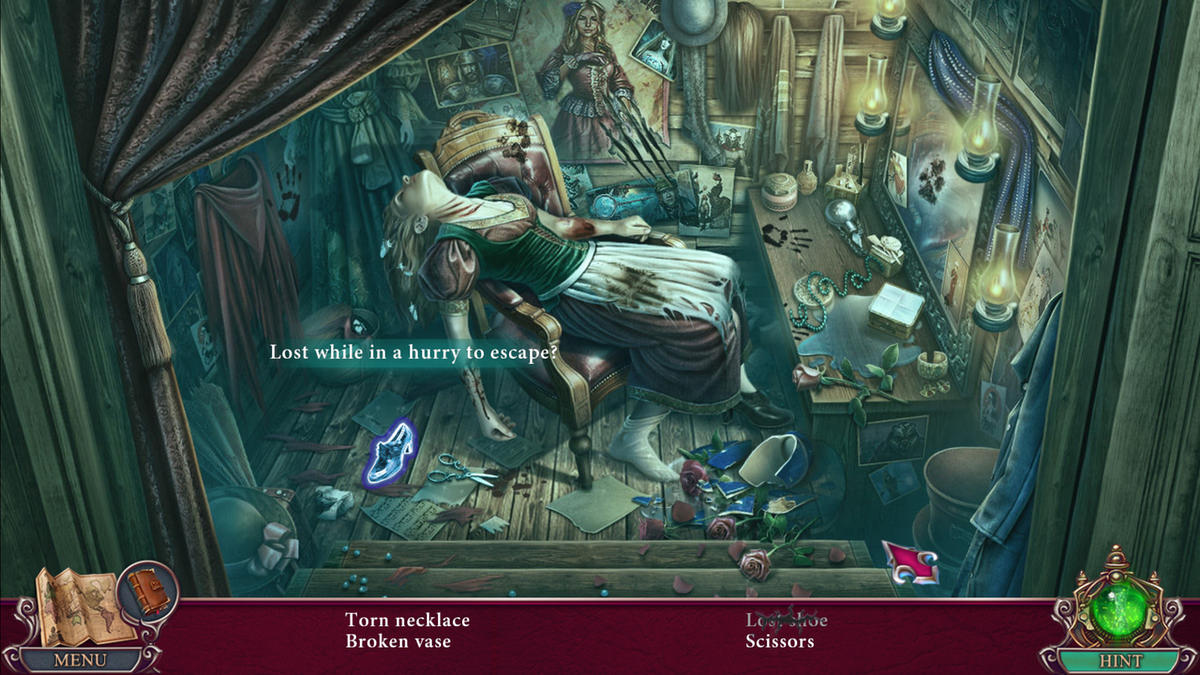
A Travel Game That Isn't About Travelling, a Dark Game That Isn't Horror
In terms of atmosphere, Dark City: Munich is dark, but never threatening or oppressive. It is therefore not a horror game, even though the detective wanders beneath the full moon and eventually visits a crumbling Gothic castle. Most importantly, the chimeras are never portrayed as monsters. Their unusual nature is almost reduced to little more than a character trait.
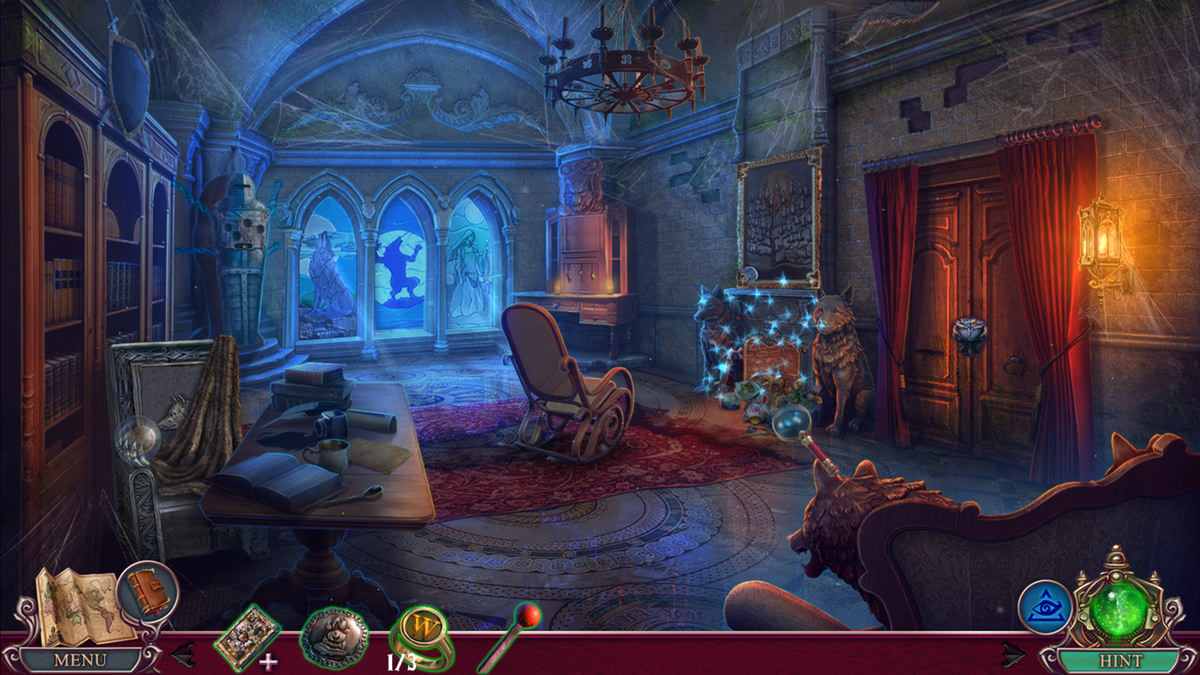
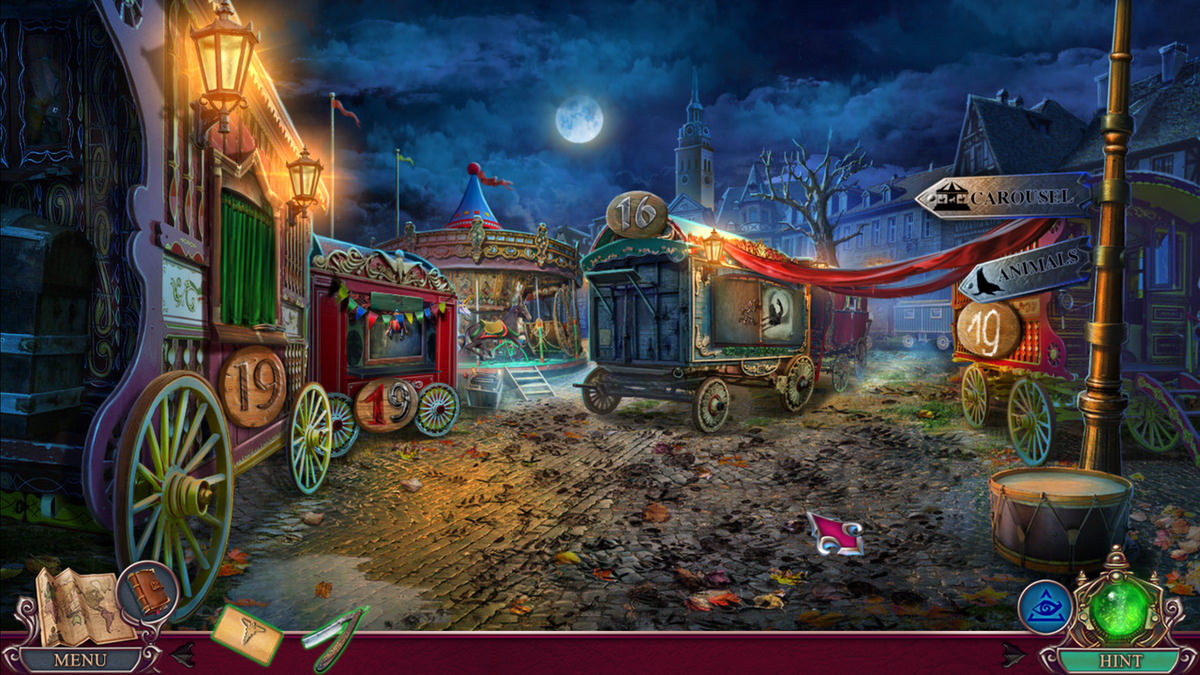
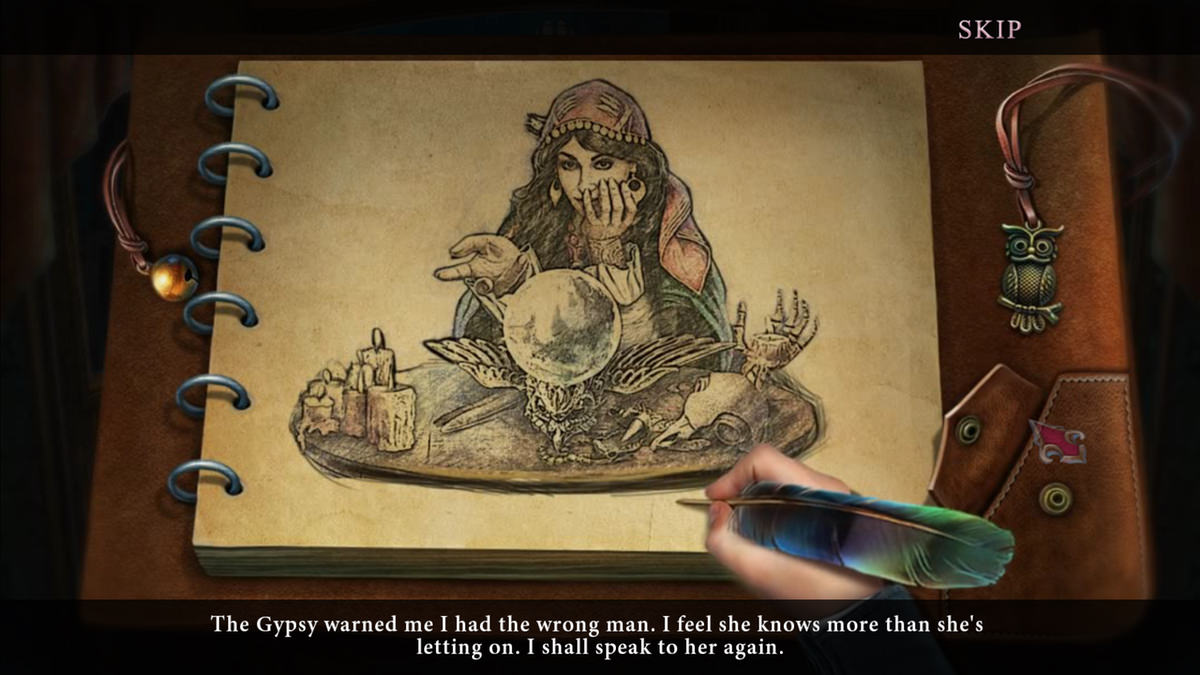
The graphics are roughly on the same level as those of the first game. The artistic styles vary considerably. In Dark City: Munich, the detective's talent for drawing comes into its own as he sketches illustrations of important story developments in his notebook. I never truly felt that I was in Munich, however, because the locations are rather generic. Perhaps the developers never intended the series to function as a travelogue. Instead, they simply selected one authentic historical landmark — in London the clock tower, and in Munich the Oktoberfest fairgrounds — while otherwise avoiding the city's famous sights. Even so, the visuals convincingly evoke nineteenth-century Europe.
The soundtrack is, indeed, very similar to that of the first game: orchestral music dominated by strings. The detective and his carriage driver are voiced by the same actors as before, as is the fortune teller. I cannot say whether the remaining cast members were reused. I paid so little attention to the sound effects that I am unable to comment on them, which is a little unfortunate because they certainly must have been there. Perhaps I will pay closer attention when I play the next instalment.
Varied Yet Easy Gameplay
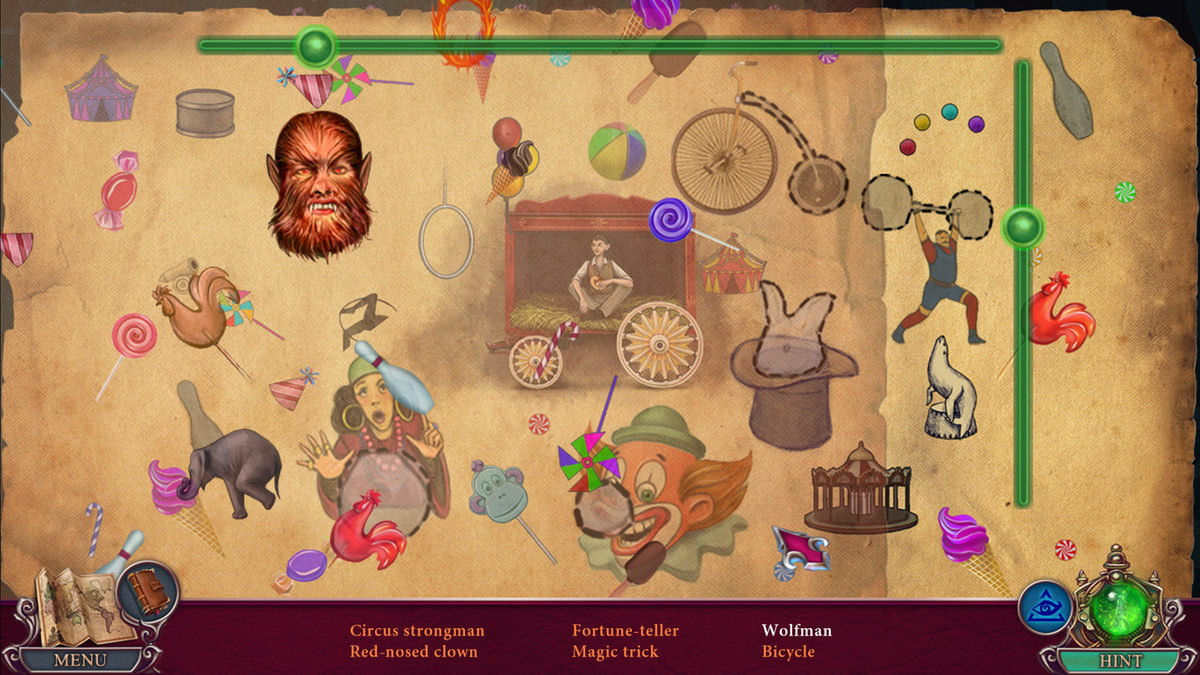
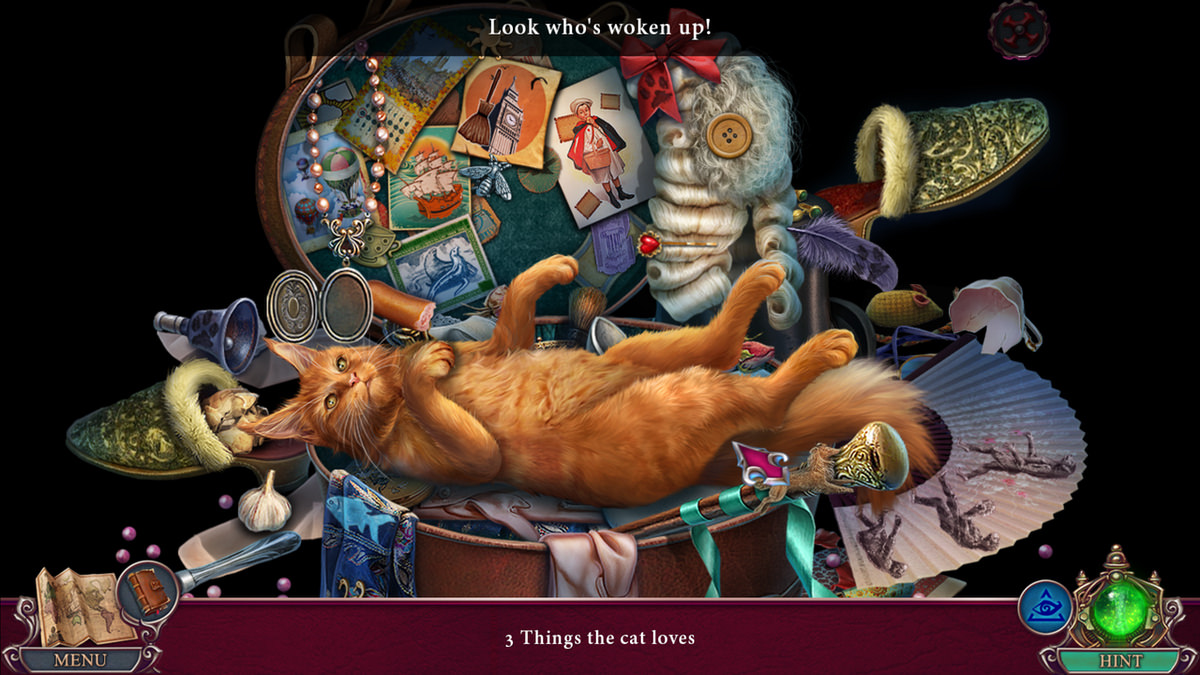
From a gameplay perspective, I found the hidden object scenes pleasantly varied and well integrated into the story. They were, however, fairly compact, with relatively few objects to locate, making them very easy. Some of the hidden object scenes also function as puzzles, for example by presenting the player with a question instead of a simple object list.
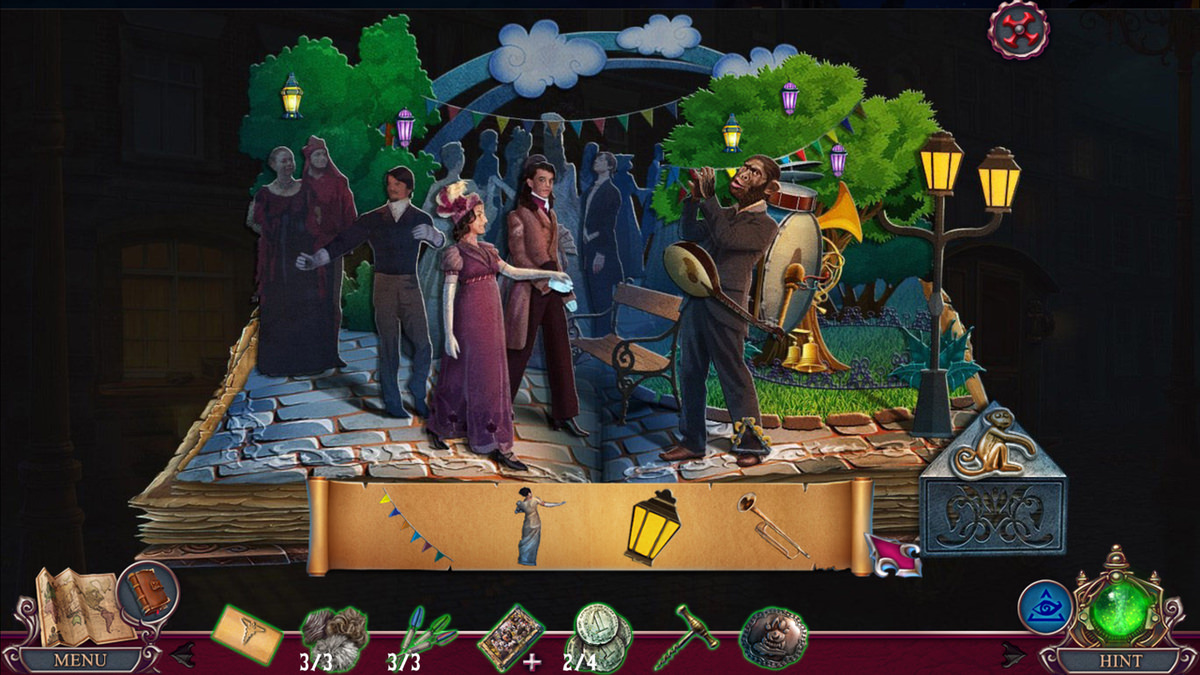
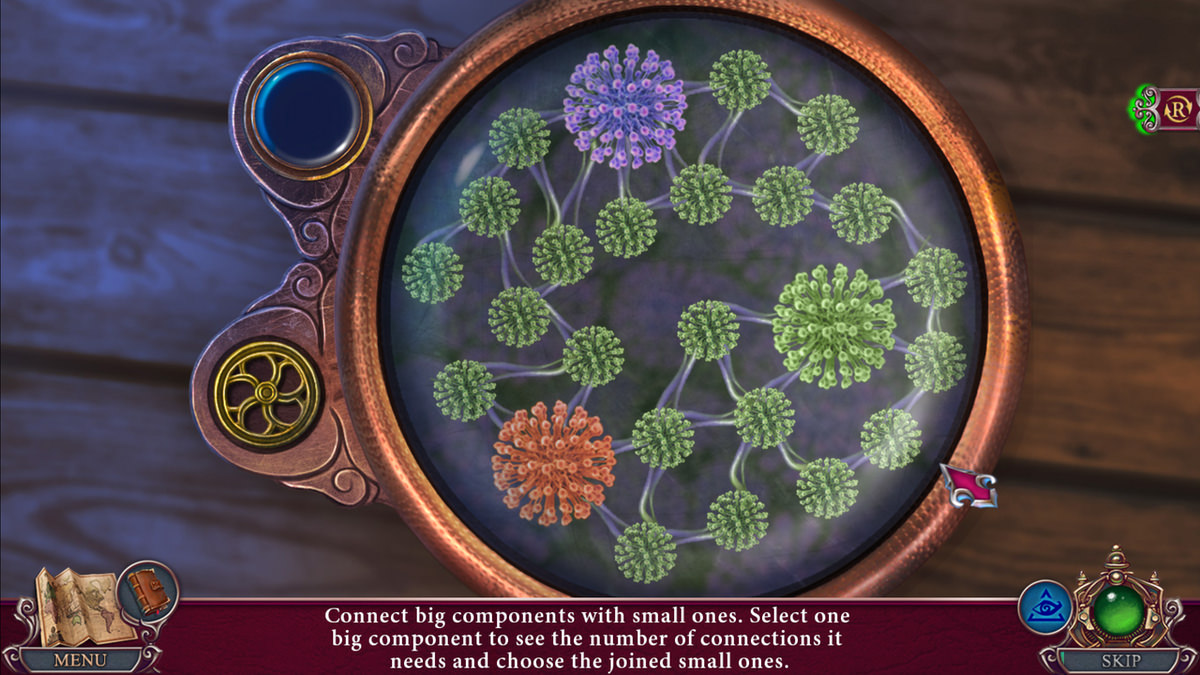
In my opinion, the developers put considerable effort into creating a wide variety of mini-games, although these too were remarkably easy. One recurring feature throughout Dark City: Munich is a multi-stage puzzle built around a pop-up book describing different chimeras. The player's task is to drag individual illustrated elements into the correct positions within each scene. The book is given to the detective by the same fortune teller from the first game — who has apparently travelled to Germany together with the amusement park — and I was delighted that, this time, she gives the detective a relevant pop-up book instead of the rather absurd banana from the first game. I wonder whether she will become a permanent supporting character alongside the detective and Vince.
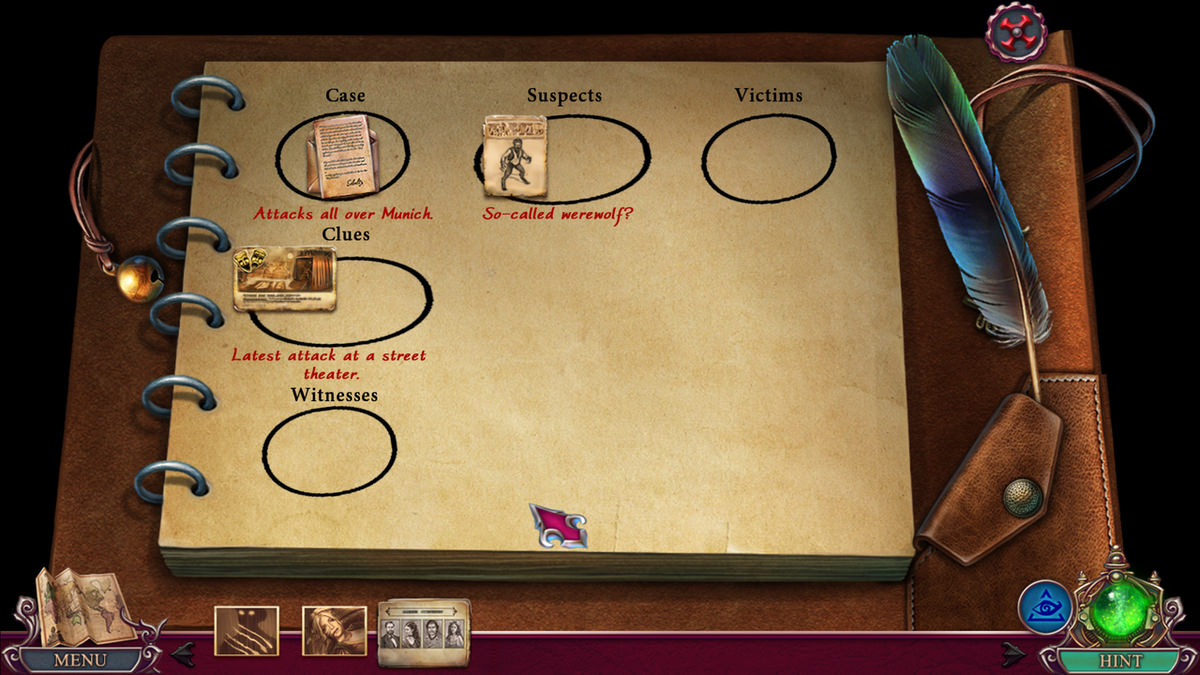
As in Dark City: London, the detective gathers evidence in his notebook, and the player must organise it in order to draw conclusions.
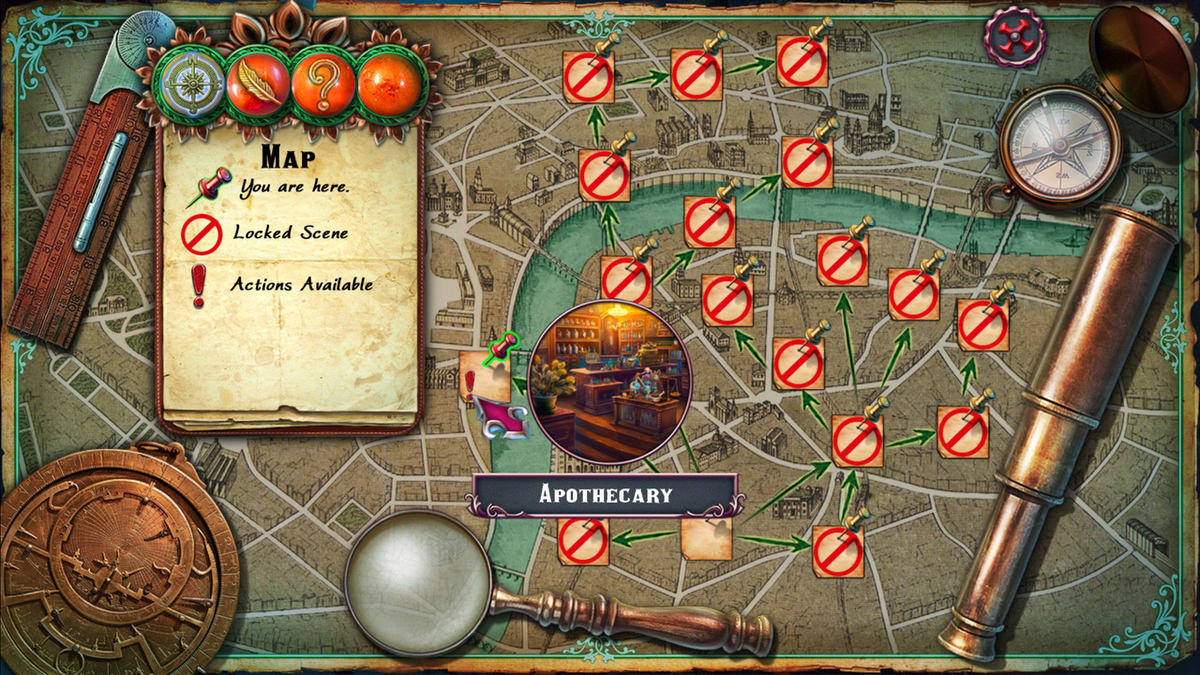
The inventory-based puzzles revolve, quite predictably, around opening locks, either to gain access to new locations or to unlock chests and containers. Some of the required items are scattered across several locations and must first be assembled before they can be used.
It took me around four hours to complete Dark City: Munich, slightly longer than the first game.
Verdict
Dark City: Munich appealed to me primarily because of its story. The chimeras give rise to a surprisingly strong ethical theme. It feels as though the detective learns a lesson in tolerance, discovering that something extraordinary may lie hidden beneath an ordinary appearance — a secret that is best protected by remaining a secret. I was also pleased that the horse carriage driver was given a far more significant role. I will certainly remember the twist involving his identity, and I am curious to see whether it will be explored further in future instalments. The villain ultimately proves to be exactly that — a villain — and the player is not given the choice of whether to report him to the authorities. His motives are also considerably more believable than those of the antagonist in the first game.
The story progresses smoothly, and because every puzzle is so approachable, the gameplay maintains an enjoyable pace throughout. The balance between hidden object scenes, mini-games, and inventory puzzles is excellent, and the developers have integrated them naturally into the narrative.
I give Dark City: Munich an overall score of 67 out of 100.
Availability
Dark City: Munich is available for Windows, macOS, and Android devices. A Collector's Edition is also available, offering additional bonus content.