
Sam & Max Hit the Road (1993)
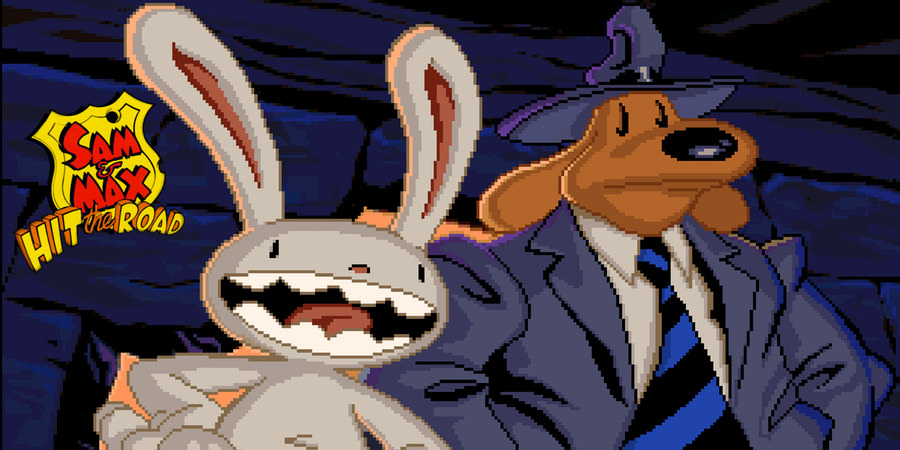
Following Leisure Suit Larry, I was reminded of another classic — the adventure game Sam & Max Hit the Road, based on Steve Purcell’s comic. Released in 1993, it belongs to the golden era of LucasArts, standing alongside The Secret of Monkey Island and Indiana Jones and the Fate of Atlantis. The anthropomorphic dog and rabbit duo, Sam and Max, work as freelance police, solving bizarre cases. The game overflows with witty dialogue, eccentric characters and absurd twists. Like Leisure Suit Larry, it requires a solid grasp of American pop culture for all its jokes to land. It also references earlier LucasArts titles. Even if not every pun hits home, the humour still works — Max’s inappropriate remarks are easy enough to grasp, and the puzzles are wildly imaginative. The game offers gorgeous pixel art, superb voice acting and animation that clearly received great care.
The Secret of Monkey Island (1991)
After the rather sombre The Longing, I needed something to lift my spirits and reached for the light-hearted adventure game classic The Secret of Monkey Island, which I originally played on the Amiga. First I played the 2009 remake, The Secret of Monkey Island: Special Edition, and then the original 1991 Amiga version to experience it again from a modern perspective. The very first version of the game, however, was for DOS PCs, and this archaic experience is included in the 2009 Special Edition, where you can switch to it on the fly. In this article I focus primarily on the Amiga version and compare it to the Special Edition. The game is a classic for a reason: as an adventure game, it still holds up very well today. I have nothing against the audiovisually updated version, but to my surprise I found the old version better in terms of playability. In this post I also answer, from my own point of view, the question of how to play Amiga games.
Loom (1990)
Loom is an adventure game released by LucasArts in 1990. It is very simple, yet mechanically quite interesting. The typical inventory-driven problem-solving of adventure games is taken to an extreme: the protagonist can carry only one single item, but it is remarkably versatile. It is a magical tool used to cast spells through musical notes.