
The Procession to Calvary (2020)
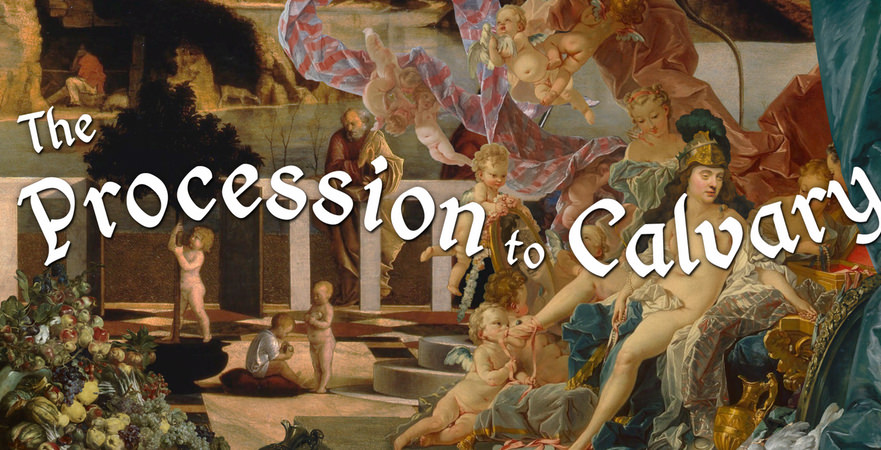
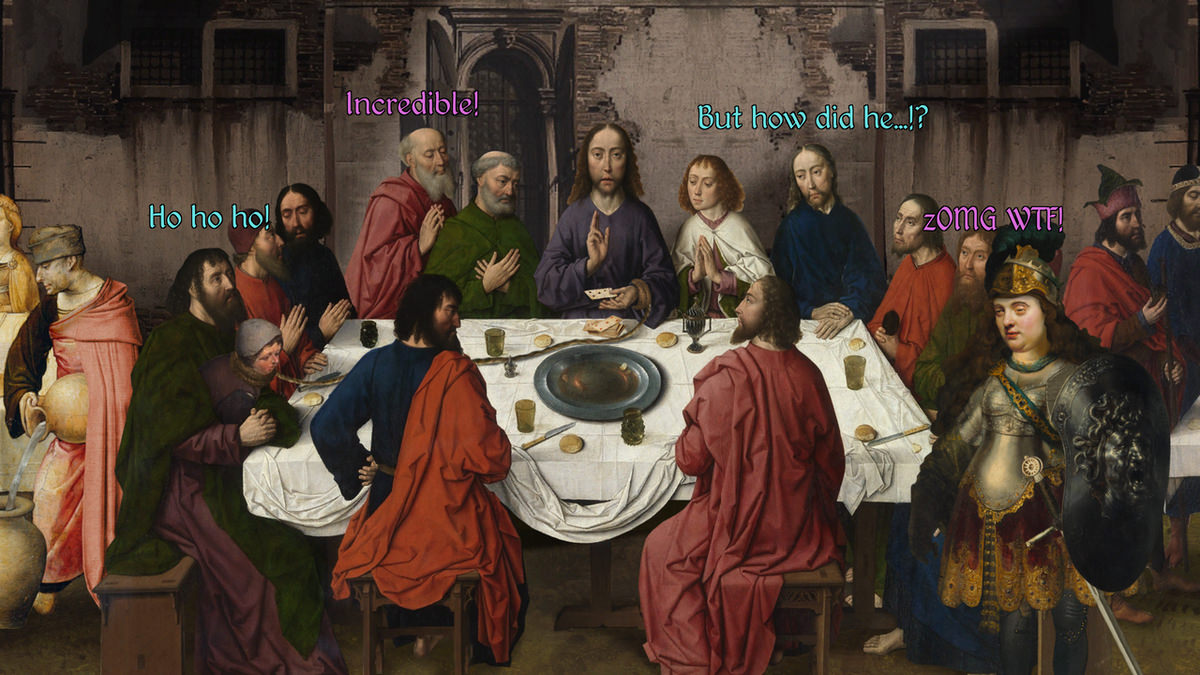
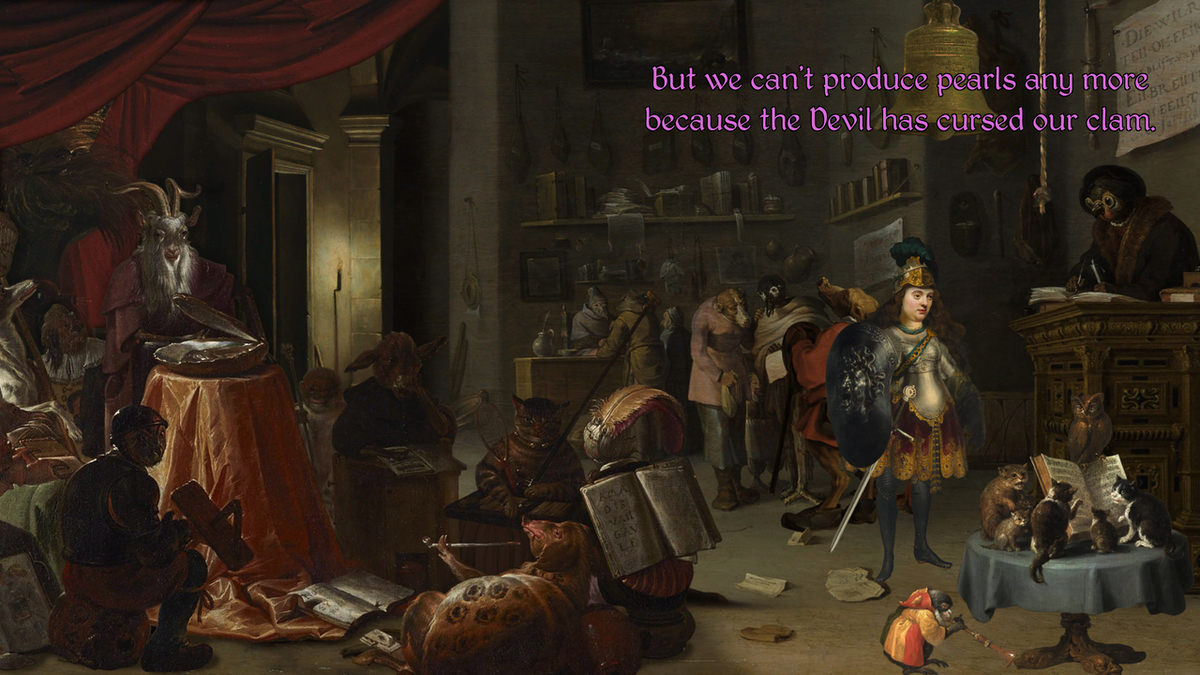
The 2020 point-and-click adventure The Procession to Calvary follows in the footsteps of Joe Richardson’s previous game, Four Last Things. It takes place in the same, or at least a similar, world collaged and composed from Renaissance paintings. However, both the protagonist and the driving force have changed. This time, the player controls a female warrior who uses a religious war as an excuse for her own bloodlust, while Christianity is subjected to cruel, carnivalesque satire. The Procession to Calvary is a journey to the dark side of Christianity and its obscure outskirts.
I played Joe Richardson’s previous game, Four Last Things, back in 2017 and also reviewed it on Samooja. After The Procession to Calvary was released in 2020, Death of the Reprobate followed in 2024. I haven’t yet played that one—and even this earlier title I only started playing now, although I have been aware of it since its release. I’ve been in a kind of adventure-game vacuum. Looking back, last year I covered only two games in Samooja, and both were hidden-object titles rather than pure adventures. I’ve been playing, of course, but mostly simulations and strategy games.
The Procession to Calvary seemed like a good way to drive myself back into the world of adventure games. It’s short—about three hours long—and simple in both mechanics and puzzles, yet visually and thematically unique.
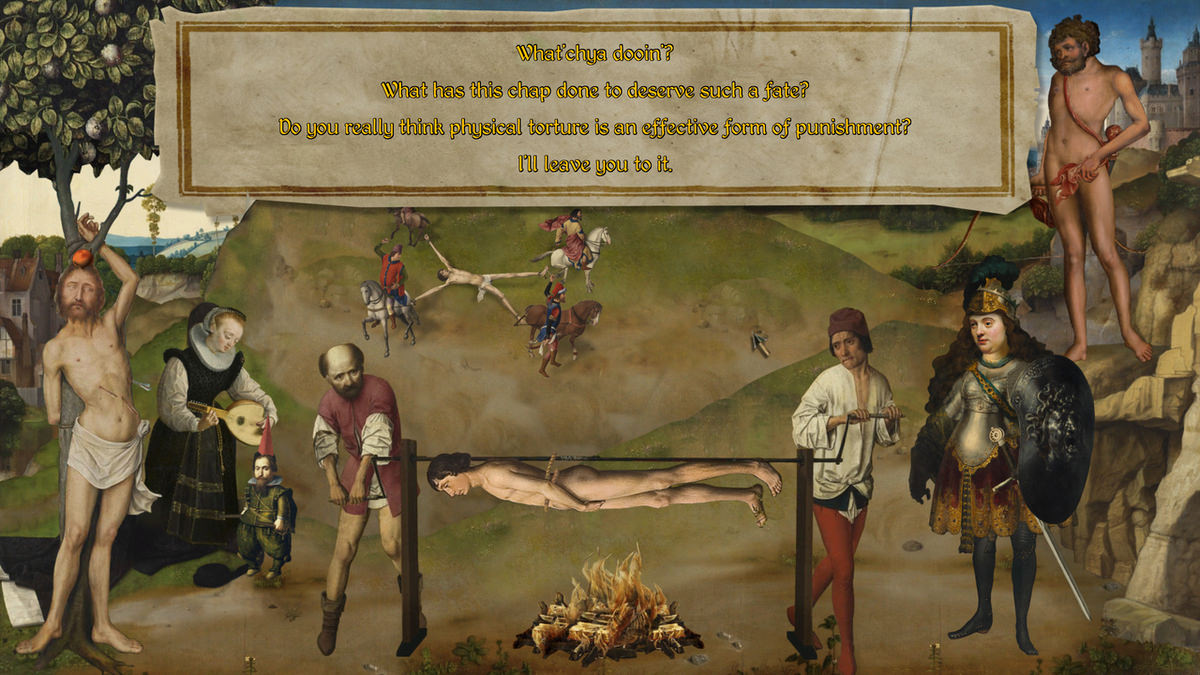
The game’s settings are borrowed from history yet remain absurd. It’s about how things considered normal in theology and Christian imagery appear strange when placed in the game's context. Richardson effectively alienates the player to make them see how bizarre and imaginative Christianity and Christian art can be, and how interpretation determines whether something feels perverse or innocent.
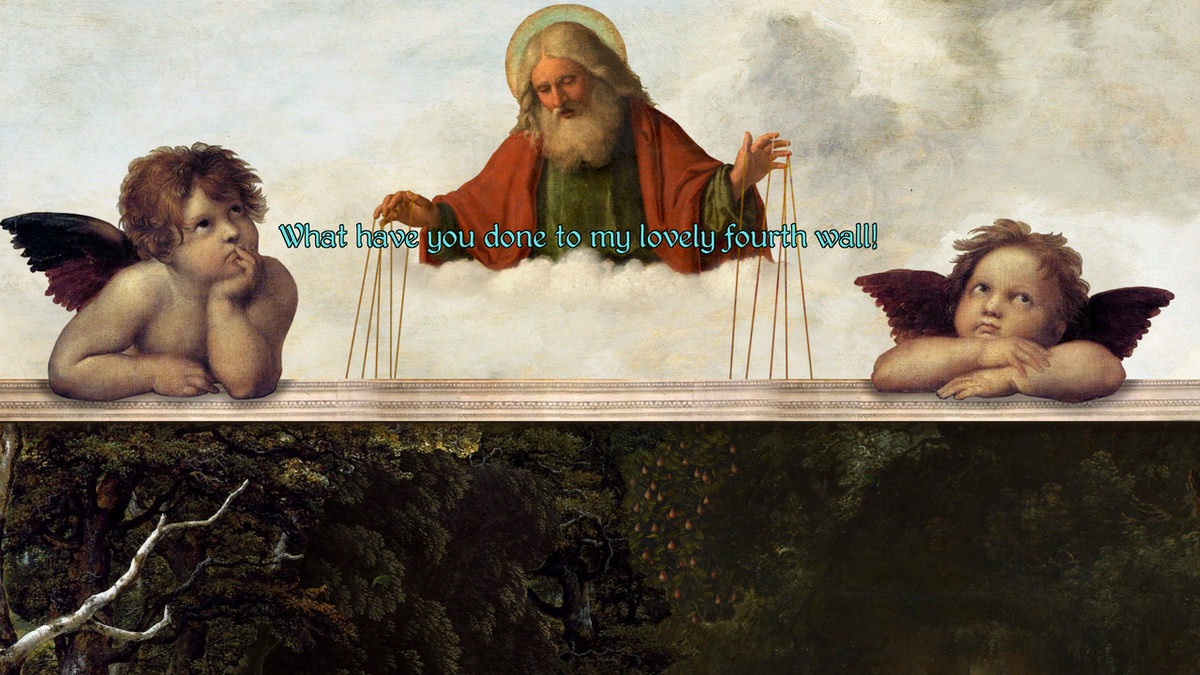
The game’s graphics and music gave me a strange sense of delight. The cut-and-paste technique works well—better than in Richardson’s previous game—and the music is on a new level. The events are staged like a theatre performance, with God pulling the strings from the heavens. Each screen features a different musical ensemble performing its own piece; by examining the musicians, one learns the composer and the title. This theatricality is charming and fits well with the theme of alienation.
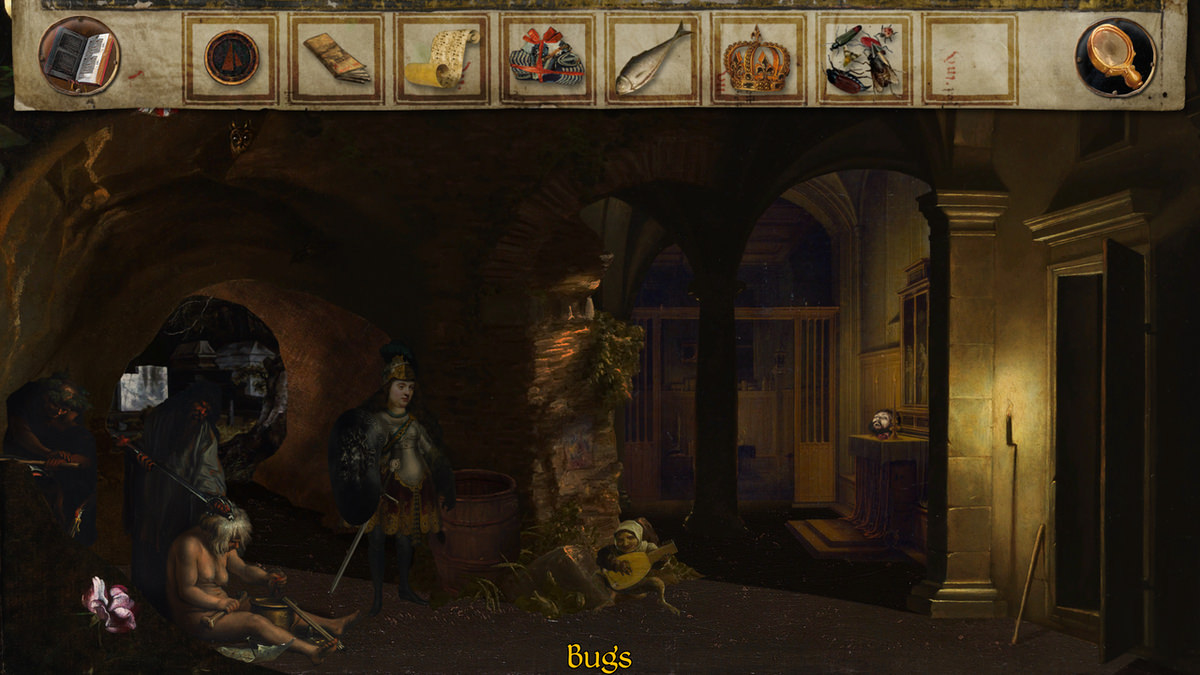
I’m torn between whether the humour and satire feel fresh or worn out. History already knows the corruption of Renaissance popes and the decadence of the Catholic Church. Likewise, a modern secular person sees religious wars as sheer madness or as earthly ambitions cloaked in divine rhetoric. We hardly need The Procession to Calvary to show us that. Yet perhaps the game still offers something unexpected or personally revealing. At least I found myself feeling sympathy in surprising places.
Verdict
In Four Last Things, I experienced a kind of Christian mysticism as I approached the Last Judgment, and I was moved. In The Procession to Calvary, I met Satan-worshipping animals and a Library made of books, and I liked them. My female warrior (Rembrandt’s Bellona, the Roman goddess of war) also gave me a strange sense of freedom at the end, when heads began to roll. Visually and musically, the game offers a full blast of history. Anyone familiar with art history can spot plenty of references. I give my gameplay experience 64 points out of 100.
Availability
The Procession to Calvary is available for Windows, macOS, and Linux computers, as well as Android and iOS devices.