
Urban Pirate (2016)
Released in 2016, the retro- and underground-styled role-playing game Urban Pirate lets the player engage in social resistance — breaking taboos, if one chooses to see it that way. You steal and rummage through dumpsters in search of food, spray-paint trains, occupy buildings by your own self-declared principles, and smoke weed. The goal is to survive in an urban environment without any real job. It was entertaining up to a point, but the daily routines soon began to wear thin: stealing no longer felt like anything, and the parties were always the same.
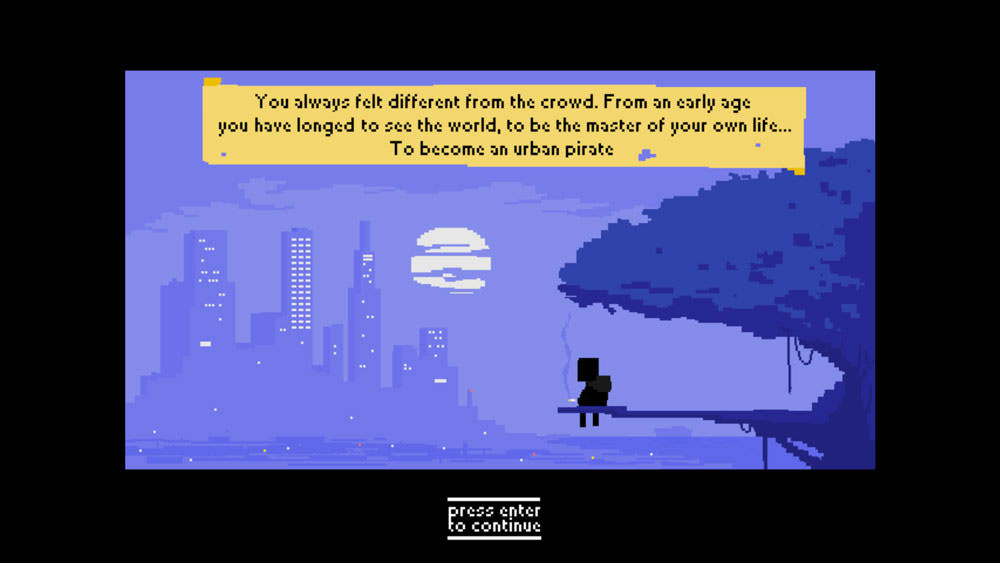
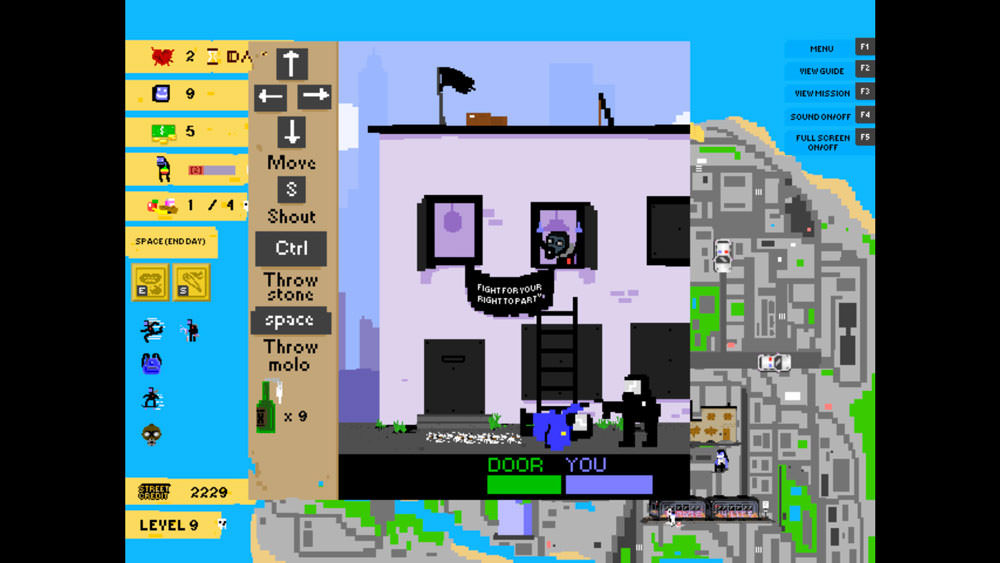
Urban Pirate was created by Danish graphic designer and music producer Baby Duka. It is his first game. The visuals are its most distinctive feature, following a rebellious aesthetic of their own. The impression is one of smudgy pixel art that slightly challenges the eye. To me it was appealing and made everything feel childishly innocent. I was a happy little petty criminal who did not feel like he was doing anything wrong. The music mirrors the graphics — blocky, simple, and retro-leaning — but because of repetition its refreshing effect eventually wears off.
As a simulation, the daily patterns are clear: get food and keep yourself “together”. Staying together means doing fun things such as skateboarding and socialising. I treated smoking weed as a last resort, since it makes you hungry and therefore offers little benefit. You can also get caught for possession and receive a fine, which lowers your mood.
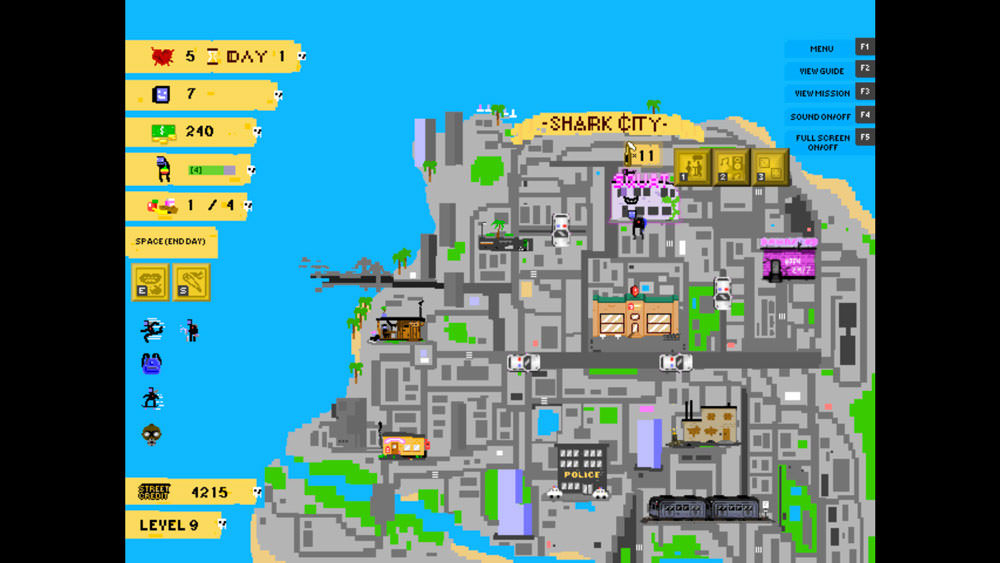
Progression comes through acquiring new skills and unlocking new locations. Police surveillance also tightens, and holding on to an occupied building becomes increasingly difficult. Your character moves from Sheep Island to Shark City, with the aim of leading a proper rebellion and achieving a certain dominance.
I left the game unfinished at the final level. Strangely, my interest faded just before the climax. This was due to frustration. The levels kept getting longer, and the last one seemed too long to me when combined with the increased difficulty. Ultimately, though, my loss of motivation stemmed from a deeper feeling that everything was somehow pointless. There is no story.
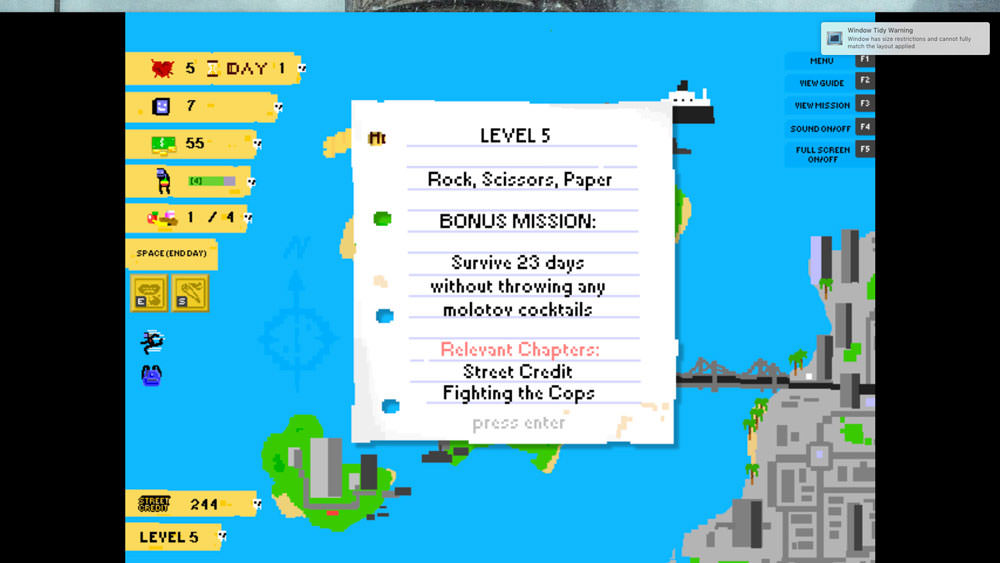
Controls are handled via the keyboard, in a somewhat clumsy way that I nevertheless found reasonably functional. The stuttering in the character’s movement may have been due to weak implementation, but since everything else is also slightly vague and makeshift, it felt like part of the experience — something you simply adapt to.
Verdict
Urban Pirate aims to portray a certain way of life, and it does so with sympathy. Within the game’s framework, it made me see everything forbidden as normal, and perhaps also helped me understand that such a reality does exist: the urban pirate as a distinct way of life. I give this extremely indie gaming experience 50 points out of 100.
Availability
Urban Pirate is available for Windows and Linux.