
Titanic: Adventure Out of Time (1996)
Released in 1996, Titanic: Adventure Out of Time conveniently anticipated the following year’s successful Titanic film and sold well in its wake. Just over a week ago, at the end of 2017, it was officially released for modern Windows computers — officially, it should be added, as the game had long been available under the false assumption that it was abandonware. Awareness of the ship’s inevitable sinking creates a particular tension in this adventure game. A four-part main objective, side tasks, and a large cast of characters make it fairly complex, and navigating the long, multi-deck ship is challenging. In terms of premise and period, it immediately brought The Last Express to mind, and I could not help comparing the two.
Titanic: Adventure Out of Time was made by CyberFlix, an American game company active in the 1990s. The game’s concept and script were created by journalist-producer Andrew Nelson. Its original working title was “A Race Against Time”. He was inspired by a remark from his wife, who felt that games required too great a time investment. One playthrough took me around nine hours, so in that sense she was not wrong. Her words ultimately turned into the game’s internal idea of struggling against time. Actual real-time progression, however, is implemented only partially, mainly toward the end of the game, once Titanic has struck the iceberg and begins to sink.
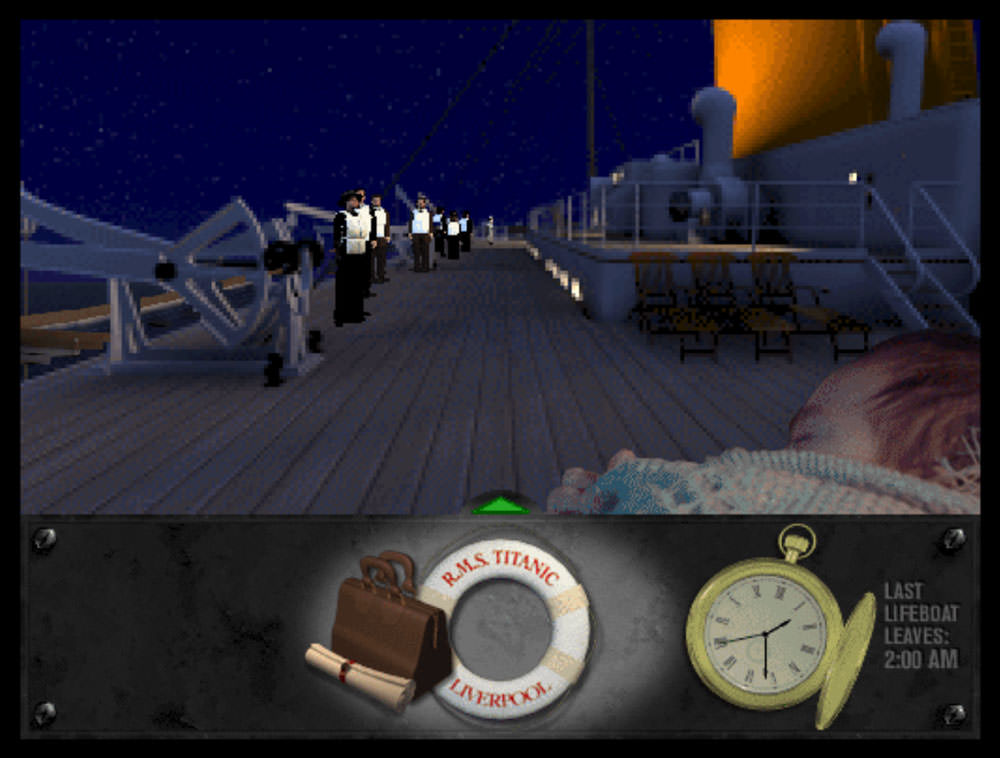
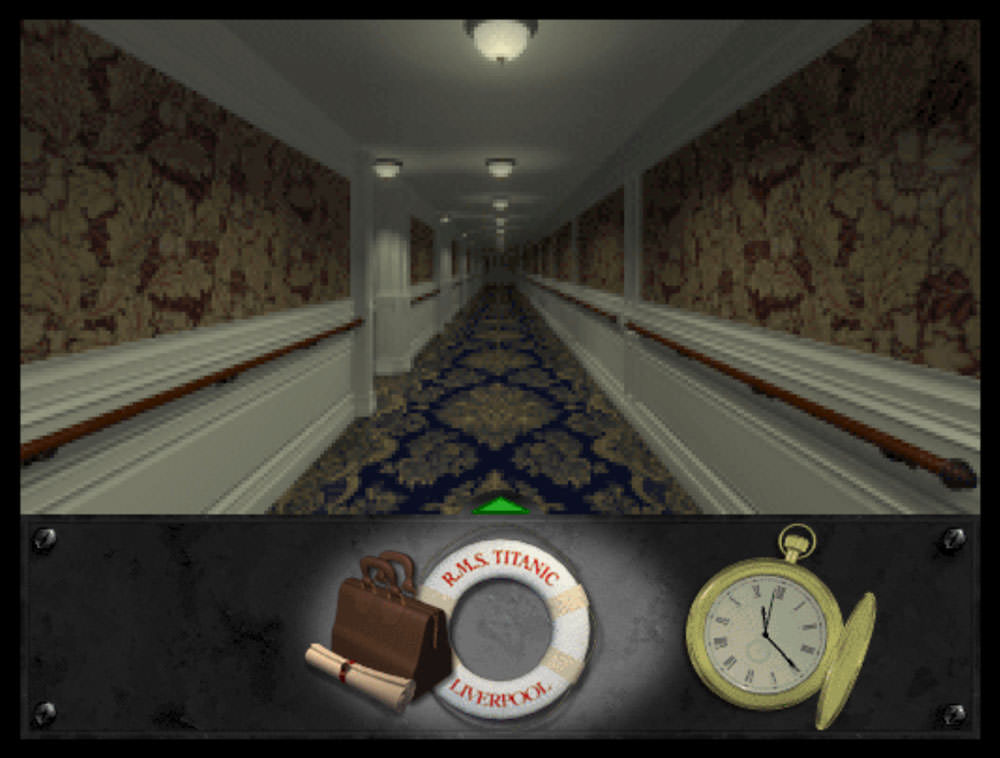
The ship itself can be described as a virtual Titanic. It has even been used in documentaries about the disaster. The 3D model corresponds closely to the real vessel, and the interiors aim for historical authenticity. To my eye, however, everything felt rather sparse and empty. The game is now over twenty years old, and the graphics of the time were still somewhat crude, constrained by the limitations of contemporary hardware and storage media such as CD-ROM.
An Agent Trapped on a Sinking Ship
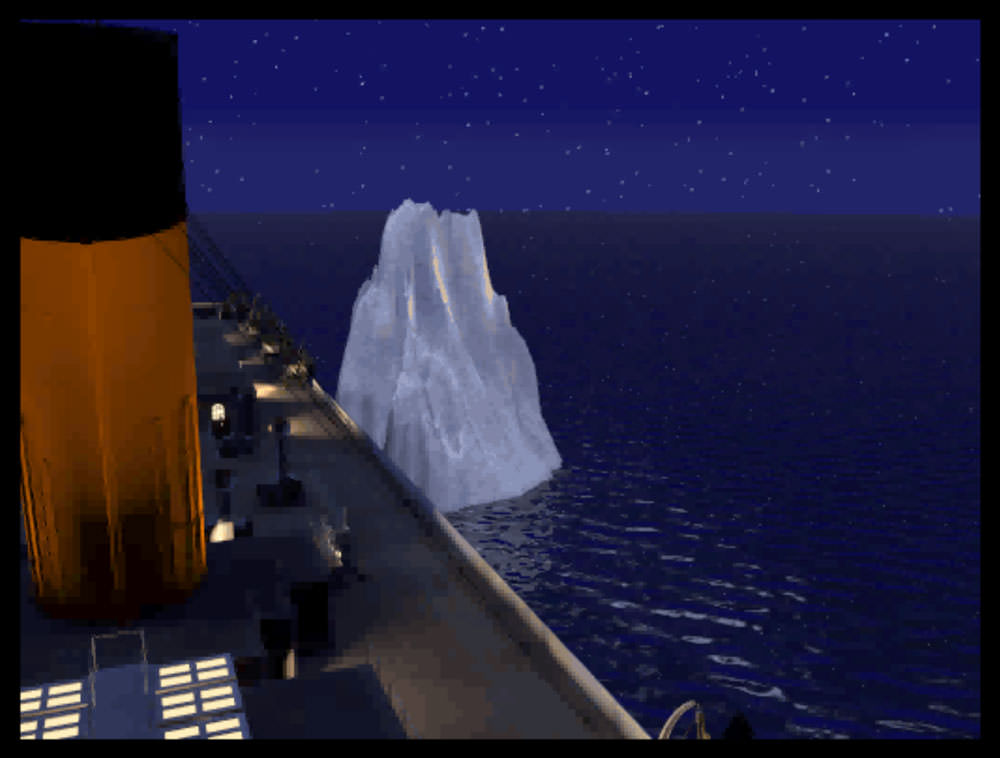
The sinking of the RMS Titanic in the Atlantic Ocean on the night of 14–15 April 1912 is perhaps the most famous maritime disaster in history. On its maiden voyage from Southampton, England, to New York, the supposedly unsinkable ship struck an iceberg that tore open its hull so severely that it went down regardless. More than half of the passengers and crew perished. Numerous explanations have been offered for the scale of the catastrophe.
In Titanic: Adventure Out of Time, the player controls former British secret service agent Frank Carlson, for whom the voyage aboard the Titanic is not actually his first. The game begins in Carlson’s London apartment in 1942, during a German air raid. The building is hit, and Carlson is knocked unconscious — or sent on a journey through time.
Carlson returns to the Titanic as his younger self, when he was previously on board on a secret mission. He failed that assignment, and now he has a chance to try again. Is the time travel “real”, or merely Carlson’s dream? Either way, the task and its consequences are extraordinary. Carlson carries nothing less than the fate of the First and Second World Wars — and the Russian Revolution — on his shoulders.
The player is thus engaged in creating alternative history. Success requires collecting three so-called major items — a stolen book, an Adolf Hitler painting, and a list of Bolsheviks — and escaping with one’s life. The mission can be completed fully or partially, or it can fail altogether. The game is said to feature eight different endings.
Broadly Drawn Characters
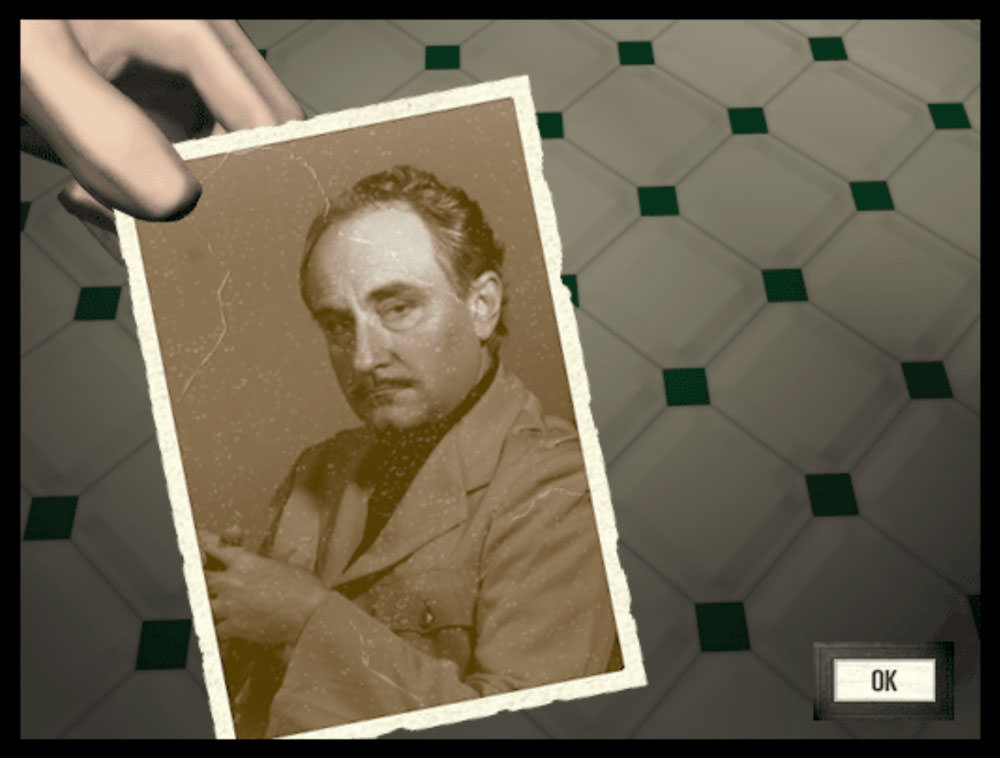
Characters are central to the game. Although the ship itself feels somewhat empty — explained away by it being Sunday night — there is still a commendable number of significant figures on board. In fact, there are so many that I struggled to keep track of them all: who they were, what they wanted, and what I wanted from each of them. And the cabins — there are endless corridors of them. I would recommend keeping an external list of characters, their roles, and their cabins. The game does include a built-in character directory via the purser, but it is cumbersome to keep knocking on his door.
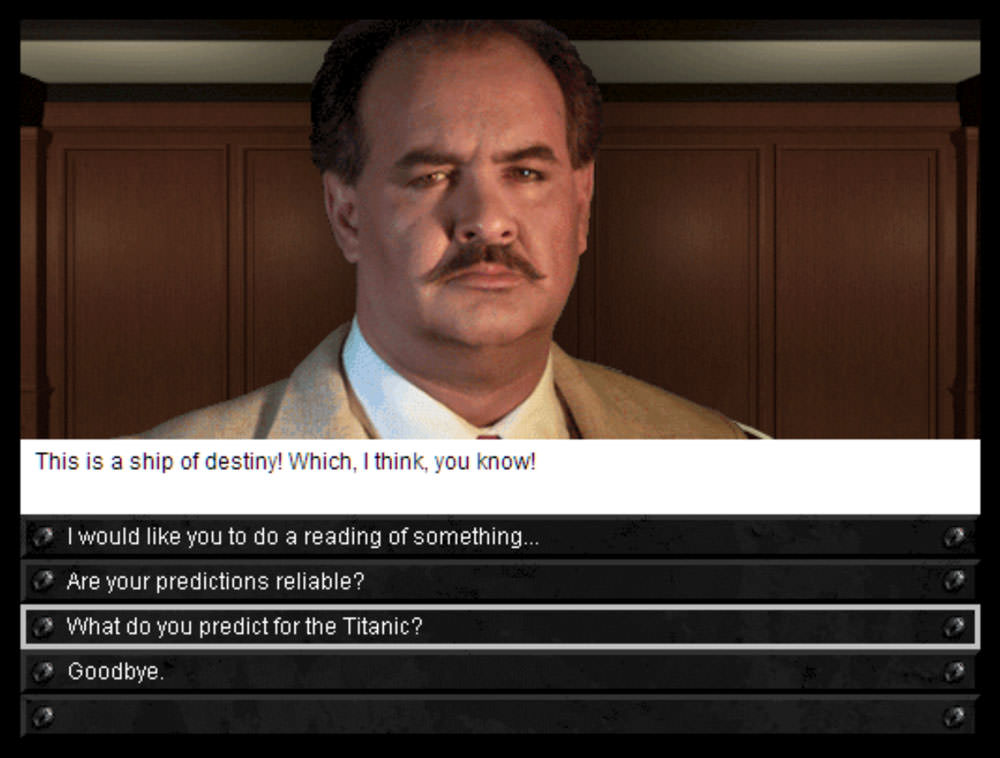
Characters are tied either to the three major items, to survival, or to their own side tasks. Everything is interconnected — or at least it felt that way to me. Conversations play an important role, and some of them are explicitly game-like, requiring specific dialogue paths to be chosen.
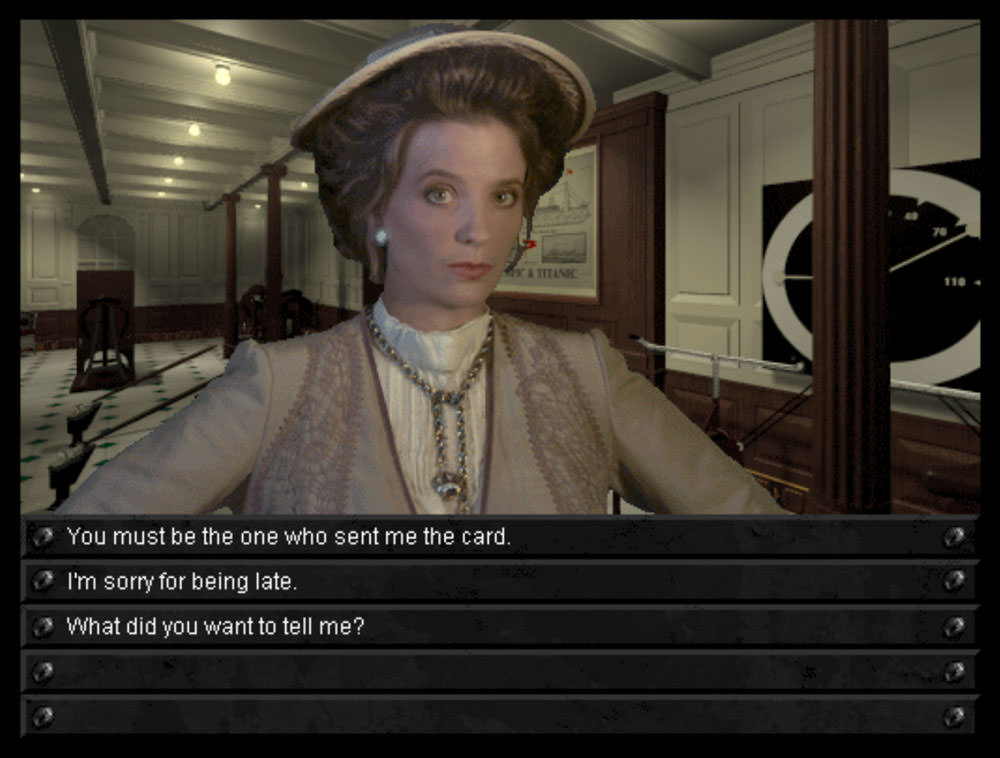
The characterisation struck me as somewhat overdone. Part of this is due to the animation technique: still images of actors’ facial expressions have been strung together into sequences. The expressions are exaggerated, and the voice acting — with its various accents and dialects — is emphatic. The makeup, too, is overly conspicuous. I found the characters interesting, yet simultaneously irritating.
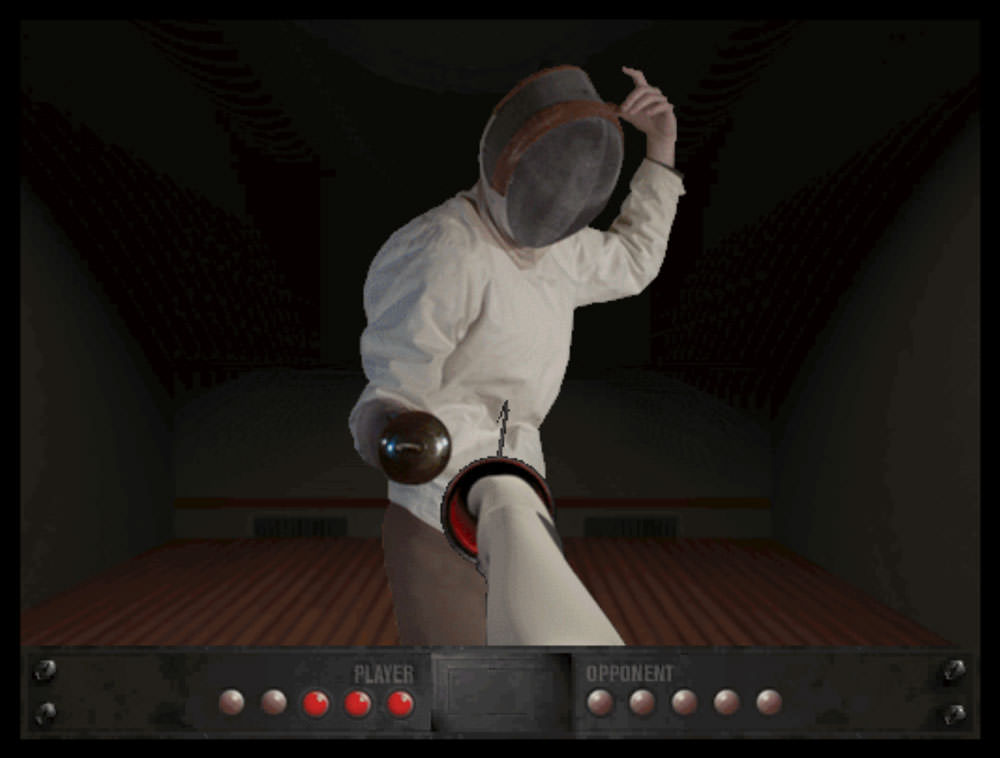
The real Titanic carried many famous figures and super-rich passengers of its time, and while these are referenced, the game’s characters are fictional. Carlson’s antagonist is, predictably, a ruthless German agent. First-class women are portrayed as arrogant, the men as more pathetic and sometimes tragic. I found the ship’s crew sympathetic and caught myself hoping for their unlikely survival. The psychic and the priest offer interesting forms of assistance. There is also a hint of romantic interest for Carlson, but the game never allows this to develop into anything deeper. It remains task-focused: find what you are looking for, and do not linger.
Racing the Clock — and Getting Lost
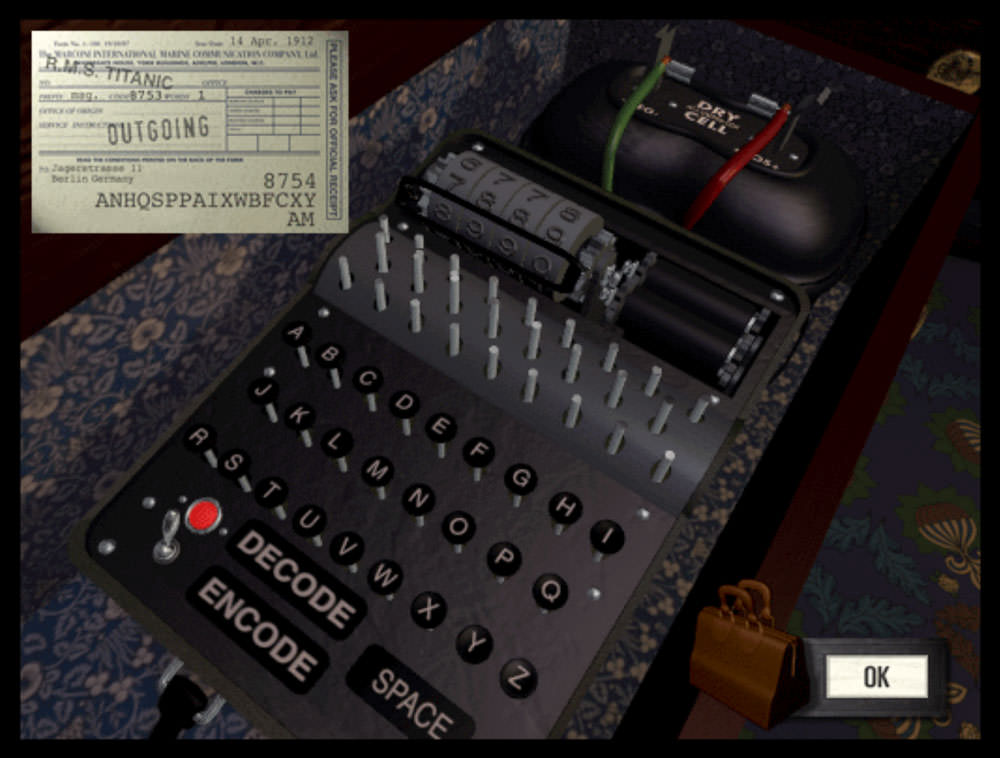
In Titanic: Adventure Out of Time, time plays a crucial role beyond the theme of time travel itself. The final lifeboat is launched at 02:00, and everything must be ready by then. Time progresses partly in real time, but mostly it advances through triggered events. I would have appreciated clearer feedback on the passage of time; the pocket watch alone was an imprecise indicator.
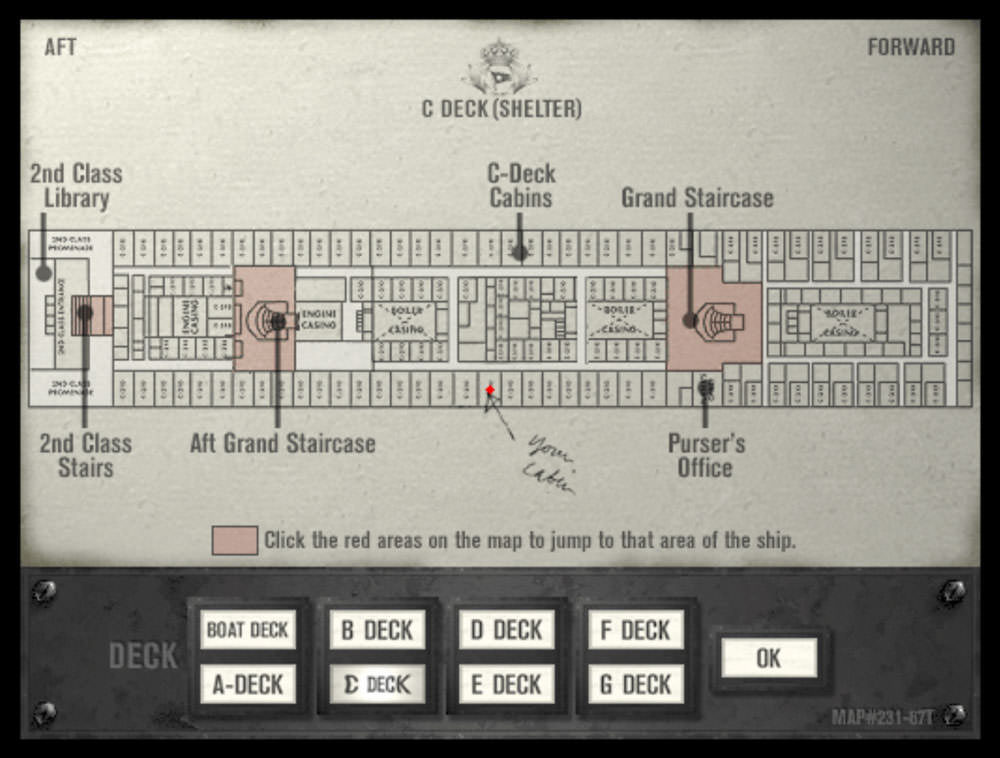
Navigation was perhaps my greatest challenge. The map helps, but it does not clearly mark exits to the outer decks or internal connections between sections of the ship. I spent considerable time simply learning to distinguish between the three staircases. When the game switches to real-time mode, practical knowledge of the ship’s layout becomes essential. Toward the end, fast travel is no longer available. Personally, I am not fond of first-person perspectives, as I easily lose my sense of direction in them.
After one complete playthrough and a great deal of frantic back-and-forth, I now feel far more familiar with the ship’s structure than when I started, and that would certainly help. Titanic: Adventure Out of Time is clearly meant to be played multiple times. It simply feels as though it demands rather a lot from a modern player.
A Remarkable Contemporary: The Last Express
I have previously highlighted in Samooja the so-called cousin game of Titanic: Adventure Out of Time, The Last Express. It was released around the same time in the 1990s and is likewise set in the years preceding the First World War. It did not achieve commercial success, however, and can otherwise be considered an ill-fated title.
In The Last Express, the game world consists of “only” seven train carriages. Time advances in real time at a six-to-one ratio (ten real minutes equal one in-game hour). The animations are choppy there as well, but in my view they are stylish and effective. The characters likewise avoid stereotyping, and different nationalities and languages are presented realistically.
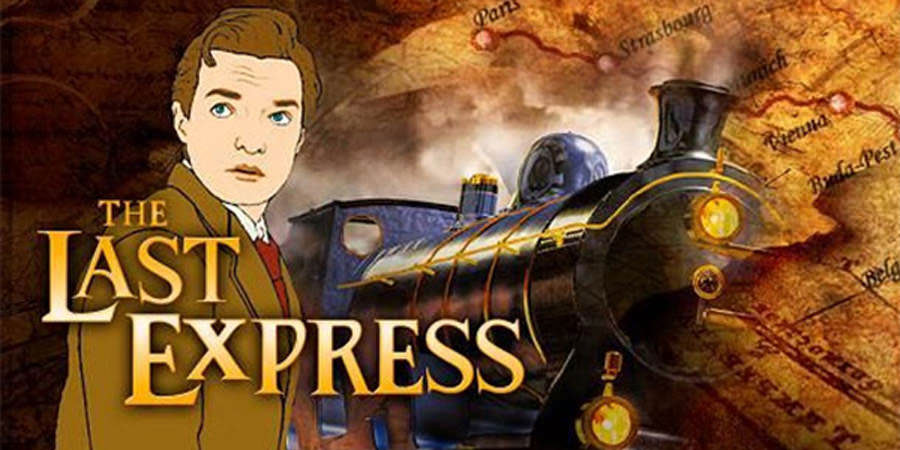
The Last Express reportedly features as many as 35 different endings and is even more demanding than Titanic: Adventure Out of Time. To me, however, it belongs to an entirely different league. It is a genuinely unique adventure game that never underestimates the player. Everything that Titanic: Adventure Out of Time promises is taken further and truly realised there: real-time progression, alternative endings, a convincing setting, memorable characters, and tension.
Verdict
I cannot say that I do not find myself reflecting on the hours spent aboard the Titanic, nor that I would not return. In fact, it feels quite possible that I will. Once the ship has become familiar, perhaps I will have time to get to know the characters better and finally grasp how the three major items move through the game and what it all truly meant.
I give my partly frustrating and ultimately panic-ridden voyage 60 points out of 100. Titanic: Adventure Out of Time has its strengths, but compared to The Last Express it is brass beside silver.
Availability
Titanic: Adventure Out of Time is available for Windows PCs on GOG.com.