
Mystery Case Files: 13th Skull (2010)
The seventh entry in the popular hidden object series, Mystery Case Files: 13th Skull, was released in late 2010. It is a standalone pirate-themed story set in the “Deep South” of the United States, in Louisiana. The player-controlled agent arrives at a dilapidated manor to investigate the disappearance of a man. It appears that the family's father has been abducted by a ghost, and the manor holds clues pointing to a hidden pirate treasure. But not everything is quite as it first seems. 13th Skull offers, so far, the most mature story in the Mystery Case Files series. New features include the ability to converse with characters portrayed by live actors in order to gather information. Alongside the familiar word-list-based hidden object scenes, the game also introduces a new type of search task: chores.
13th Skull was designed by Adrian Woods, as were the previous entries in the series. He was also involved in the graphics, sound design, and programming. The game was developed by the US-based Big Fish Games. I played the standard edition, which was in fact released in 2011, after the collector’s edition.
Decaying but not abandoned
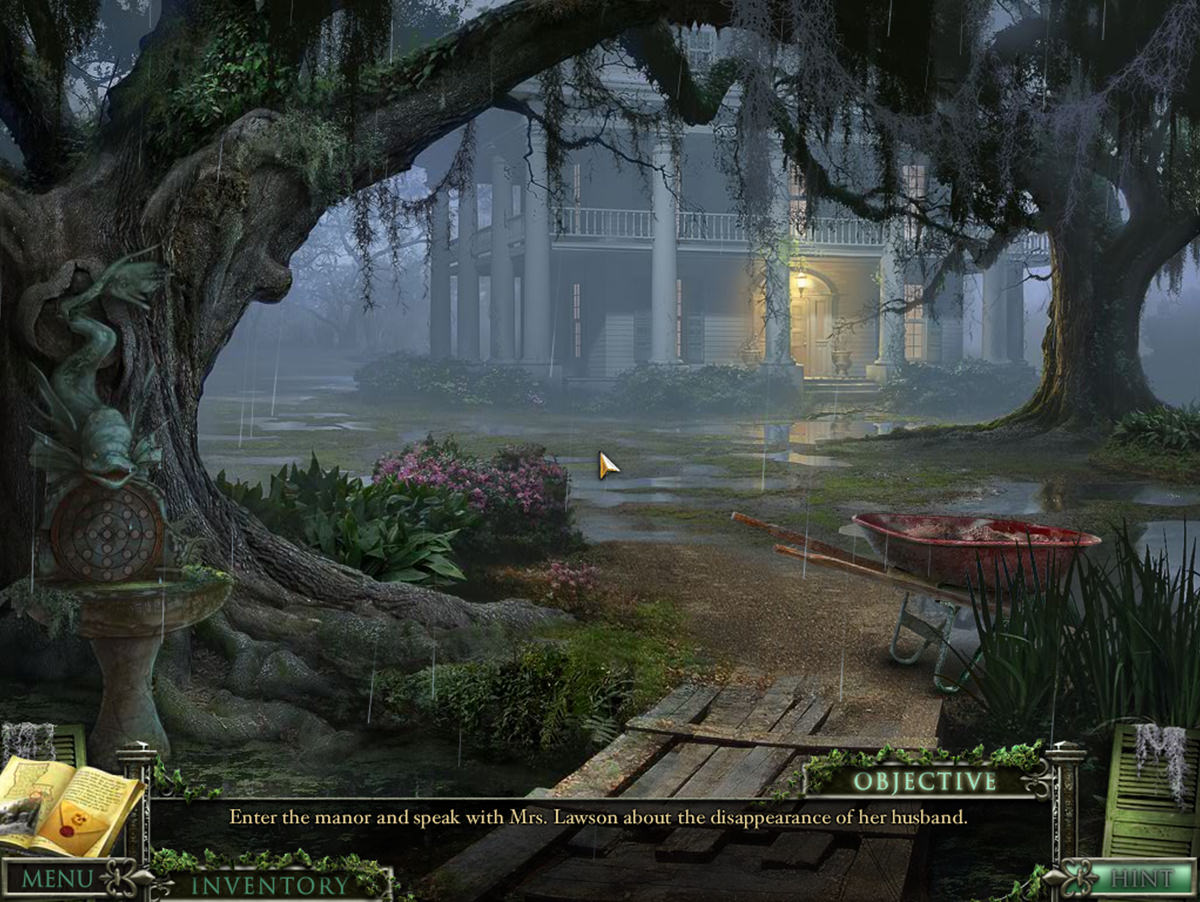
13th Skull is set in a swampy area inhabited by alligators and large snakes. The soundscape is loud both indoors and outdoors. Rain and thunder are constant, shutters bang against windows, and frogs croak incessantly. Banjo and harmonica in the background music firmly situate the setting in the American South, as does the local manner of speech. Voodoo and the traditional dish gumbo soon become familiar to the player.
The old manor at the centre of events suffers from damp and seems on the verge of collapse. Nevertheless, a family lives there: a mother, a father, and a daughter. At the beginning, the player is shown a scene in which the father reads his child a bedtime story about a pirate, only to be suddenly taken away in a flash of white light. The child recounts this event, which a rational adult might interpret as a child’s response to a traumatic experience. In 13th Skull, however, the adults are superstitious, and more than one character suspects that something truly evil lurks in the manor.
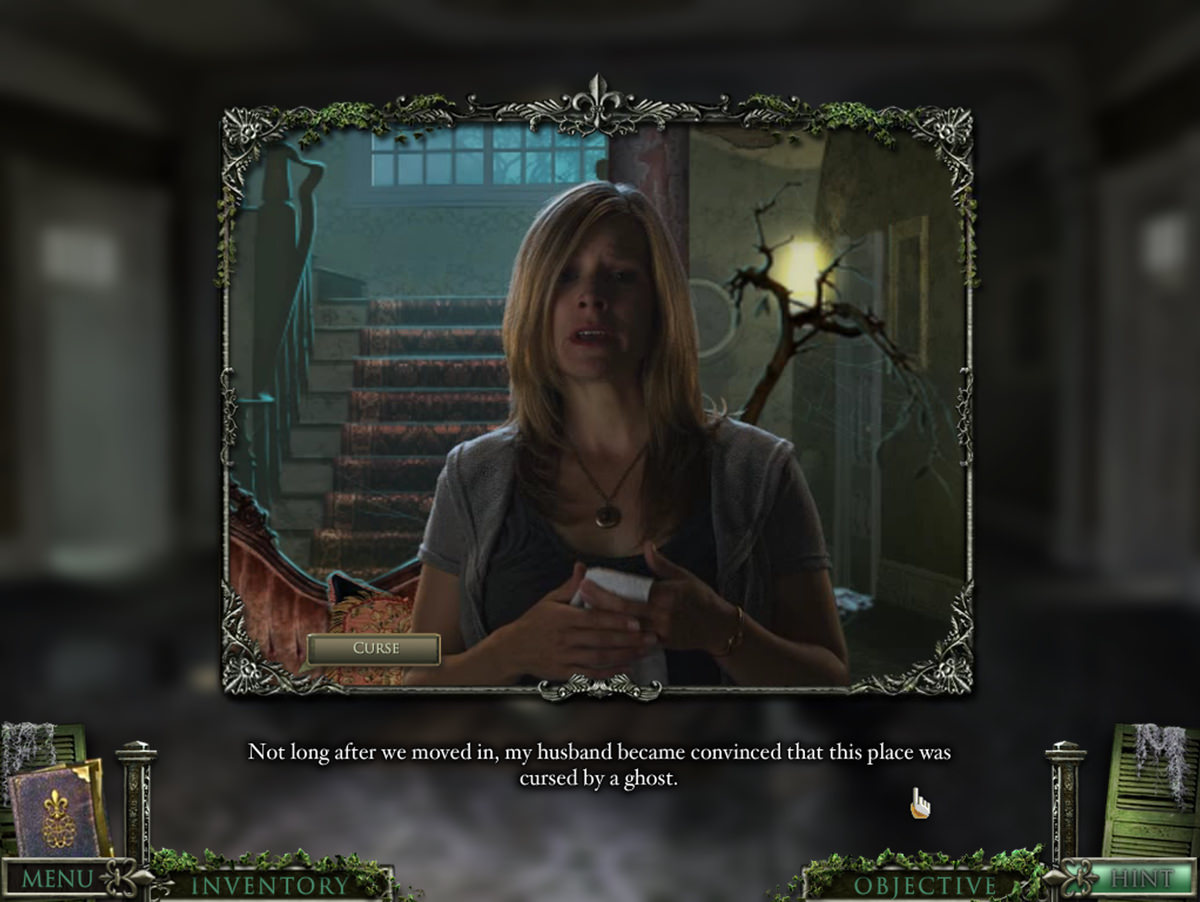
The agent sets out to investigate the man’s disappearance and identify possible culprits by exploring environments and interviewing people. Pirates soon emerge as a promising lead, as the manor was originally built by a pirate. Is his spirit haunting the house?
Interactive conversations with characters are entirely new to the series. The ghostly human figures seen in earlier games have been replaced by flesh-and-blood characters. In dialogue scenes, the player selects from predefined topics. Choosing one option never excludes the others; all conversations ultimately convey the same information. Even so, the ability to converse felt distinctive and refreshing, and dialogue plays a crucial role in the story. Characters provide information and hints — as well as tasks.
Guided orientation
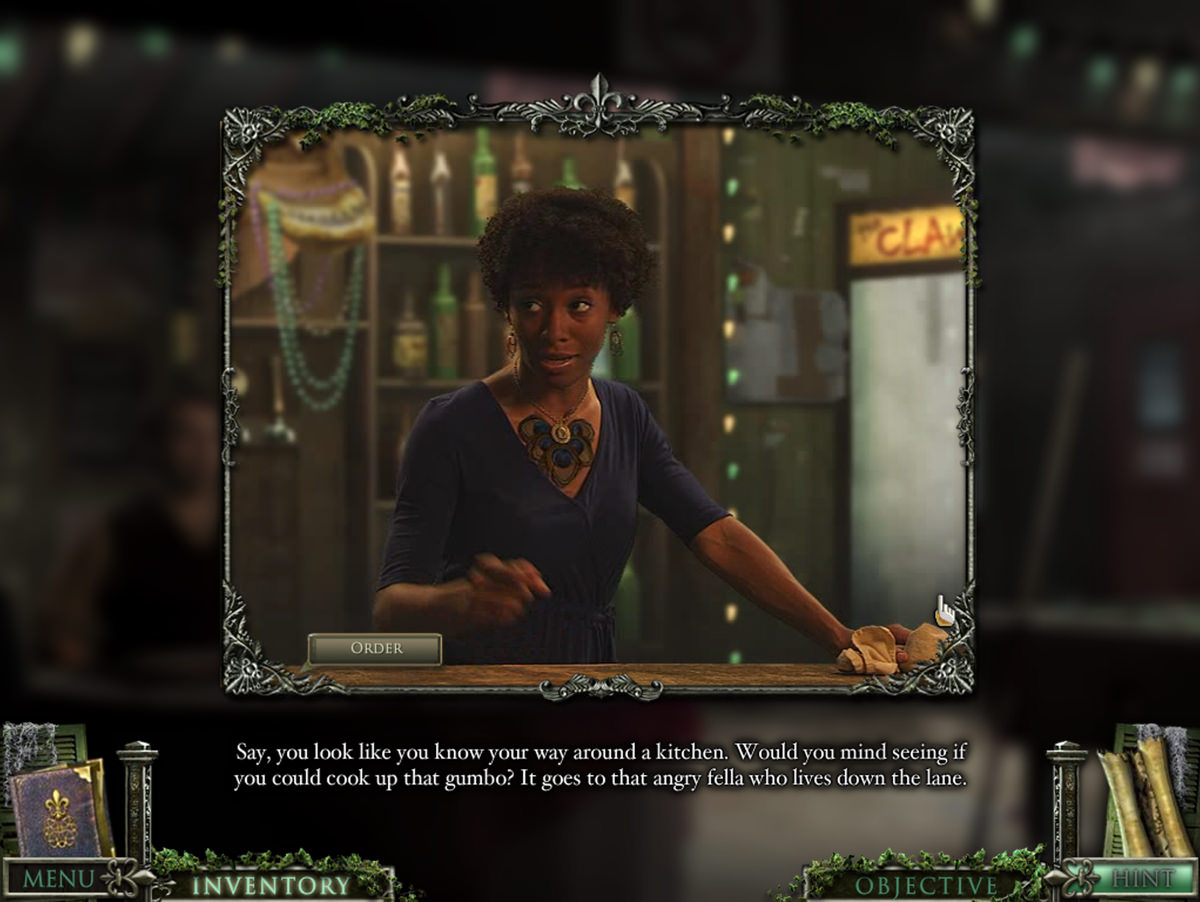
The game’s characters reduce the agent to an errand runner, demanding that the agent fetch all manner of items — from coloured pencils and cleaning supplies to voodoo artefacts — in exchange for information or keys. Each task requires collecting seven items, scattered across the game world.
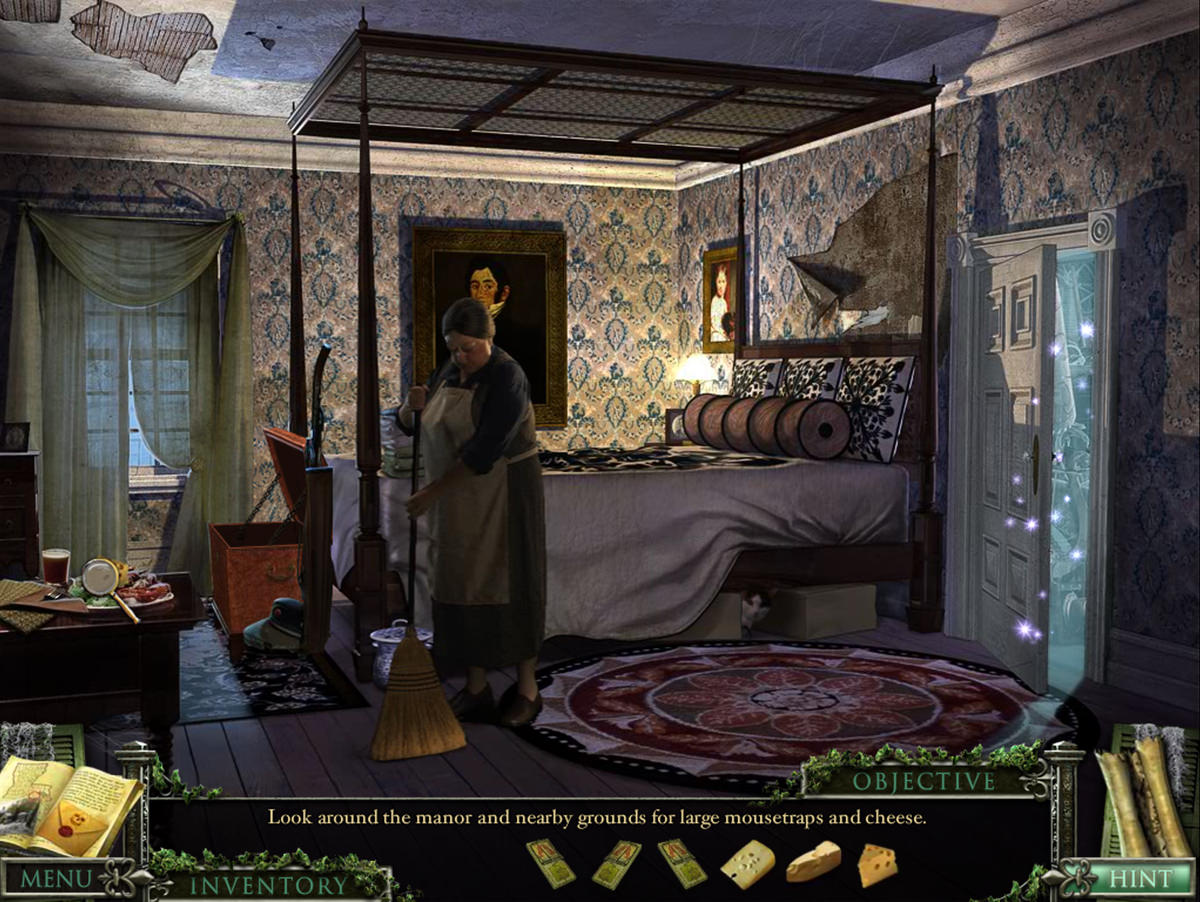
The game is very friendly — that is, heavily guiding — in keeping the player aware of the current objective. An Objective panel appears above the inventory, explicitly stating the active task and displaying images of the missing items. This prevents aimless wandering. The panel also prompts the player to go to a specific location or speak to a particular character when the story requires it.
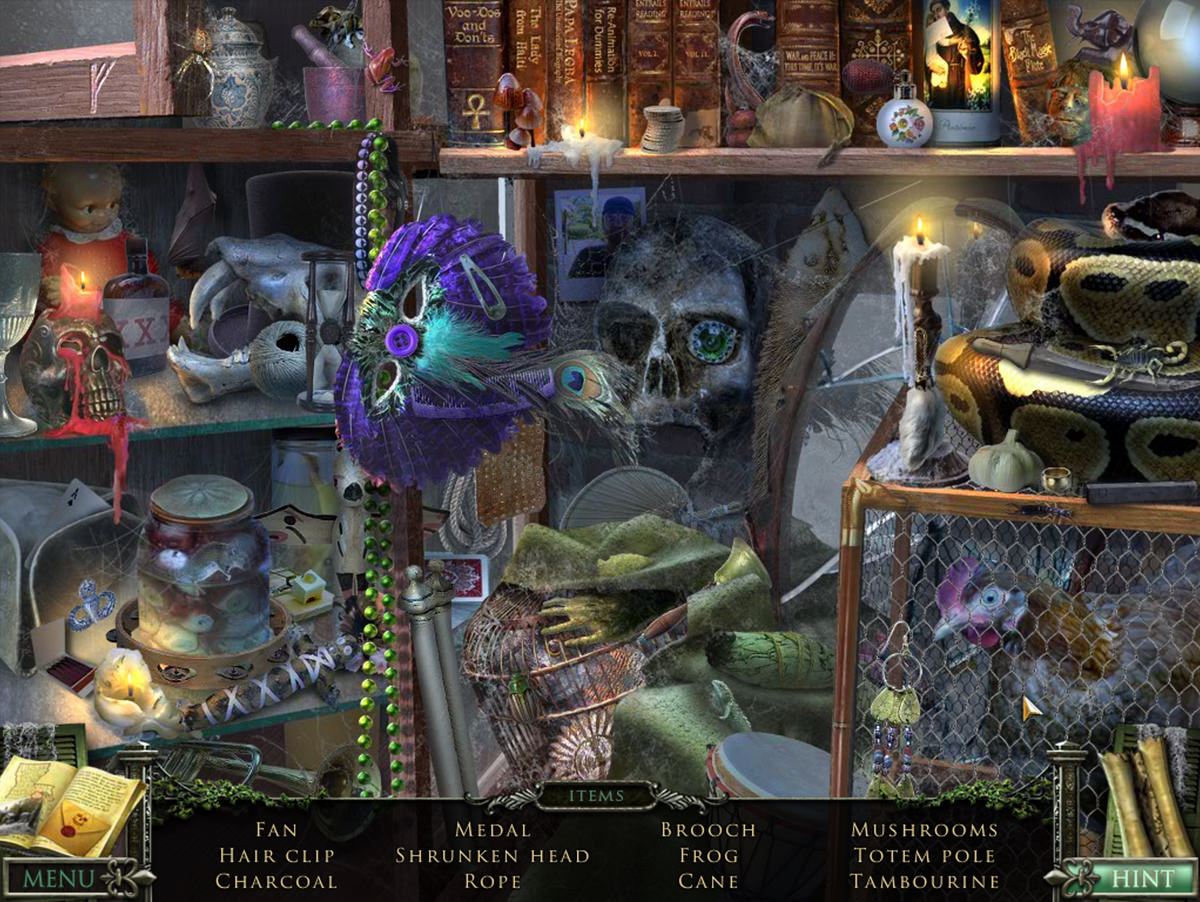
13th Skull also includes traditional hidden object scenes, marked in the environment by animated light orbs. These scenes always rely on word lists. One item from each list is transferred to the player’s inventory once all objects have been found. Inventory items are then used in the game world in an adventure-game fashion.
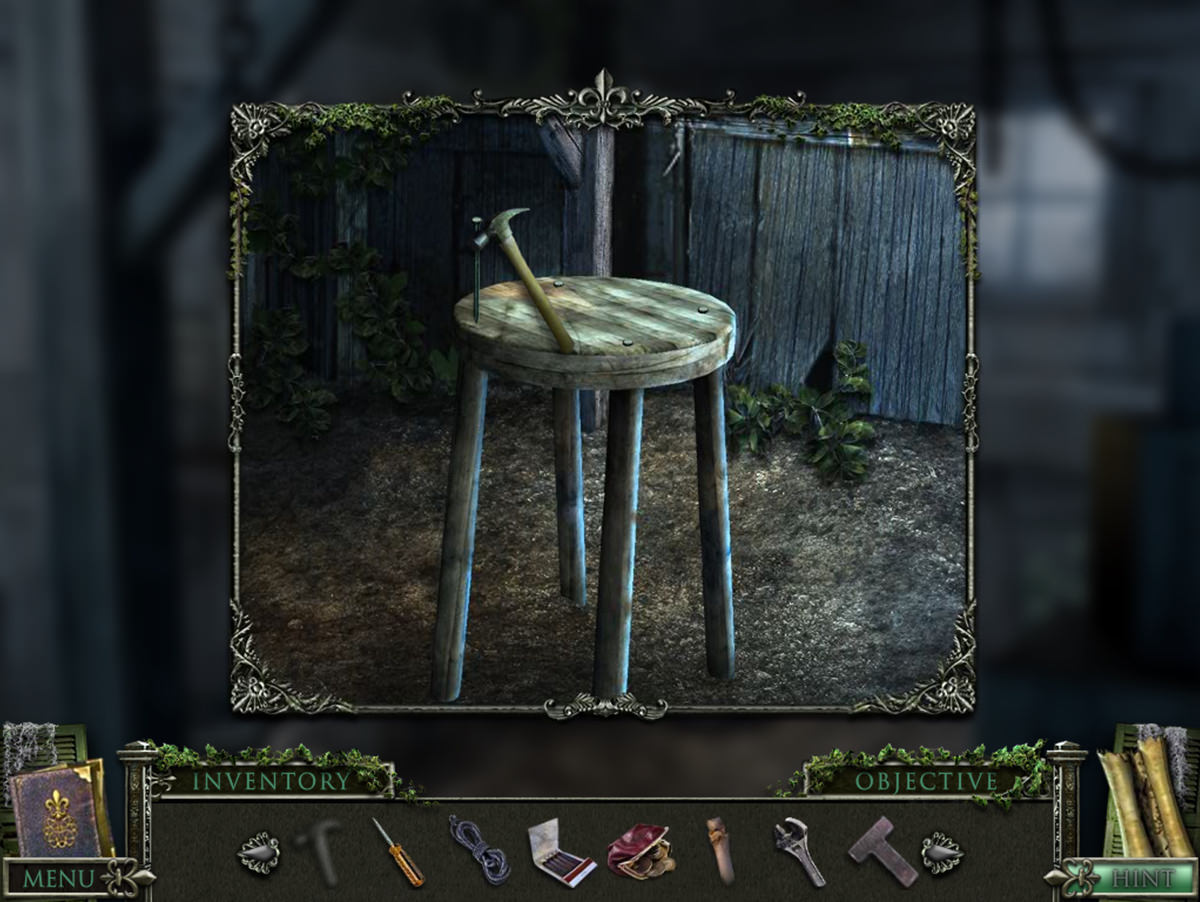
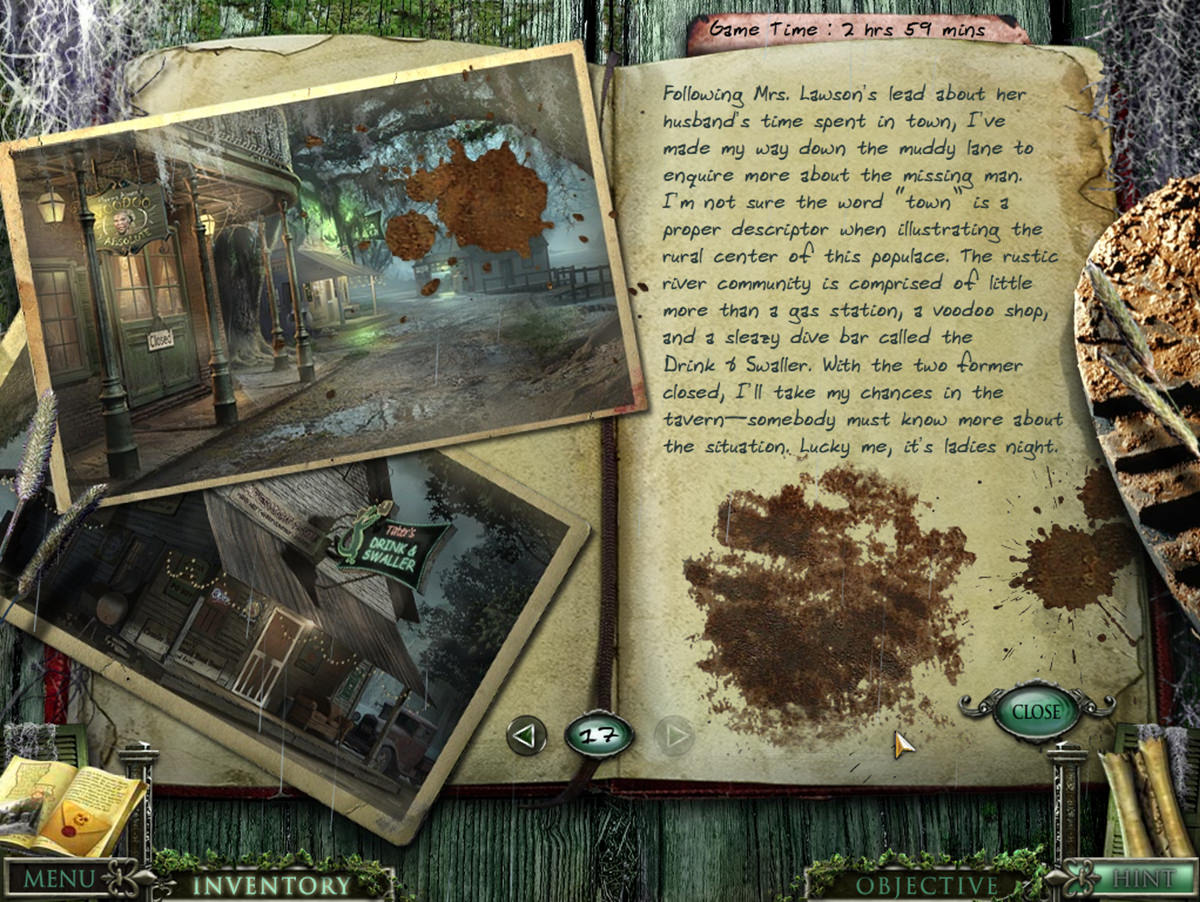
Inventory tasks — including acting as an errand runner for other characters — are varied. They are not particularly inventive, but neither did I find them dull. They integrate smoothly with the game’s puzzles, which are present in moderation. Some puzzle solutions are multi-stage and require careful exploration of the environment. Fortunately, the player has access to a journal that records essential information, including hints. Even so, I occasionally resorted to pen and paper for notes. These multi-stage puzzles were, in my view, the strongest part of the game’s puzzle design. Locked doors, boxes, and similar obstacles do appear, but they never became overwhelming.
Help — and the lack of it
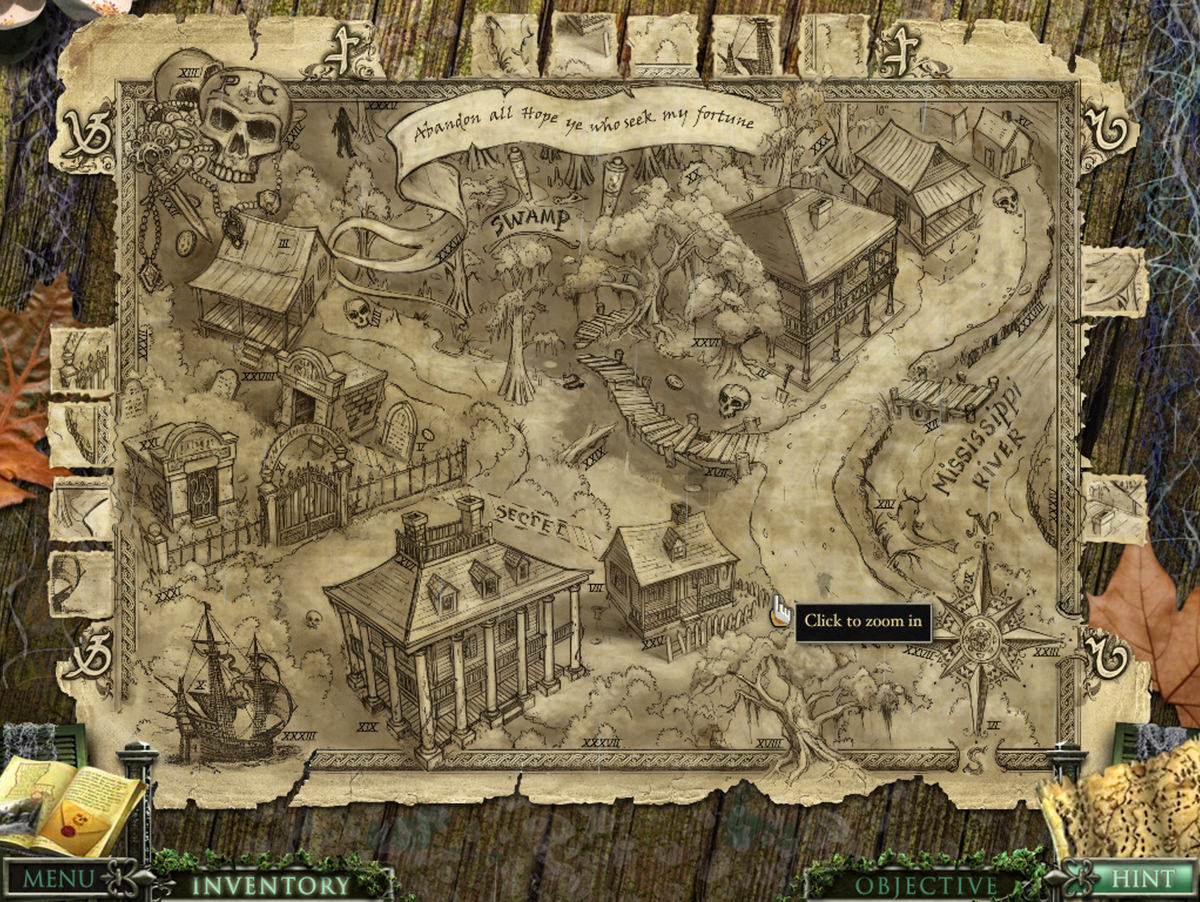
13th Skull includes a map, but not a proper navigational map of the game area. The player must learn to find their way independently. While it does not meet modern expectations of a map, it is nevertheless one of the game’s most interesting elements. It combines a search task, an inventory task, and a puzzle into something resembling a treasure map.
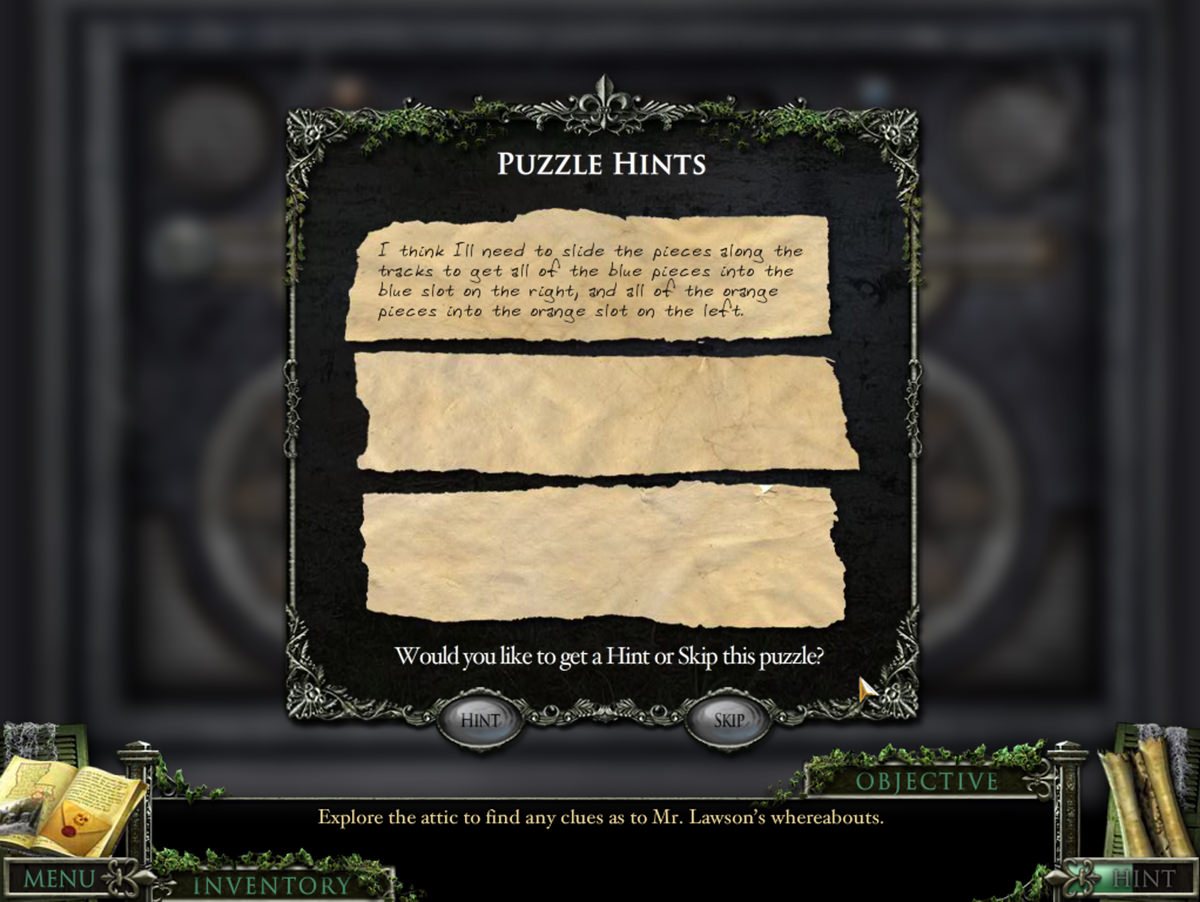
The familiar crime computer from earlier entries is gone, replaced by a more abstract hint system. In hidden object scenes, requesting a hint highlights the location of one remaining item on the word list. In puzzle scenes, requesting a hint opens a small window presenting a three-step solution, revealed one step at a time. The window also includes a Skip button, which can be used if a puzzle proves too difficult or tiresome.
The player’s task is complicated by the fact that not all puzzle solutions can be copied directly from walkthroughs. Some puzzle solutions are randomised on a per-playthrough basis. I do not know why the designer chose this approach. Deliberate difficulty feels old-fashioned in a casual game where there is no competition, not even against time. Still, these puzzles were among the game’s strongest moments.
Verdict
It took me 9.5 hours to complete 13th Skull. I am not sure whether that is a long time, but my interest in the story held throughout, and the game never felt drawn out. My overall impression is very neutral. The experience was not bad, but it did not evoke strong emotions either.
Like the previous entry, Dire Grove, 13th Skull is a balanced and controlled experience. It progresses steadily, holding the player by the hand while allowing tasks to be completed in slightly different orders. It is therefore not fully linear, but lightly branching.
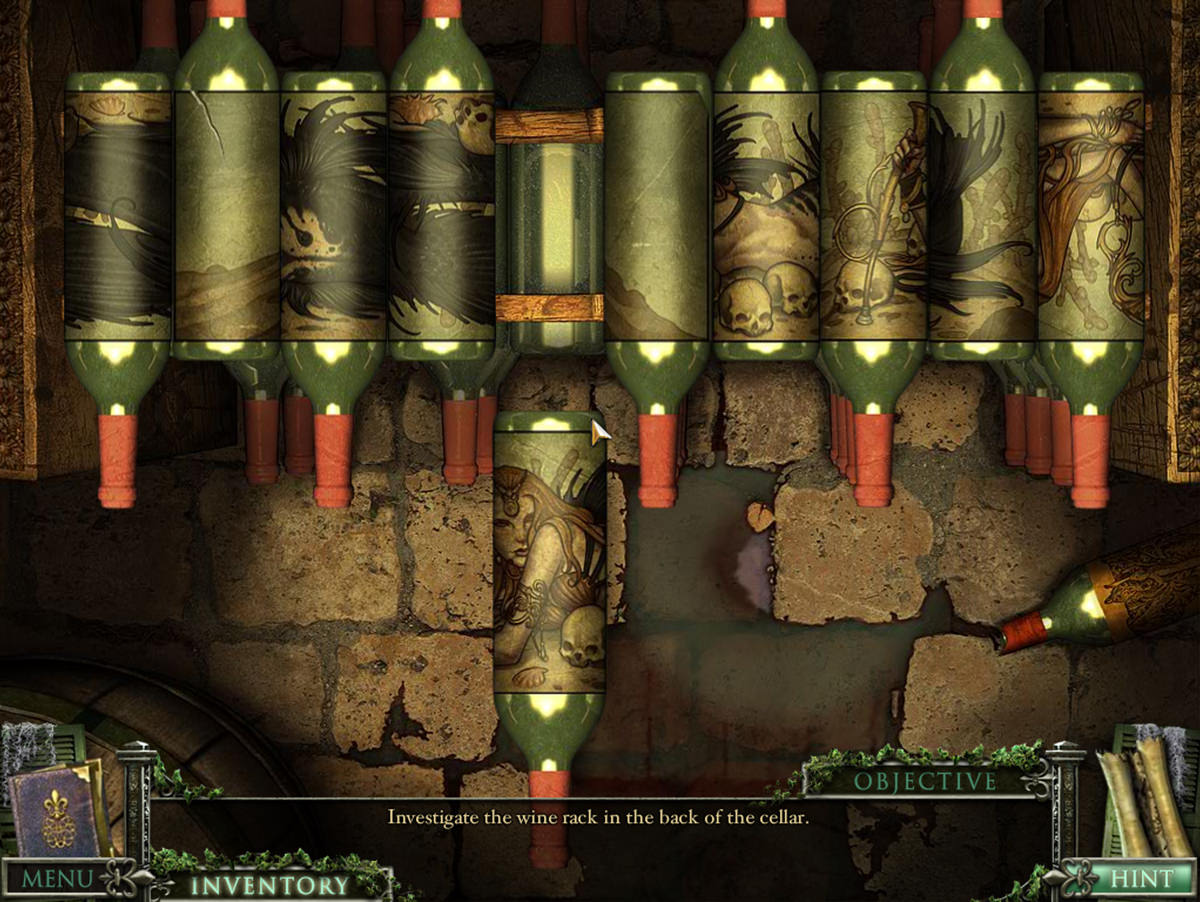
The game’s photo- and video-based graphics are perfectly serviceable, and the hidden object scenes fit their environments well. The lighting is sombre but not colourless, and I did not experience visibility issues. The journal, familiar from earlier entries, is once again well executed. I found the switching between the Objective panel and the Inventory panel somewhat confusing; it is not the most elegant interface solution.
I have nothing against 13th Skull. It offers several hours of casual entertainment. If you enjoy search tasks and are interested in live-action characters, I can recommend it. Still, I do not feel that skipping this entry would mean missing out on anything essential. I give my overall experience a score of 64 out of 100.
Availability
13th Skull is available for Windows, macOS, and iOS. Both standard and collector’s editions are available.