
Mystery Case Files: Shadow Lake (2012)
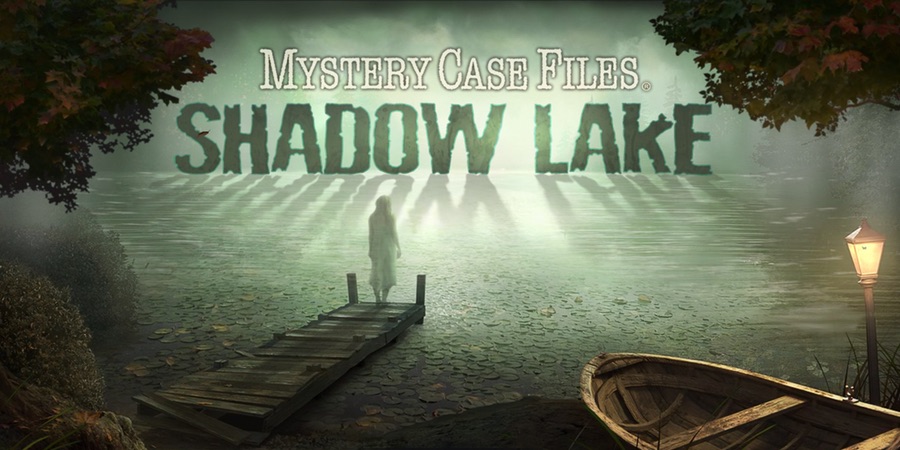
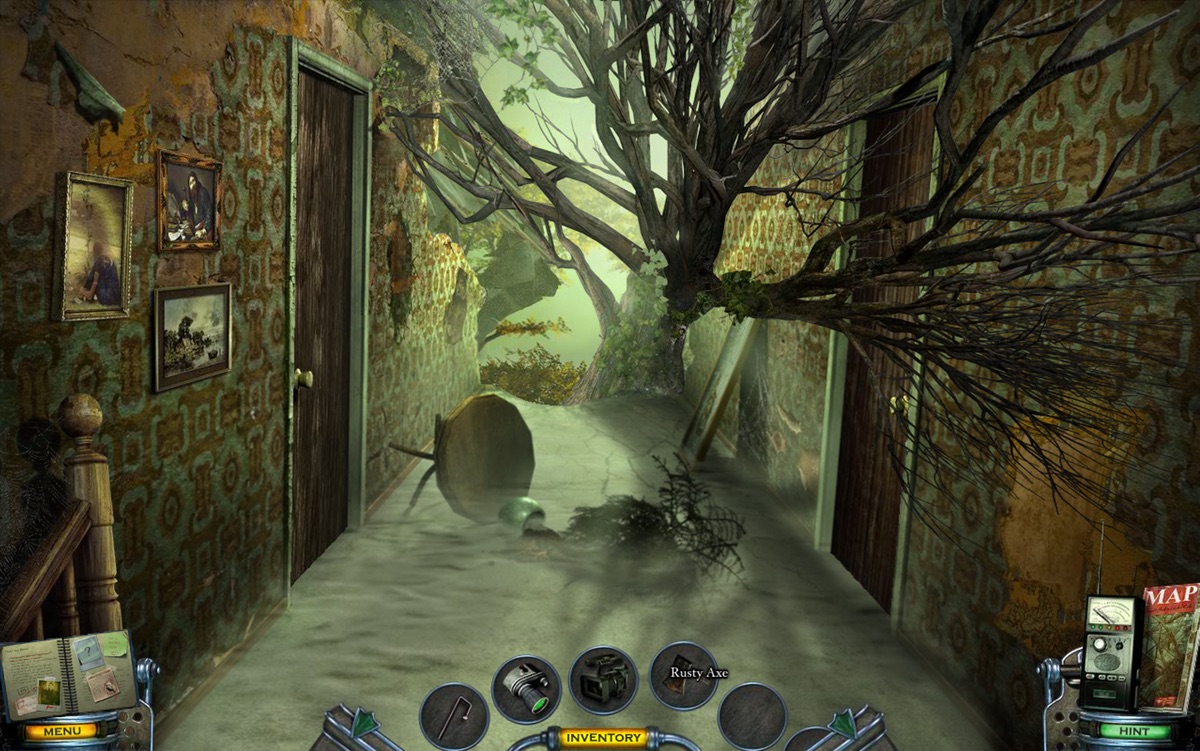
Released in 2012, Shadow Lake is the final entry in the Mystery Case Files series developed by Adrian Woods and Big Fish Games’ in-house studio. Subsequent instalments have been produced by other studios, although the brand has remained with Big Fish Games, which continues to publish the series. I started playing Shadow Lake almost immediately after Escape from Ravenhurst, and my first reaction was that it looked ugly and rather bleak. Stylistically, Shadow Lake is realistic and structurally quite simple. After the fantastical Escape from Ravenhurst, it feels like a return to earth, even though the story itself is supernatural, with mediums and cursed horns. It felt as if they’d squeezed the last drops out of Adrian Woods and then simply slipped through the fence instead of climbing it. Still, it is a perfectly decent game, very casual in nature, and my experience was by no means miserable.
The cursed earthquake
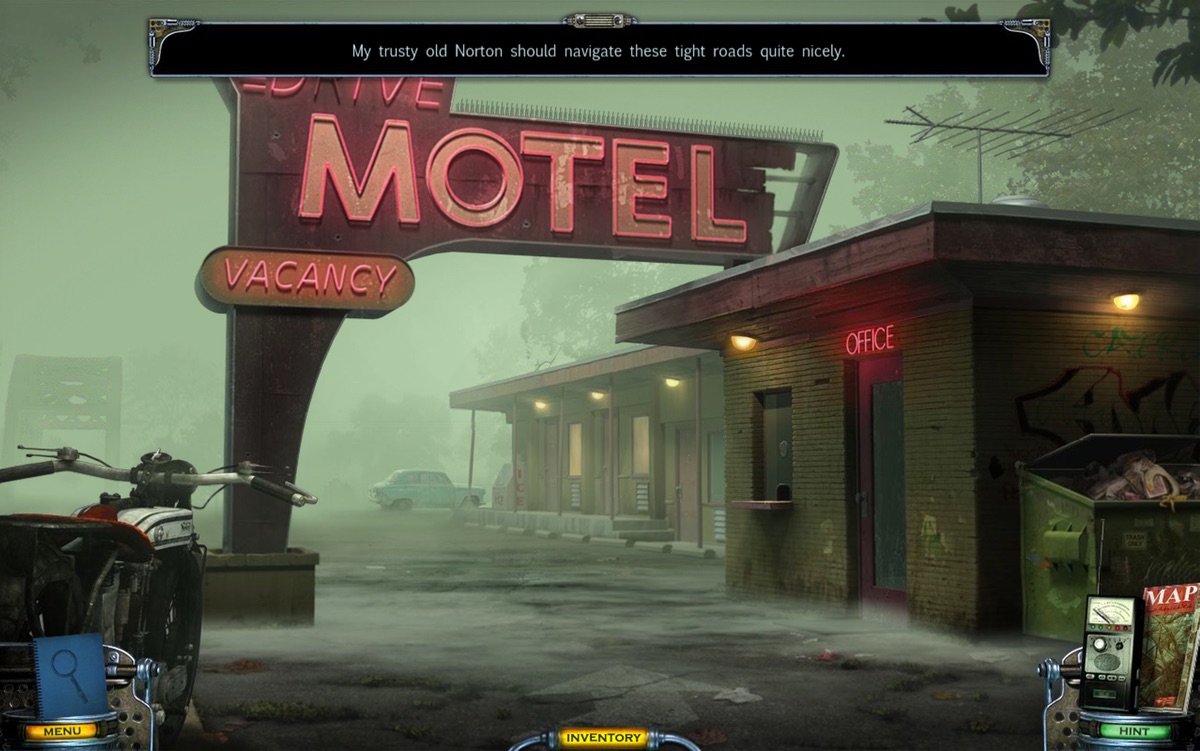
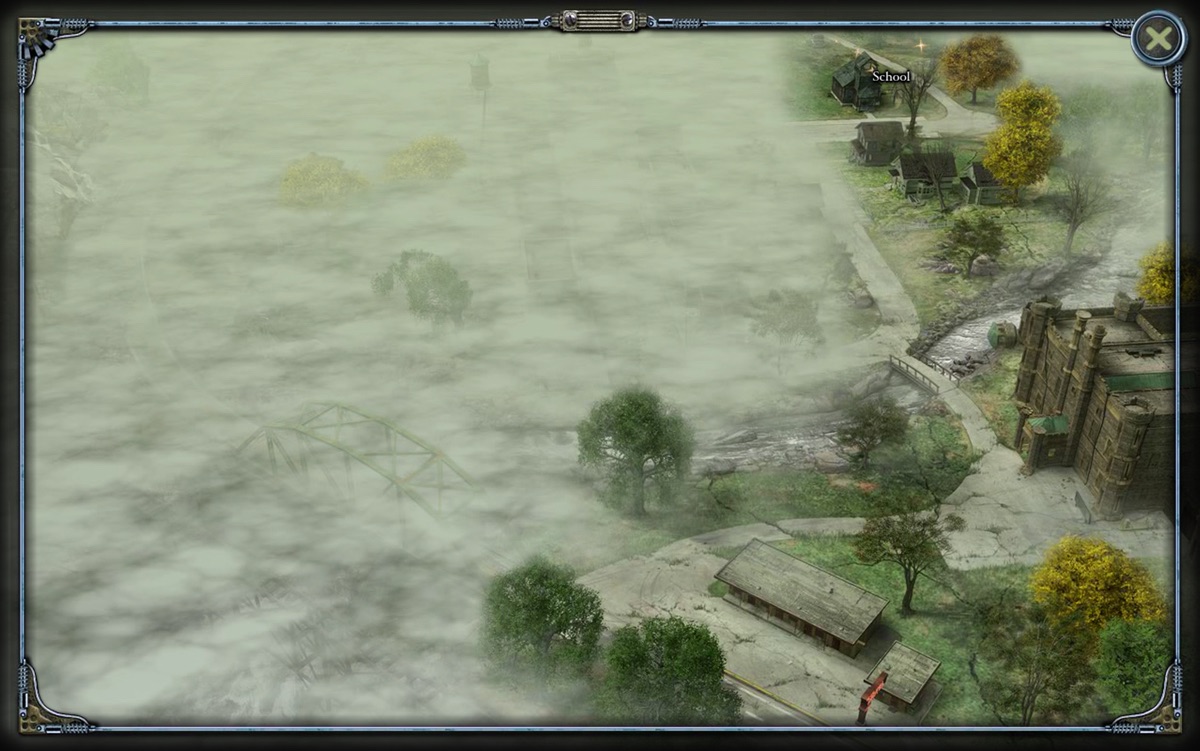
This time the agent rides a motorbike into a motel car park somewhere in Maine, USA. Judging mainly by the landline telephone and the clumsy walkie-talkie, the game is set perhaps in the 1990s. It may parody paranormal reality television – or perhaps it does not, as everything can also be taken quite seriously. In any case, the small town of Bitterford has been abandoned after an earthquake, and a film crew called Ghost Patrol has picked up rumours of strange happenings there. The agent begins working with a medium recruited by Ghost Patrol. Cassandra the medium is clairvoyant and practises automatic drawing (related to automatic writing).
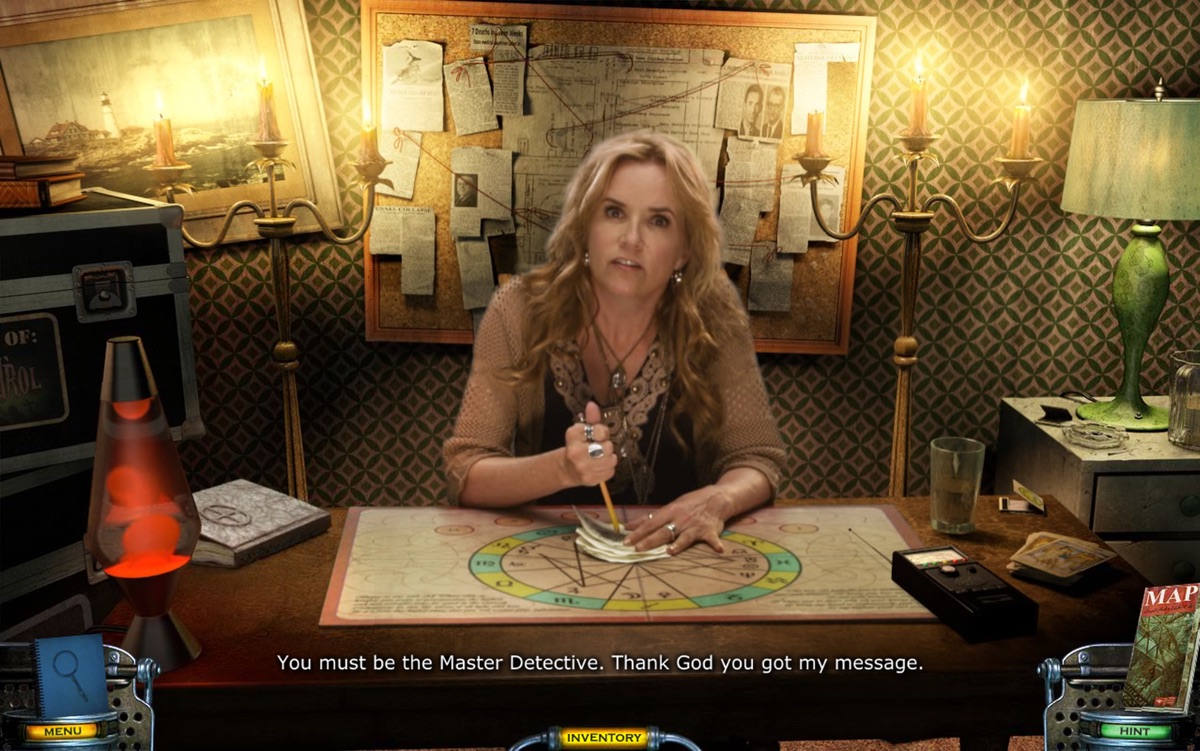
In Shadow Lake, the player moves around a map containing a total of eight locations, such as a school and a prison. Everywhere is haunted. Each location consists of a handful of spaces – a yard, a kitchen, an office, and so on. At last the series received the map I had been missing, one that also functions as a shortcut. The map gradually fills in as the player discovers or unlocks new places. The earthquake damage and abandonment conveniently justify the scruffy, chaotic visual style.
Under the medium’s command
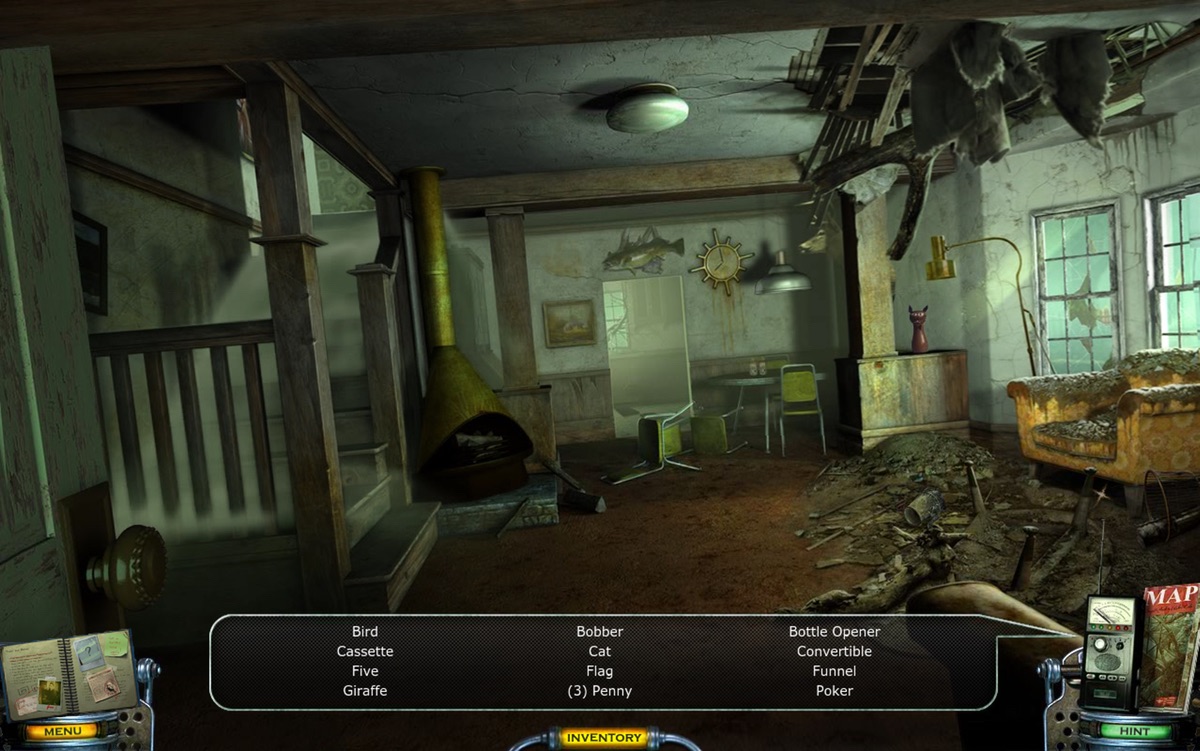
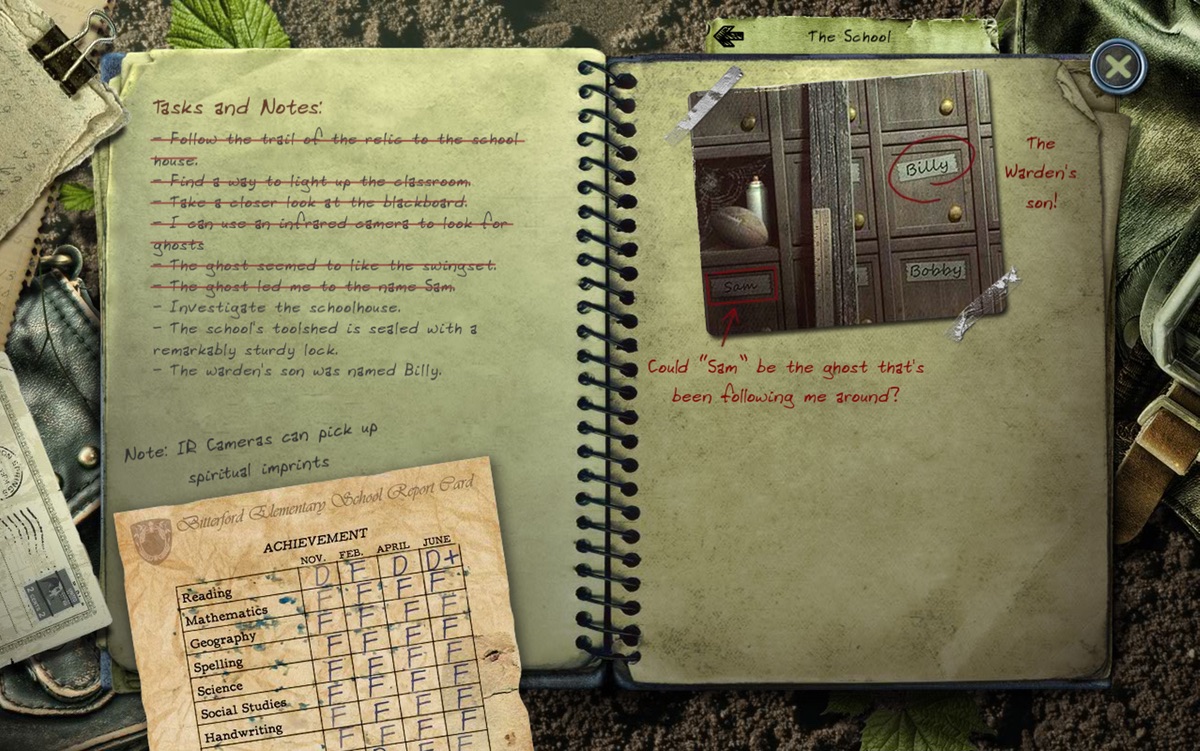
The medium directs the agent via walkie-talkie. She tells you where to go and provides word lists that determine which objects must be found. Word lists thus return as the main search mechanic after being absent from Escape from Ravenhurst. The novelty lies in the fact that items from a single list may be spread across several spaces or rooms, and even within zoomed-in details – various “corners” inside those rooms. Once the items have been found, the medium summons the agent back to the motel.
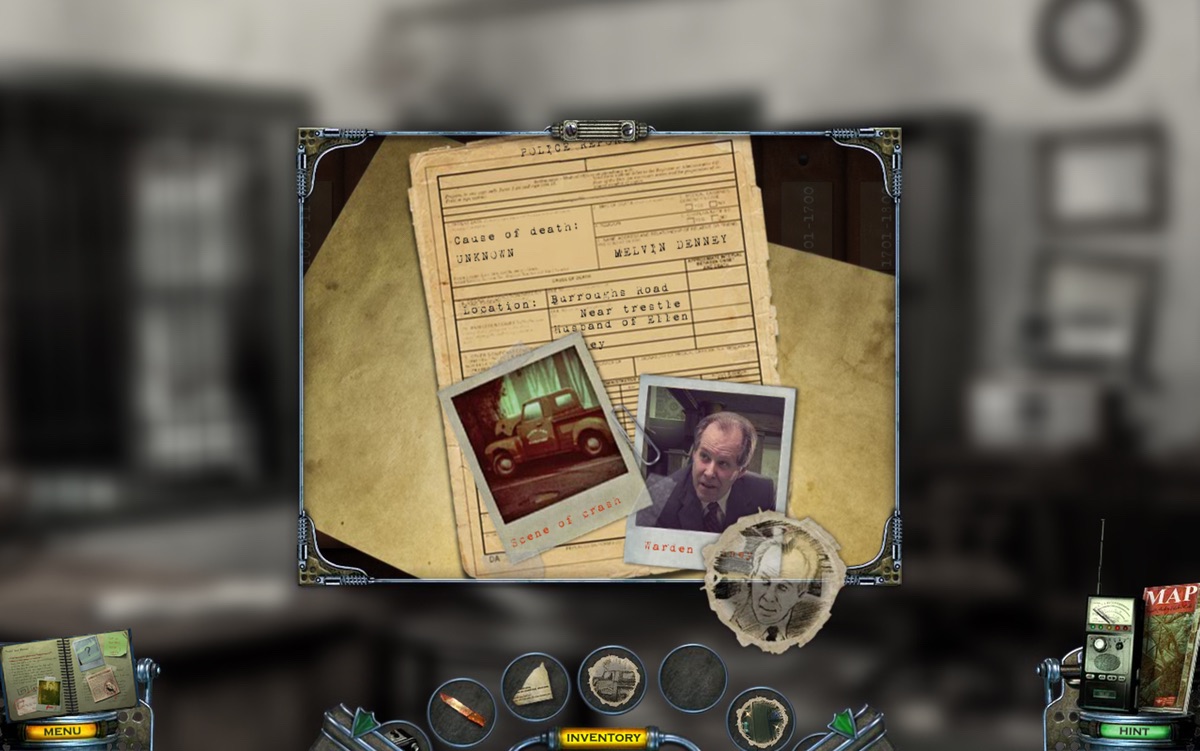
At the motel, the medium hands over the results of her automatic drawing in the form of image fragments. These fragments echo the door plaques from Escape from Ravenhurst. Each fragment must be placed over the game world at a spot matching the image it depicts. A fragment may contain a puzzle linked to item use and searching, requiring the player to stage the environment to match the fragment. Once “activated”, the fragments are returned to the medium, who then sinks into a trance.
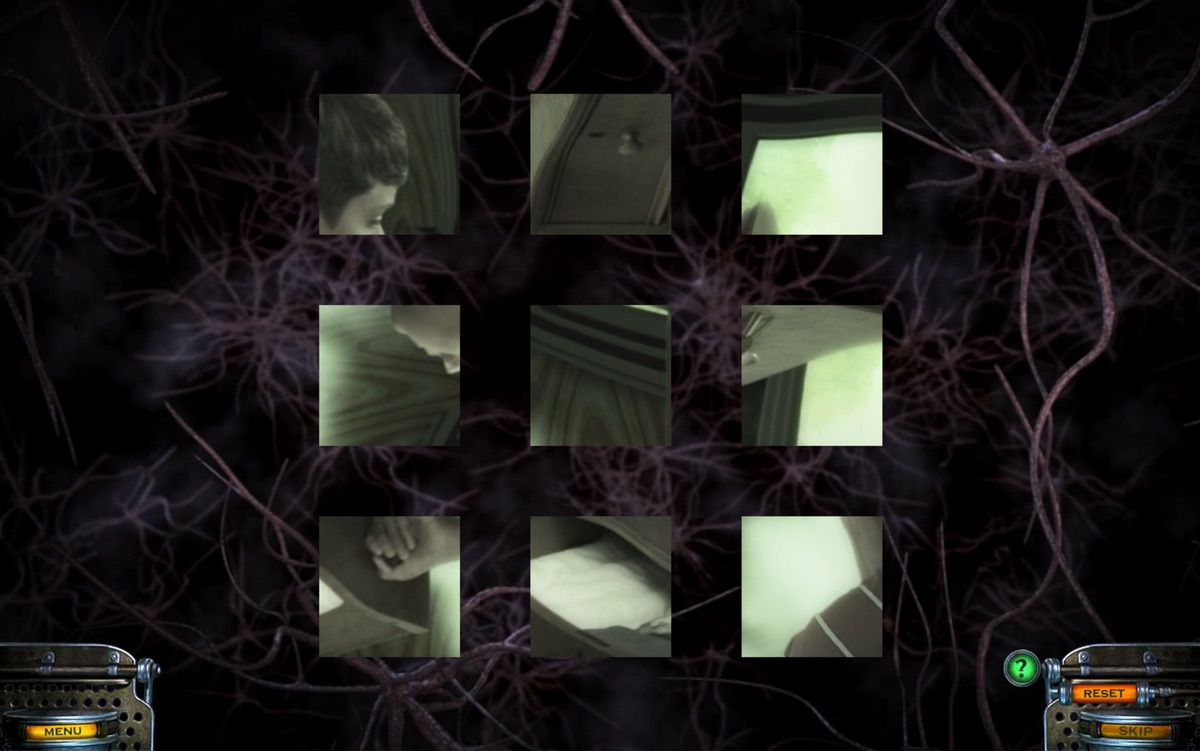
The medium’s clairvoyant visions are presented as jigsaw puzzles. The pieces are wildly drifting squares that must be fitted together. The puzzles gradually become more difficult, although I found myself actually getting faster at solving them. The completed image is a moving video clip, and once assembled it triggers a cutscene depicting events from the past. Piece by piece, the truth behind those events becomes clearer to both the agent and the medium. After each puzzle, the cycle begins again: word list, image fragments, puzzle.
Realism at the expense of creativity
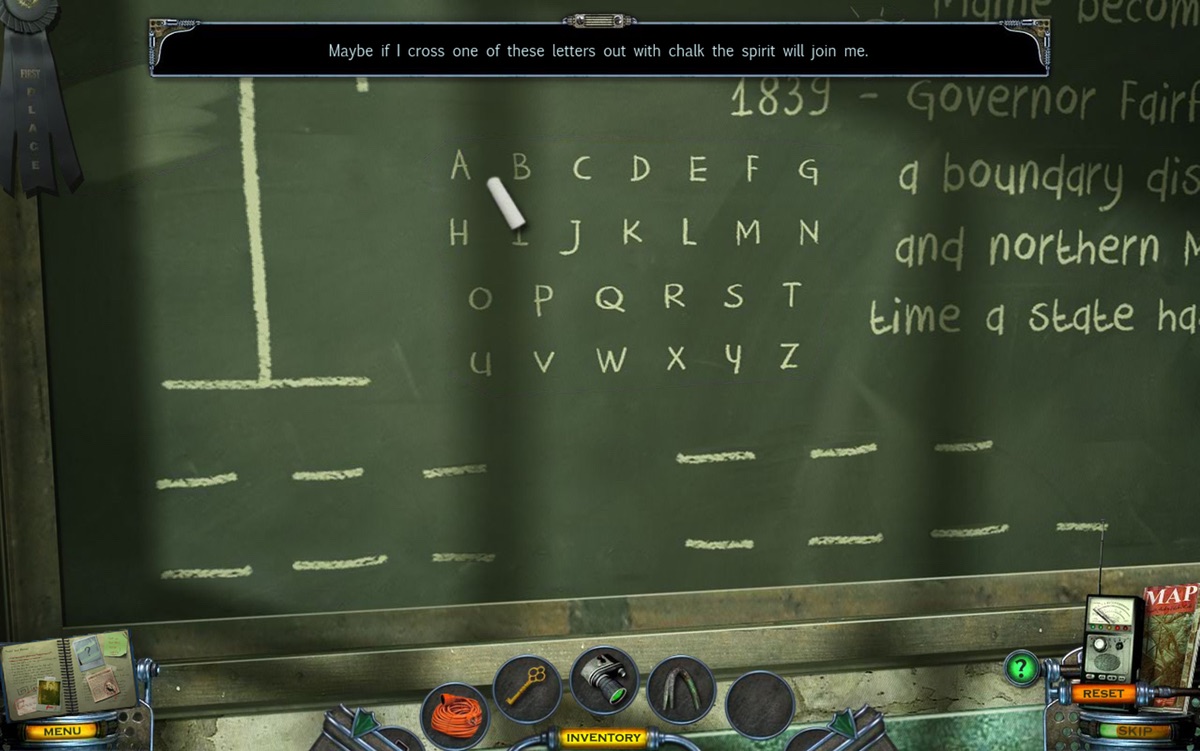
Shadow Lake contains very few minigames, which was a mild disappointment for a series veteran accustomed to them. Those that do appear are not particularly inventive. Overall, Shadow Lake feels stripped down. This does fit the realistic approach, as one might ask what Charles Dalimar’s wondrous contraptions in earlier entries were if not overtly unrealistic. Still, Shadow Lake had me playing with a straight face throughout, and I never sighed in delight.
Inventory use focuses on practical, realistic problems. Typical items include a crowbar, a screwdriver, and a night-vision camera – nothing especially whimsical. The night-vision camera does at least introduce a distinctive visual style and some variety. Ladders turned out to be essential in several places, and I repeatedly had to return to fetch them from previous locations. A particular inventory mechanic is tied to the image fragments, which require staging the environment in specific ways.
Verdict
Being under the medium’s control was easy and repetitive – not particularly inspiring, and structurally the game offers no real surprises. I did not find it boring, however; it is simply very light and easygoing. The story, too, is rather slight, although the camp-spirited finale left an impression. My playthrough lasted only four and a half hours, which felt just right for a game this repetitive.
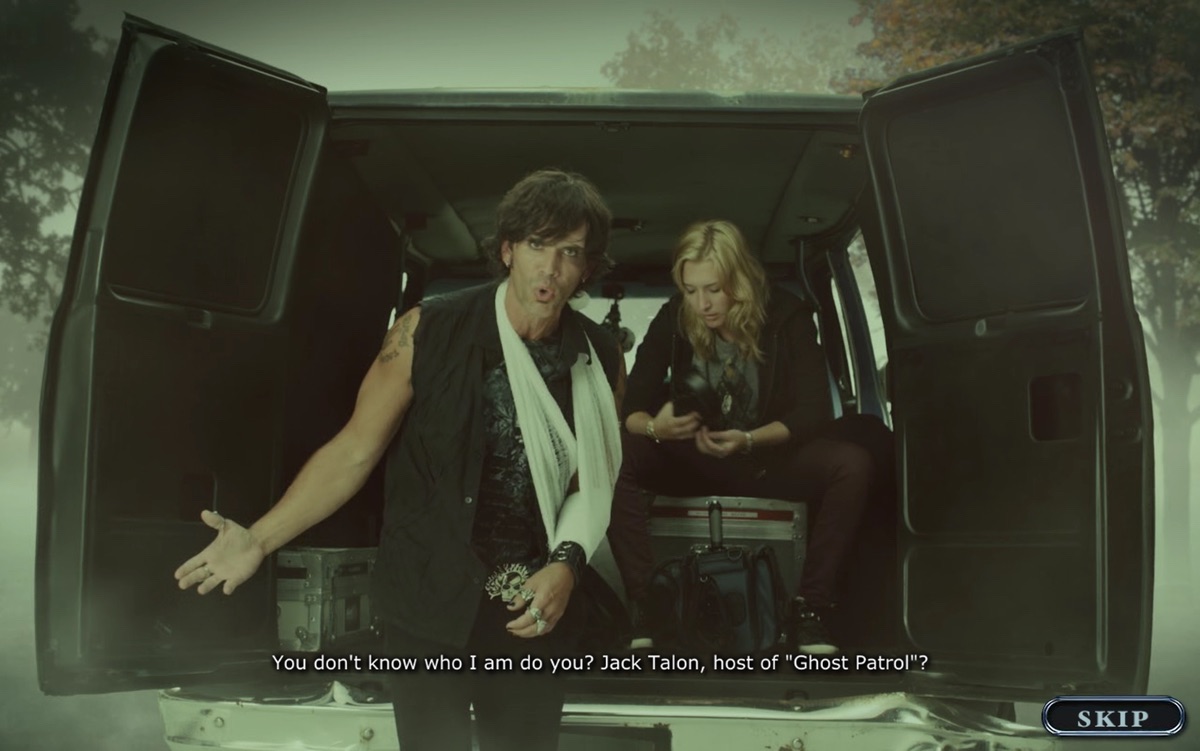
As the game progressed, I grew more forgiving of the visuals, despite the disappointing start. I cannot say what exactly the studio was aiming for – perhaps some kind of deliberate departure. The music, soundscapes, and effects were subdued. The live-action performances are solid, neither overdone nor underplayed. The medium and the rock-styled Ghost Patrol host were even memorable. There is more video material here than in previous entries, with a noticeably greater emphasis on acting.
In a sense, Shadow Lake returns the Mystery Case Files series to its roots with simple word lists, a recurring puzzle, and a map-based structure. Clarity is a design choice that is hard to criticise. Repetition is not a problem if the mechanics genuinely work and reward the player. I give my experience 61 points out of 100.
Availability
Shadow Lake is available in both standard and collector’s editions. I played the standard version. The collector’s edition includes, among other things, a built-in strategy guide and morphing objects. The game is available for Windows, macOS, and iOS.