
Victorian Mysteries: The Yellow Room (2012)
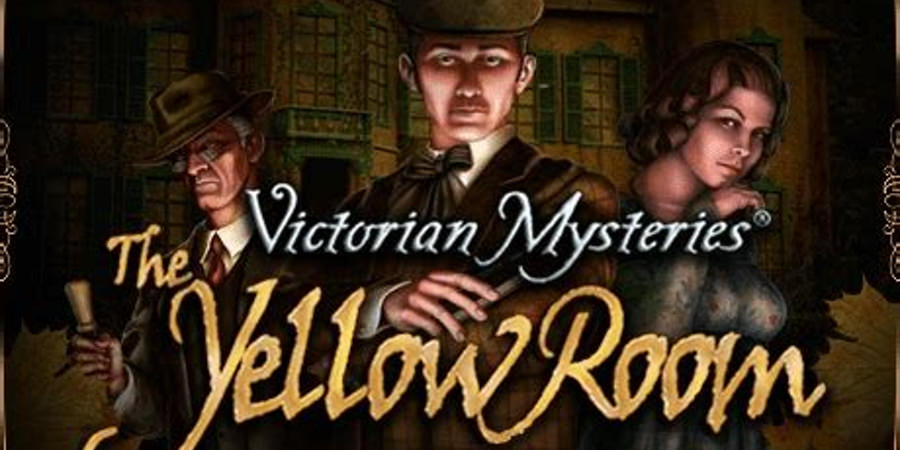
The third and final entry in the Victorian Mysteries trilogy, The Yellow Room, was released in 2012. It already resembles modern hidden object games quite closely: traditional search scenes give way to adventure-game-like inventory tasks and puzzle-oriented mini-games. The game is based on Gaston Leroux’s 1907 locked-room mystery Le mystère de la chambre jaune (The Mystery of the Yellow Room). Compared to its predecessors, The Yellow Room succeeds better at conveying the original story. The player acts as the assistant to master detective Rouletabille, Sainclair, who also serves as the narrator in the novel.
Victorian Mysteries: Woman in White (2010)
The second entry in the Victorian Mysteries game series, released in 2010, Woman in White expands the formula from pure hidden object scenes and mechanical mini-games toward a more fully fledged adventure game. The focus is now narrative, and the inventory has multiple slots. This game, too, is based on Wilkie Collins’ novel of the same name. Instead of solving a theft, the player unravels the mystery of the woman in white in all its twists. My overall experience was rather lukewarm. The Victorian setting failed to charm me, and the hidden object scenes were overly easy. Audiovisually, however, the second game is clearly more polished than the first.
Mystery Masterpiece: The Moonstone (2009)
The Victorian Mysteries trilogy, released between 2009 and 2012, follows in the footsteps of the long-running hidden object staple Mystery Case Files. Instead of original backstories, however, The Moonstone, Woman in White, and The Yellow Room draw directly from literature — specifically from pioneering detective classics by Wilkie Collins and Gaston Leroux. I was interested in these games precisely as literary adaptations. As hidden object, puzzle, or adventure games, there is nothing particularly distinctive about their mechanics. I hesitate to call them good, but they are certainly playable and easy enough, and the historical character of both the games and their stories appealed to me. In this blog post I focus on the first game and will return to the other two later in their own articles.