Victorian Mysteries: Woman in White (2010)
The second entry in the Victorian Mysteries game series, released in 2010, Woman in White expands the formula from pure hidden object scenes and mechanical mini-games toward a more fully fledged adventure game. The focus is now narrative, and the inventory has multiple slots. This game, too, is based on Wilkie Collins’ novel of the same name. Instead of solving a theft, the player unravels the mystery of the woman in white in all its twists. My overall experience was rather lukewarm. The Victorian setting failed to charm me, and the hidden object scenes were overly easy. Audiovisually, however, the second game is clearly more polished than the first.
Woman in White was developed by the American studio Freeze Tag Games, with Craig Holland as lead designer. The novel on which the game is based, The Woman in White, first appeared in 1859 and remains the most famous work of the English author Wilkie Collins. The book is commonly classified as a sensation novel, but it can also be seen as an early precursor of modern detective fiction. The story comments on the legal position of married women in Britain at the time, and it may well have influenced legislative change, given the novel’s immense popularity. Woman in White is part of a game trilogy based on classic novels, the other entries being The Moonstone (2009) and The Yellow Room (2012).
Keys and cutscenes
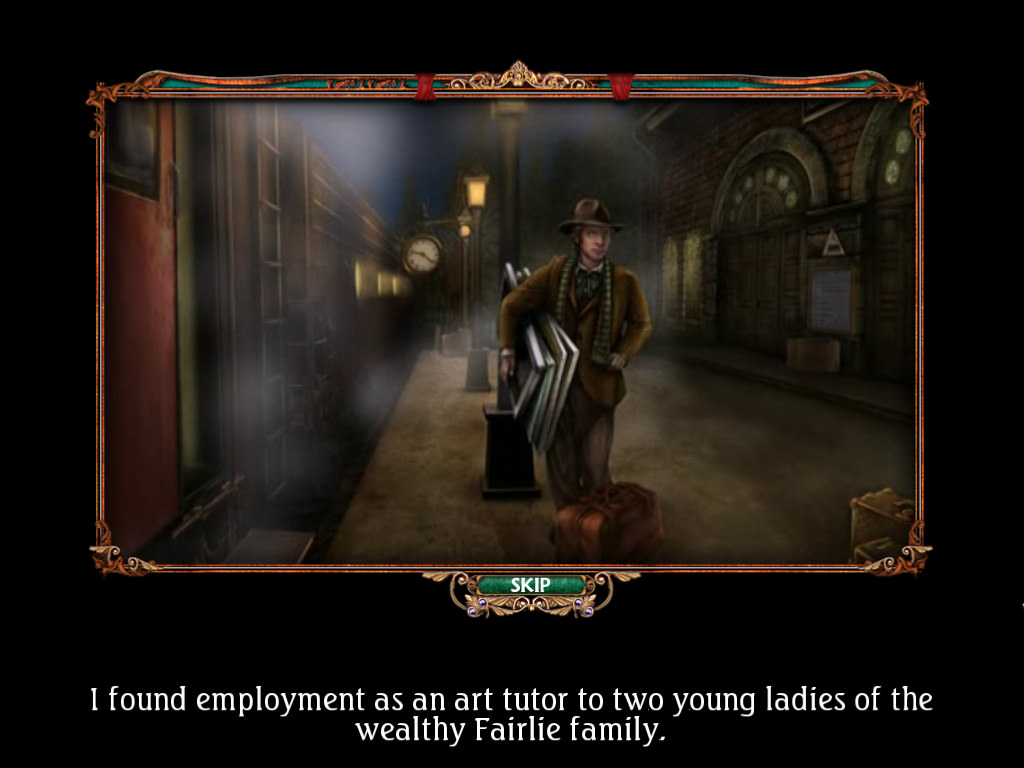
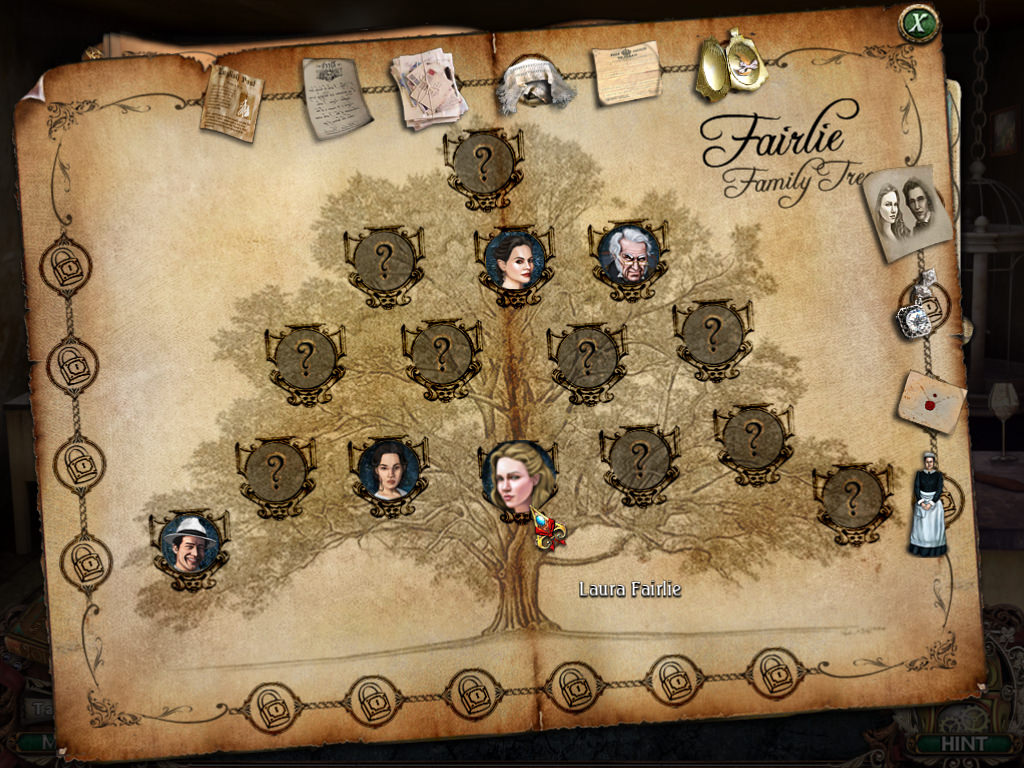
The game’s protagonist and sole narrator is Walter Hartright, who is hired as a private art teacher at Limmeridge House. In the novel, by contrast, there are several narrators, which Collins himself justified by comparing the structure to a court case with multiple witnesses. The game begins when Walter encounters the woman in white on his journey to Limmeridge. She leaves a strong impression on him, and upon arrival it becomes clear that she has some connection to the estate. Walter teaches two young women at the house, Laura and Marian. He falls in love with Laura, while Marian becomes his partner in uncovering the mystery of the woman in white.
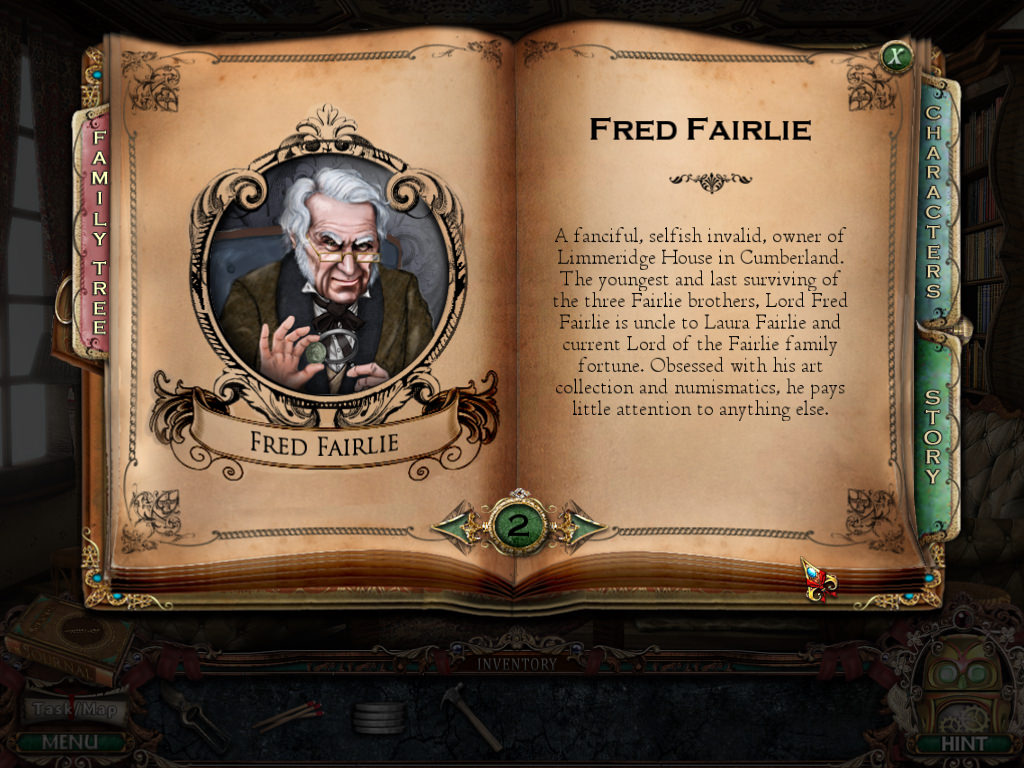
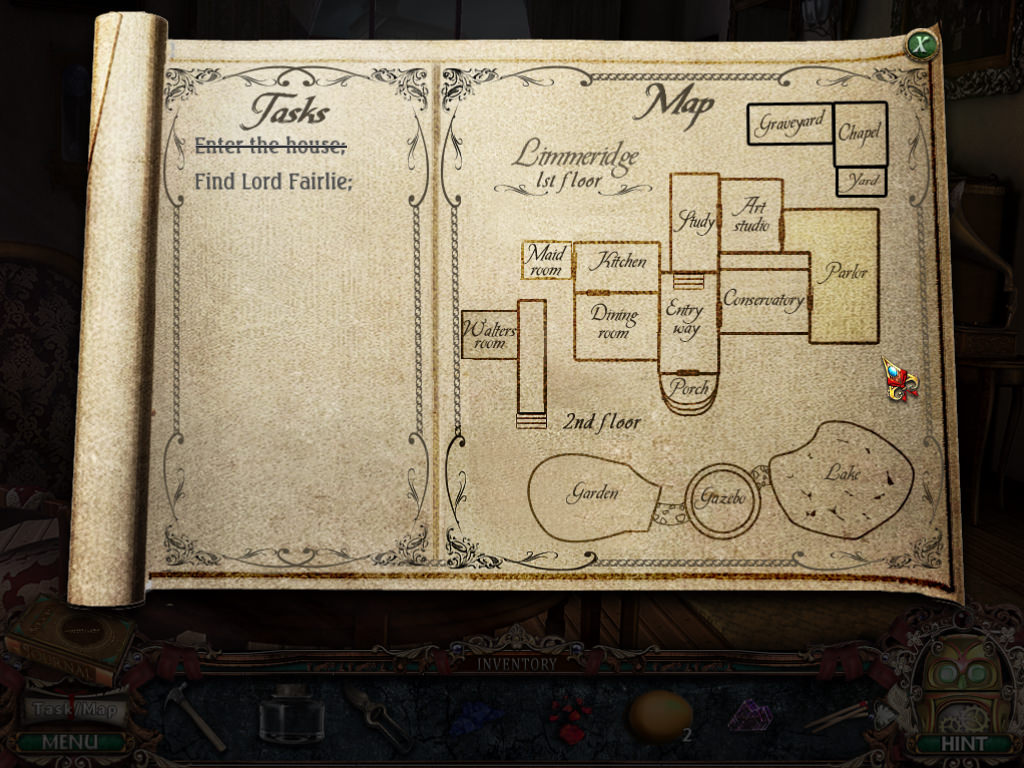
The game — and especially its story — moves at a brisk pace. Inventory tasks and adventure-style progression revolve primarily around opening locks. Walter must constantly acquire keys to open the next door — quite literally doors. The abundance of locked rooms is explained by the estate’s owner, Mr Fairlie, who is said to be fiercely protective of his privacy.
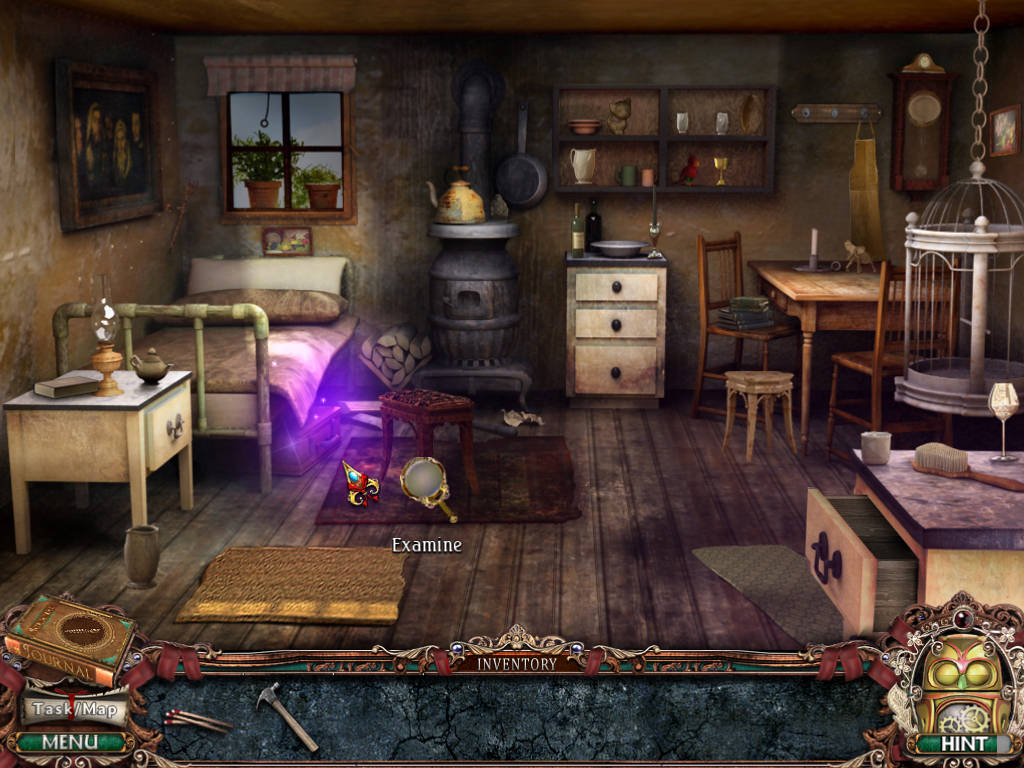
Collectible items are found both in environmental scenes and in hidden object sequences. The game’s equivalent of a crowbar — a reusable, multipurpose inventory item — is a hammer, which Walter uses without hesitation to break his employer’s property. In addition to keys, Walter also gathers various forms of evidence, which are recorded in his notebook and serve to advance the story.
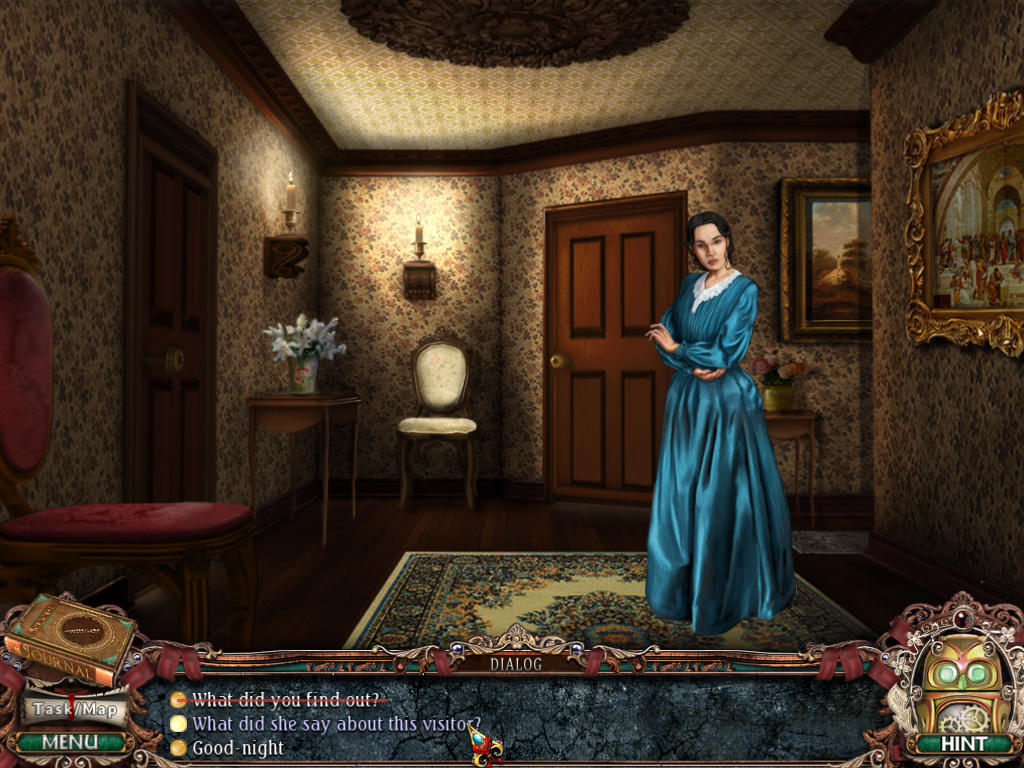
Conversations with Marian are also crucial to the narrative. Although presented as dialogue choices, the player’s options are largely illusory. One reply — always the last on the list — acts as a shortcut forward, while the other two merely provide additional background information.
The game’s cutscenes function as summaries of longer periods of time within the story. The main events are confined to three locations: Limmeridge House, Blackwater Park, and an asylum. London, which plays an essential role in the novel, is entirely absent. Even the asylum has been relocated close to Blackwater Park, accessible via an underground passage — a detail that felt distinctly implausible. In the game, Walter explores the asylum together with Marian, whereas in the novel Marian acts alone. Several narrative twists that are still significant toward the end of the book are only briefly alluded to in the game’s final cutscene.
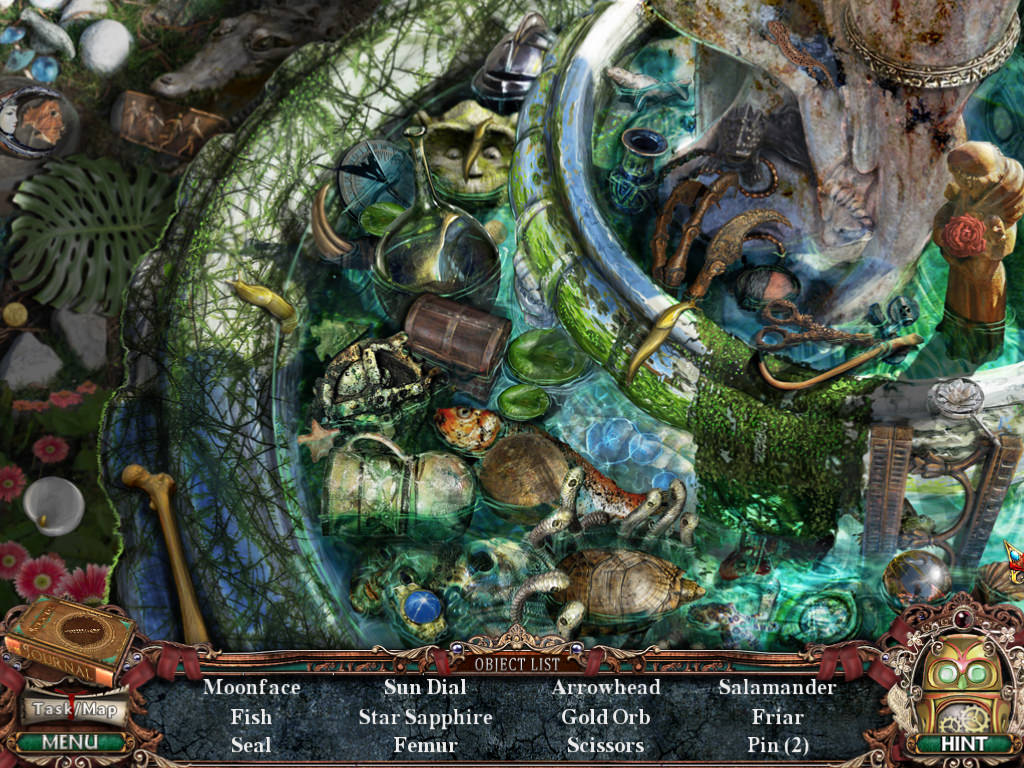
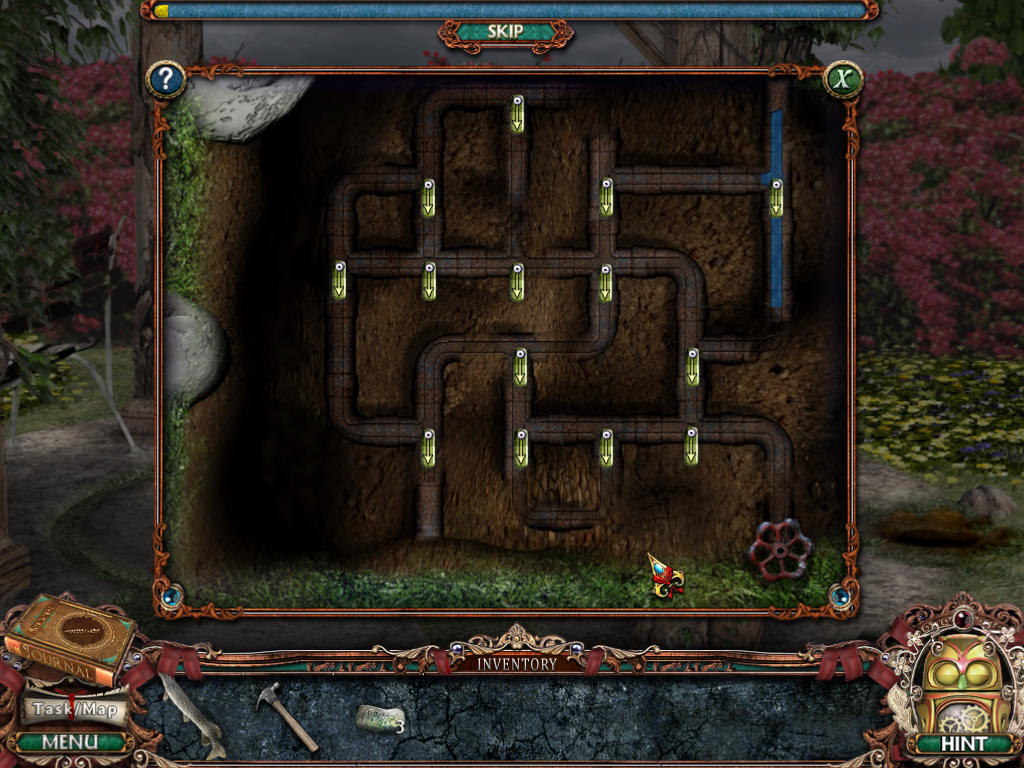
I completed Woman in White in roughly two hours, making it even shorter than the first entry in the series, The Moonstone. Both the inventory tasks and the hidden object scenes felt extremely easy, which did little to improve my engagement. At the start, the player can choose between Casual and Expert modes, but the difference mainly affects the recharge speed of the hint owl and the skip button for mini-games. At its best, the story evoked sympathy in me toward Marian — though that sentiment stems more from the source material than from the game itself.
The game’s visuals did not leave a strong impression on me, despite being far more consistent than in The Moonstone. I preferred the background music composed by Vel9 Studios, which feels purpose-made for the game. The piano- and string-based soundtrack of Woman in White is mostly calm, with occasional moments of heightened drama. I found the voice acting exemplary. Initially, I thought there were far fewer speaking characters than in The Moonstone, but after counting I arrived at the same total — ten.
Verdict
Unfortunately, I must conclude that Woman in White was also difficult to adapt into compelling gameplay. Completing minor inventory tasks and rummaging for keys does not feel worthy of the story itself. I do, however, appreciate the effort to bring a classic novel back into the spotlight. The improved audiovisual quality compared to the previous game did not win me over. I suspect that The Moonstone will stay with me longer. I rate my gameplay experience at 48 out of 100.
Availability
Victorian Mysteries: Woman in White is available for Windows and macOS, as well as for iPad, iPhone, and Android devices. I cannot, however, vouch for availability or functionality on platforms other than Windows — and even on Windows there may be issues. For Windows 10 and Windows 11, I recommend installing Microsoft Visual C++ Redistributable X86. If Windows 7 is available, it is preferable to play the game on that system.