
Victorian Mysteries: The Yellow Room (2012)
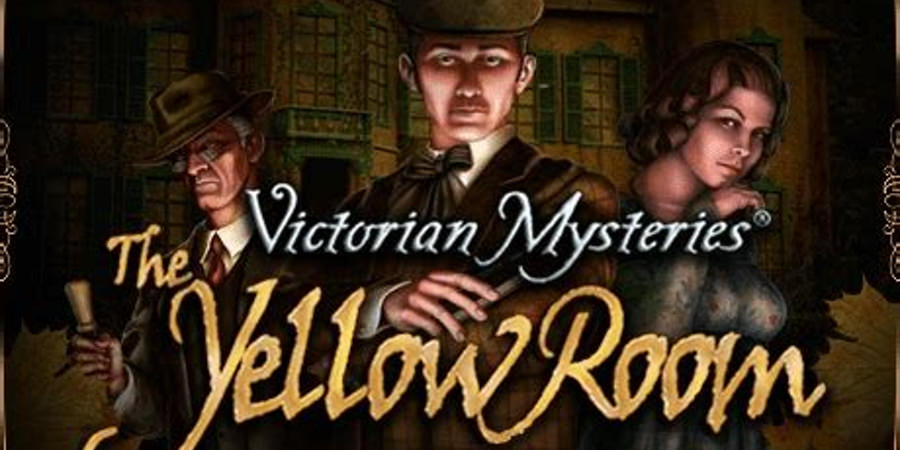
The third and final entry in the Victorian Mysteries trilogy, The Yellow Room, was released in 2012. It already resembles modern hidden object games quite closely: traditional search scenes give way to adventure-game-like inventory tasks and puzzle-oriented mini-games. The game is based on Gaston Leroux’s 1907 locked-room mystery Le mystère de la chambre jaune (The Mystery of the Yellow Room). Compared to its predecessors, The Yellow Room succeeds better at conveying the original story. The player acts as the assistant to master detective Rouletabille, Sainclair, who also serves as the narrator in the novel.
The Yellow Room was developed by the studio Freeze Tag, with Craig Holland as lead designer. The journalist-detective Joseph Rouletabille, created by the French writer Gaston Leroux (1868–1927), appears in nine novels in total, and The Mystery of the Yellow Room is widely regarded as one of the finest locked-room detective stories ever written. Besides Rouletabille, Leroux is best known for The Phantom of the Opera.
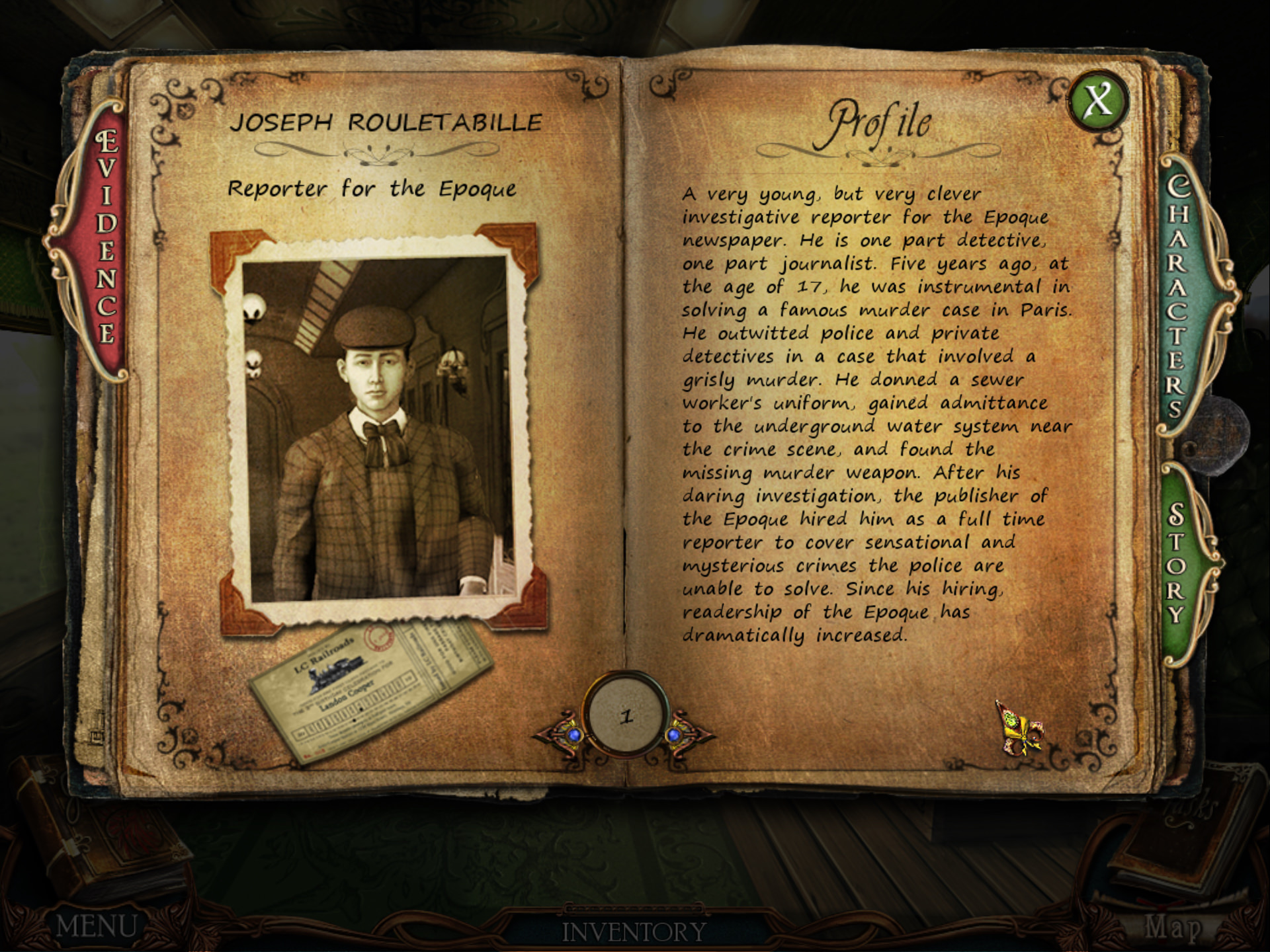
The master detective and his assistant
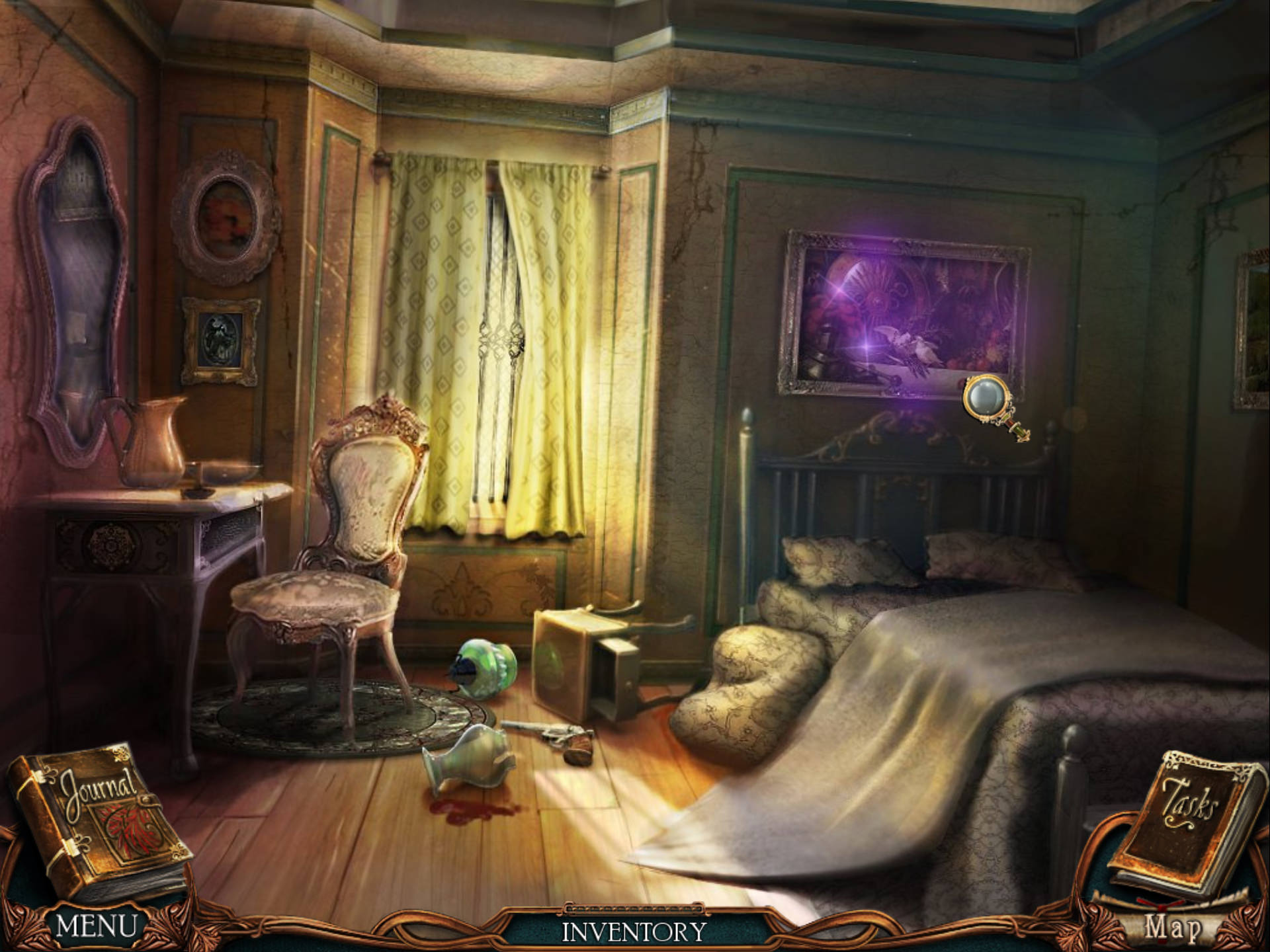
The mystery in The Yellow Room concerns Mathilde Stangerson, the professor’s thirty-something daughter, who has been attacked. The crime took place in a room adjoining a research laboratory, locked from the inside and fitted with barred windows. During the night, Mathilde’s cry of “Murderer!” and a gunshot were heard, and she was found unconscious and injured on the floor. Yet the attacker was nowhere to be seen, and no one had observed anyone other than Mathilde entering or leaving the room.
The young journalist Joseph Rouletabille is sent to the scene to report on — and clearly also to solve — the case, as he is already known as a sharp detective. Accompanying him is his friend Sainclair — a lawyer in the novel, but judging by the game little more than an idle photographer.
On the train journey from Paris to Sainte-Geneviève, where the Stangersons’ ancestral home Château de Glandier is located, someone fires at Sainclair, triggering a slow and hopeless chase in which the shooter escapes. Upon arrival, the threats continue. Someone is clearly determined to prevent Rouletabille from investigating the case. Sainclair repeatedly finds messages threatening their lives if they do not withdraw. Rouletabille, of course, has no intention of giving up and insists on uncovering the truth.
Rouletabille’s rival and antagonist in the story is the famous police detective Frédéric Larsan, who is investigating the same crime. I asked ChatGPT for a summary of the novel’s plot, and it claimed that Larsan was a hypnotist, inventing a twist in which Mathilde, under hypnosis, accuses her own father. When I pointed out that Larsan is a detective, ChatGPT apologised for fabricating the detail and confirmed that he is indeed a detective. It also emerged that Mathilde is hypnotised in the story, but she does not accuse her father.
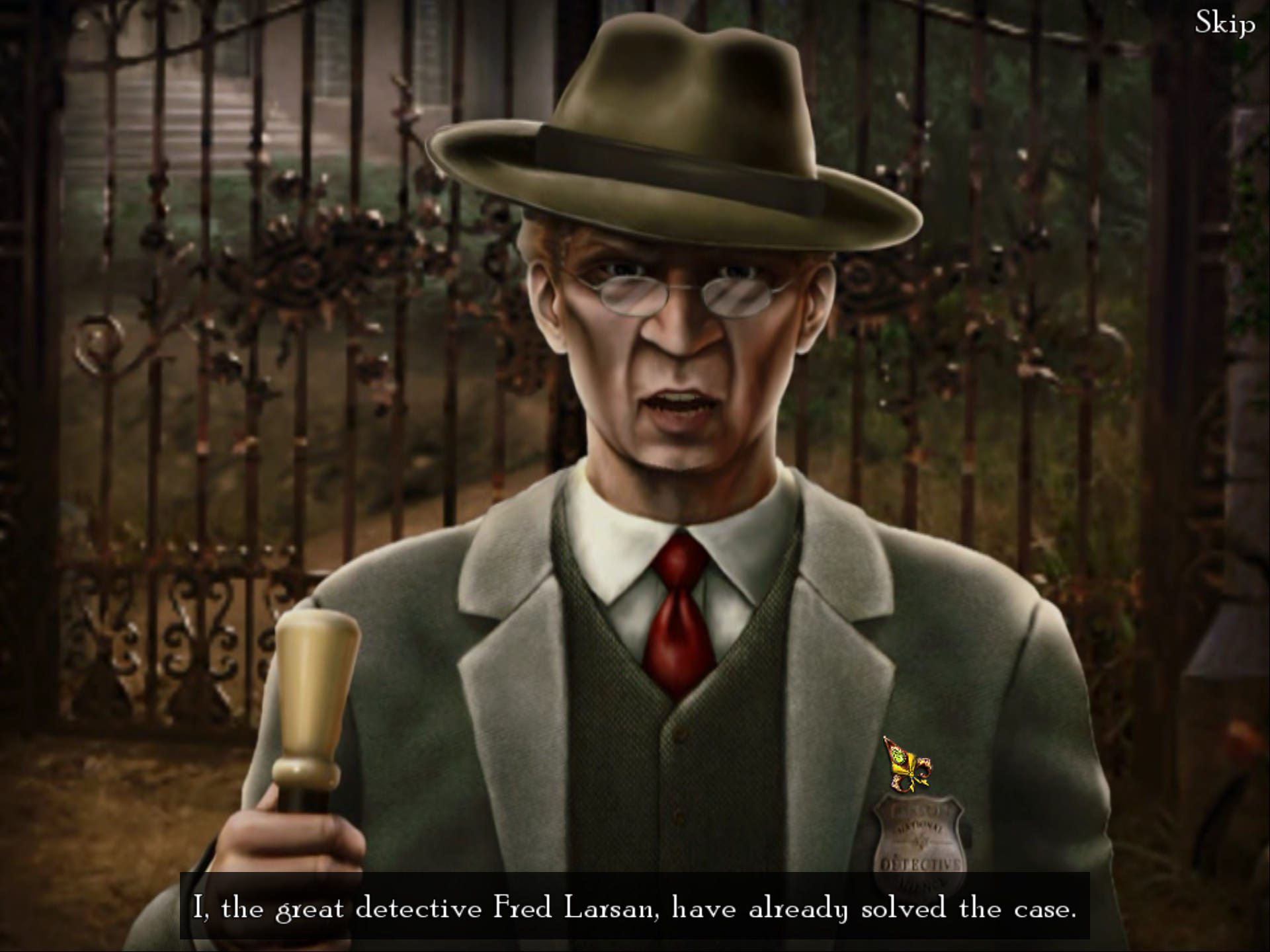
The game world comprises eight locations in Sainte-Geneviève and around the castle. Each location contains two or more areas, both indoors and outdoors. The novel features secret passages and underground tunnels, which are absent from the game. This is a significant omission, as Rouletabille reveals that the attacker used secret routes to move unnoticed and escape. The case is also not debated in court in the game; instead, Larsan and Rouletabille present their respective theories on the grounds of Château de Glandier.
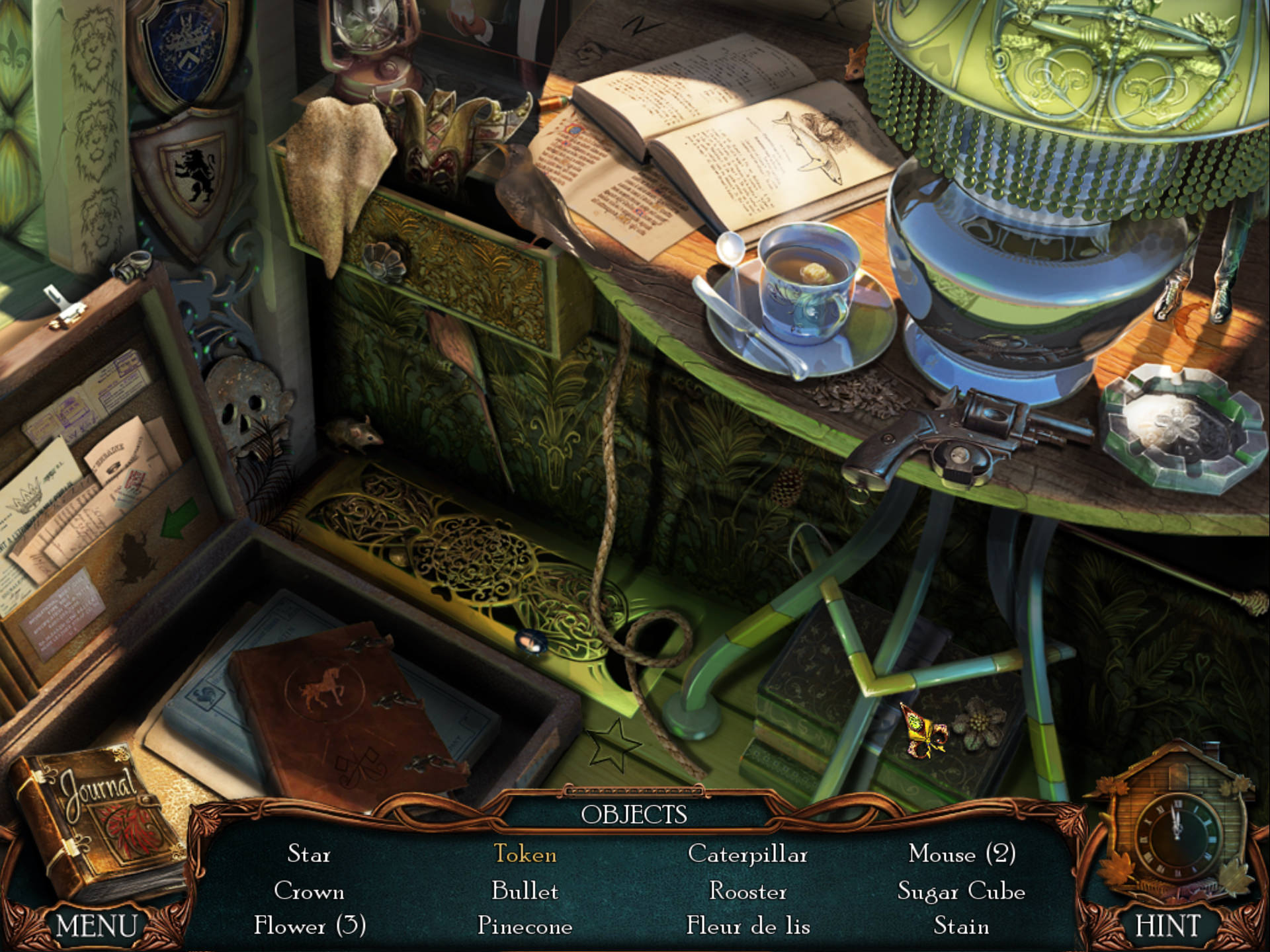
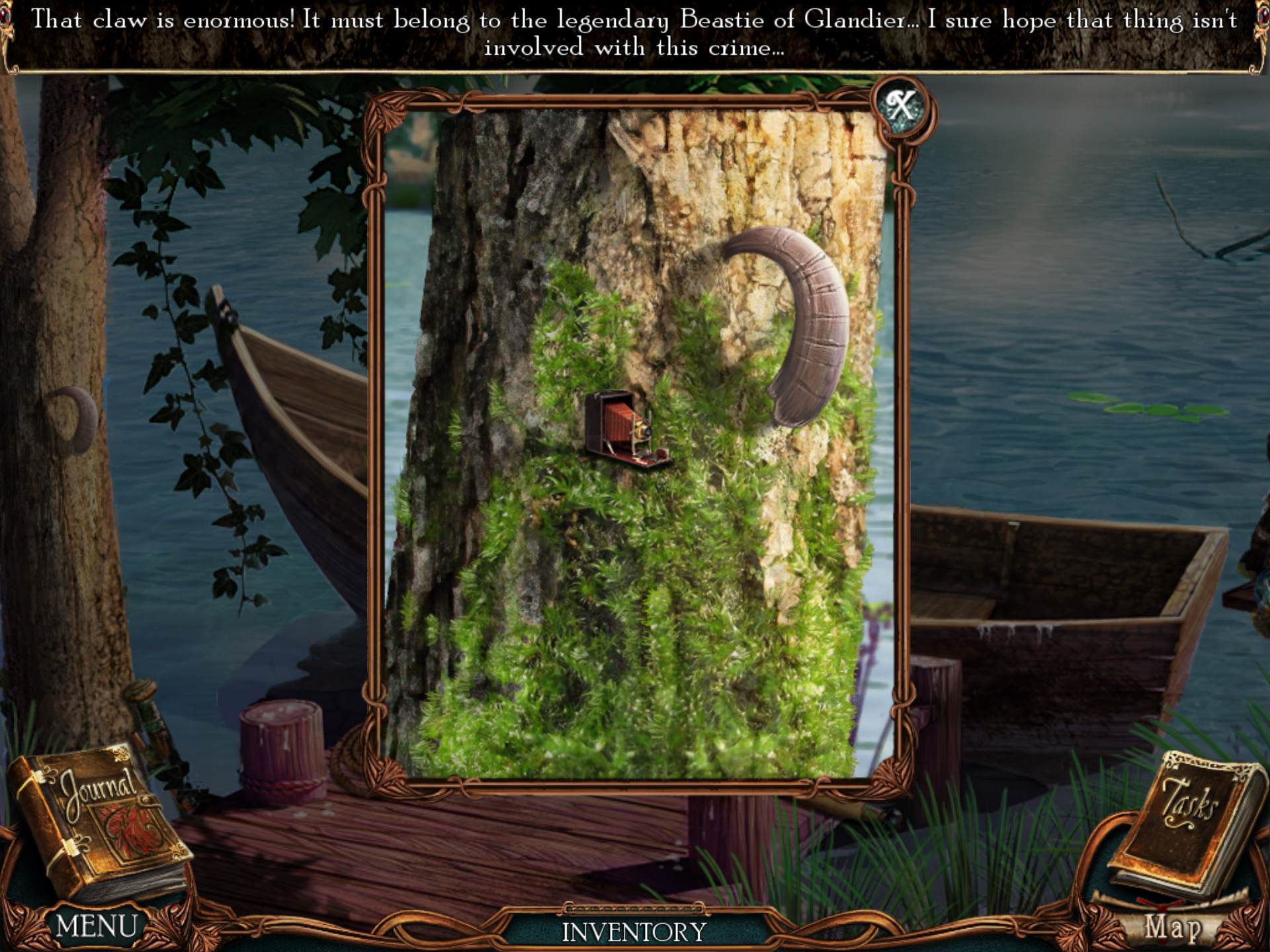
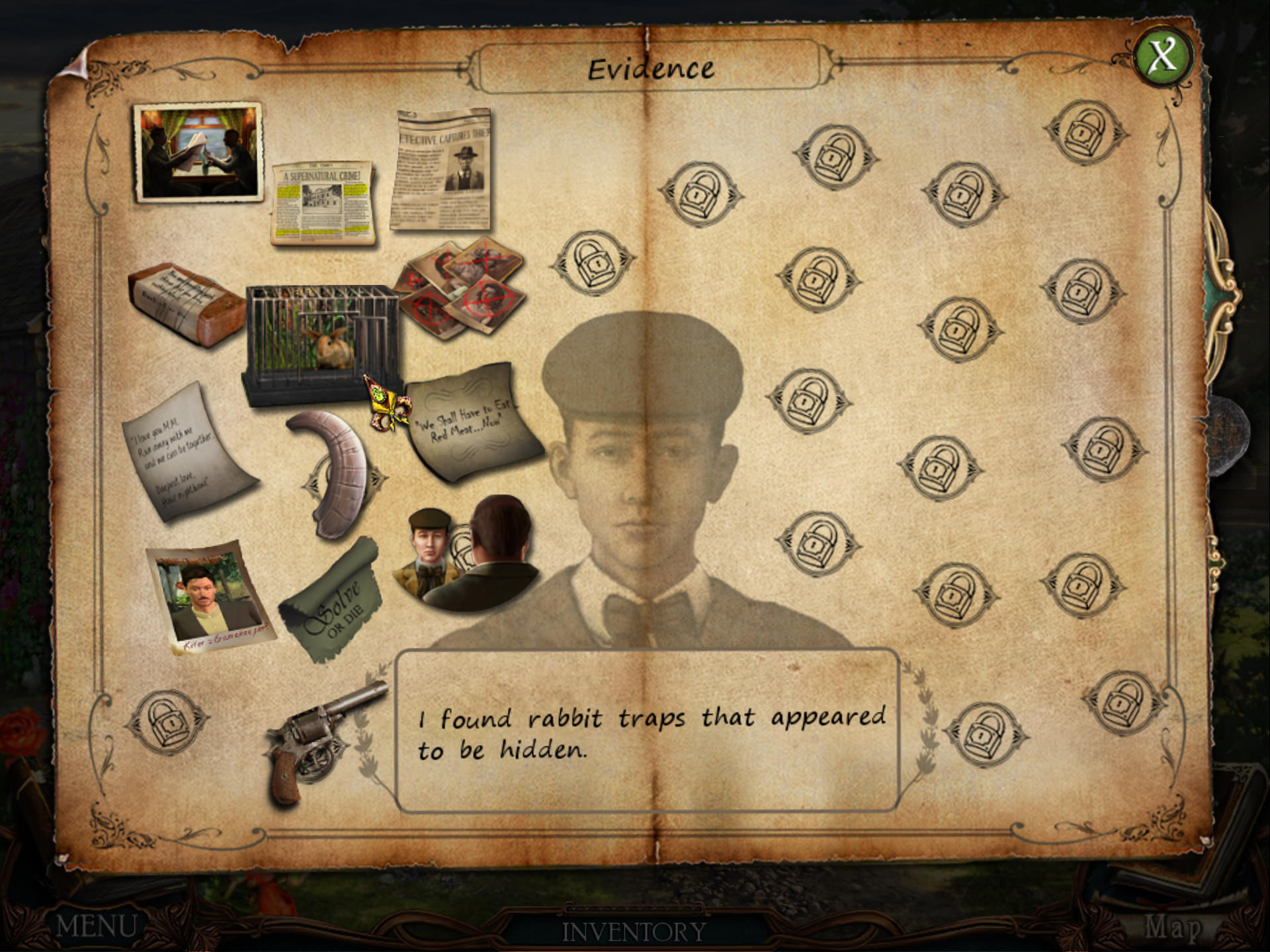
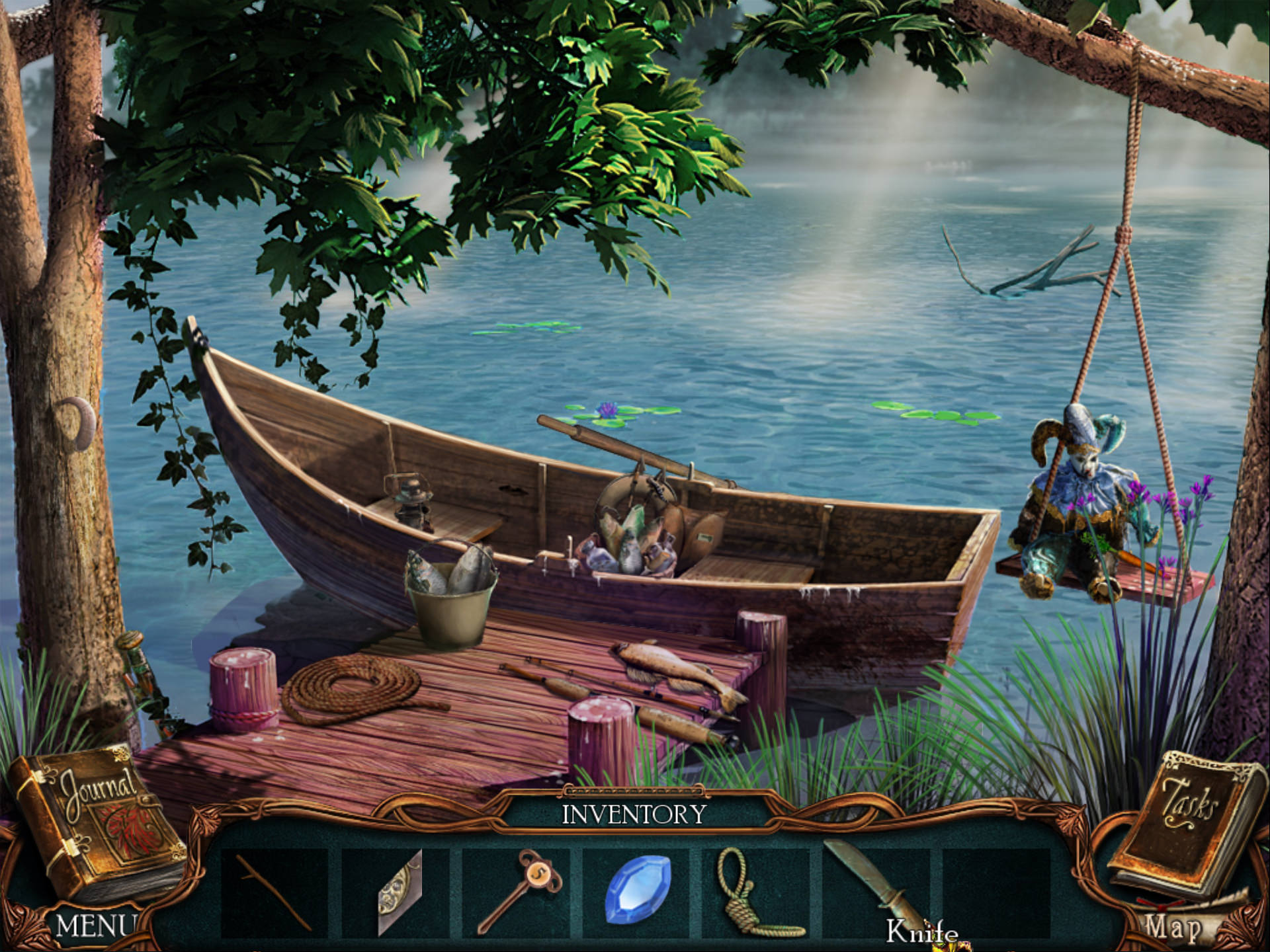
The player navigates environments in the manner of adventure games, collecting and using items. At the same time, they photograph evidence and crime scenes; eavesdropping also falls within Sainclair’s abilities. His journal resembles the one in the previous entry, Woman in White. In addition to narrative excerpts, it contains character portraits and collected evidence.
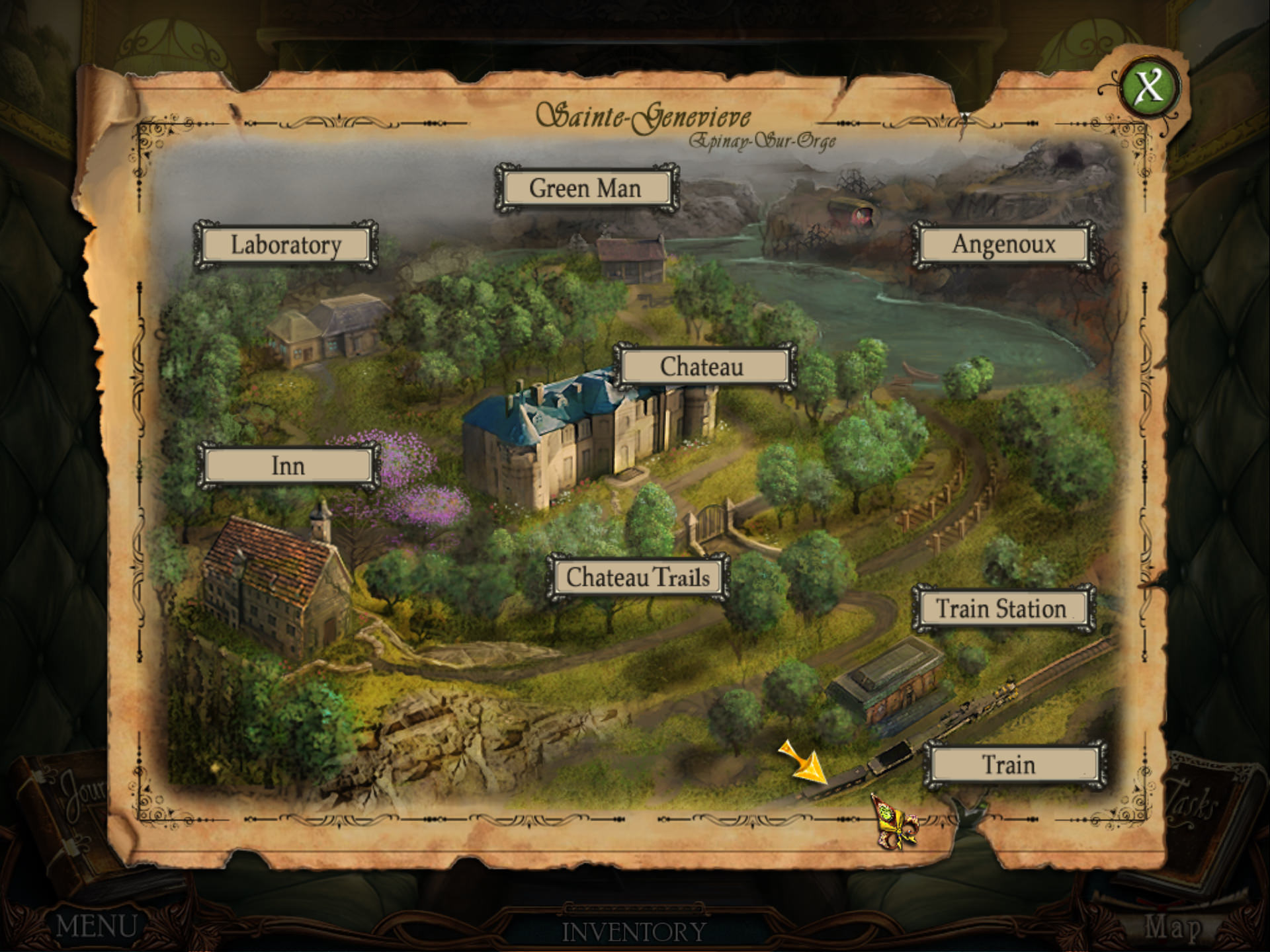
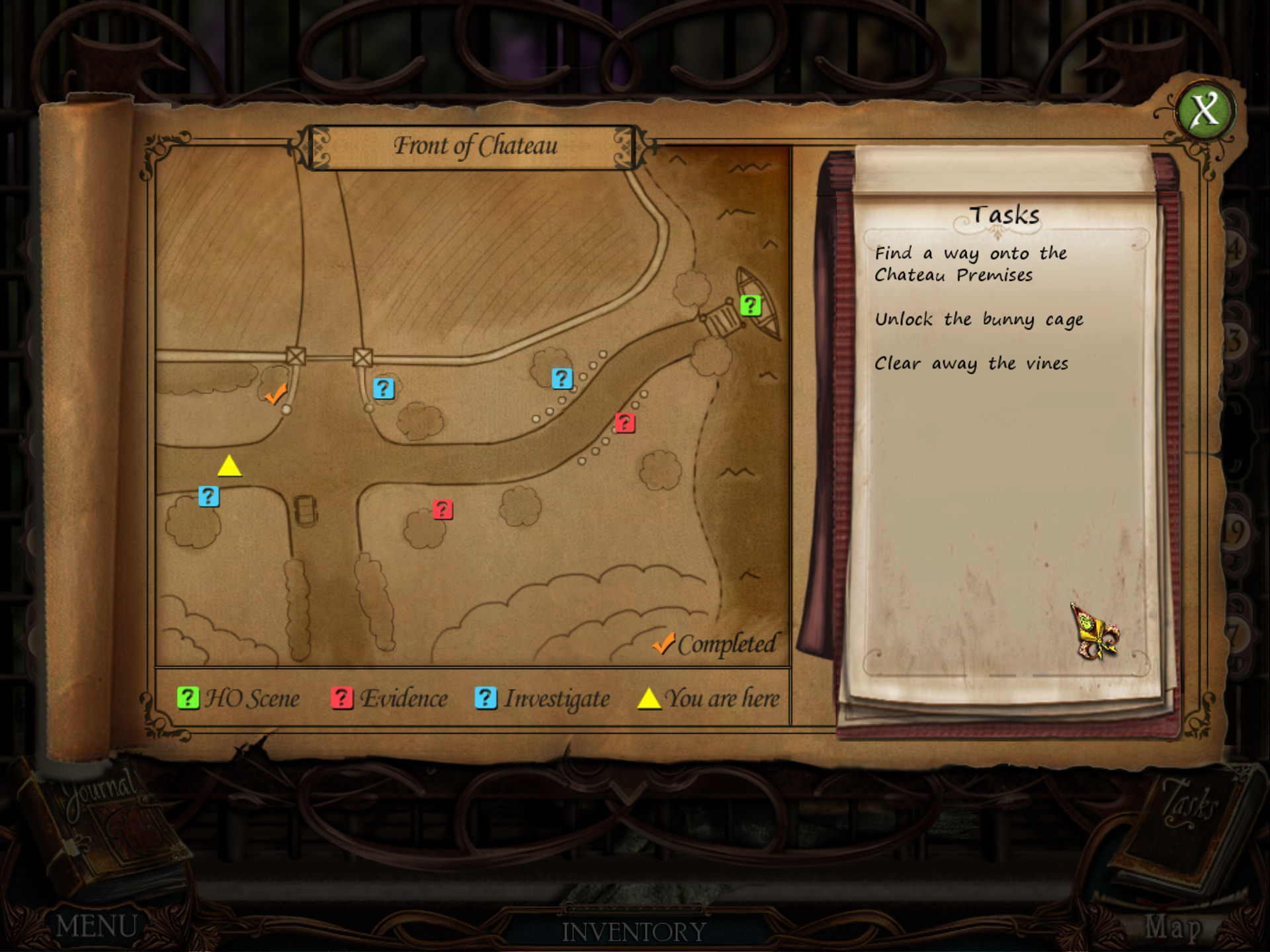
The Yellow Room features two types of maps: a town map and property maps. The town map displays the eight main locations, while the property maps show the areas within each location. The property maps also conveniently indicate the positions of hidden object scenes and evidence, and whether they have been completed. The town map does not function as a quick-travel tool as in newer hidden object games; selecting a location name merely opens the corresponding property map.
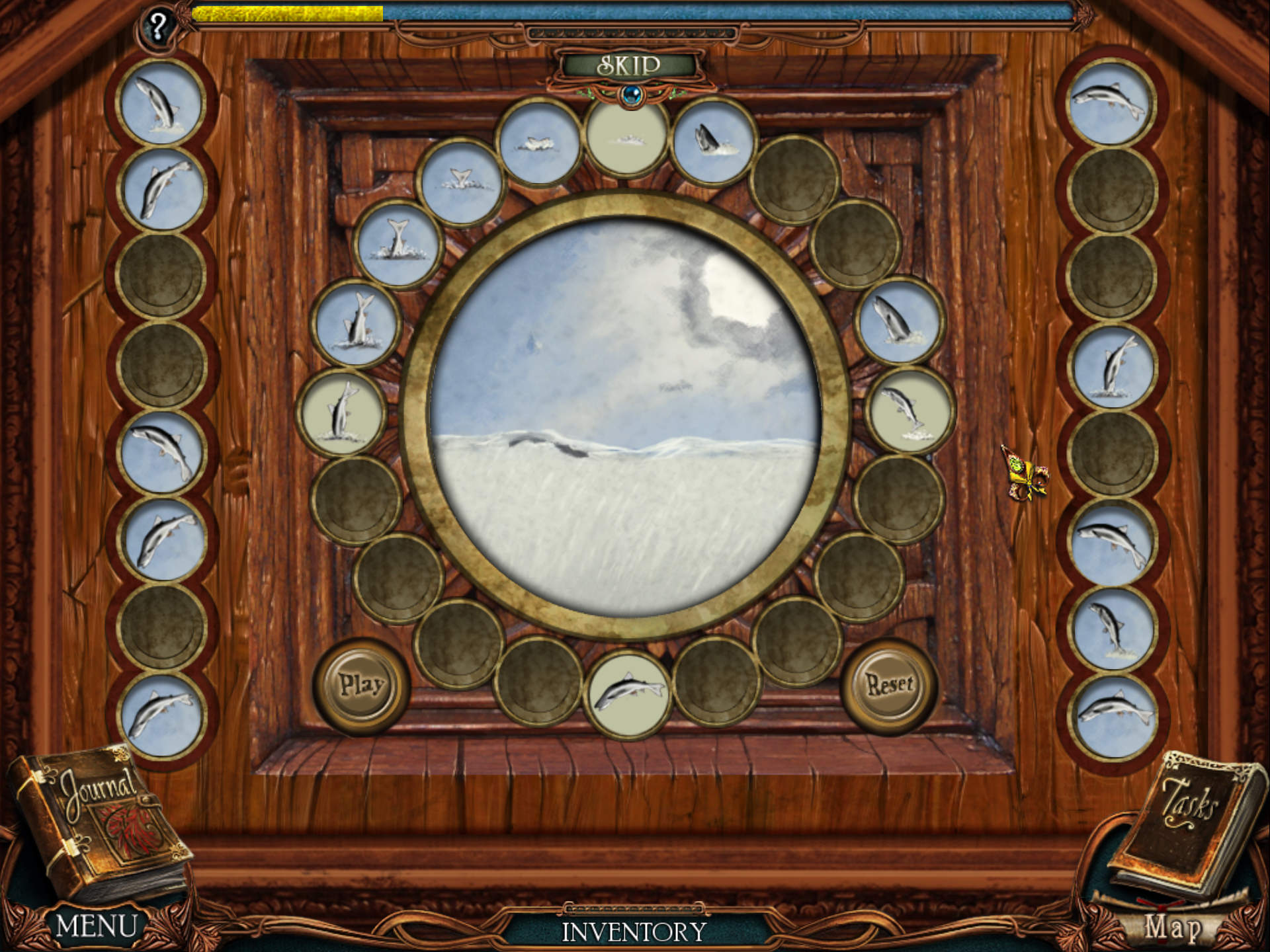
The game includes detailed hidden object scenes, and items such as letter fragments are also concealed within environmental views. Completing hidden object scenes rewards the player with items. I found the scenes fairly standard — nothing wrong with them, but nothing remarkable either. The mini-games involve lock mechanisms and letter-assembly puzzles. They did not offer much challenge, but they varied pleasantly, and I enjoyed some of them.
The game offers casual and expert modes. In casual mode, the hint timer for hidden object scenes recharges faster, and the option to skip mini-games becomes available sooner. In addition, hidden object scenes are highlighted in the environment with a star-like sparkle.
My playthrough lasted just under three hours. All three games in the trilogy are therefore rather short.
On the threshold of the modern
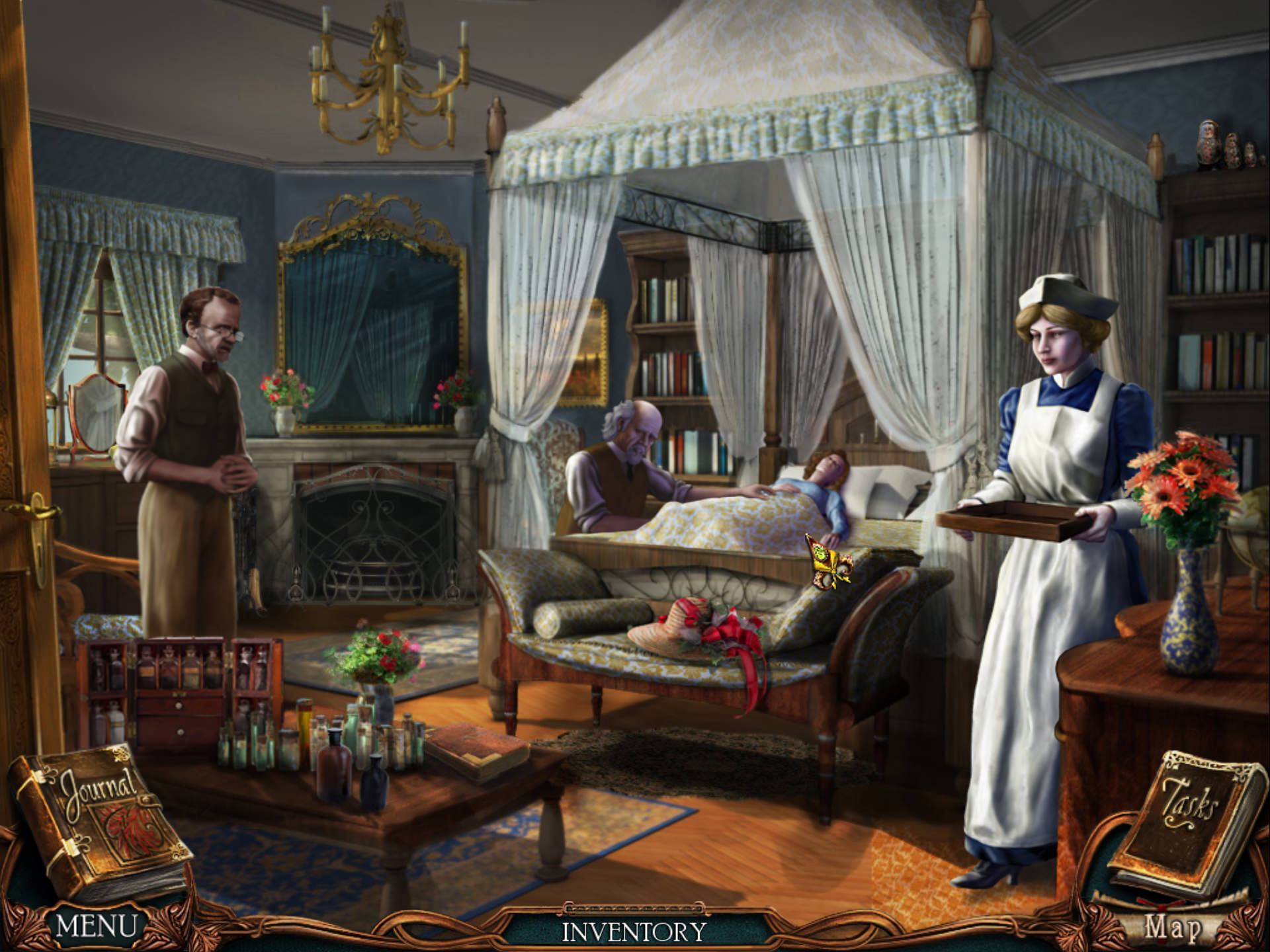
The graphics are more mature than in Woman in White. The cutscenes even feature genuine movement, such as characters’ mouths moving as they speak. However, the cutscenes are somewhat blurry. The overall impression is still quite modern, and the game does not lag far behind newer hidden object titles.
The characters are fully voiced, speaking English with French accents. I had no objections to the voice acting. I did miss interviewing or questioning Mathilde, but she remains confined to her bed throughout the game.
The game includes ambient soundscapes, but I barely noticed them. Perhaps this represents a missed opportunity for the developers.
The music, however, was impressive and thoroughly enjoyable. It is by Pyotr Tchaikovsky. Variety is limited, though: the same piece always plays during hidden object scenes, and I only noticed two location-specific themes. This feels like a shame, as there would certainly be more suitable music available from Tchaikovsky. Still, because I liked the music so much, the repetition did not truly bother me. It felt surprisingly modern within the game.
Verdict
Like the earlier entries in the series, The Yellow Room does not capture the full complexity of the original novel. The scope has been narrowed in terms of both locations and plot. In my view, the game does not fully reveal the attacker’s motives, as Professor Stangerson’s revolutionary research in optics never becomes significant. Based on the game alone, I would not understand it as part of the motive at all. Nevertheless, the core events at the castle come across clearly, and the intricacies surrounding the characters are conveyed. I felt able to follow the story, even as I merely snapped photographs while Rouletabille carried out the actual detective work.
Across the Victorian Mysteries trilogy, there is clear development, but it once again confirmed my dislike of the direction taken by hidden object games. The old remains preferable. I give my overall experience with The Yellow Room a score of 50 out of 100 — two points less than the trilogy’s first entry, The Moonstone. The trilogy leans heavily on its literary sources, but it feels as though finding a genuine detective approach within the games never progressed beyond experimentation. The player is never truly involved in solving the crime, remaining instead a perpetual bystander.
Availability
Victorian Mysteries: The Yellow Room is available for Windows and macOS computers, as well as for iPad and iPhone. I can only confirm functionality on Windows. As Freeze Tag no longer updates even the Steam version of the game, it — along with the other two titles in the series — risks becoming inaccessible to players. If the game has launch issues on Windows 10 or Windows 11, installing the Microsoft Visual C++ Redistributable X86 may help. The official website appears to direct users to the Big Fish Games store, where the games can at least be tried for free, allowing players to test compatibility.