
Mystery Case Files: Dire Grove Collector's Edition (2009)
The sixth entry in the Mystery Case Files series, Dire Grove, was released toward the end of 2009. It follows in the footsteps of the previous game, Return to Ravenhurst, as a full-fledged adventure game, but it does not continue the Ravenhurst storyline. Instead, it tells its own tale inspired by Celtic mythology. Dire Grove features remarkably few mini-games, with tasks revolving primarily around the inventory. There are no bizarre door-lock mechanisms, even though the core actions still involve opening, activating, and gaining access. There are plenty of hidden object scenes — one could say enough to make up for the missing mini-games.
As with earlier entries in the series, Dire Grove was led by chief designer Adrian Woods and developed by Big Fish Games’ in-house studio. With Return to Ravenhurst, my original plan of playing through the first nine entries in the series took a hit. I had assumed that the transition of hidden object games into weak adventure games would have happened around 2010, but in fact it already occurred with the fifth Mystery Case Files entry in 2008. Now it feels as though I am merely witnessing the series venturing ever deeper into the woods, drifting further away from the playful hidden object puzzle games that the first four entries represented. In that sense, I feel the series is already broken at this point. Samooja contains reviews of the earlier games in the series: Huntsville, Prime Suspects, Ravenhurst, Madame Fate, and Return to Ravenhurst.
A freezing world
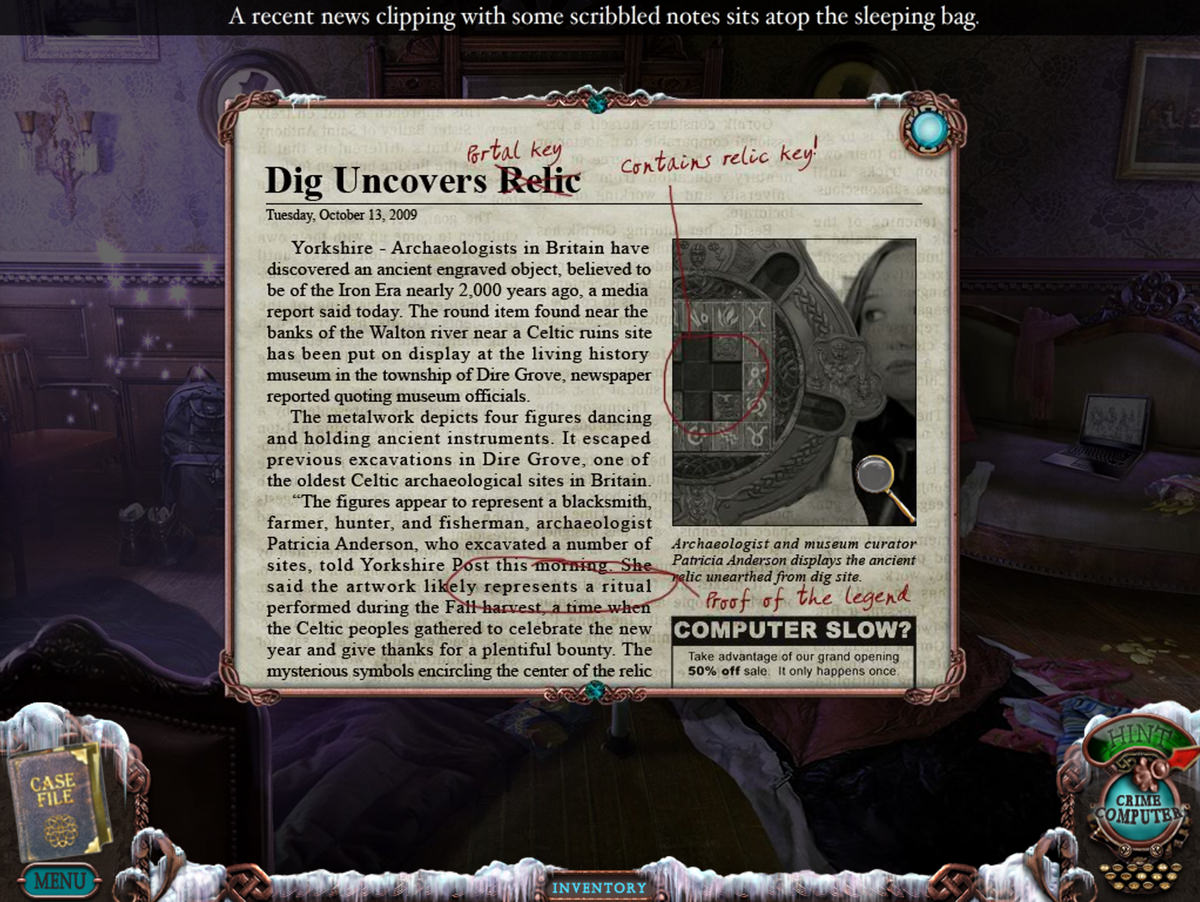
Inspired by a recent historical artefact discovery, four American students travel to England to an archaeological dig in the village of Dire Grove. The group is led by Alison, a doctoral student who seems deeply taken with an old Celtic legend. She treats it at least half-seriously, and the other three students are drawn in by her enthusiasm. Nothing is heard from the students after that: they disappear, and the player-controlled agent begins investigating the case. The year is 2009.
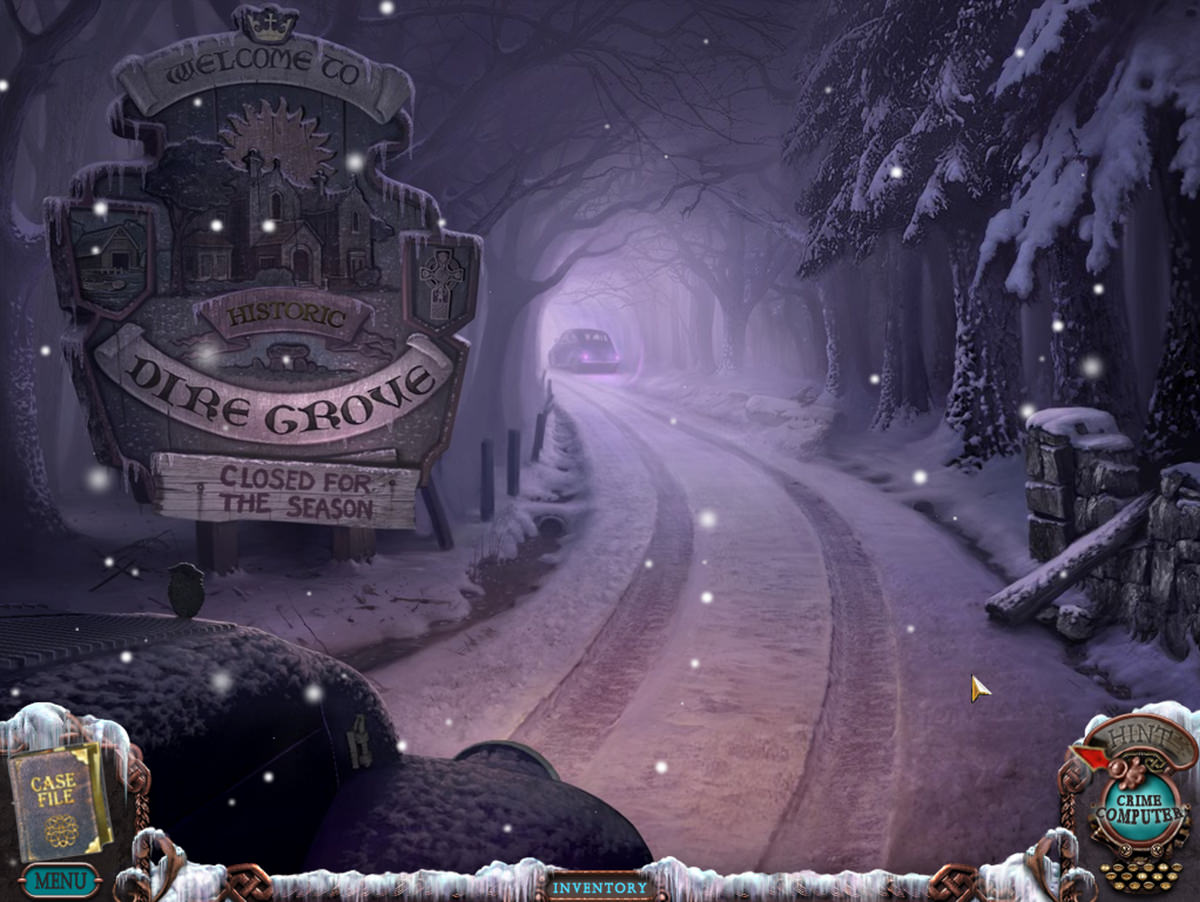
The agent finds the students’ car abandoned by the roadside and follows their trail to a local hotel. The picturesque village of Dire Grove, however, is completely deserted. The agent races against increasingly severe cold, but there is no time limit in the game — playtime is merely recorded as a high score. I managed to complete the game in under six hours, earning one of the achievements, and did not fall outside the top 10 list as I did in Return to Ravenhurst.
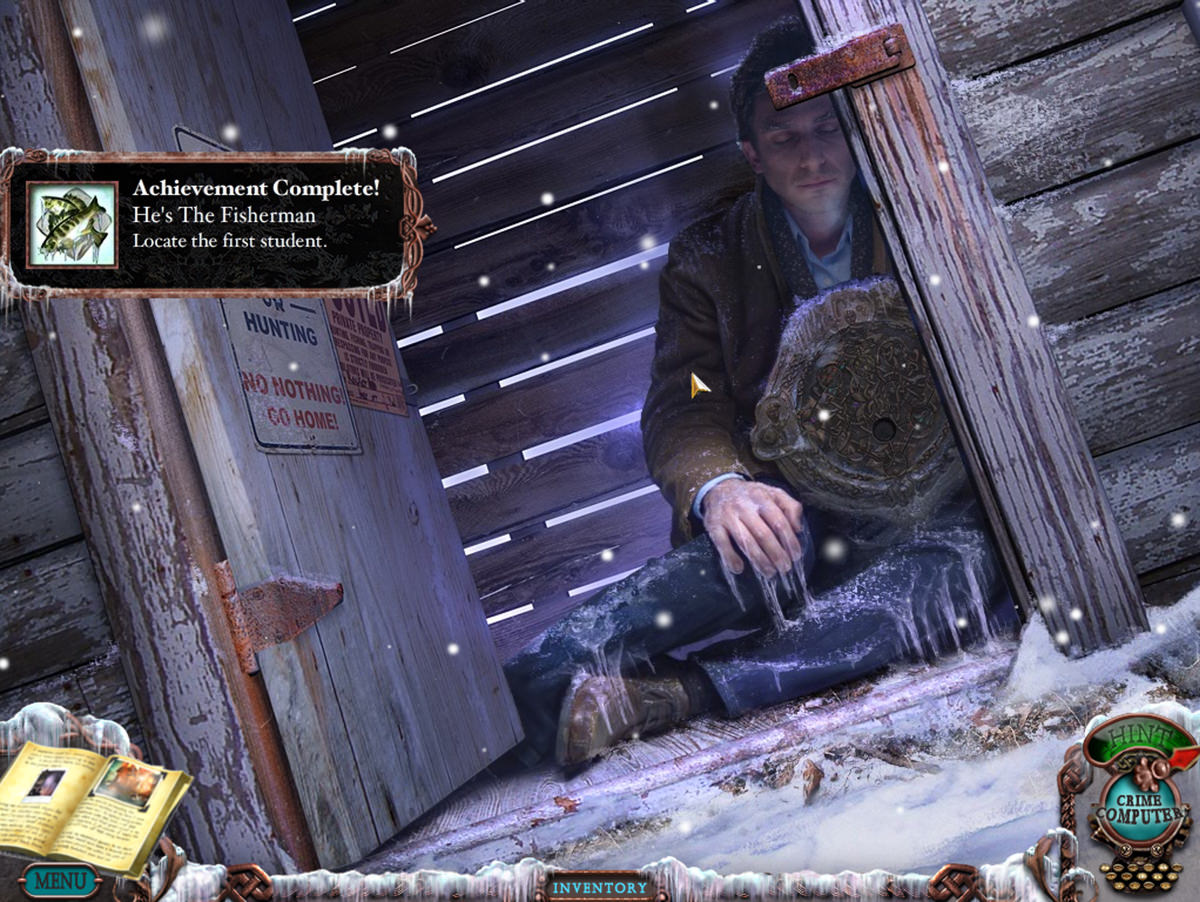
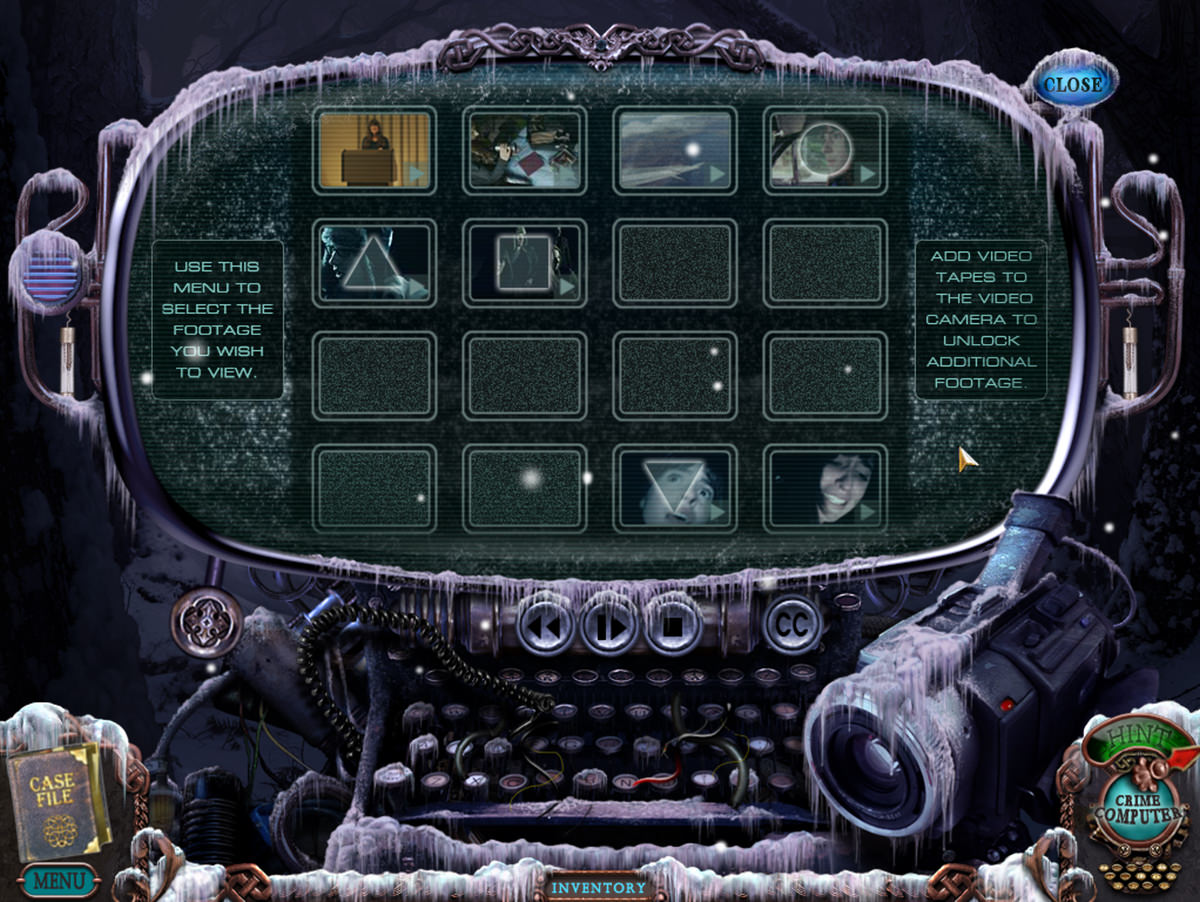
Everything in the game world is frozen, including the students, who are found one by one. They are not truly dead, but appear to be trapped in some kind of magical coma. Scattered throughout Dire Grove are VHS tapes that can be viewed using the crime computer. These tapes contain recorded scenes of the students’ activities. By collecting all of them, their story gradually comes together. The narrative unfolds along supernatural lines. The agent uncovers not only the students’ fate, but also the origin of the extreme cold.
Plenty to search, little to ponder
The crime computer familiar from earlier entries plays a dual role in Dire Grove. On the one hand, it functions as a video player; on the other, it assists in hidden object scenes by indicating the area where one of the remaining word-list items can be found. I did not need hints in the hidden object scenes. The visual clarity is high enough that I had no trouble recognising items, and unlike in Return to Ravenhurst, there were no lighting issues. In fact, the hidden object scenes felt almost too easy.
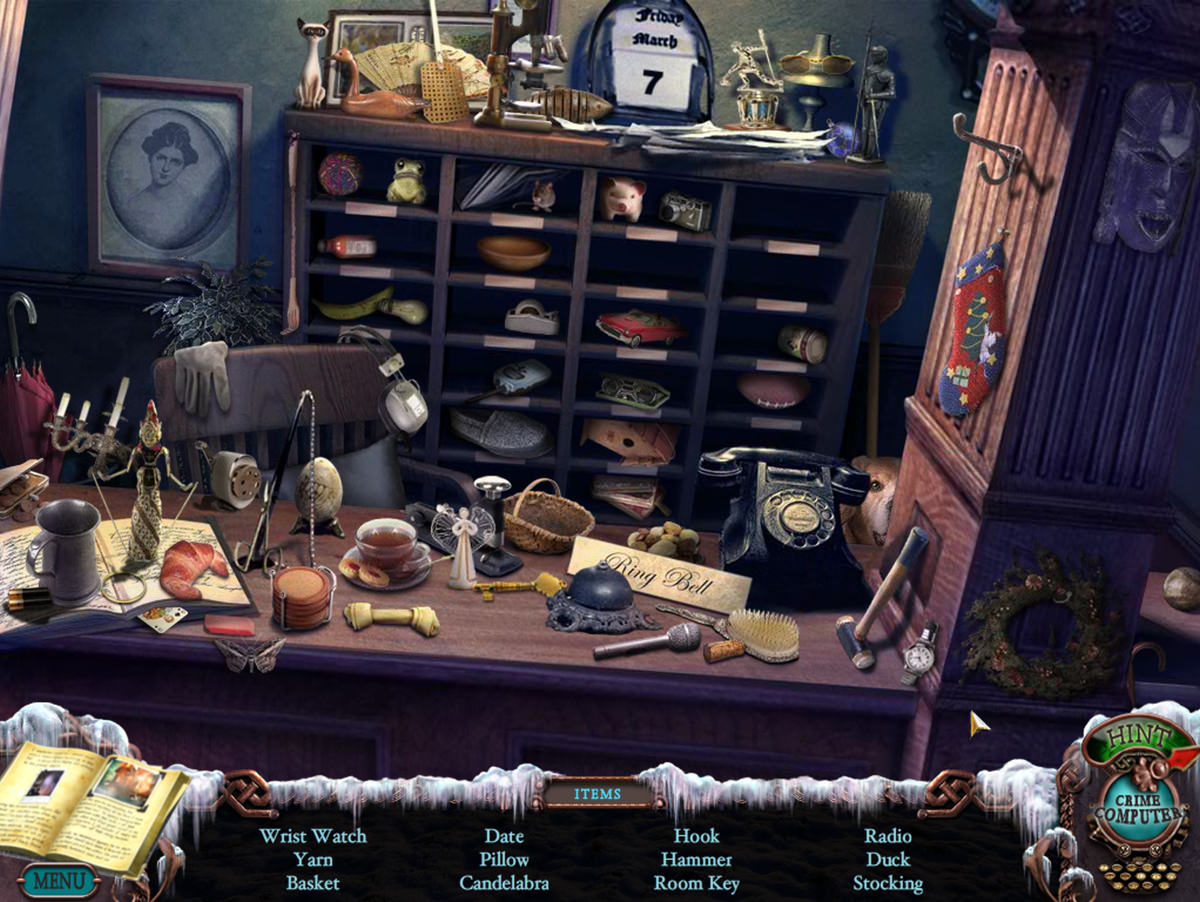
As in Return to Ravenhurst, each hidden object scene in Dire Grove yields an item for the inventory. New scenes appear in seemingly random locations and provide seemingly random items. Even so, my overall impression was that Dire Grove is more streamlined and fluid than Return to Ravenhurst — a more mature adventure game. The hidden object scenes also fit their environments better. In fact, Dire Grove works reasonably well as an adventure game, once the hidden object scenes are accepted as the primary source of items.
The inventory focuses on tools and other practical items, with the exception of objects needed for the word puzzles toward the end of the game. Those final word puzzles are, in my view, the game’s strongest element, both as puzzles and as inventory-based tasks. Inventory use emphasises a very literal interaction with the environment. For example, a hammer must be used repeatedly on a breakable object — a single click is not enough.
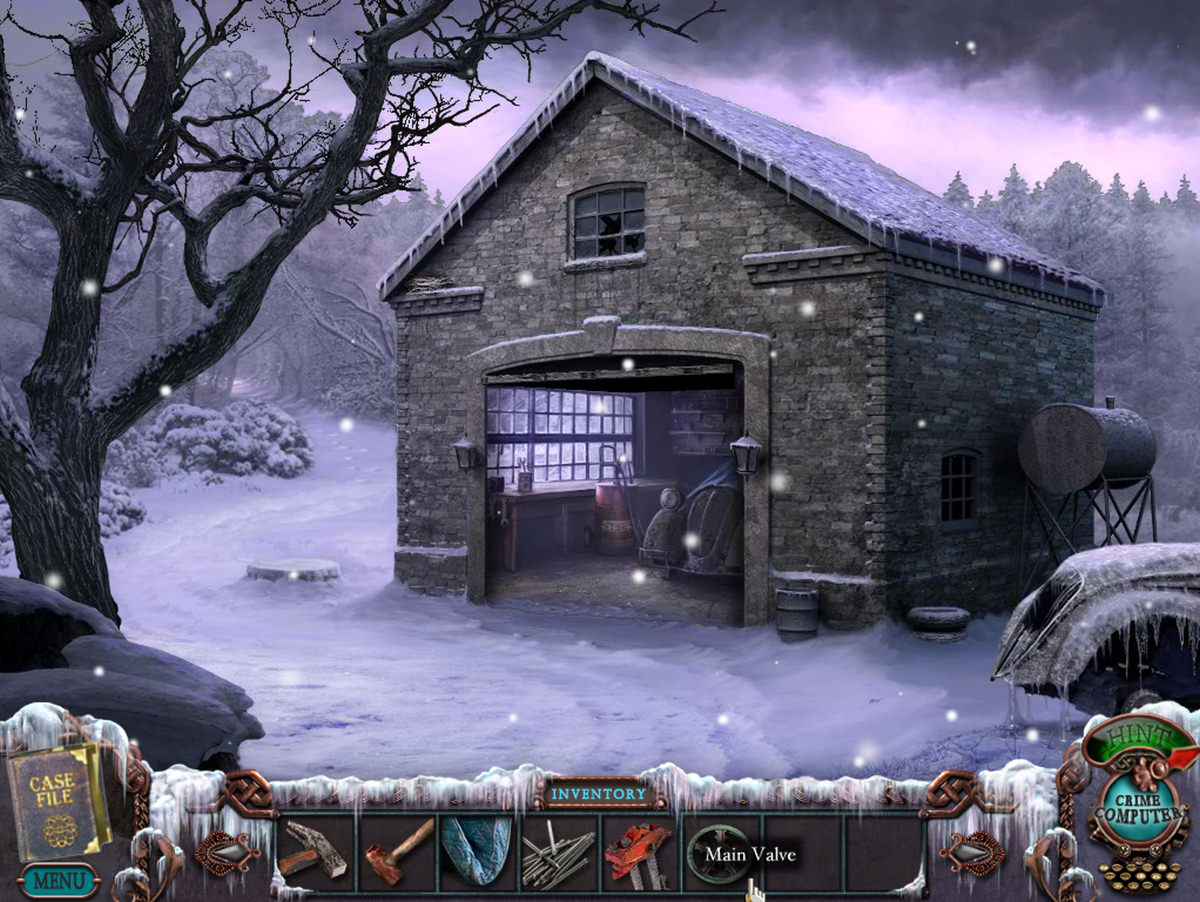
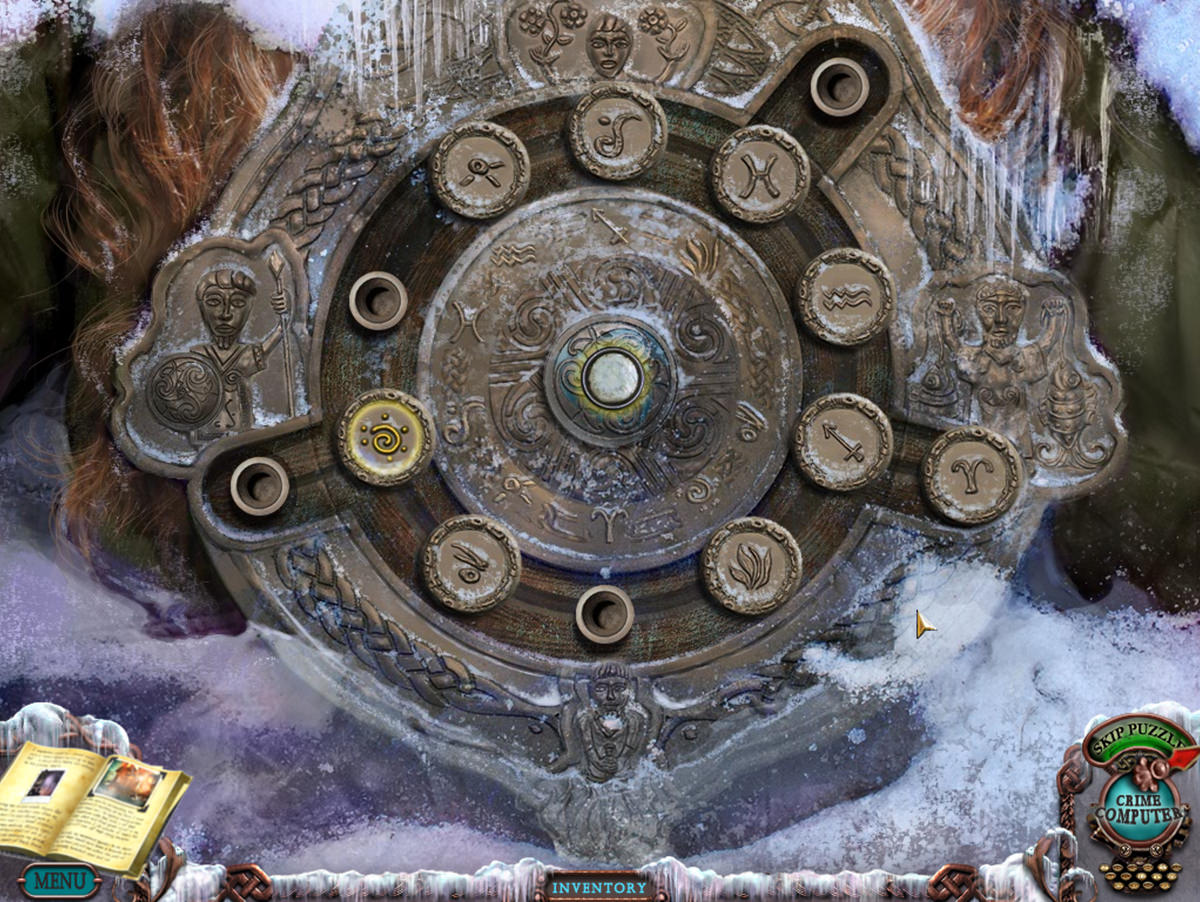
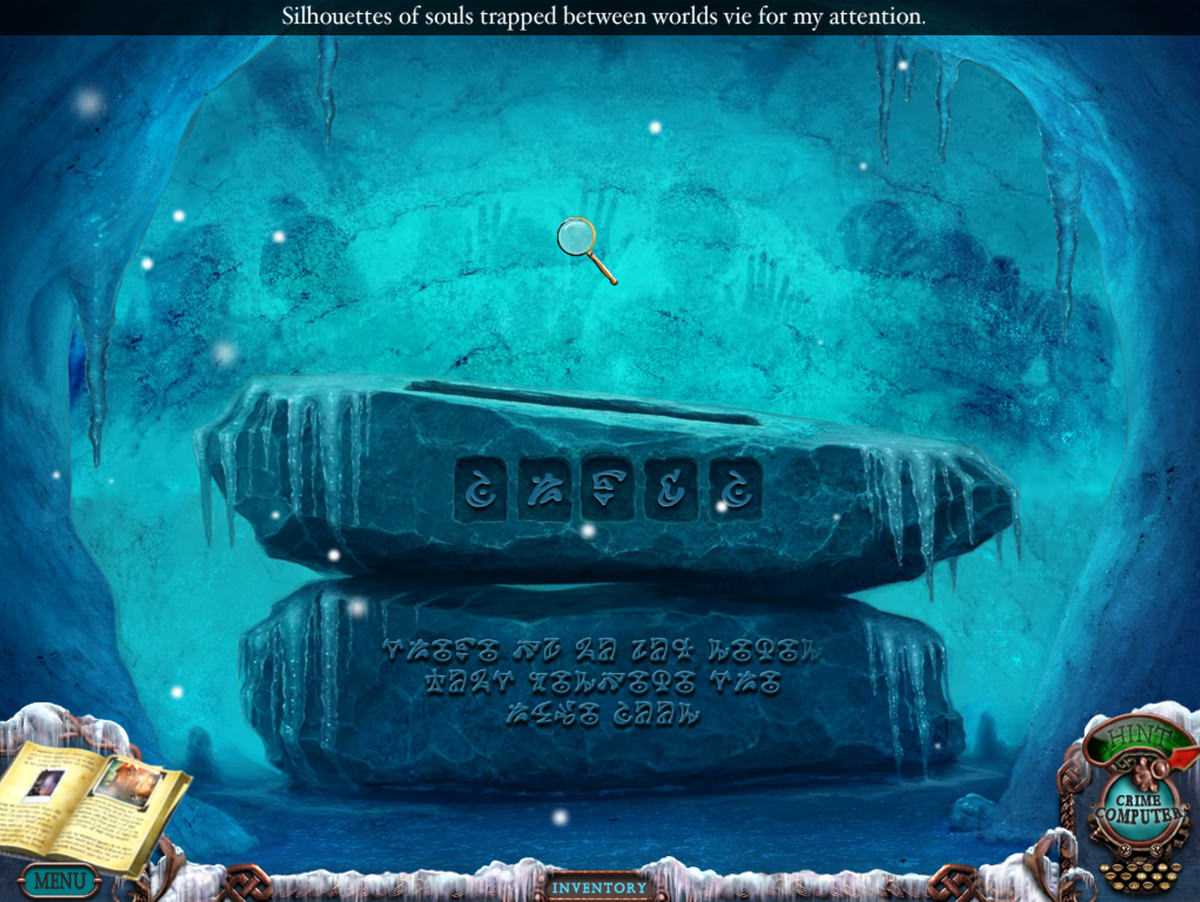
There are hardly any mini-games in Dire Grove, and those that do exist are fairly simple. I did not mind this. I am not particularly fond of mini-games — unless they are original. Dire Grove’s mini-games are visually stylish and clear, but not especially inventive, at least by the standards of more recent hidden object games. Evaluation is complicated by the fact that newer hidden object games borrow so heavily from the early Mystery Case Files titles. The mini-games introduced here have spawned countless variations. In any case, Dire Grove lacks the unruly creativity of Ravenhurst and Madame Fate. Because of the scarcity of mini-games, I would not even call Dire Grove a puzzle game. The hidden object scenes serve the inventory so directly that I am inclined to see them as part of an adventure game structure.
A ghostly atmosphere
The game’s fantastical realism is of high quality. Dire Grove effectively cemented this style as a standard for future hidden object games — not that it had to happen that way. This is yet another example of how homogeneous hidden object games have become, copying one another. In Dire Grove, I particularly appreciate how well the hidden object scenes integrate into their environments, something that was not always a given in earlier entries.
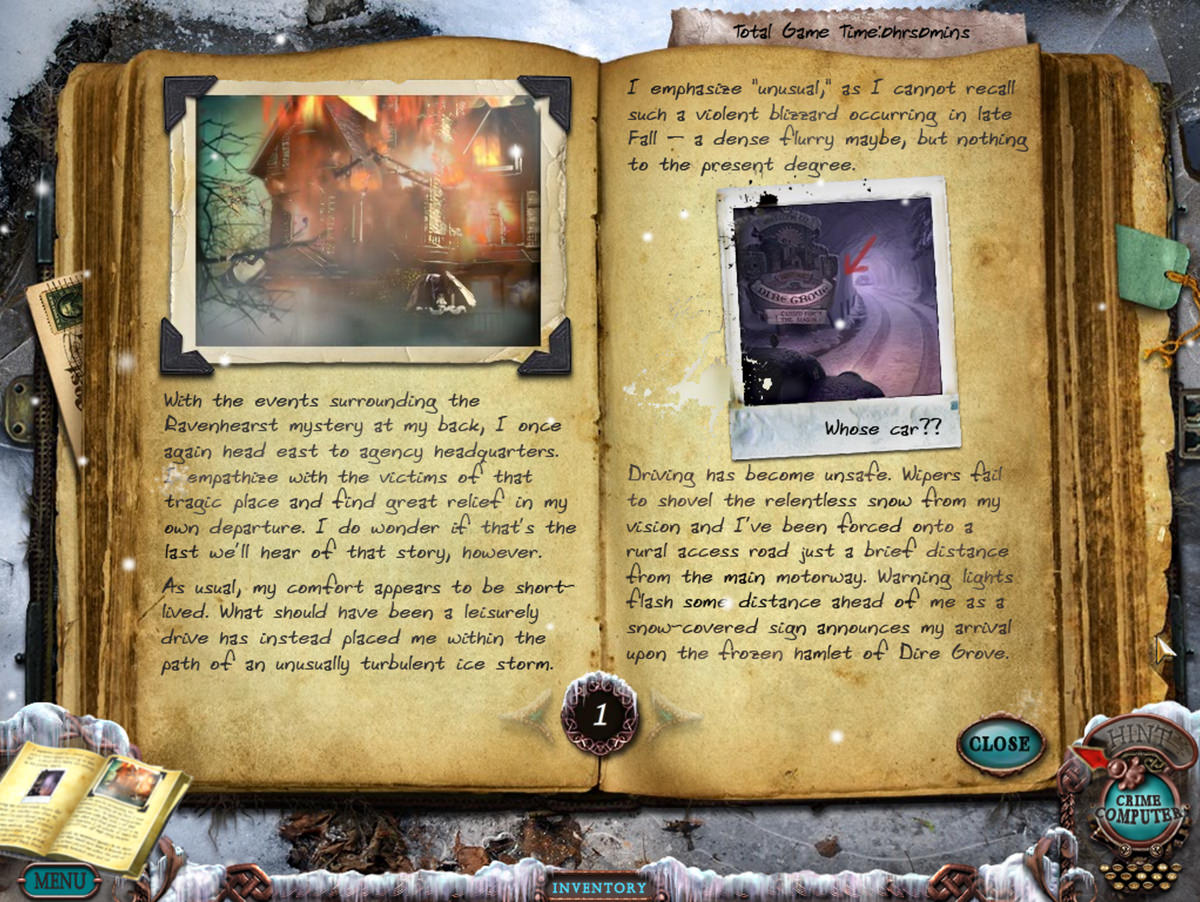
The agent’s journal looks old and worn, which is slightly odd given that the year is 2009 and the agent writes in it in real time. In addition to text, the journal contains drawings and aged photographs, with decorative framing that varies from page to page. Setting aside the anachronism, the journal’s visual design is excellent.
The background music is minor-key orchestral music with modern touches and Celtic vocals. I found it pleasing. Ambient sounds and sound effects are also well executed. Footsteps in snow and the crunch of boots add a sense of dynamism, even though all scenes are static (aside from minor animations) and the agent’s movement is never shown.
The overall atmosphere is calm, despite the encroaching cold that threatens the world. The video clips depicting the students’ experiences are live-action and convey a sense of panic. Since everything has already happened, however, the clips do not put the player on alert, but instead evoke concern for the students’ fate.
Collector’s Edition
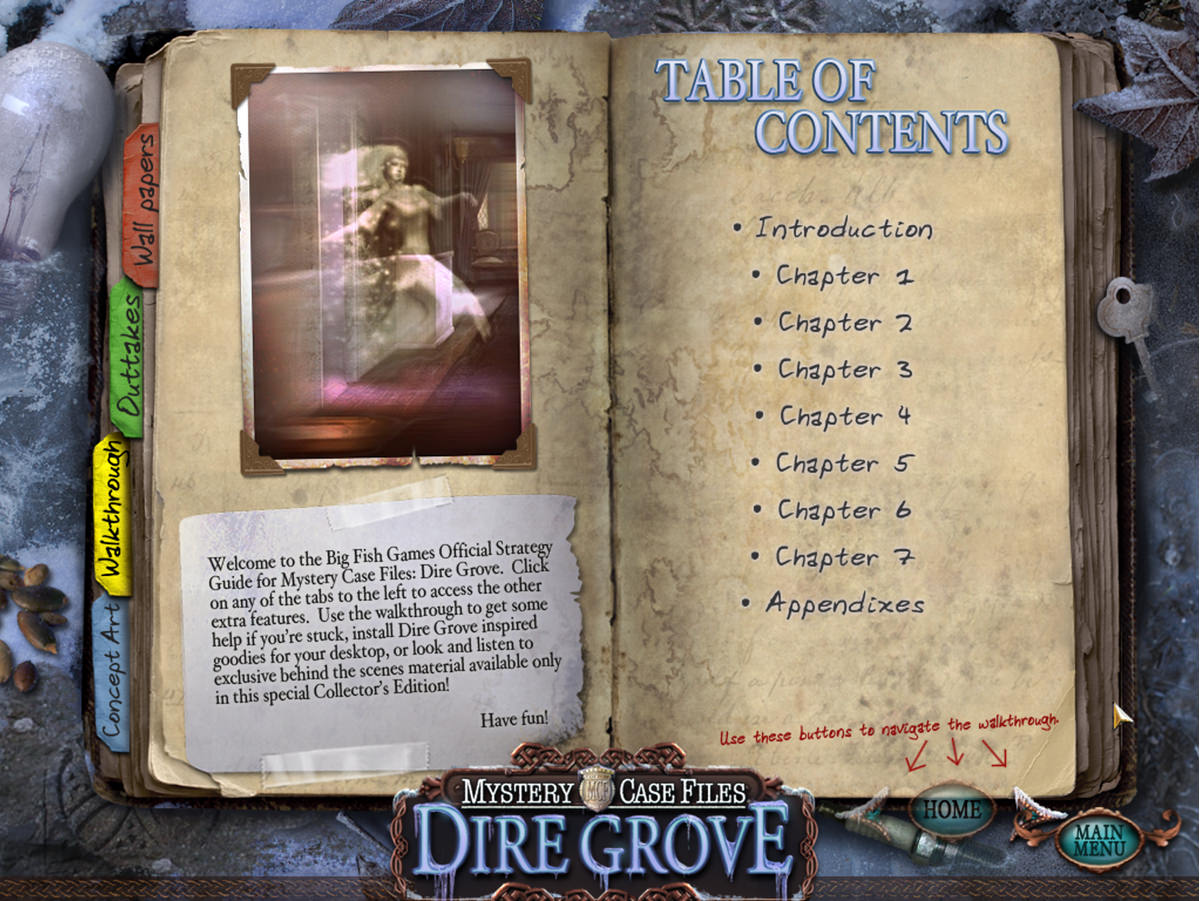
I played the Dire Grove Collector’s Edition. Compared to the standard version, it includes bonus gameplay content, achievements, morphing objects, an integrated strategy guide, and a media gallery. Dire Grove was the first hidden object game to be released in both standard and collector’s editions. Today, this dual release has become the norm.
I did not use the strategy guide, and I failed to unlock the bonus gameplay content. It does not become available automatically after completing the game, but is tied to an in-game task that can be failed. In more recent hidden object games, bonus storylines simply unlock upon completion. The bonus content is said to contain a hint about the continuation of the Ravenhurst storyline. The seventh entry in the series, however, does not return to Ravenhurst; that only happens in the eighth game.
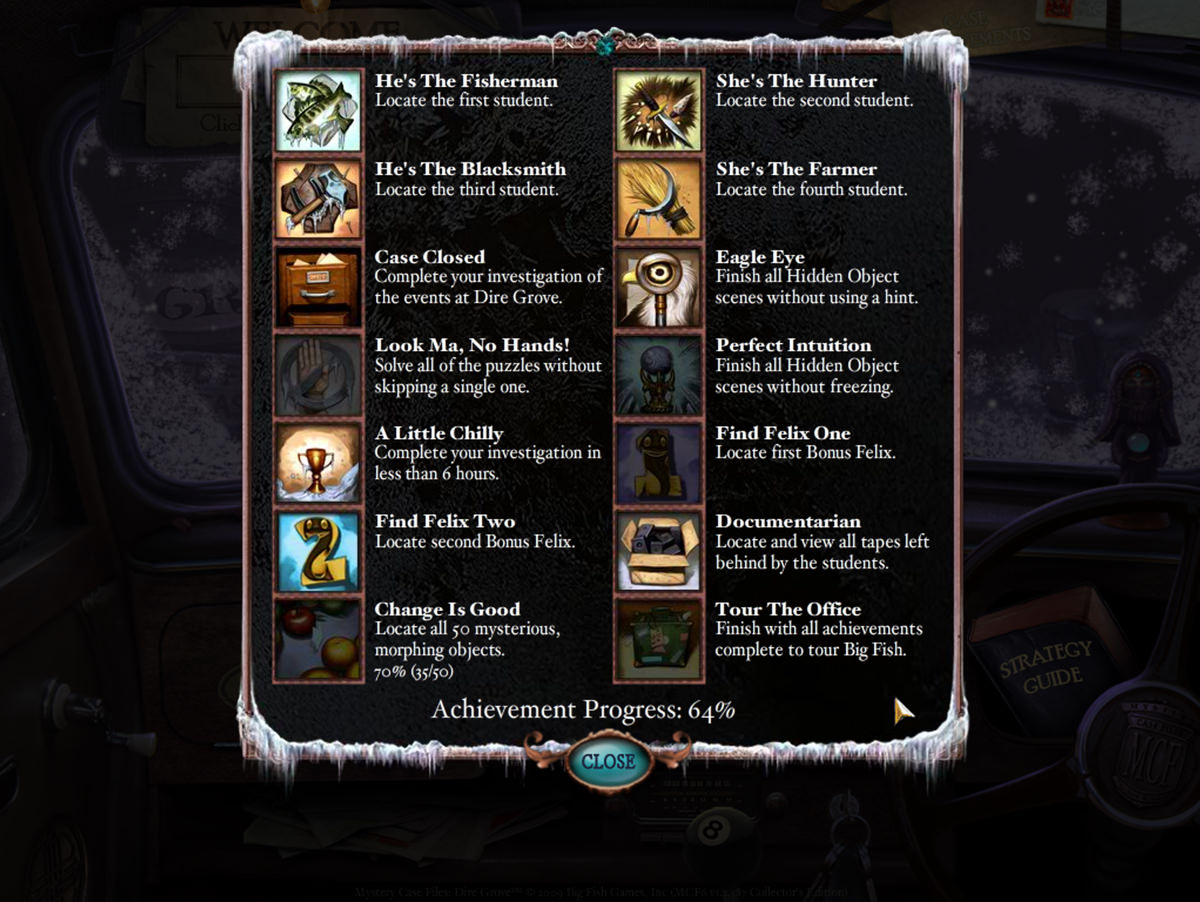
Spotting morphing objects is, in my view, a welcome additional challenge in hidden object games, though not necessarily an easy one. Even in Dire Grove, I did not manage to find all of them, despite thoroughly examining every scene. Finding all morphing objects is one of the achievements, and I failed to earn it. While I do not think I performed poorly, the number of missing achievements shows that I was far from a pro.
The Collector’s Edition media gallery includes wallpapers, concept art, and video clips. The clips reveal that the footage depicting the students’ experiences was filmed in Argentina.
Verdict
Dire Grove is well designed and carefully executed. It feels balanced, controlled, and streamlined — a polished hidden object adventure. It is pleasant to play a well-made game, even if I still miss the idiosyncratic character of the series’ earlier entries. I give my gameplay experience a score of 67 out of 100.
Availability
Dire Grove is available for Windows, macOS, iOS, and Nintendo 3DS. Both standard and collector’s editions exist.