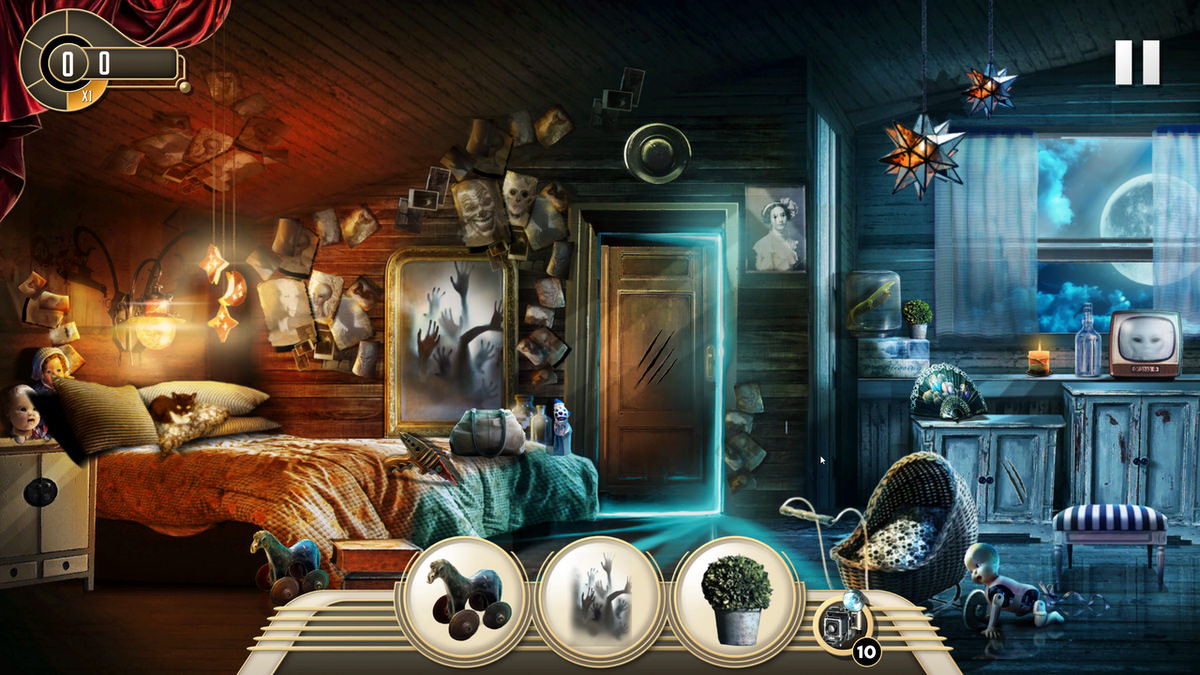
Project Blue Book: Hidden Mysteries (2021)
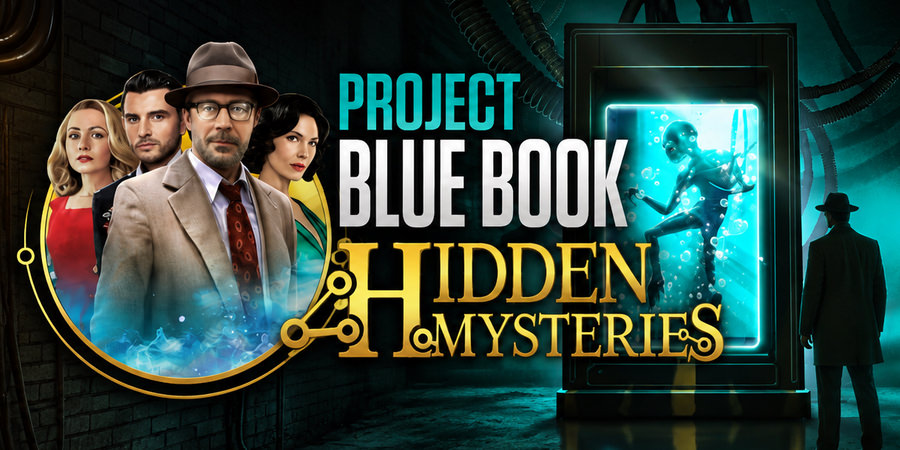
While browsing the selection at the soon-to-close Legacy Games casual games store, I came across Project Blue Book: Hidden Mysteries, a game featuring UFO cases. It is based on the History Channel television series Project Blue Book, from which the first two cases have been adapted. The other two are original to the game. All four are genuine historical cases dating from 1948–1952. As in real life, astronomer J. Allen Hynek investigates unusual aerial phenomena in cooperation with the United States Air Force. The aim is to reassure the public and provide ordinary explanations for the phenomena. The player takes on the role of an additional member of the team, tasked with finding evidence in hidden-object scenes. Project Blue Book: Hidden Mysteries is a polished and formulaic, extremely easy game.
Project Blue Book: Hidden Mysteries was developed by Swedish studio Three Gates (now Jumpgate) and Legacy Games. The script was written by Steven-Elliot Altman. This game actually led me to look more closely into the history of Legacy Games, which recently announced that it would be closing down. More precisely, the company's founder, Ariella Lehrer, is retiring.
A brief history of Legacy
California-based Legacy Games, also known as Legacy Interactive, was founded in 1998. This was actually the company's second incarnation, as its founder Ariella Lehrer had previously run Legacy Software from 1991 to 1997. She was forced to sell it but retained the right to use the Legacy name. Ariella, who holds a doctorate in cognitive psychology, was determined to break into the video game market, which at the time was dominated by men and large corporations.
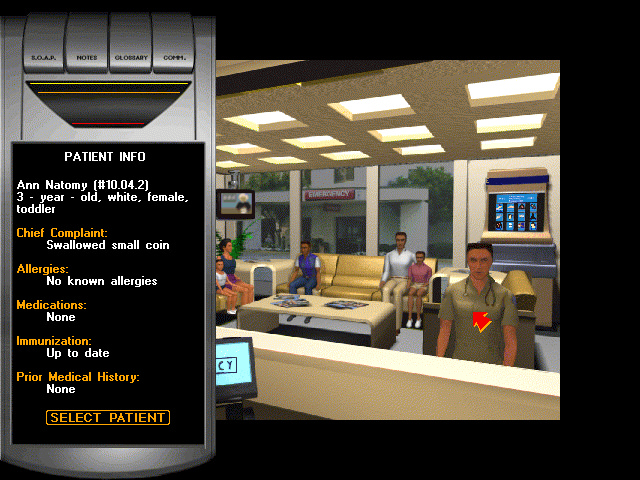
Initially, Legacy Interactive focused on simulation games, but later found an opportunity in video game adaptations of television series. These included Murder, She Wrote, CSI and Law & Order. All were made with the approval and cooperation of the television companies. These games can be difficult to find nowadays.
In fact, Legacy Interactive was an early player in digital game distribution. As early as the mid-2000s, the company experimented with selling its television-based games both as traditional CD-ROM releases and as downloadable versions. For example, Law & Order: Criminal Intent was released in 2005 as a downloadable game in four separate parts, whereas the CD-ROM version was a single, complete game.
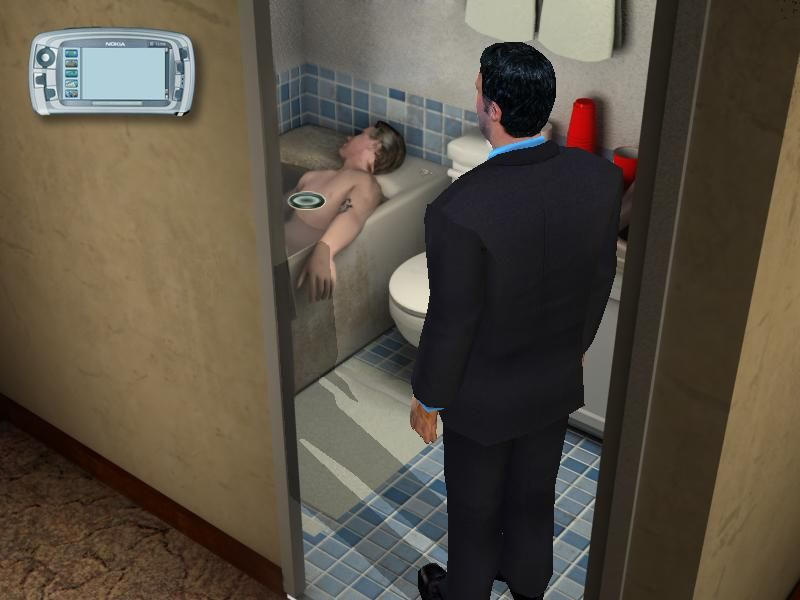
Interestingly, the CD-ROM versions were also richer in audiovisual content than their downloadable counterparts. In an interview published in 2006, Legacy Interactive's development director Craig Bannon explained that some graphics, sounds and animations had been removed from the downloadable versions to keep file sizes down. He described these as additional visual and audio details that were not essential to gameplay. Broadband connections were becoming more widespread, but file size remained an important consideration in game distribution.
Over time, Legacy Interactive shifted increasingly towards developing, publishing and distributing narrative-driven casual games, particularly hidden-object games. In autumn 2020, it opened its own digital game store, Legacy Games. The store offered both the company's own releases and games from numerous partners. Its selection was later expanded to include titles from independent developers as well.

Lost games?
Legacy is a small company built around one woman, and there is no successor lined up to continue its work. I don't know what we are losing, but I found the story behind Legacy Games interesting. It is a small piece of video game history.
The closure of a digital game store is, of course, a player's worst nightmare. Will you lose the games you have bought? Steam, for example, does not technically sell games but rather licences to use them. Playing requires an online connection and the use of a launcher. This is a form of DRM protection. GOG.com, on the other hand, sells standalone installation files that do not require a launcher and work offline.
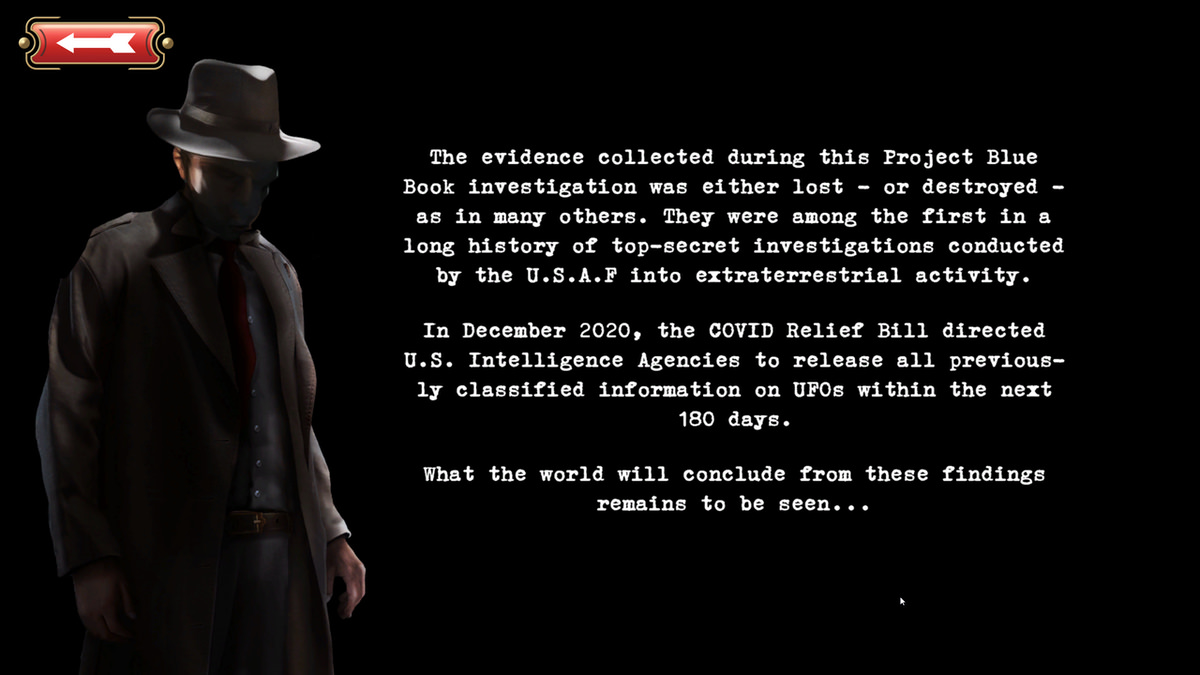
Legacy Games also turned out to be DRM-free, because games purchased before the store closes can be installed on your own computer and will continue to work far into the future, even without a launcher. This is not quite the same thing as having standalone installation files, of course. Well, I went ahead and installed my entire Legacy Games library. It does take up some hard drive space, but we are not talking about more than a thousand games (heaven help my Steam library!) here, just a couple of dozen.
Search, and search again
Project Blue Book: Hidden Mysteries clearly has two distinct layers: gameplay and storytelling. They are tied together by a game world that reflects the early 1950s. The story is based on real events and therefore has a realistic foundation, although some liberties have been taken. The game is a cross between a hidden-object game and a visual novel, with a few puzzle games thrown in. It is not a HOPA as it doesn't have features of an adventure game.
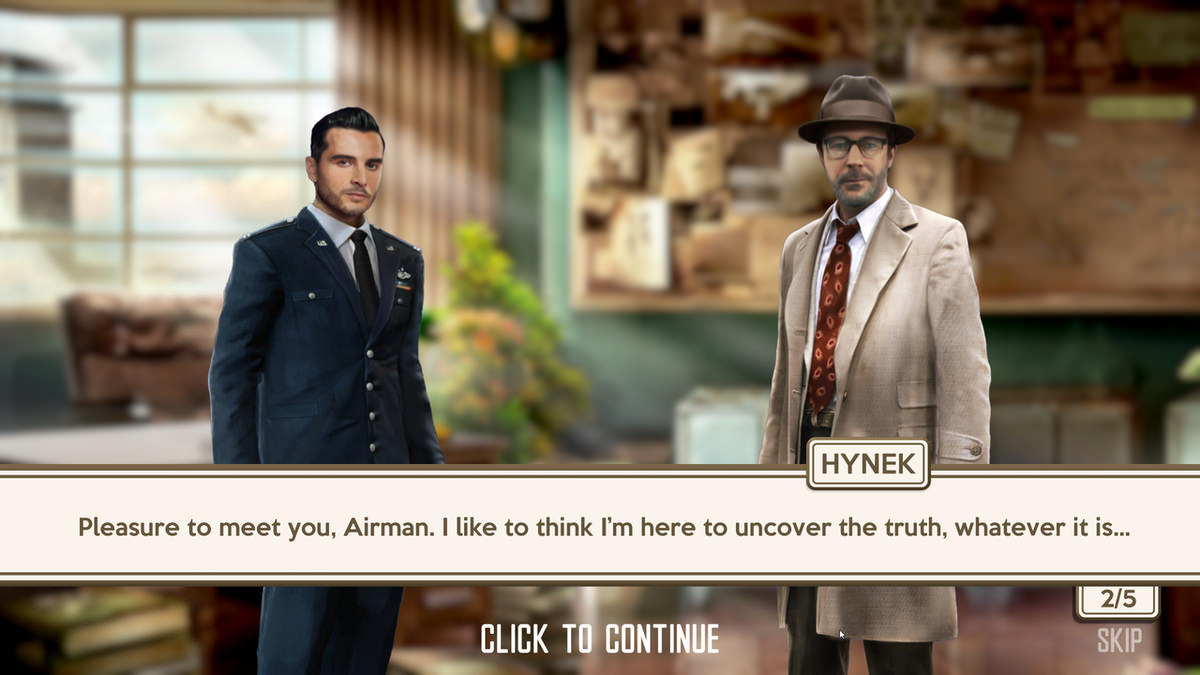
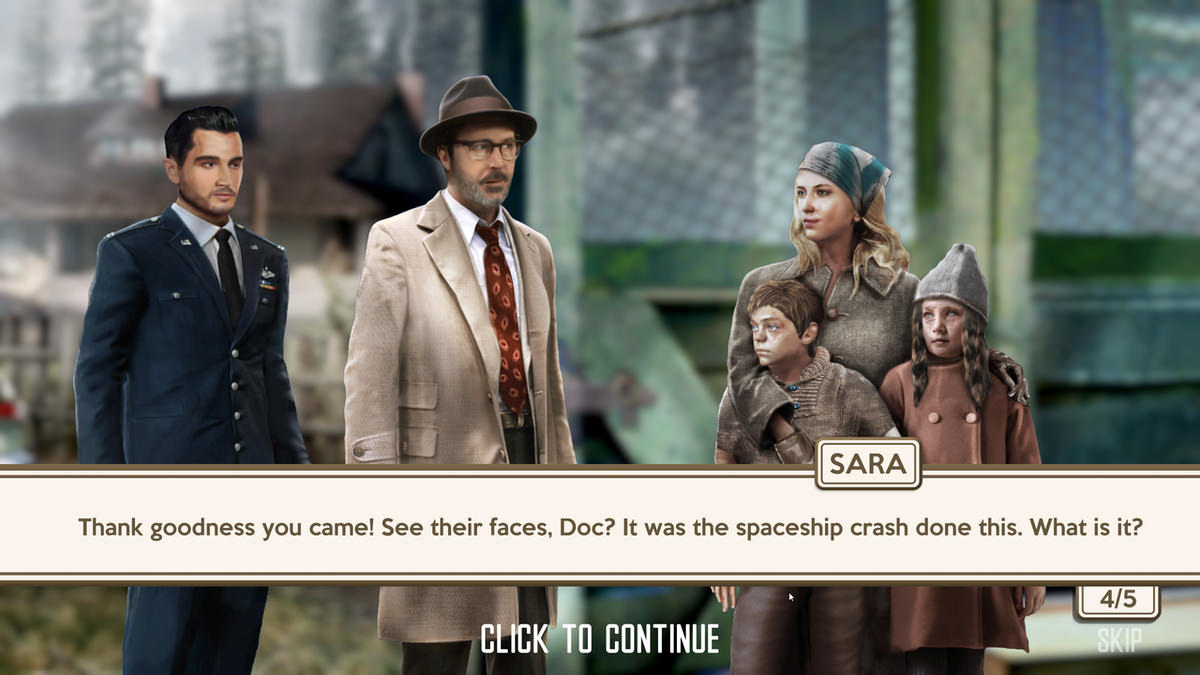
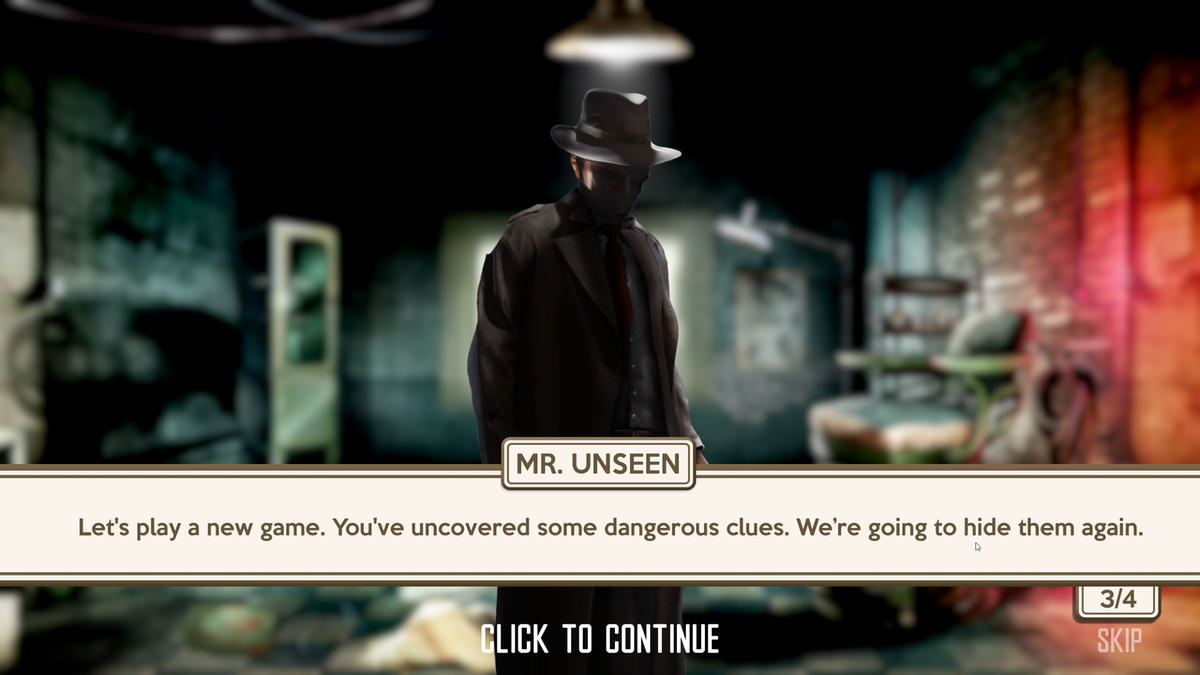
The story progresses through visual-novel-style dialogue and automatic notes. During conversations, the characters appear as static figures against a background image. The player cannot influence the conversations in any way. The game characters occasionally acknowledge the player's presence, but there is no interactivity in these scenes. Notes are added as evidence is discovered.
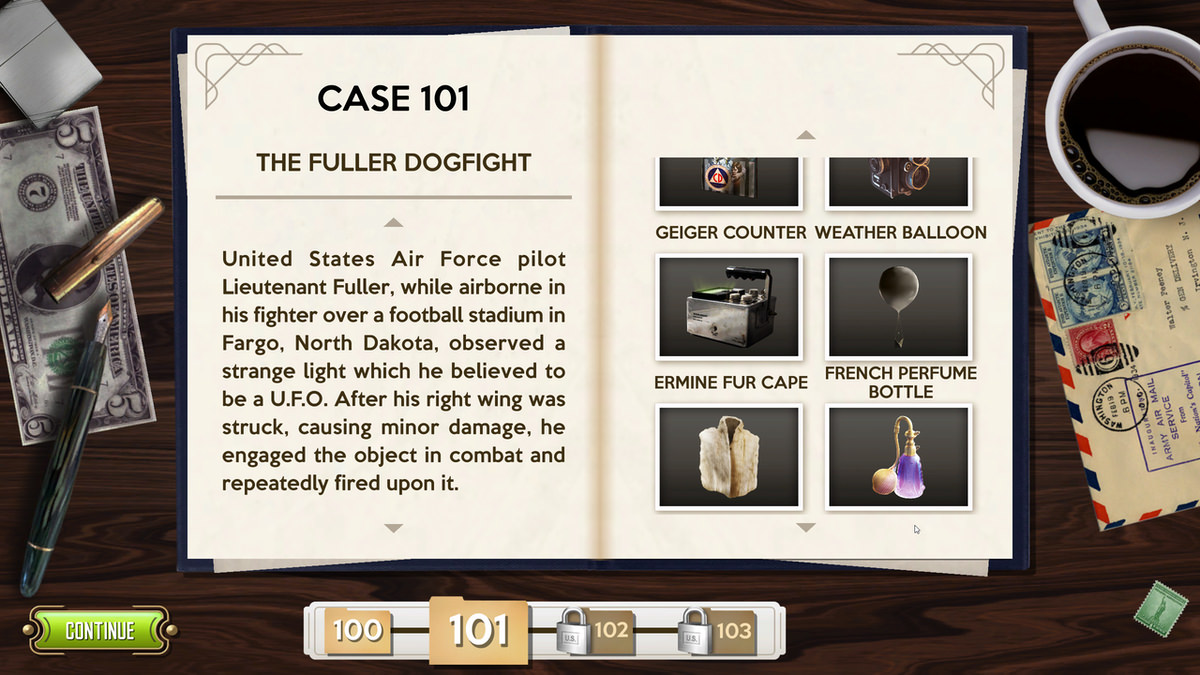
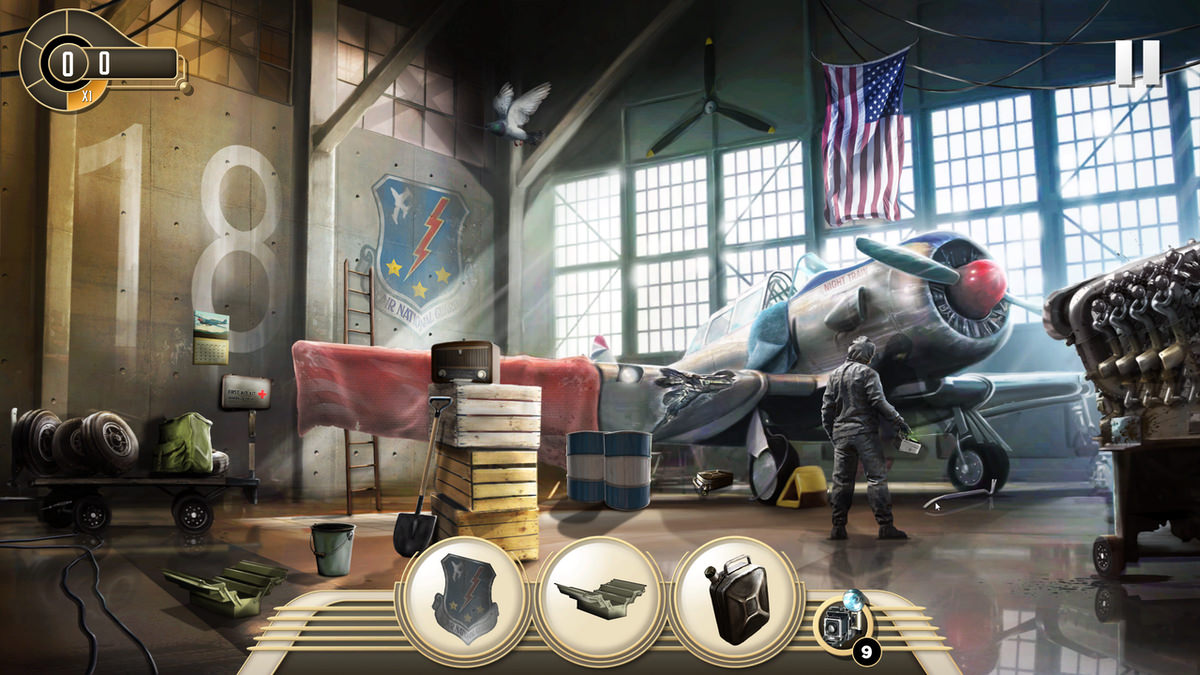
Evidence is scattered rather sparsely among numerous other objects in the hidden-object scenes. These scenes provide most of the game's actual interaction. Objects are found using picture clues and words. Each scene comes in three different search modes: three rotating pictures of objects to find, three rotating words, or one picture at a time with a ten-second time limit. The last is naturally the most challenging because of the time restriction. However, I found any hidden-object scene most difficult the first time I encountered it, even when searching in the usual way using picture clues. After that first attempt, the scene became so familiar that finding the objects was no longer difficult in any of the modes. It is worth noting, however, that new objects were occasionally added to the hidden-object scenes as well.
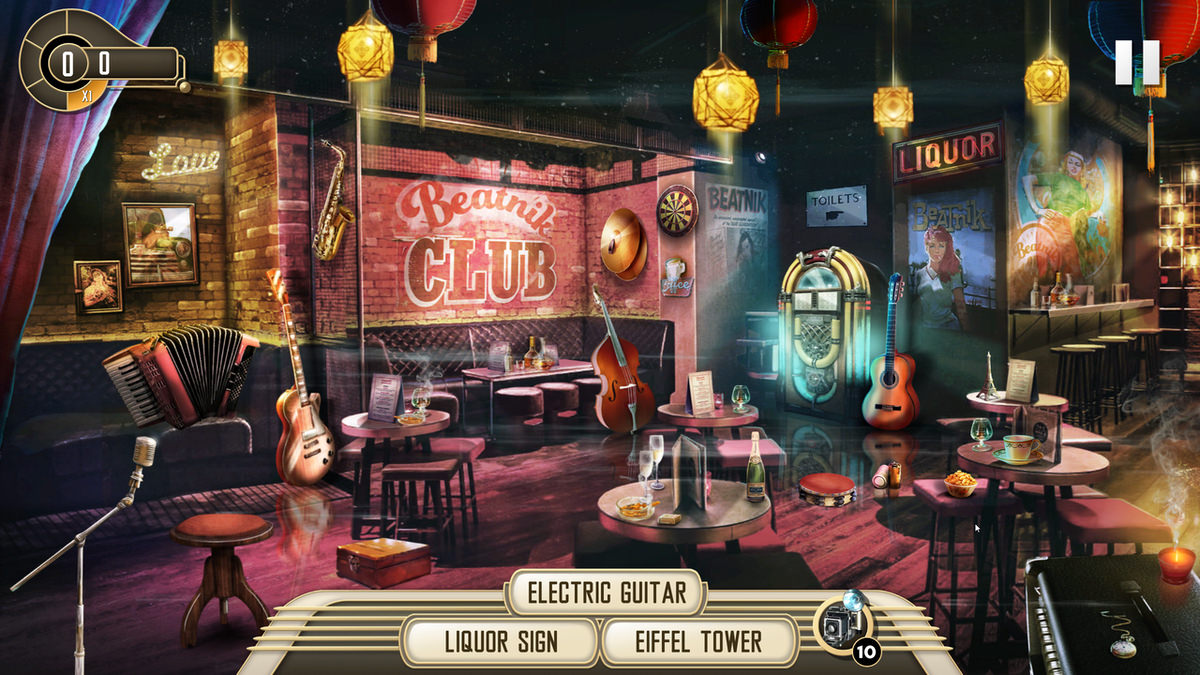
The hidden-object scenes are cluttered, but there are still relatively few details, or at least the objects are easy to distinguish from one another and from the background. Perhaps this reflects the game's mobile origins, as it was released on mobile devices before the PC version. Its mobile roots are also evident in the relatively small number of objects to find and the game's fast pace.
I think the graphics are good, or at least easy on the eye, and there are plenty of locations to explore. What bothered me about the characters was their stubbly faces. In those days, especially in the military, men were expected to be clean-shaven! The women are young, slim-waisted and mostly dressed to the nines. Women certainly play a part in the drama of the game, even if none of them are UFO researchers or military personnel.
The music and sound effects complemented the graphics, but came close to becoming irritating through repetition.
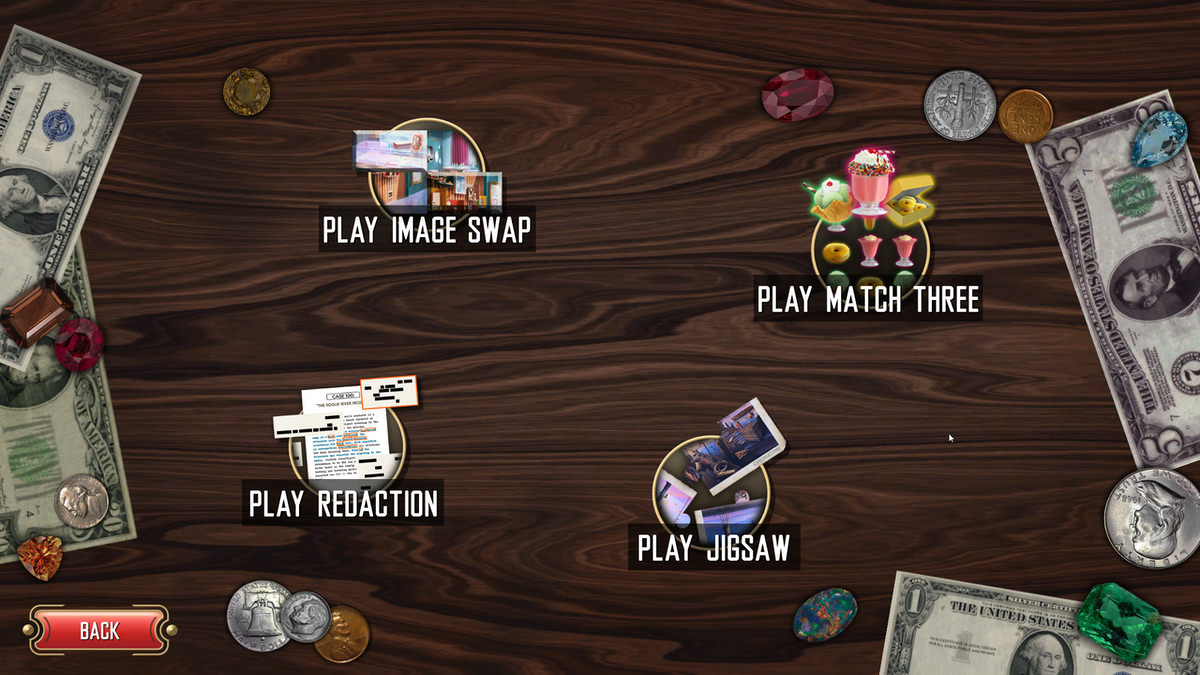
Project Blue Book: Hidden Mysteries also includes puzzle games, but they have no connection to the story or the main gameplay. There are four types of puzzles, and completing them can earn additional hints for the main game. The hidden-object scenes feature a hint system disguised as a camera flash. It reveals the location of the object being sought. The most interesting puzzle adaptation, in my opinion, was redaction.
A complete playthrough took me four hours. By complete, I mean that I collected all the stars in the hidden-object scenes, read all the content and tried out every puzzle game. Collecting all the stars requires searching each scene approximately six times rather than stopping once the actual evidence has been found. Since I got through the hidden-object scenes so quickly, I experienced something like the beginnings of a flow state. Even so, the game was too easy for me to experience genuine flow or the satisfaction of accomplishment.
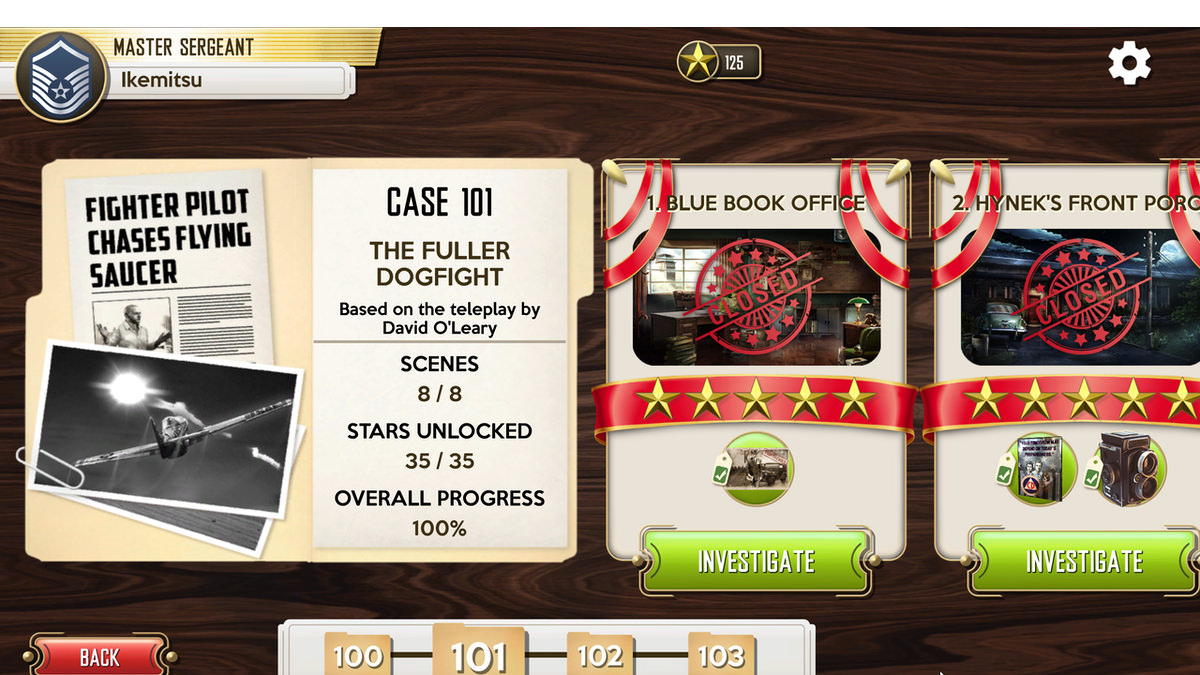
Project Blue Book: Hidden Mysteries is a very formulaic game. It always follows the same pattern, and the interface is highly polished. I don't think there is anything wrong with that, but despite the game's ambitious premise (who wouldn't be interested in UFO cases?), the content feels rather thin.
Fact and fiction
The main characters in the game are Professor Josef Allen Hynek and Air Force Captain Michael Quinn. Hynek is a real-life figure known for his work in ufology. He was originally recruited as a scientific adviser to the military's UFO investigations, first Project Sign and then Project Blue Book. During the 1960s and 1970s, however, he developed into a UFO researcher in his own right. He represented a scientific perspective but also remained open-minded about alternative explanations. His legacy includes the so-called Hynek classification of UFO sightings.
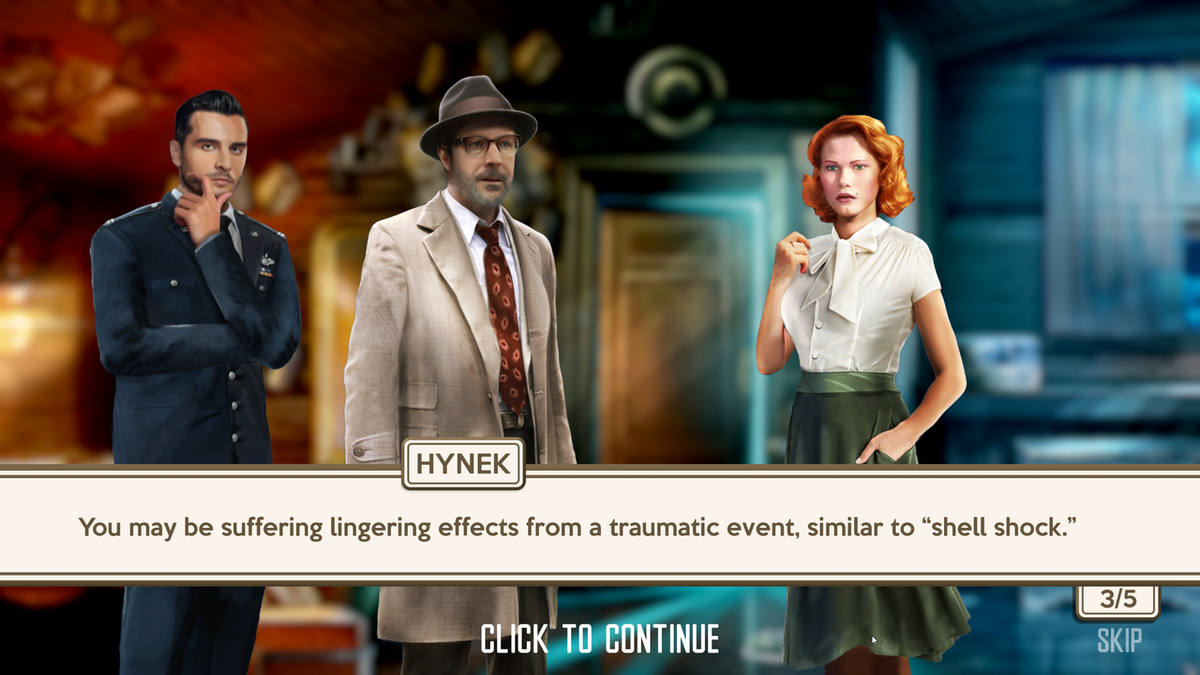
Captain Michael Quinn is also based on a real person, although under a different name: Edward J. Ruppelt. In the game, he dismisses people's UFO sightings and strongly pushes an agenda in which UFOs are explained away in mundane, everyday terms. The impression is that the military is trying to wrap up UFO reports as quickly as possible without any deeper investigation. The media fuels UFO mania among the public, while the military tries to put it out.
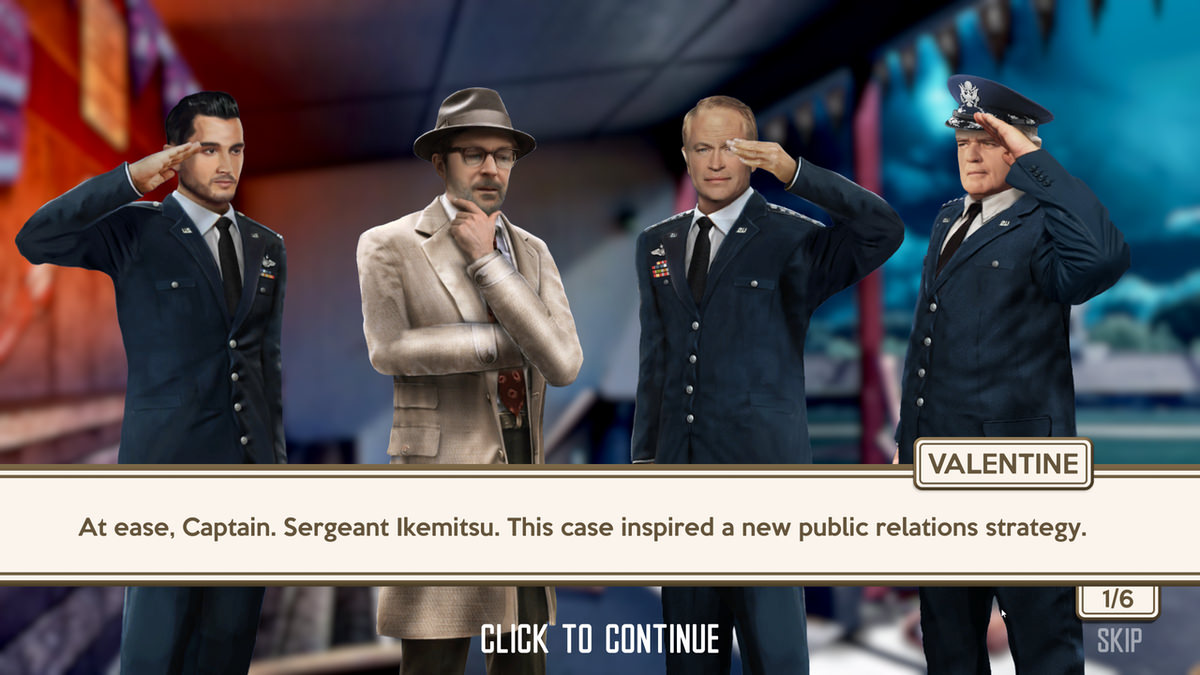
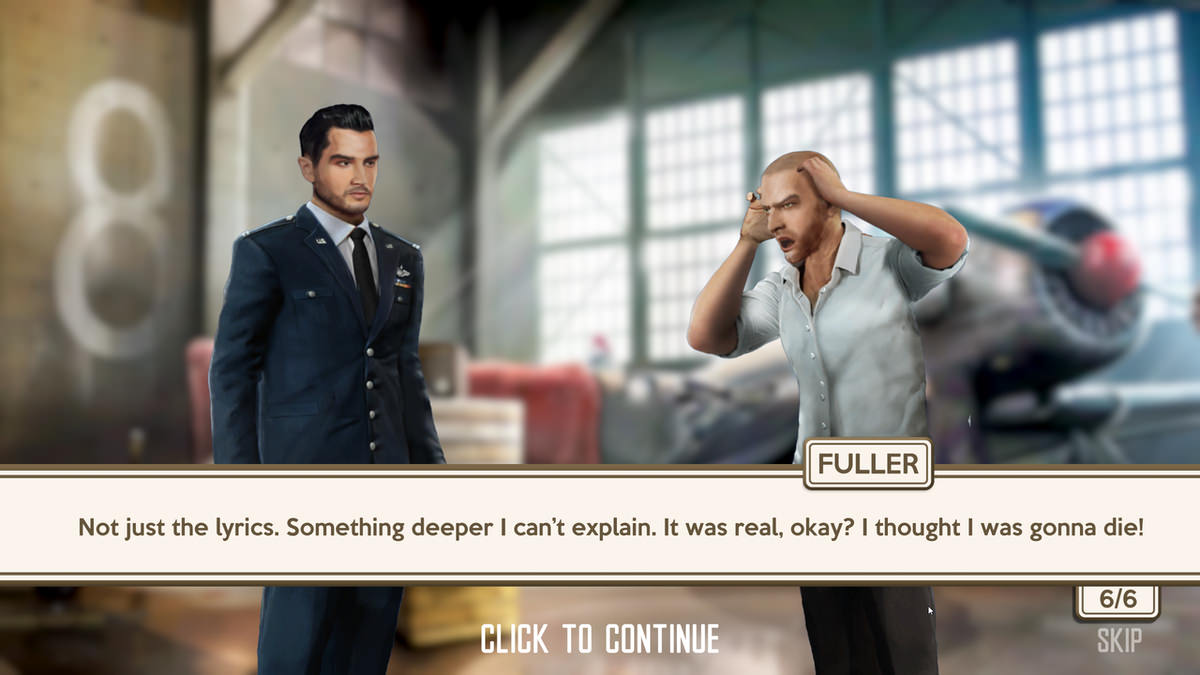
As for the other characters, some appear under their real names, while many do not. I found myself wondering why. Apparently, the game follows the casting of the television series, and the writers may have had dramatic reasons for their choices. The Soviet spies are fictional, but they fit the spirit of the era. One particularly unfortunate decision concerns the Fuller Dogfight case, which is actually based on the Gorman Dogfight. In the game, the pilot Fuller is mentally unstable, which is in stark contrast to the real-life pilot George Gorman, who served as the model for the character. I did not know this background while playing, but I found the portrayal deeply disturbing. It strongly suggested that the entire UFO incident was nothing more than a confused delusion. In reality, however, the pilot was highly credible.
It's no fun being a pawn
My own role as a player felt contradictory. I naturally sided with Hynek, but I understood that I was representing the military and had no real say in anything. All I could do was witness events, interviews with eyewitnesses, the exchanges between Hynek and Quinn, and the interventions of senior military officers. To top it all off, a shadowy figure called Mr. Unseen appeared to me and effectively forced me to destroy evidence, precisely the kind of evidence that did not fit the simple explanations. I certainly had no desire to do that.
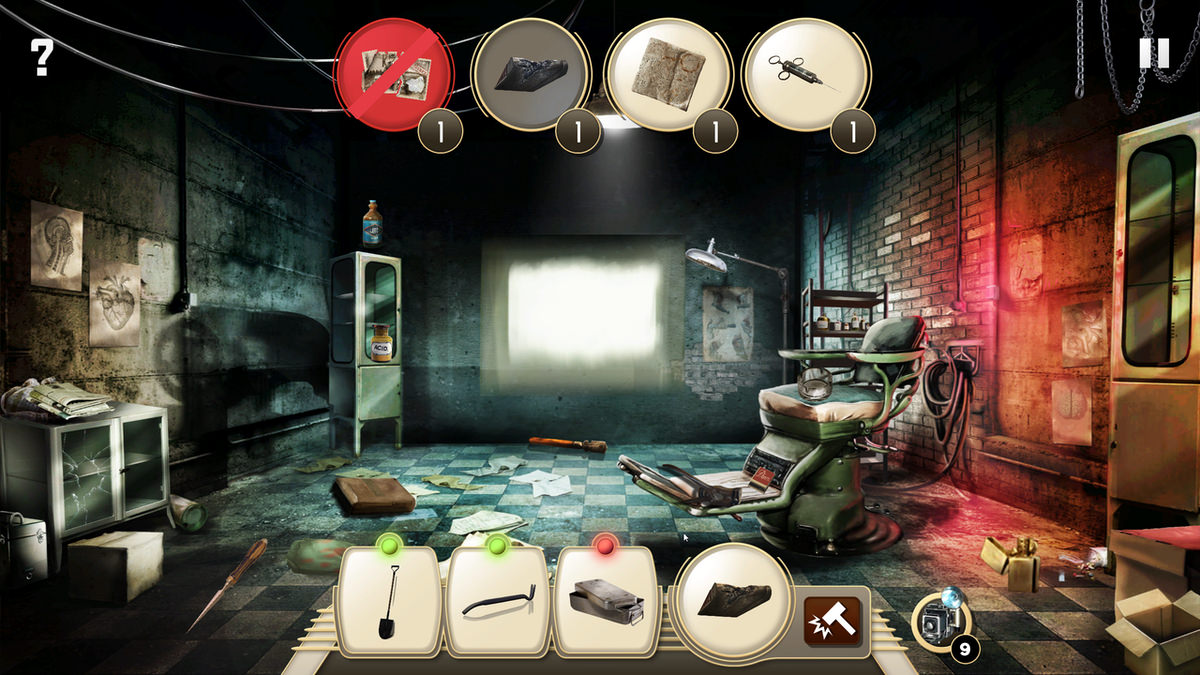
I feel that the subject matter is too broad to be reduced to a game of this kind. It gave me no decision-making power or real influence, and did not even genuinely encourage me to think for myself. I am not convinced that a hidden-object game is the best format for this material. Perhaps a traditional adventure game would have provided a better starting point.
Verdict
Project Blue Book: Hidden Mysteries is one example of a hidden-object game based on a television series. Not all the evidence collected in the game is genuine evidence, nor is all of it related to UFOs. The process of collecting evidence also fails to convey enough information about the cases, and I would have liked more interaction during conversations and interrogations. What particularly stuck with me was Mr. Unseen, who forced me to destroy some of the most valuable evidence.
Project Blue Book: Hidden Mysteries offers easy hidden-object gameplay and 1950s eye candy, despite the stubbly faces. I give my overall gaming experience a score of 54 out of 100.
Availability
Project Blue Book: Hidden Mysteries is available for Windows PCs from the Steam store. There is probably little point in buying it from Legacy Games any more. I can no longer find the Android or iOS versions.