
Tiny Echo (2017)
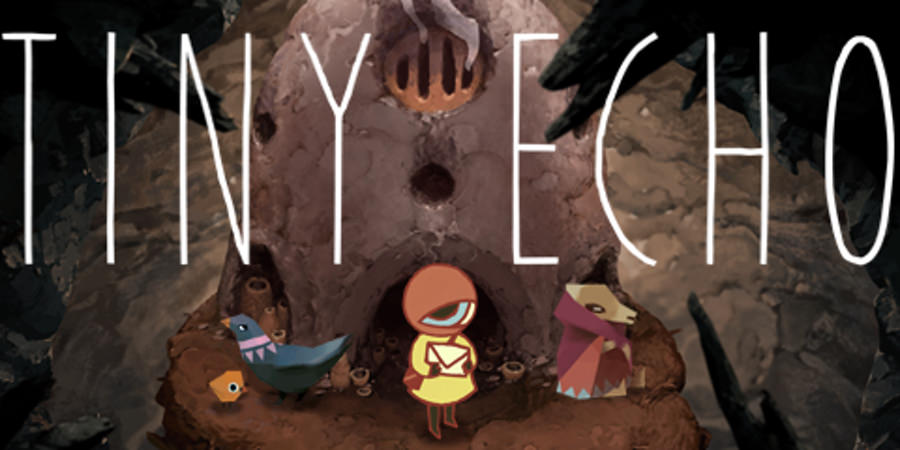
Released in 2017, Tiny Echo feels like a pause — a breath taken in, deep yet feather-light. The player guides a small character named Emi, who receives a bundle of letters from above ground and must deliver them to recipients living underground, or perhaps at the very edge of the earth. This point-and-click game is driven primarily by its visuals, and its sense of “gameplay” is so pared down that it can feel almost illusory. It might be more accurate to describe it as an interactive animation rather than a conventional game — or perhaps as a kind of walking simulator, a wandering experience. Tiny Echo’s world is mysteriously charming, even sensually evocative in a digital sense. A summer night seems to come alive on the screen.
Tiny Echo was created by the Swedish studio Might and Delight, best known for the Shelter survival game series. In Shelter the player controls a mother badger, while Shelter 2 places you in the role of a lynx mother, and Shelter 3 has also been announced. The studio’s path has not been without obstacles. Their fairly extensive catalogue includes a project that was abandoned due to weak early reception, staff numbers have had to be reduced, and even the Shelter games have not received unanimous praise from players. Might and Delight represents a strand of art- and eco-focused games and works. In Tiny Echo, for instance, nature takes on a distinctly fantastical dimension.
Messages from above ground
The opening moments of the game feel faintly depressing. On a grey-blue, misty stone plain sit humanoid figures with their heads bowed. They have no distinguishing facial features and all appear identical. They seem to be mourning, suffering, or praying — or perhaps all of these at once. From their thoughts or emotions, letters are formed, falling into a chasm that opens in the ground. At the bottom of this chasm, one-eyed Emi is dozing at her desk, and it is up to the player to wake her. Apparently, Emi is a post carrier, waiting on duty for the mail to arrive. She slips her shoulder bag over her head and sets off with a sigh to do her work.
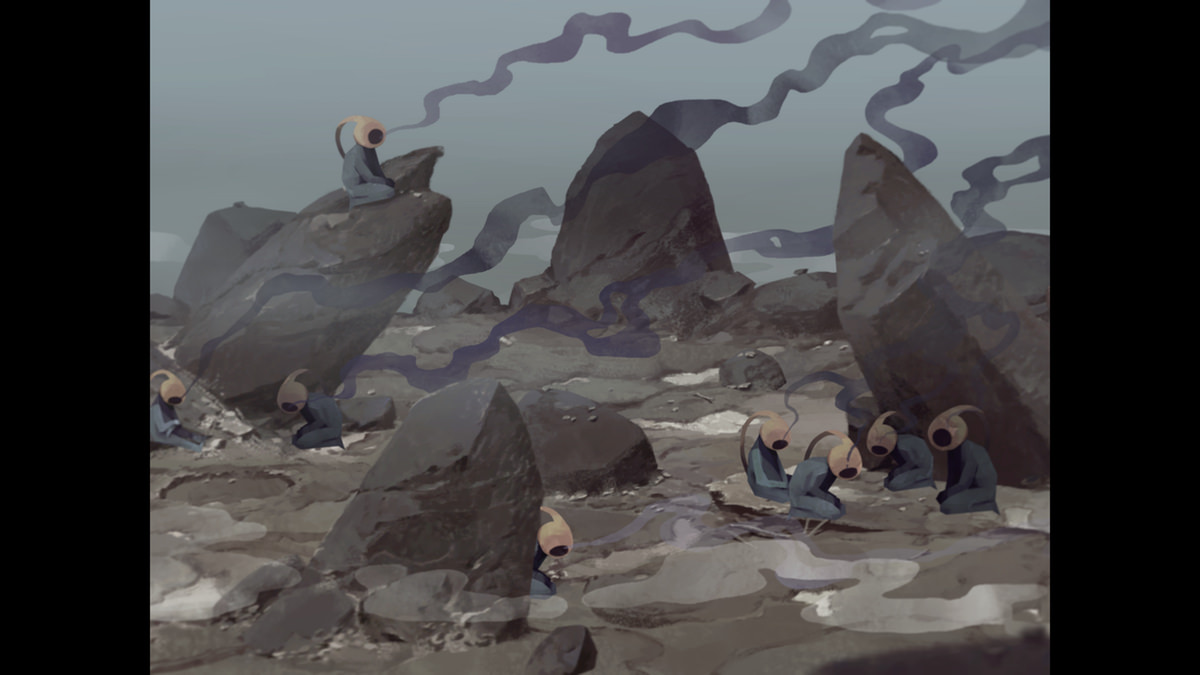
From the very outset, the game’s mood is wistful and its pace slow — so unhurried that it can evoke a feeling of powerlessness. Each mouse click feels like an effort. Yet I did not experience the game as bleak. Instead, I settled into its rhythm and noticed my pulse slowing.
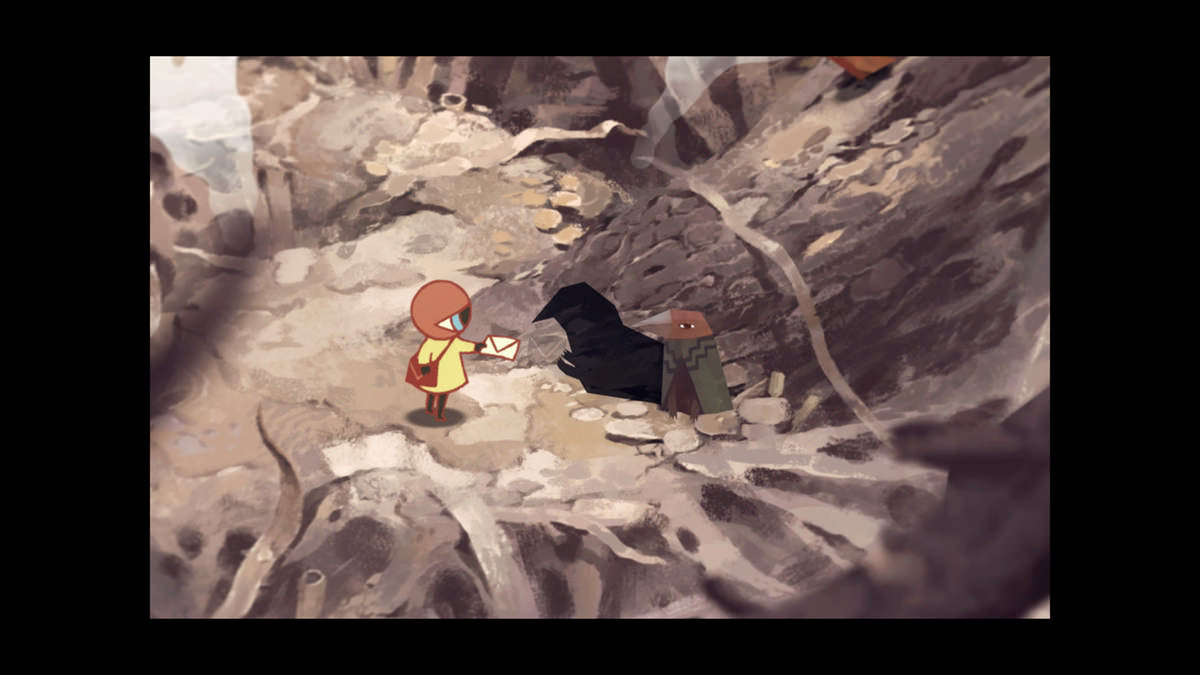
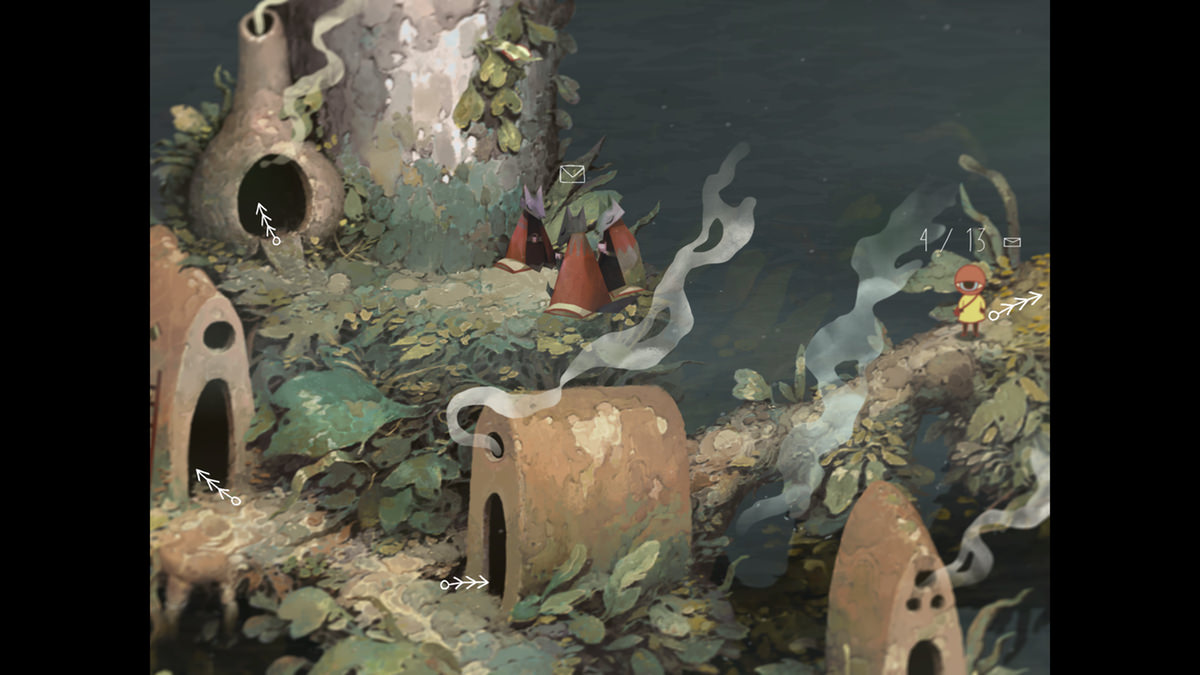
Emi must locate the recipients of thirteen letters. Underground corridors branch into chambers or lead back up to the surface. There are dry caverns and lush wetlands. These spaces are inhabited by peculiar fox-like, bird-like and frog-like creatures. They are not particularly welcoming and may refuse to accept a letter, citing various reasons. Tiny Echo’s gameplay arises precisely from these encounters: Emi must overturn the creatures’ “excuses”. Sometimes the solution is immediately apparent; at other times it lies further away. There is no inventory system — all tasks are solved by manipulating the environment or the characters within it.
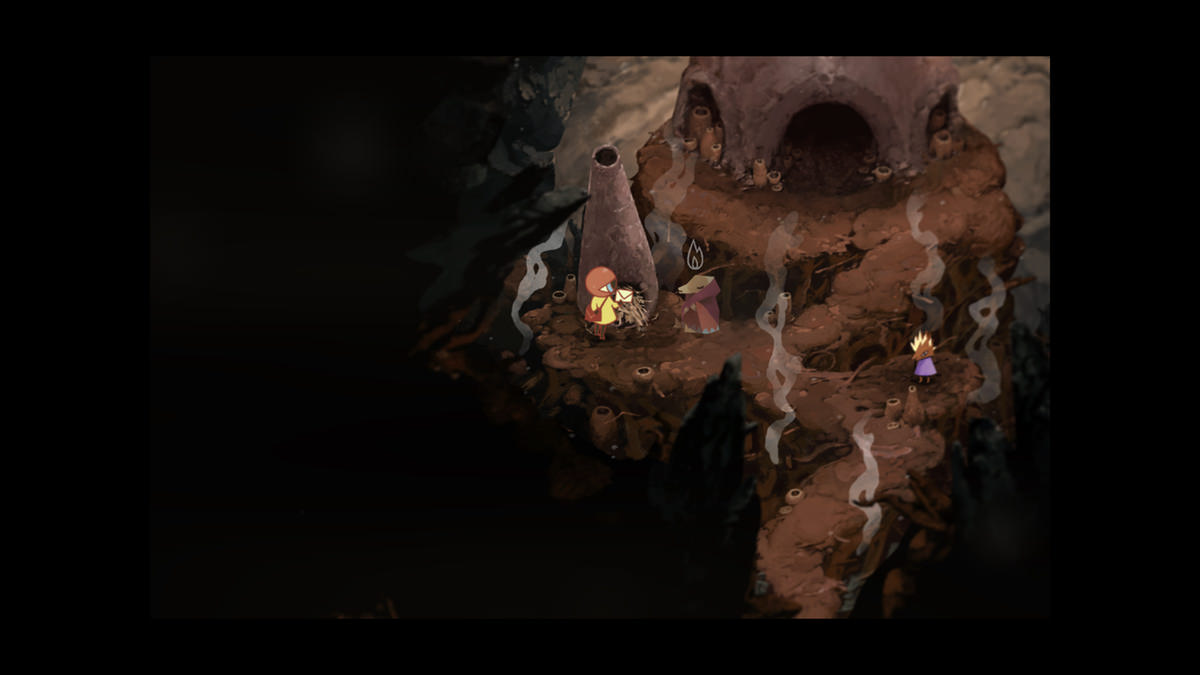
When a creature accepts its letter, it extends a shadow from itself, and the scene shifts to a deeper or alternate level in which the creature is asleep. The arrival of the letter wakes it. Upon returning to Emi’s everyday reality, the shadow is gone and Emi herself is found asleep. She must be woken again. References to sleep and dreaming are strongly emphasised throughout the game.
Delivering all thirteen letters took me about an hour. On Steam, some players report shorter playtimes, but I found the underground labyrinth somewhat challenging. At times I wished the game had an internal map, but none exists. The back-and-forth walking is not solely due to navigational difficulties; it is deliberate and unavoidable. Not all paths “lead everywhere”, so to speak — the game world contains dead ends from which one must simply turn back. The designers have not optimised even an optimal route.
Atmosphere and interpretation
Tiny Echo relies heavily on atmosphere. It is dreamlike — or at least nocturnal. The game world feels quiet, even though soft ambient music (occasionally tinged with menace) plays in the background, accompanied by environmental sounds and other effects, but no speech. The game has been compared to Amanita Design’s Samorost series. I do not think the comparison holds, as the Samorost games are far more game-driven. They are also richer and more developed as worlds, both audiovisually and structurally. Tiny Echo should be placed in its own category and judged on its own terms.
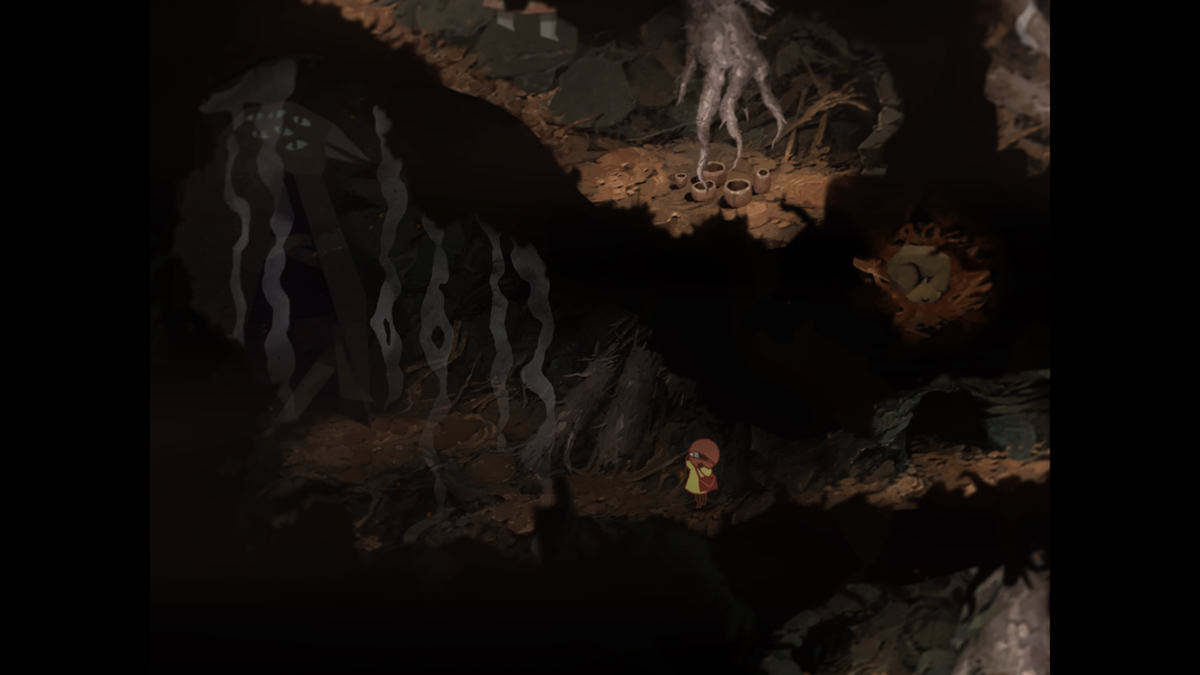
Like the best children’s books and films, Tiny Echo is suitable for both children and adults. While it can be experienced at face value, without much reflection, it is strongly interpretative — or at least invites the player’s own interpretation. In Steam reviews, it is often suggested that the game is about wishes or prayers. I take the interpretation further. I believe the game is about creative work. The figures slumped above ground are artists or game developers who feel their creativity has run dry. The subconscious has, in a sense, fallen asleep and must be awakened for creation to continue. The game’s nature-like environments, adorned with fantastical creatures, represent the sources of their inspiration.
Verdict
Tiny Echo is a slip into a hidden world of bright summer nights, beyond nature and dreams. Its slow tempo has a calming effect. The thirteen letters carried by Emi form the game’s central thread, and there is no conventional narrative as such. The eye wanders and comes to rest in nature-like landscapes, while the ear becomes attuned to a quiet melody behind birdsong. Navigating the caverns was the game’s greatest challenge for me; the actual tasks themselves were straightforward. I give my overall experience a score of 50 out of 100.
Availability
Tiny Echo is available for Windows, macOS, and Linux. In my view, this game would be well suited to touch screens, but no mobile versions exist.