
The Deed (2015)
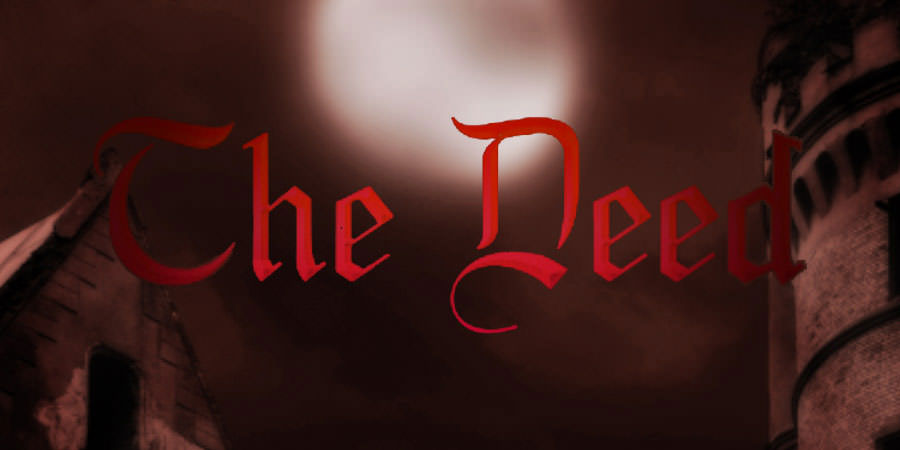
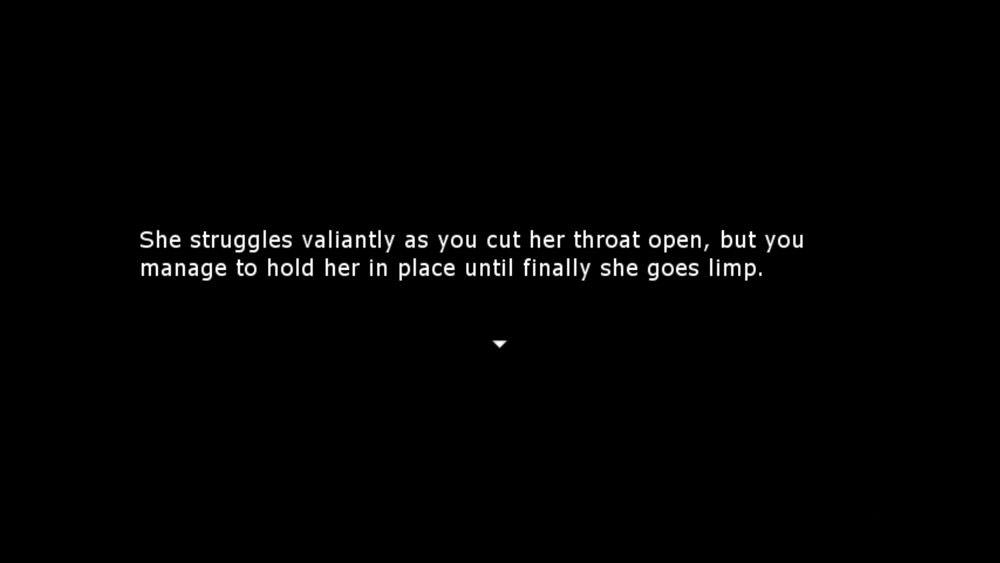
As its name suggests, The Deed revolves around a single decisive act — the murder of one’s sister — and the attempt to avoid being caught by framing someone else for the crime. Slipping into this grim and vengeful role was surprisingly easy, and I did not find the experience traumatic. The Deed is a neat little game whose core idea almost demands multiple playthroughs.
Behind the game is a small studio called Pilgrim Adventures. I was unable to find much concrete information about its creators; even the official website was hard to track down and contained no real “about” section. Most likely the studio consists of a single person, Noel Clay. The Deed was not originally intended as a commercial project, but grew out of a hobbyist background. It arrived on Steam towards the end of 2015 and was followed fairly quickly by a sequel. In early 2016 Pilgrim Adventures also released the four-part Space Pilgrim. All of these games were made with RPG Maker, and the tool’s influence is clearly visible.
From thought to action
In The Deed, the player controls a young man named Arran Bruce, who has been disinherited by his father. The game begins as Arran returns to his family’s estate with grim intentions: he plans to murder his mentally ill sister and, more or less, to take revenge on his parents. The story is set in the early twentieth century.
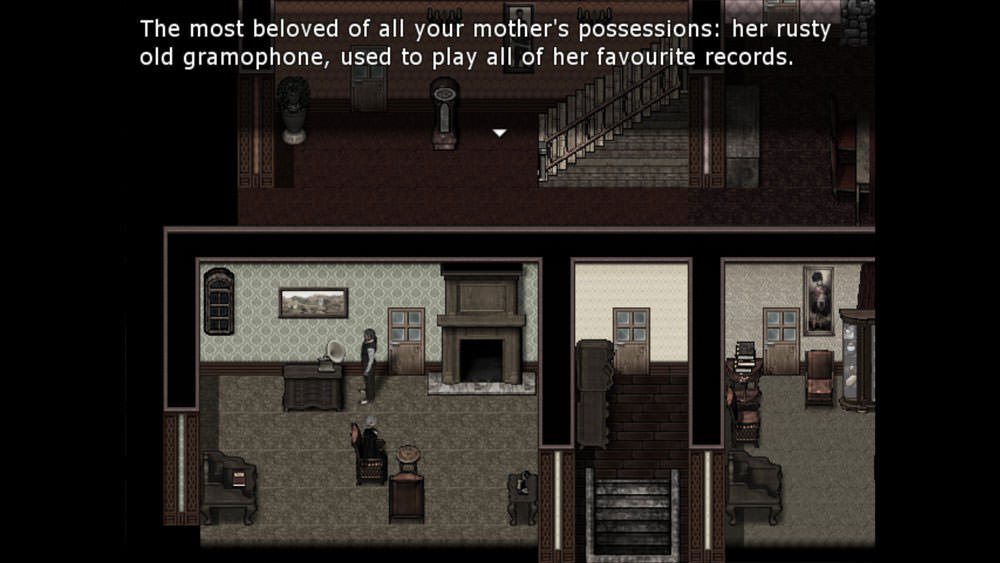
The basic instruction is simple: choose one murder weapon and one piece of evidence to frame another character. Conversations with the other characters are also crucial, as dialogue choices lay the groundwork for fabricated motives. Through these exchanges and environmental exploration, the game reveals Arran’s troubled relationship with his family and a series of unpleasant memories. After the murder, a police detective arrives at the house and interrogates the player character; the dialogue choices here matter as well.
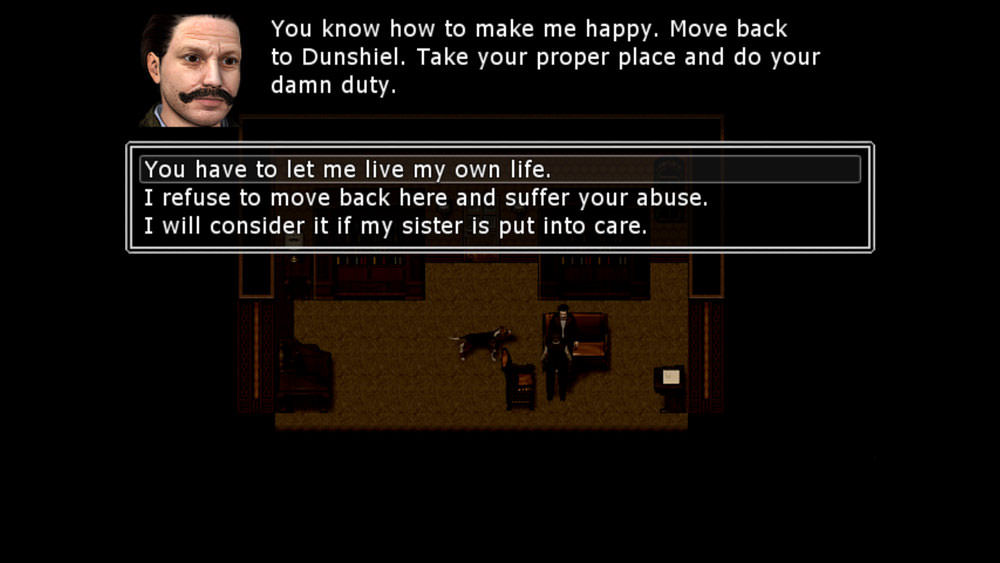
I managed to frame my mother on my very first playthrough. The second attempt was not, for some reason, any easier. Eventually I unlocked all Steam achievements: every character was convicted once, and every possible murder weapon was used. At first I avoided deliberately rude dialogue options, but I did end up trying those as well. All in all, I spent a couple of hours with The Deed.
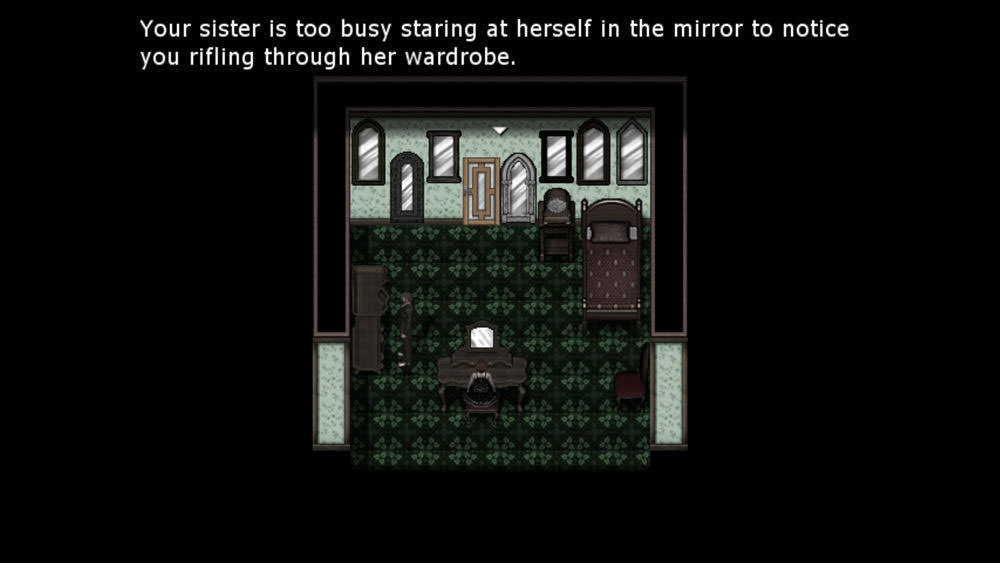
The game’s mechanics are simple, but I found them clever and effective. Judging by the detective’s remarks, the game seems to calculate each character’s “guilt potential”, and the one with the highest value is convicted — unless the player manages to confuse the detective enough that no one is found guilty at all. The Deed is heavily text-driven and comes close to interactive fiction.
Issues of credibility
The house itself felt rather modest for the estate of a wealthy and old family; the Bruces seemed closer to ordinary middle class. The comments and dialogue compress ideas that would have needed deeper and broader justification to feel fully credible, and perhaps different wording as well. For these reasons, The Deed came across more as a prototype than as a completely finished game.
After playing the sequel, The Deed: Dynasty, I partly changed my mind. It is larger and more demanding, with longer conversations and more characters. It also delves further back into the history of the Bruce family, reframing the first game’s events as part of a kind of family curse. I did, however, grow tired of the lengthy dialogues and was not especially drawn to the medieval setting. The first The Deed, in its compact form, works well. Perhaps it mainly needs new graphics. The ambient music was fitting, if somewhat rough around the edges.
Verdict
The Deed wears its mechanics openly, even to a casual player, and its grim subject matter is treated with a somewhat naïve lightness. Even so, it offered me a satisfying level of challenge, and the setup itself felt sharply appealing. I give The Deed an overall score of 53 out of 100. The concept is more valuable than the execution.
Availability
The Deed is available for Windows PCs on Steam.