
Mystery Case Files: Rewind Collector's Edition (2018)
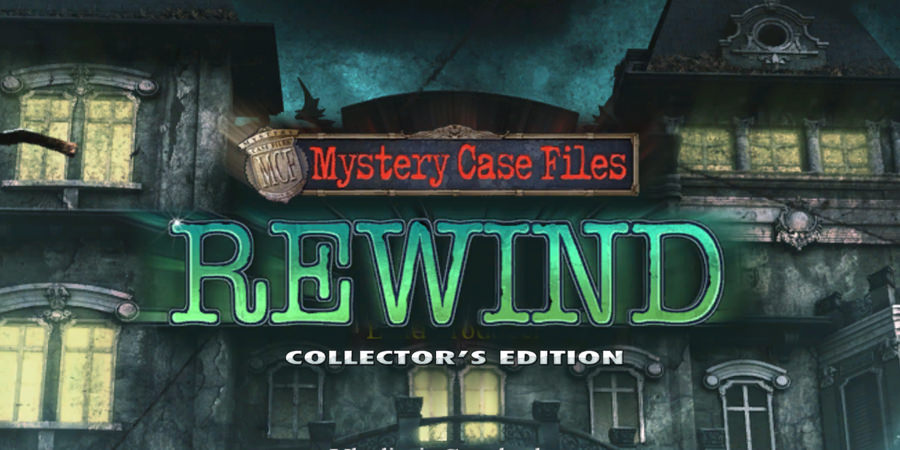
I do not know why it took me this long to discover Rewind, the seventeenth entry in the Mystery Case Files series. I have not played the series in order, but rather followed a vague sense of attraction. Perhaps the game’s visual image did not appeal to me, and the Big Fish Games description does little to explain what the game is really about. The title and the players, however, do tell the truth: this is a journey into memories. Rewind rewinds backwards in more than one sense. Mechanically, it combines elements from the first four entries in the series, from the era of pure hidden object games before adventure elements began to intrude. It also brings together characters from earlier games, with the old adversary Charles Dalimar once again looming in the background – although the central figure this time is his son Victor. Victor has meddled with the settings of a time machine and scrambled the timelines. The player’s task is to return characters torn from their own timelines back where they belong. Silly as it sounds, I enjoyed it.
The Mystery Case Files series now consists of 27 entries, with the latest officially releasing in November 2024. Over the years, four different studios have worked on the series: initially Big Fish Games’ in-house team, followed by Elephant Games, Eipix Entertainment, and GrandMA Studios. Rewind belongs to the Eipix era. Eipix is a Serbian studio with an extensive catalogue, particularly of hidden object games. They may not be known for any single standout title, but they have managed to maintain a consistently solid standard in casual games.
Timelines entangled
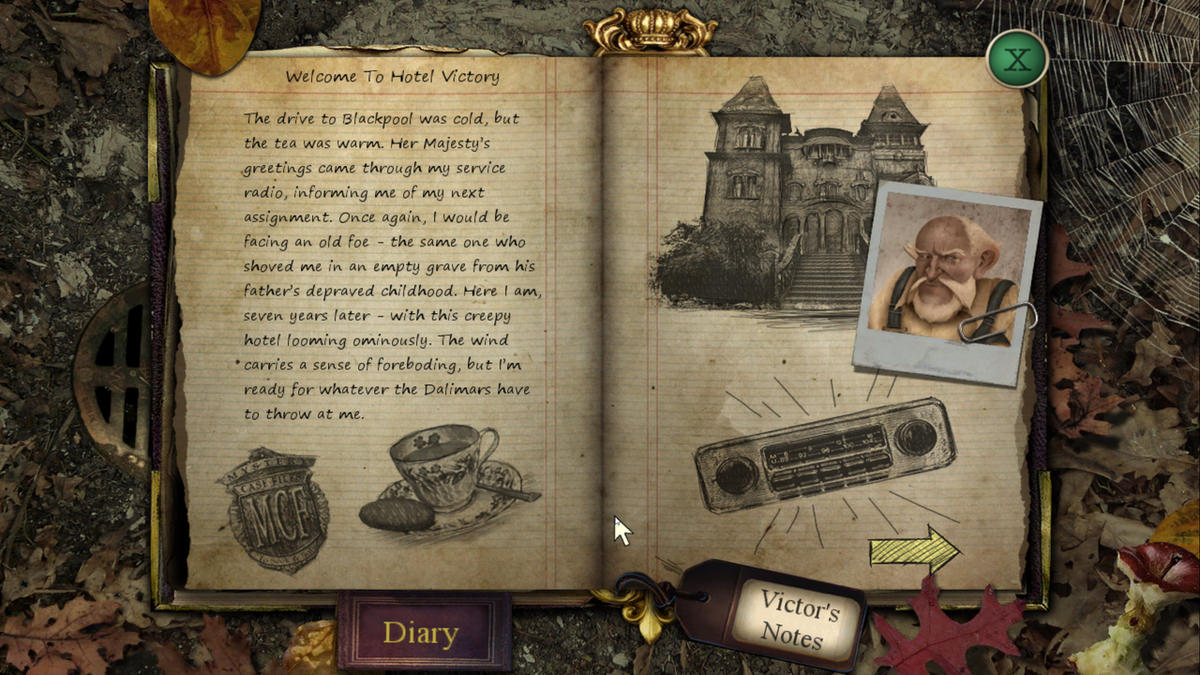
Rewind begins, as a Mystery Case Files game should, with an assignment from the Queen. Our agent is tasked with investigating suspicious activity at a hotel called Victory. Awaiting inside are nine characters previously seen in the series – with Victor Dalimar as the tenth. It appears Victor has been searching for his father using a time machine, which has malfunctioned and dragged a chaotic selection of familiar characters into the present-day hotel. Both Victor and the agent want to set things right.
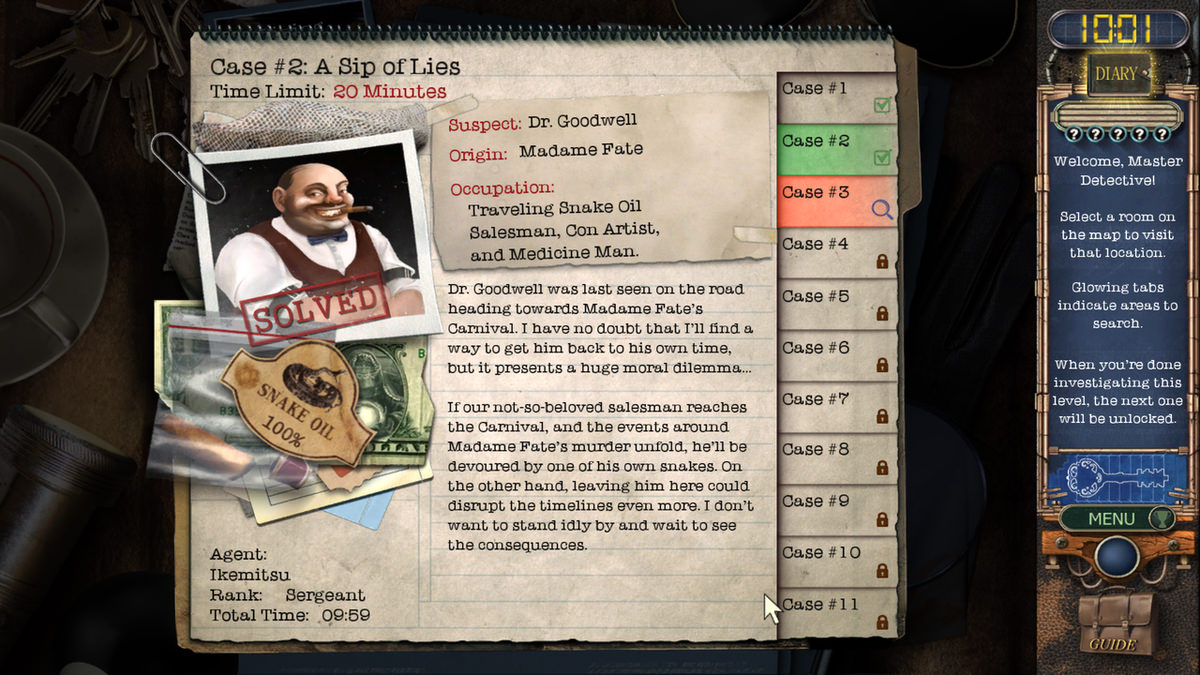
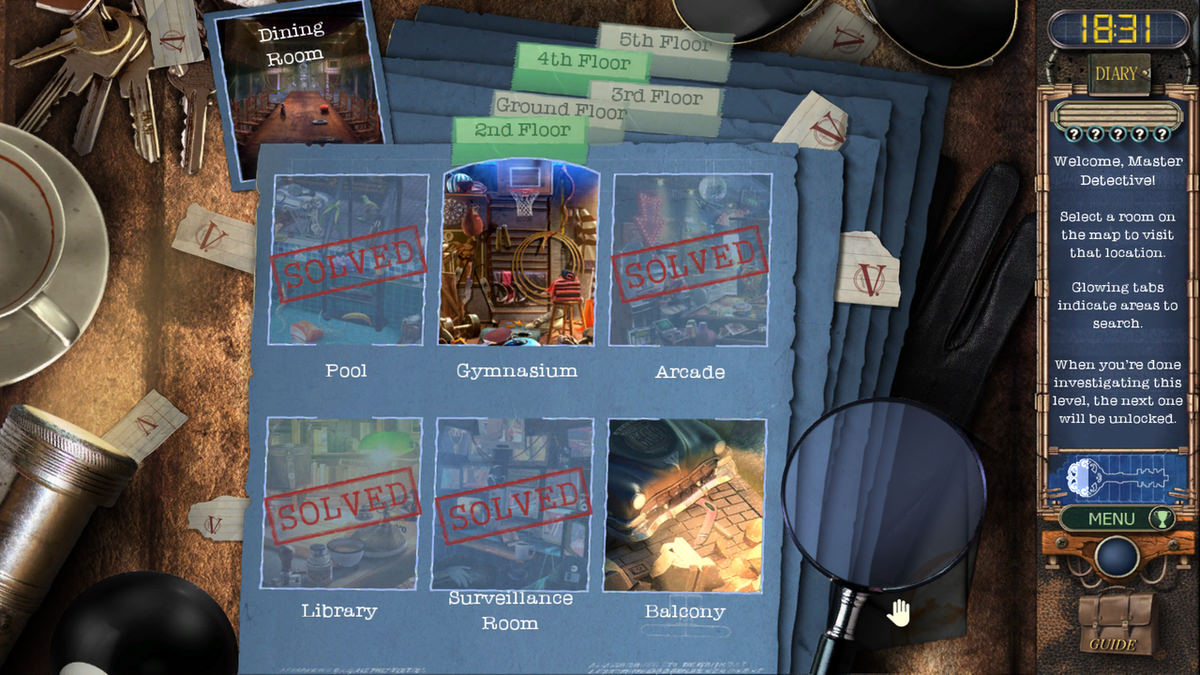
Each character has their own page in the case file, which the agent completes as investigations proceed. The case file strongly reminded me of the very first entry in the series, Huntsville, visually, structurally, and even in its writing style. The agent thoroughly explores all five floors of the hotel, with each room or area containing a traditional hidden object scene. The hotel “map” is clearly borrowed from Ravenhurst. New rooms open gradually and seemingly at random across different floors. Revisiting the same rooms more than once creates a sense of improving skill, as objects begin to stand out more quickly. At its best, Rewind drew me into a similar flow state as Madame Fate, where I was snapping up hidden objects almost on instinct. Unlike some earlier entries, Rewind does not reward speed in the same way, even though each case must still be solved within a time limit.
Hidden object scenes and puzzles in abundance
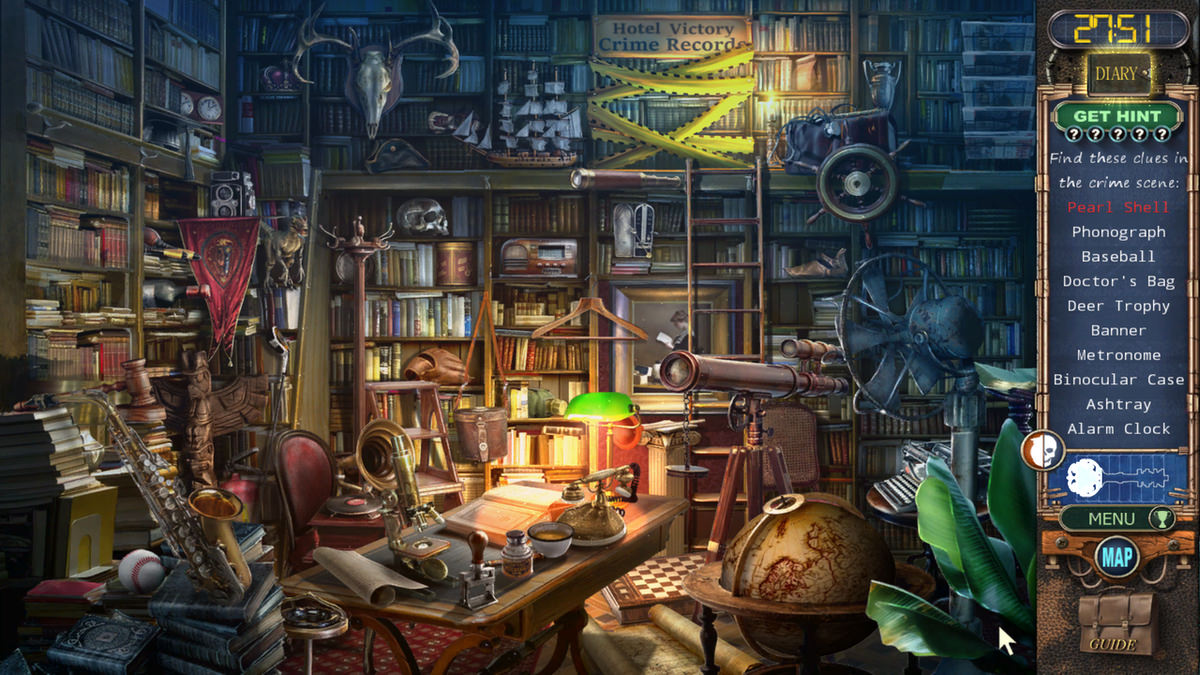
Most hidden object scenes rely on traditional word lists. Among the listed items, there is always one or more concealed objects that require some form of scene manipulation to reveal, often through mini-puzzles. Another, more sparingly used type of scene involves finding a specific number of objects from a single category. The game also features more demanding scenes familiar from Prime Suspect, using tools such as a flashlight beam or an X-ray lens. In addition, there are fully animated scenes where objects appear and disappear in turns. Morphing objects add challenge across all scenes.
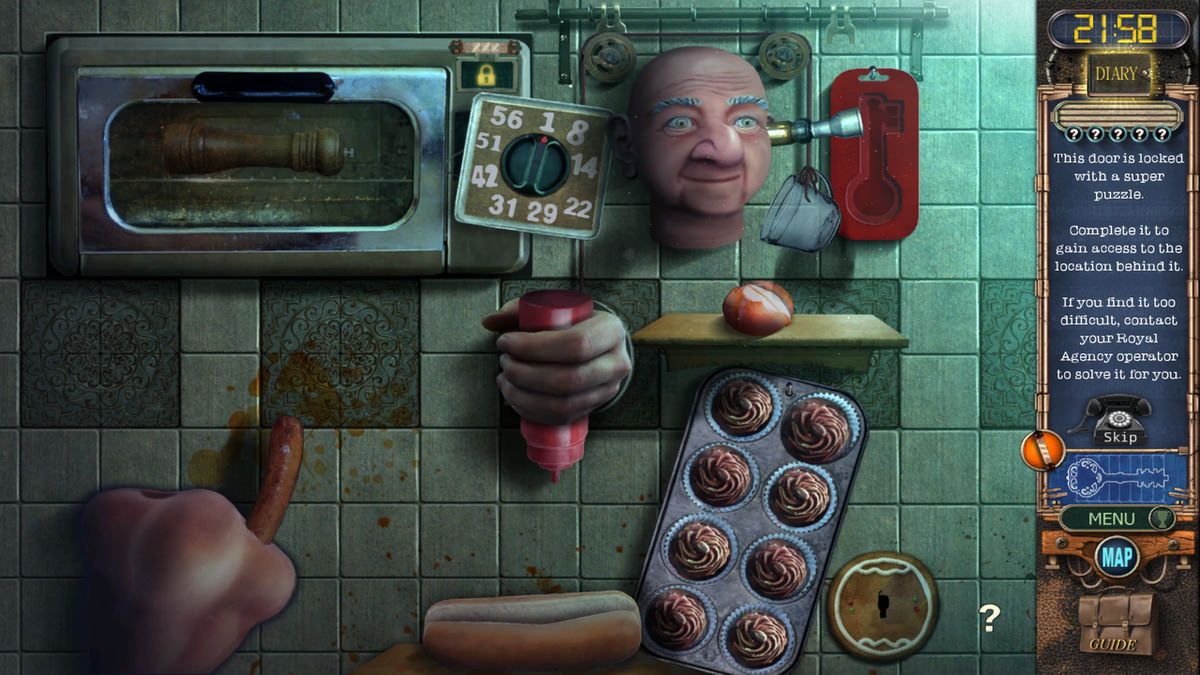
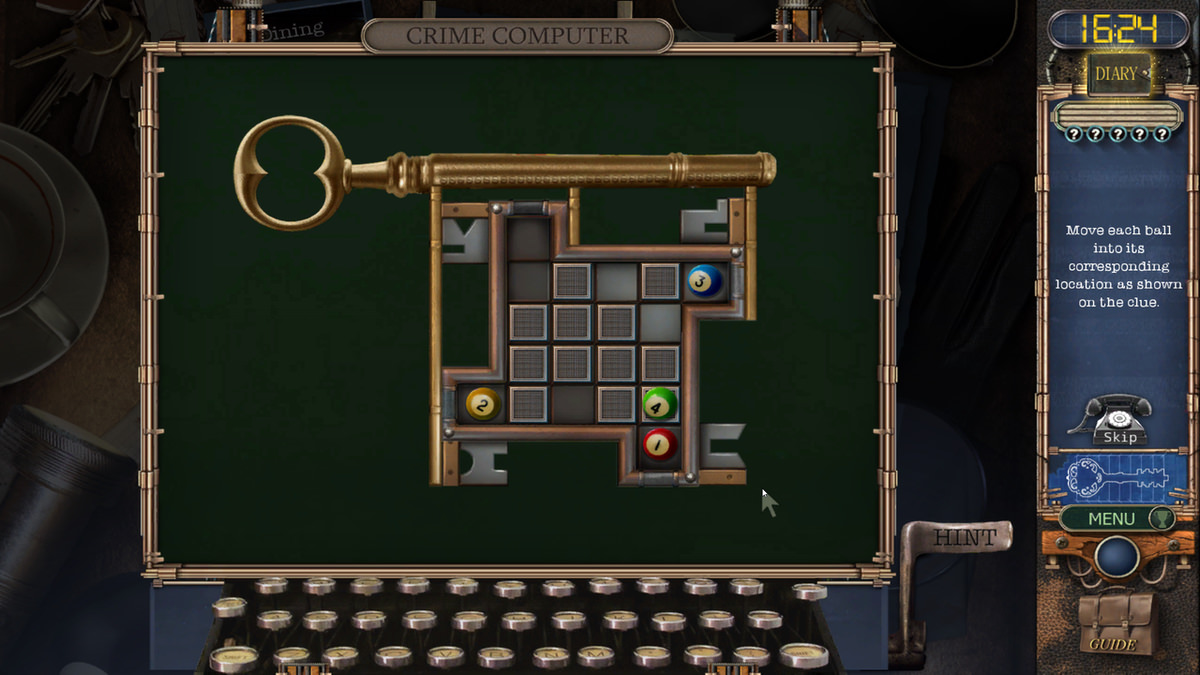
Once enough rooms have been investigated, the agent receives a key blueprint. The series staple, the crime computer, is used to decode the blueprint. This is followed by the mechanical puzzle of assembling the key itself. The finished key fits a still-locked room door, which functions as another puzzle. These door mechanisms are multi-stage interactive sequences reminiscent of Charles Dalimar’s warped ingenuity, and they also include a small additional task involving a hidden fuse.
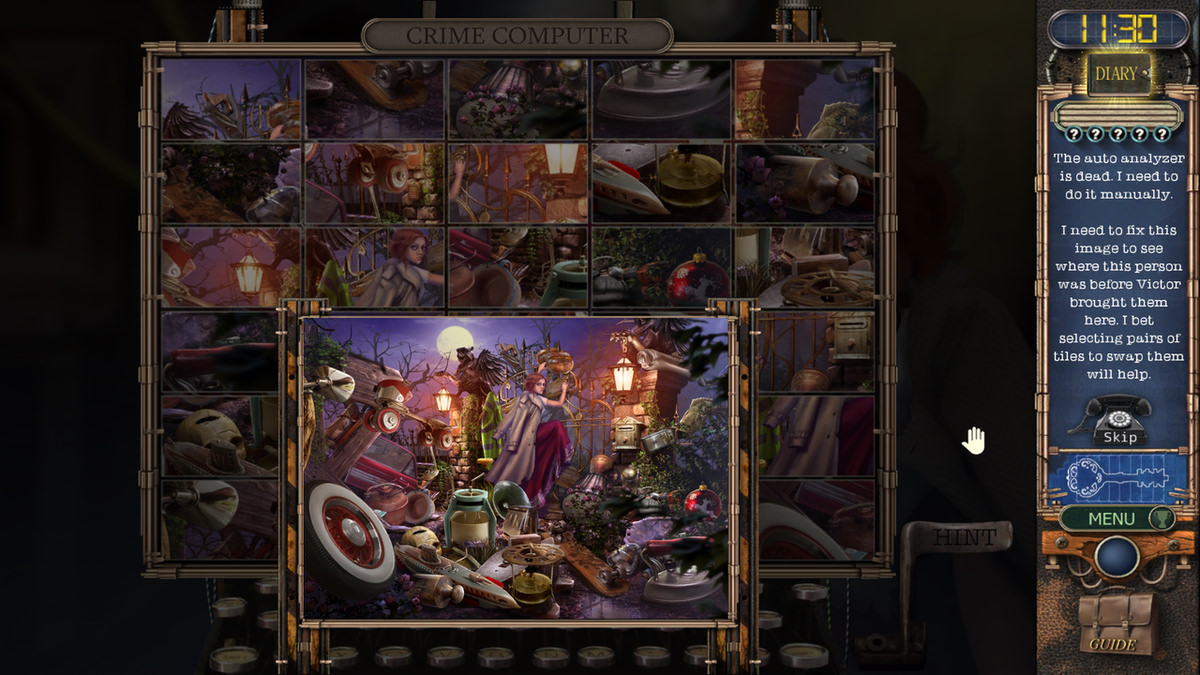
Only after completing the door puzzle does the agent find the sought-after character. An item found in that character’s own hidden object scene is then fed into the crime computer, producing a third major puzzle. These are simple image-tile puzzles. Only after this does the case file update and the game proceeds to the next case. Each case must be solved within 20 or 30 minutes.
Rewind also includes two additional puzzle types: a memory game and a simple timing game where moving targets must be clicked. These represent random temporal anomalies.
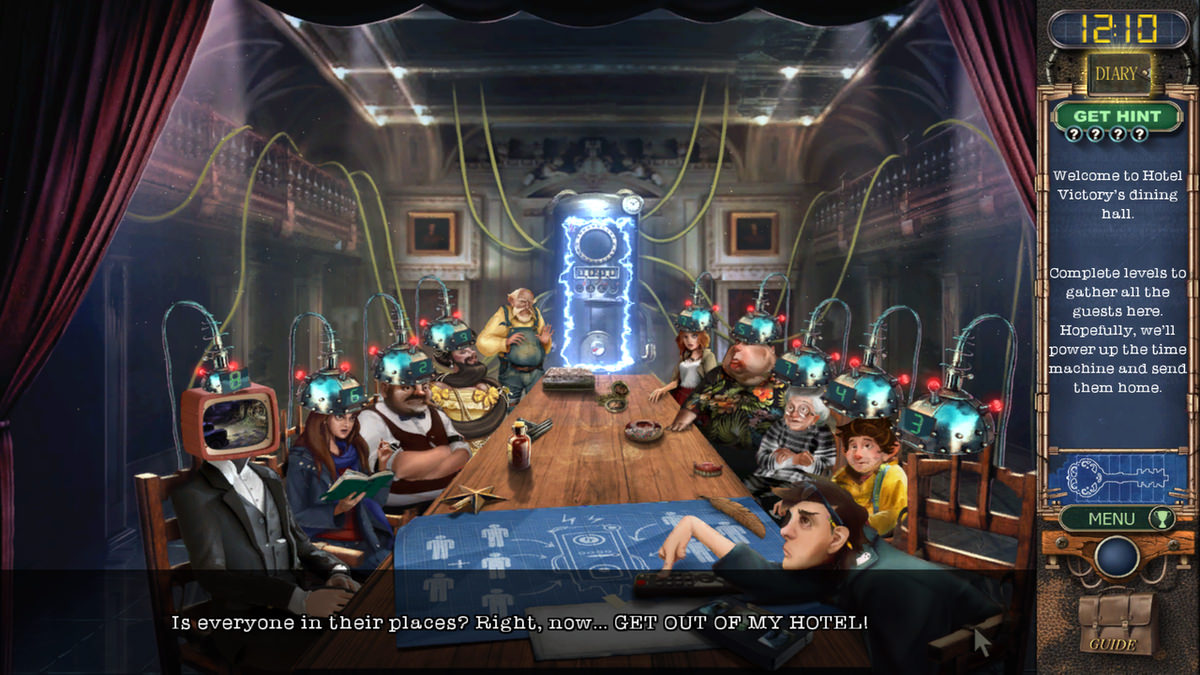
All characters rescued by the agent gather in the hotel dining room. There, they don helmets connected to the time machine. Connecting the helmets forms yet another puzzle.
Difficulty, collector’s edition extras, and multimedia
At the start, the player selects a difficulty level: a relaxed mode without time limits, a normal timed mode, or a custom mode. I found Rewind easy, although I am not particularly good at puzzles and felt tempted to skip them. Each case allows five hints, and puzzles can be skipped entirely by calling for help. The collector’s edition I played also includes a strategy guide. Overall, my playthrough took around six hours.
Additional collector’s edition content includes a bonus chapter about collecting fragments of Charles Dalimar’s soul across timelines, the ability to replay hidden object scenes and puzzles individually, and separate access to the game’s music, artwork, and videos.

The graphics partly reuse existing assets, which did not bother me given that rewinding is the game’s core theme. I would have liked to see more animation in the characters, who pose somewhat stiffly in the scenes and felt lifeless. They are, however, fully voice-acted. I enjoyed Rewind’s soundscape: the desolate yet calming background music, ambient sounds in the hidden object scenes.
Verdict
Rewind returns the Mystery Case Files series to its roots — to the era of pure hidden object games before adventure elements were introduced. It combines the mechanics of the first four entries into a more modern whole. In that sense, it is retro at its best. Structuring puzzles between cases works in practice, but when looking back on the game’s progression, the overall flow feels somewhat confusing. Opening doors and concluding cases is a highly multi-stage process, and the crime computer is used in two oddly different ways. It feels as though Rewind attempts to pack in as many puzzles as possible rather than design a coherent gameplay experience. The resulting jumble is nevertheless navigable. Overall, Rewind fulfilled the purpose I gave it: a light and easy hidden object puzzle game that does not provoke much thought.
Availability
Mystery Case Files: Rewind and Rewind Collector’s Edition are available for Windows and macOS. As usual, Big Fish Games offers a one-hour free trial.