
Shardlight (2016)
Released last Tuesday, Shardlight is another dependable new release from Wadjet Eye Games — a game that is both classic and modern at the same time. Classic because it is built on the AGS engine, modern because of its protagonist and certain narrative turns. What initially felt like a sluggish story tightens into a thriller towards the end, ultimately grappling with fundamental questions of life and death.
I have played all of Wadjet Eye Games’ AGS-based adventures and consider myself a fan of Dave Gilbert’s productions. I was already familiar with Shardlight’s designer, Francisco Gonzalez, from A Golden Wake (2014), which was released with little fanfare and almost slipped out unnoticed. It even felt as though its creator was, to some extent, embarrassed by it. I saw no reason for that, even if the game was marked by a certain clumsiness. A Golden Wake is far more distinctive than Shardlight; what appealed to me was its (genuinely) historical setting and subject matter — the moral decay of its protagonist.
An idyllic macabre mixture
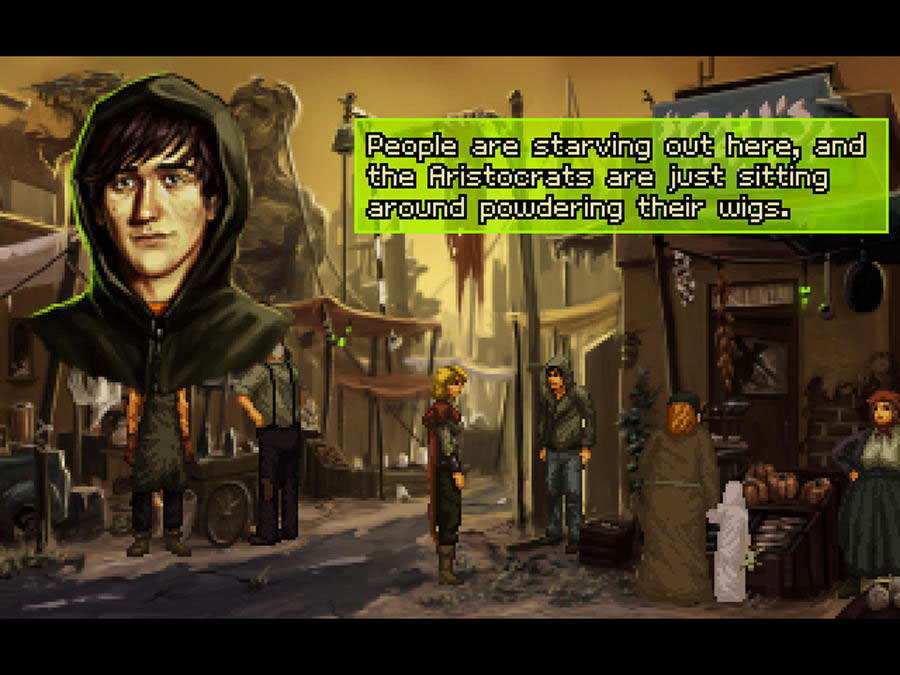
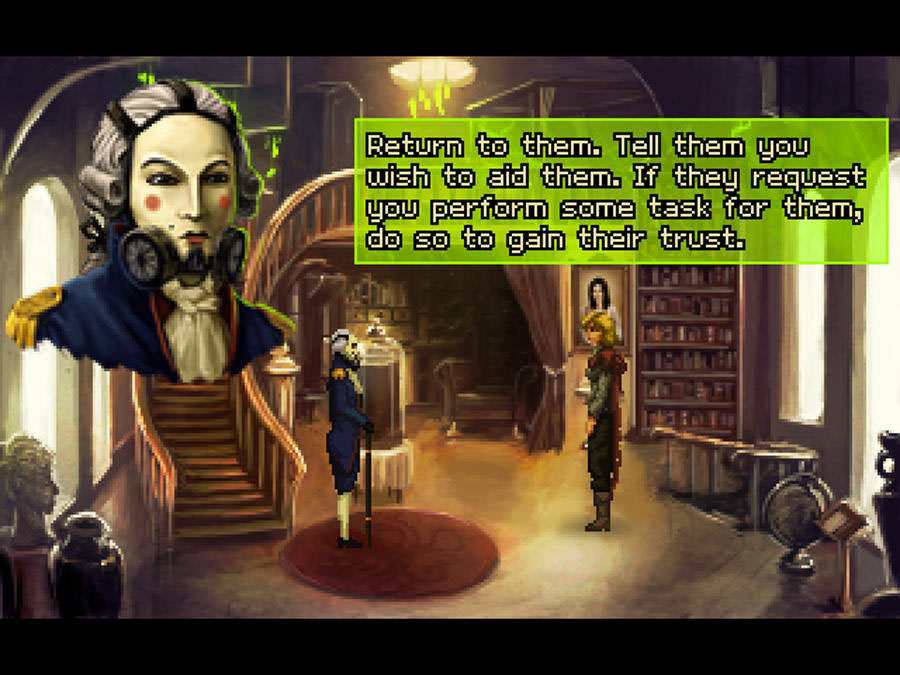
Shardlight is a dystopian fantasy. The setting itself is appealing (albeit macabre), and artist Ben Chandler has done strong work. In his hands, pixel art never feels like a limitation, and the close-up portraits of the characters lend them a sense of humanity when paired with solid voice acting. For me, the visuals and voice work were the game’s strongest elements. I was less fond of the background guitar music, though its sketch-like artistic quality made it somewhat atypical. Both as a story and as a game, Shardlight improves towards the end.
The protagonist, Amy, is a young mechanic who has lost both her mother and father to a disease known as Green Lungs. The illness appears to be a reference to radiation sickness and to the atomic bomb, the Big Blast, which destroyed the city twenty years earlier. The ruling class has adopted the trappings of historical aristocracy, and society is sharply divided between those who receive treatment and those who can only obtain it by winning a lottery. The city’s buildings and infrastructure have never fully recovered, and corpses lie scattered throughout the streets. From a realistic standpoint this felt silly — surely people would have cleared away the bodies simply to continue living — and even by the standards of fantasy it comes across as excessive.
Heavy questions in a simple package
The player guides Amy, who has just learned that she is terminally ill. Themes of hope and hopelessness dominate the experience and, to some extent, steer both Amy’s and the player’s decisions. The game seems designed to encourage the player to draw their own conclusions about which side to support and whether to act selfishly or altruistically — yet in the end, or rather right up until the very final choice, Amy cannot escape her fate. Will she receive a curative vaccine, and who is the crow-like Reaper worshipped by the cultists but feared by others?
Although I found the game’s qualities appealing and its socio-moral themes managed to resonate on a personal level, I cannot shake the feeling that the whole is highly calculated. It seems as though elements from Wadjet Eye Games’ most popular titles have been consciously combined, leaving Gonzalez’s own voice partially obscured. The dialogue flows well, but feels almost too polished and therefore somewhat impersonal, and even the excellent voice acting cannot entirely compensate for that.
Perhaps the creators’ intentions are sincere, but the protagonist feels very deliberately constructed: a woman interested in cars and mechanical gadgets, a beautiful blonde to whom appearance means nothing, an unhappy orphan capable of heroic deeds, a terminally ill character who never loses her agency…
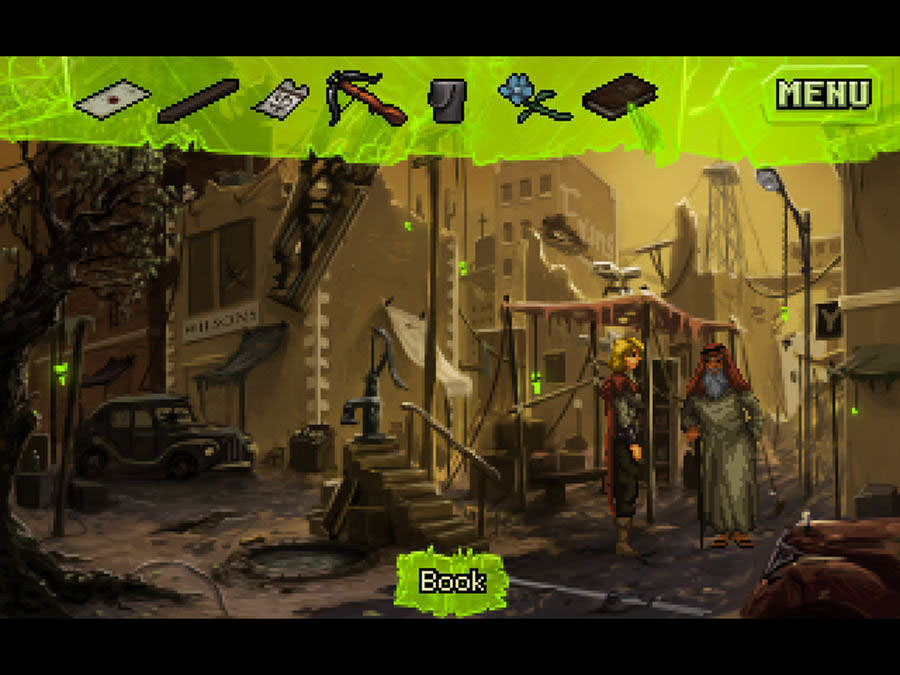
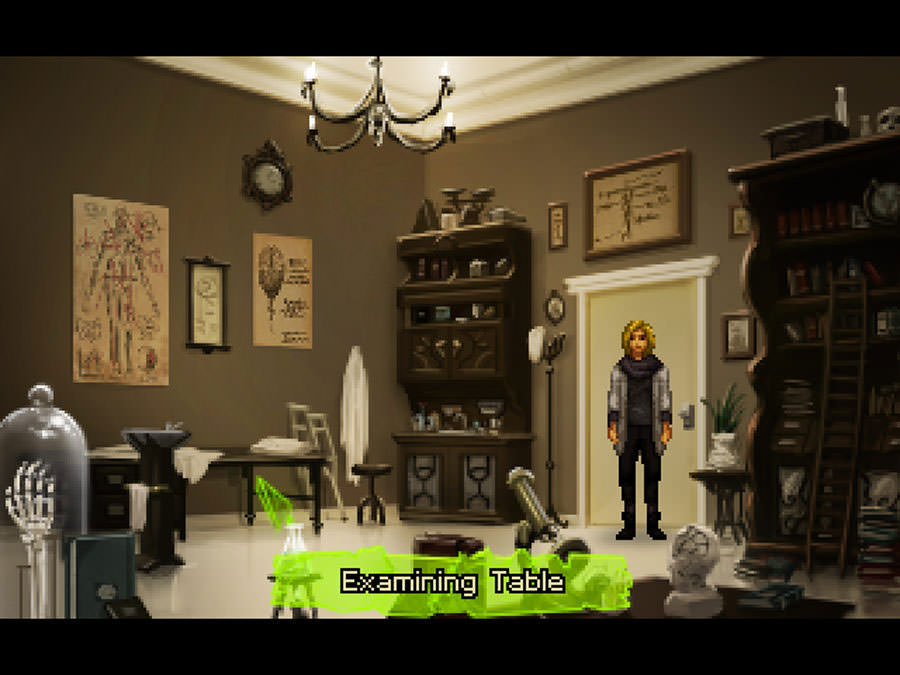
The puzzles are fairly straightforward and easy, inventory use is clear, and solutions require little in the way of real thought. Travelling between locations via the map works smoothly, and I never experienced navigational problems. Shardlight relies heavily on its story and characters, and it held my attention through the details that the visuals bring to life.
Verdict
I would gladly give this game a score above 70, but when I revisited the blog’s earlier scoring standards, I concluded that, to be fair to other titles, I had to settle on 64 points for Shardlight. For me it is, at best, an average adventure game, and in fact one of the weaker releases published by Wadjet Eye Games — though not to the extent of being a bad game.
Availability
Shardlight is currently available for Windows only, with a free demo available for download.