
Dead Synchronicity: Tomorrow Comes Today (2015)
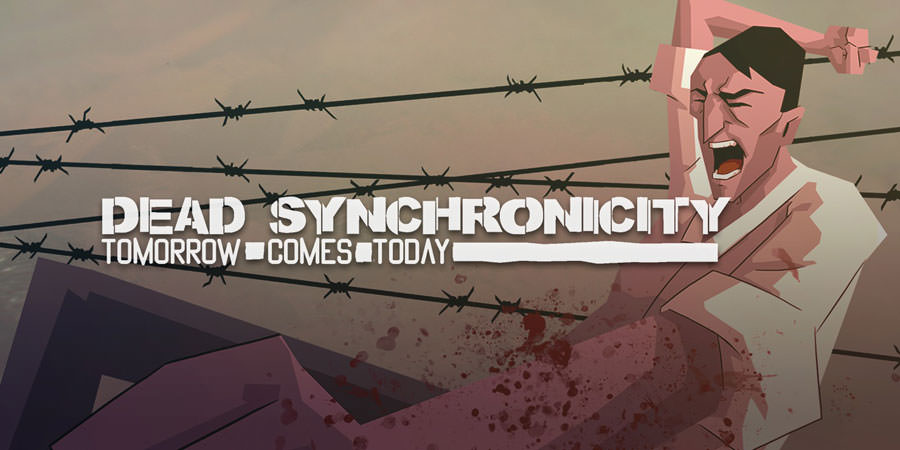
Released in April 2015, Dead Synchronicity: Tomorrow Comes Today is the first instalment in an adventure game series originally planned as a multi-part project. It is set in a dystopian future — or perhaps more accurately, in an alternative version of the 2010s. A so-called “Great Wave” has swept across the world, triggering natural disasters and other strange phenomena, including a disease of unknown origin that enables communication with the dead. The game depicts a post-civilisation world in stark terms, focusing on how people react to the collapse of organised civil society.
Behind Dead Synchronicity is the Madrid-based studio Fictiorama Studios, founded by the Oliván brothers, with Alberto Oliván acting as the series’ creator and lead designer. The game’s music is composed by the brothers’ own band, while the graphic artist comes from outside the studio. Tomorrow Comes Today was funded through a Kickstarter campaign. Fictiorama Studios has announced that the second part of the series, The Underground Highways, has received EU funding, making its development possible. As far as I know, no concrete release date has yet been announced.
Standalone Episode 0
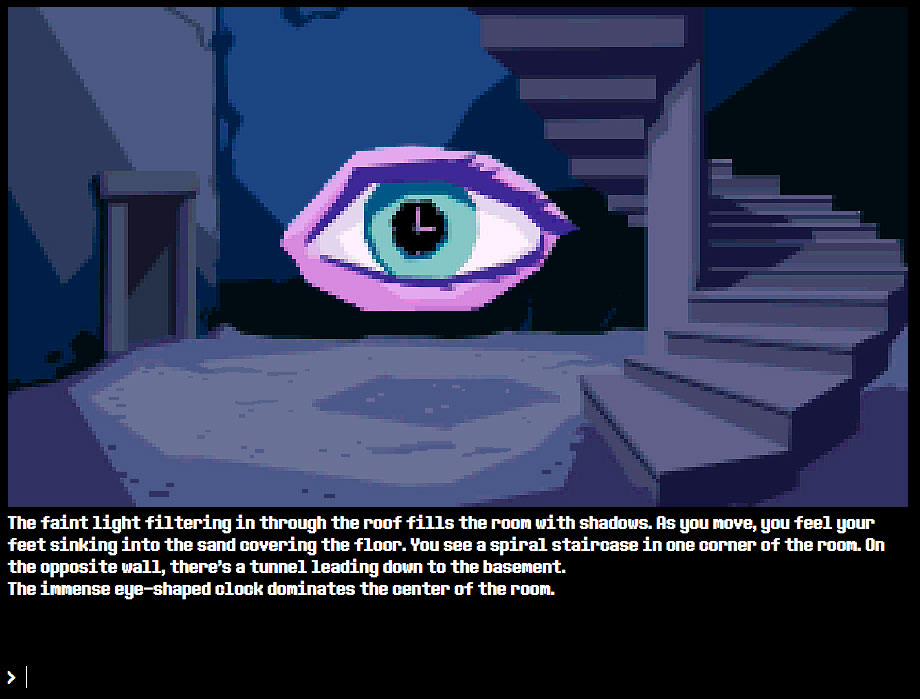
I had already become familiar with the free text adventure Dead Synchronicity: The Longest Night some time ago, and it was through that experience that my interest in the main Dead Synchronicity series was sparked. The Longest Night functions as a standalone introduction, but aside from its overall tone it bears little resemblance to Tomorrow Comes Today, which is a modern point-and-click adventure. The Longest Night was a tense and artistic experience. Tomorrow Comes Today can also be described as artistic, thanks to its distinctive visual style. The music is far from mainstream as well. In terms of gameplay — interface, mechanics, and tasks — the game represents a fairly basic level of the adventure genre.
A Nightmarish Rebirth
The protagonist is Michael, a man who has fallen into a coma due to unknown events and who, upon waking, remembers nothing — not even his own identity. A seemingly benevolent civil servant and his wife have taken him into their caravan to recover. In exchange for personal details — effectively an identity — which the civil servant promises to obtain, the player must save the couple’s sick son. Through this arrangement, Michael begins to explore a world that truly feels new to him. At the same time, it is profoundly nightmarish. The city is divided into two zones, and naturally Michael finds himself trapped in the worse one, with no easy way out.
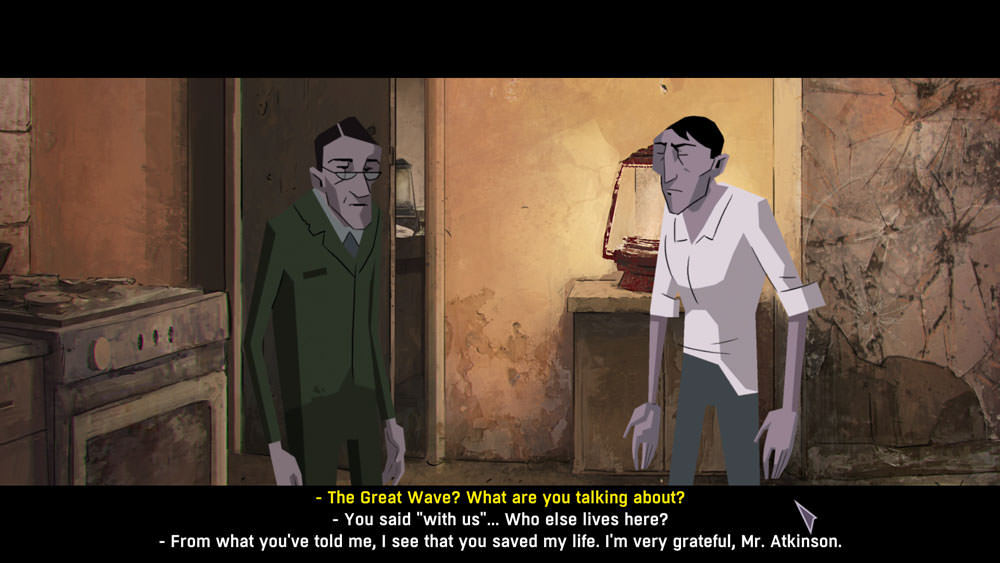
The ghetto zone is governed by brutal rules. Not only material conditions but also people’s mental and moral state have collapsed. As in wartime, food and supplies are scarce. The arbitrariness of the system is emphasised by the fact that there seems to be no real justification for sealing off the lower zone and branding its inhabitants as an inferior race. The sick, for example, exist on both sides of the border. There is a strong confrontation between soldiers and the civilian population.
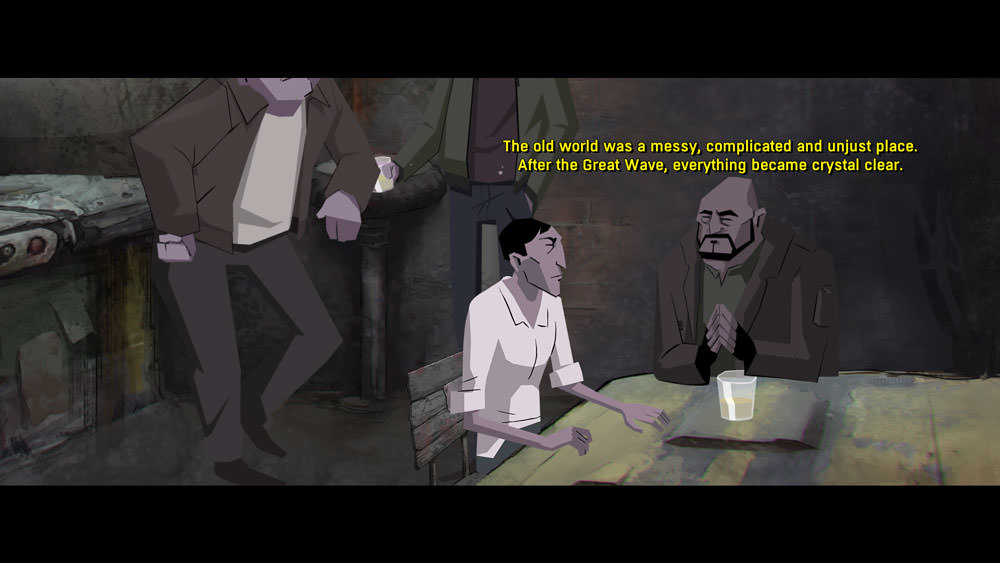
Tomorrow Comes Today covers events that unfold over a single day and night. My playthrough lasted roughly seven hours, and it did not feel particularly short or overly long. The story ends on a cliffhanger, but in practical terms it reaches a form of closure: Michael discovers his identity and parts of his past, and also learns, at least in theory, what the “Great Wave” was about.
Closer to Reading Than Playing
The appropriate mindset for Tomorrow Comes Today is calm and attentive to the story. It is a serious adventure that confronts the player with disturbing and unsettling places and phenomena. Despite his amnesia and strange, future-tinged flashbacks, the protagonist is mentally stable: he reacts to events in a “normal” manner, defends human dignity, and seeks realistic explanations for what he encounters. I did not find the game distressing, but it clearly demands a certain contemplative approach.
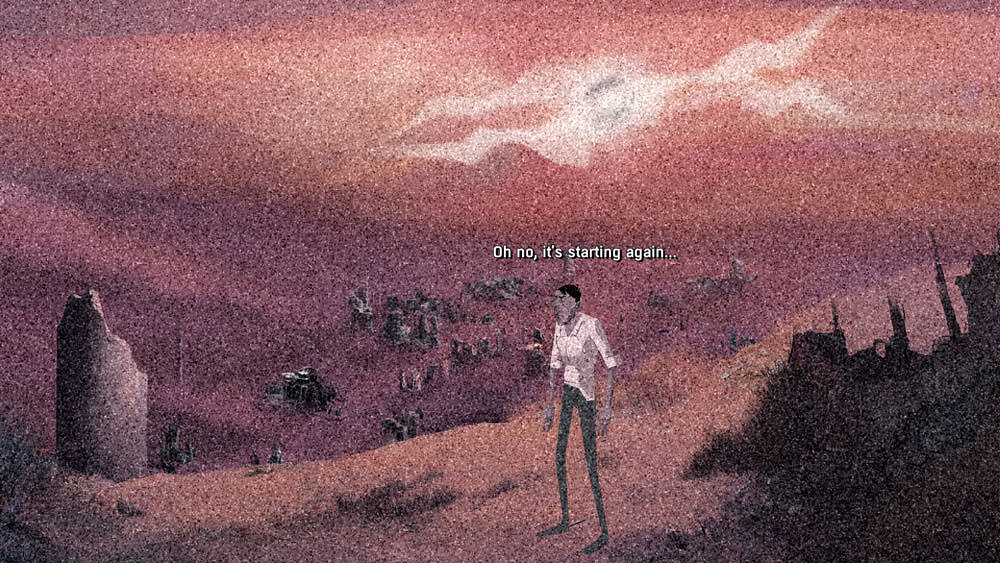
There is something timeless about the game, which fits well with its theme of synchronicity. For me, Tomorrow Comes Today brought to mind Sanitarium and, in a different way, A New Beginning, another title published by Daedalic Entertainment. Although these three games are clearly very different from one another, they share certain situational similarities, and on a deeper level seem to address the player in comparable ways.
The game’s potentially harsh image should not be feared. Even if that impression is not entirely unfounded, my experience was humane — perhaps above all else. The characters react to the collapsed reality in different ways: some sink into despair, while others “adapt” to it in a selfish manner.
Against the Mainstream
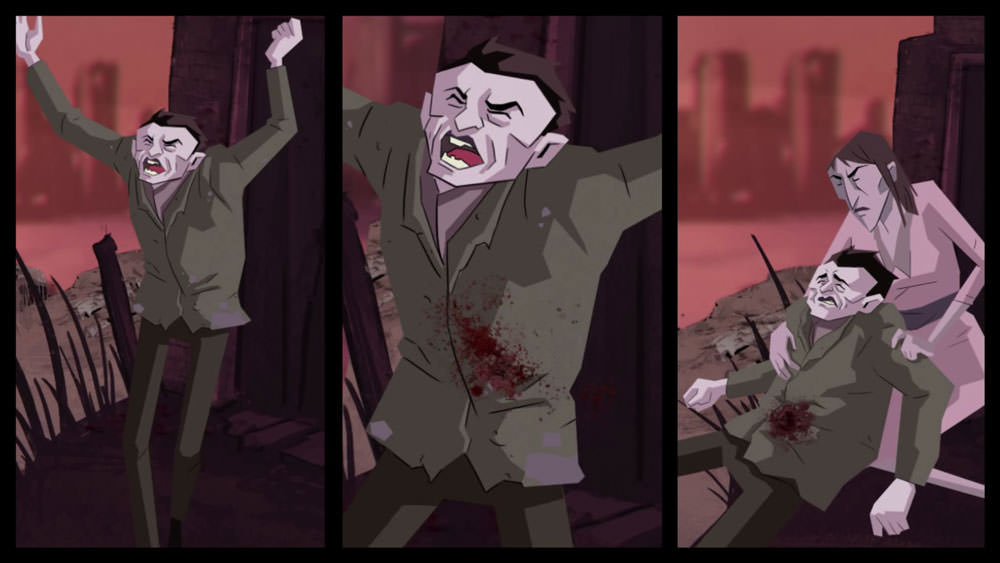
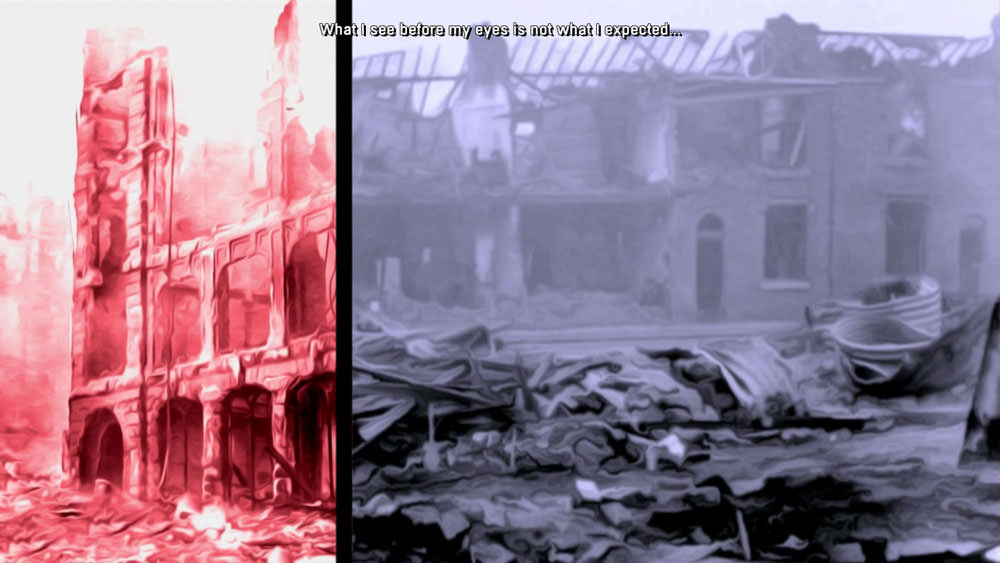
Visually, Tomorrow Comes Today represents a strongly stylised form of realism. It is impressive in a distinctly adult way and helped me adopt a calm, investigative, almost reading-oriented approach to play. The game uses varying camera distances, such as close-ups when Michael is thinking or speaking with someone. There are also some interesting juxtapositions and colour filters, though I am not always convinced of their purpose. Photographic manipulation that departs from the main visual style also appears in cinematic sequences.
The music, described as “alternative rock”, occasionally rises dramatically to the foreground, but otherwise remained mostly in the background in my experience. That may partly be because I lowered the music volume in the settings so that it would not overpower speech and sound effects. Voice acting is of high quality and gives the characters distinct personalities.
Verdict
Audiovisually and narratively, Tomorrow Comes Today is compelling. Its characters and characterisation are strong. As an adventure game, however, it remains firmly at a basic level, balancing between the classic, heavily descriptive environmental approach and modern clarity.
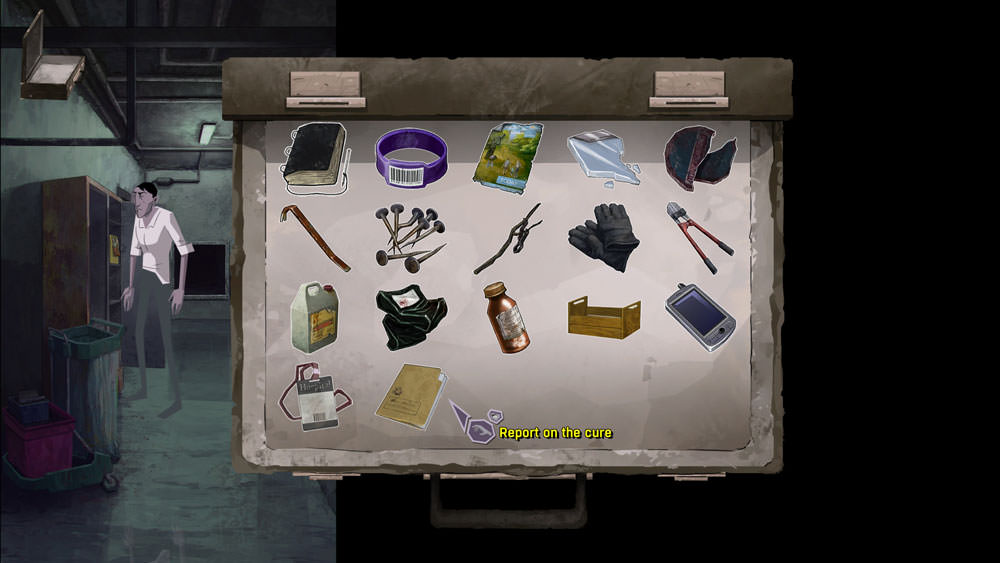
I did not find the tasks difficult, and they are often deliberately mundane; a crowbar really does come in handy in many situations. The game also includes a journal that allows the player to review key events and tasks if they have been forgotten or missed. The narrative generally does a good job of ensuring that the player knows what to do next.
For its solid quality and serious subject matter, but also for its conventional task design and the story’s unfinished nature, I give my overall experience a score of 65 out of 100.
Availability
Dead Synchronicity: Tomorrow Comes Today is available on Windows, macOS, Android, iOS, and PlayStation 4.