
Valiant Hearts: The Great War (2014)
Set on the Western Front of the First World War, Valiant Hearts: The Great War approaches the conflict through the eyes of four different characters — and a dog. It is not a war game, but a game about war. Between puzzle-solving and stealth sections, and action sequences that focus more on evasion than attack, the story follows how war tears families apart while also revealing the strength of human bonds.
Released in June 2014 for multiple platforms, the game was designed by Julien Chevalier and developed by Ubisoft Montpellier. Considerable resources have clearly been invested in this wartime adventure, and the high production values show. This is not a cynical, mass-produced title however. There is a strong sense of emotional commitment behind it, not least because several members of the development team had great-grandfathers who fought at the front.
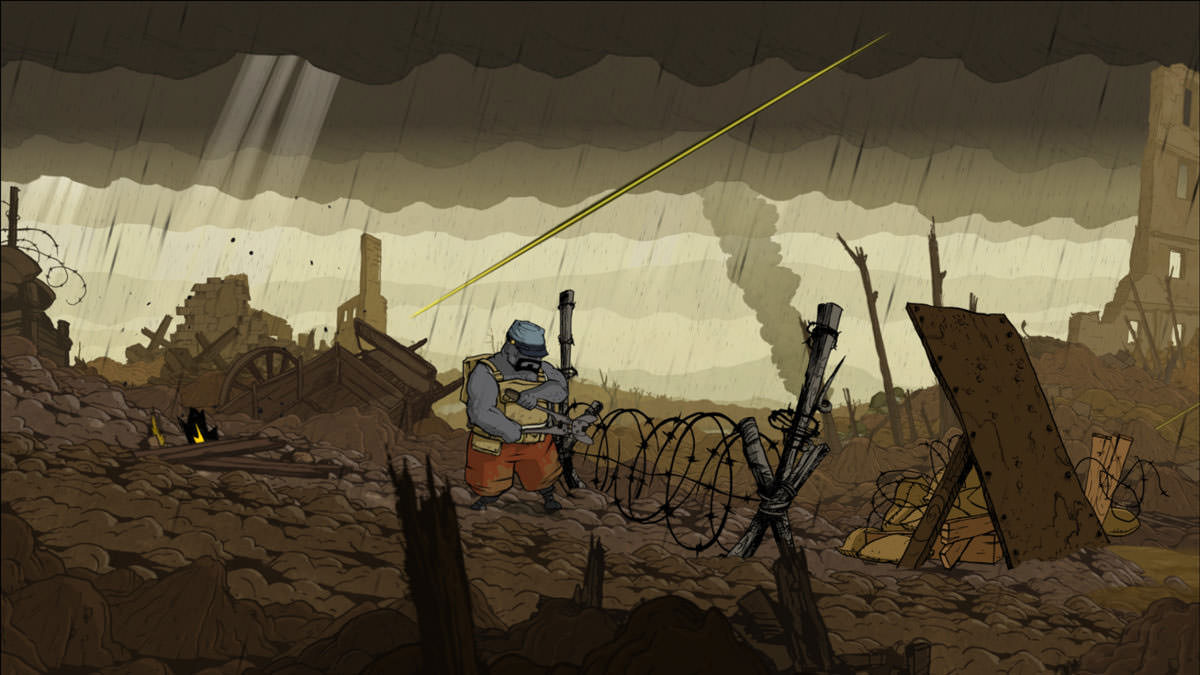
I personally experienced the game as a sad one, and often began play sessions with a sigh. The melancholic music reinforces that mood. At the same time, the game itself is varied, and its comic-book-inspired visual style creates enough distance to prevent the experience from becoming overwhelming. In my view, Valiant Hearts: The Great War offers a good sense of the reality of war, though not a full understanding of it. It gives the player something to think about, even if the most brutal and repellent aspects of war remain unseen. The game is not psychological in nature.
Tasks and gameplay
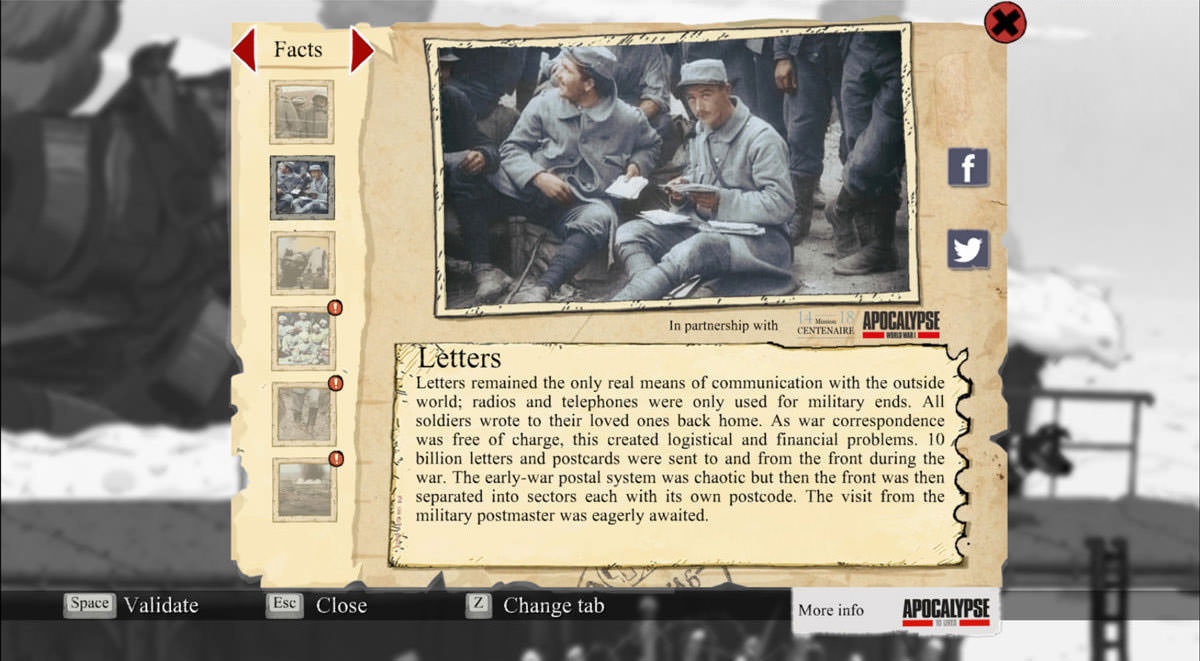
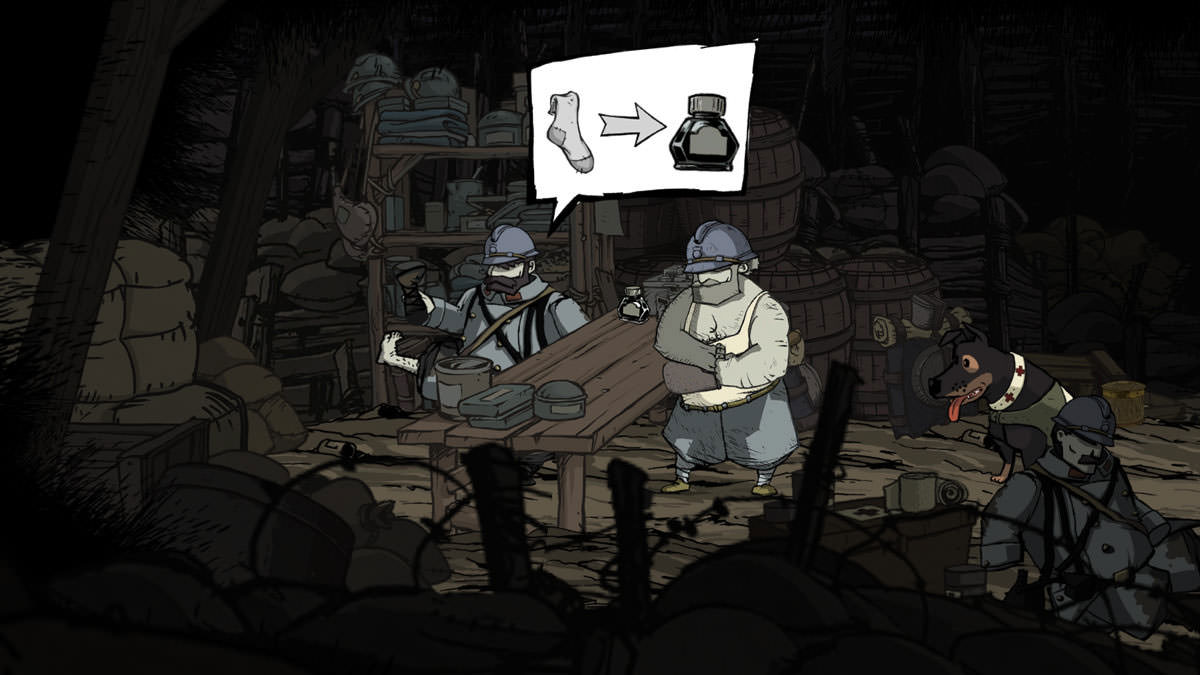
The characters are fictional and many of the tasks unrealistic, but the historical framework itself is sound. A documentary flavour is added through collectible items and selected factual notes. These items serve no gameplay purpose; their role is purely educational, offering insight into life during the war. There is no traditional inventory system. The controlled character can carry only one item at a time, and the dog one as well. This never felt limiting, and the mechanics worked well as a whole.
The tasks are varied, and with four playable characters plus the dog, the game never felt monotonous. The overall design is clear and restrained, and each character has only a small set of abilities that can be used in the game world. Valiant Hearts: The Great War is accessible and player-friendly. It is not difficult, although I did have to retry several action-heavy sequences. The challenge mostly lies in timing and rhythm. When a character dies, the game always allows an immediate retry. A built-in hint system is also available.
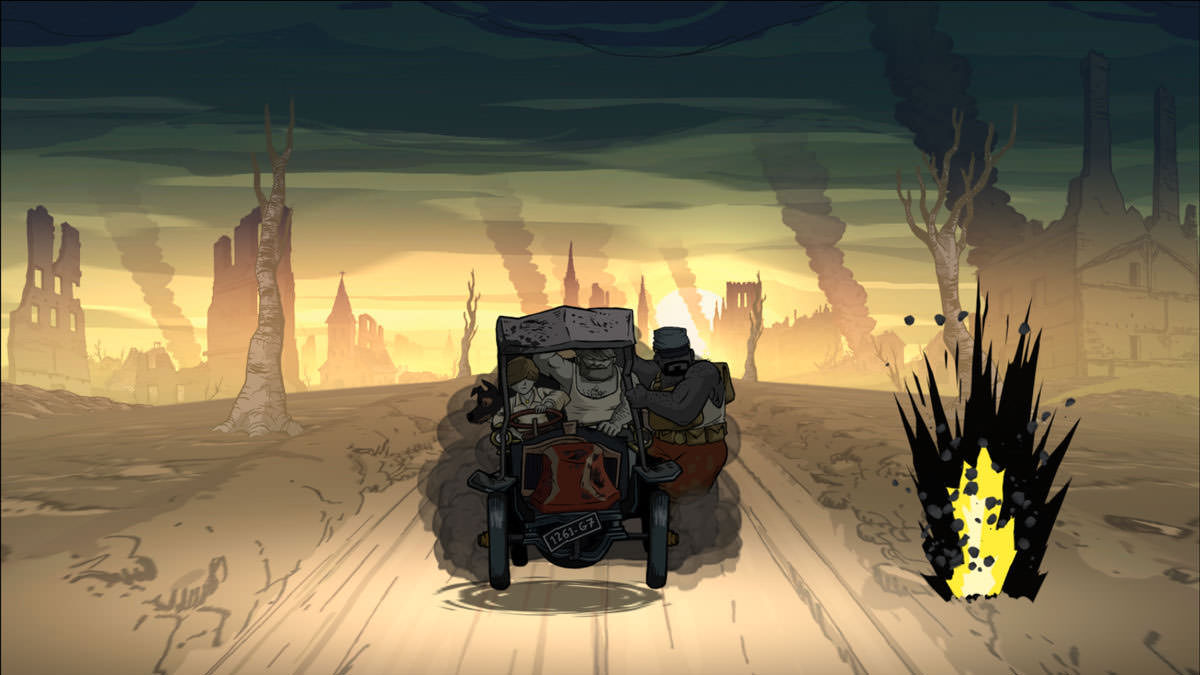
Action sequences include dodging falling bombs, fleeing by car, cutting barbed wire under time pressure, throwing grenades and other objects, digging into the ground, operating a tank, and tending to wounded soldiers. The puzzle sections often feel closer to abstract puzzle games than to warfare, with frequent use of levers, but the experience as a whole remains varied.
Verdict
In a sense, Valiant Hearts: The Great War is a “soft” game about war. Even so, I find it commendable that a game about the First World War exists at all, and that its focus is clearly human rather than strategic or combat-driven.
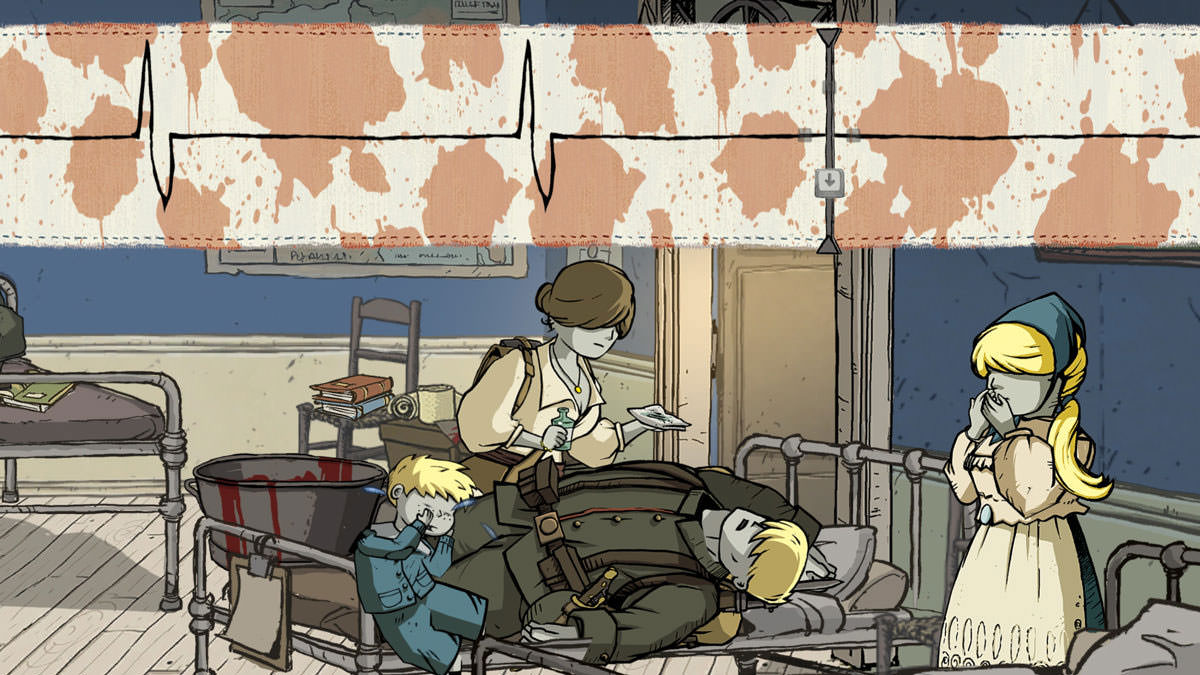
I also appreciate that the game takes multiple sides into account. While it is clearly told from an Allied perspective and the German baron is portrayed in a rather naive, demonised manner, one of the main characters is Karl, a German man married to a French woman and living in France, who is nonetheless conscripted into the German army. The baron can also be seen as a narrative device — a face onto which hatred can be projected.
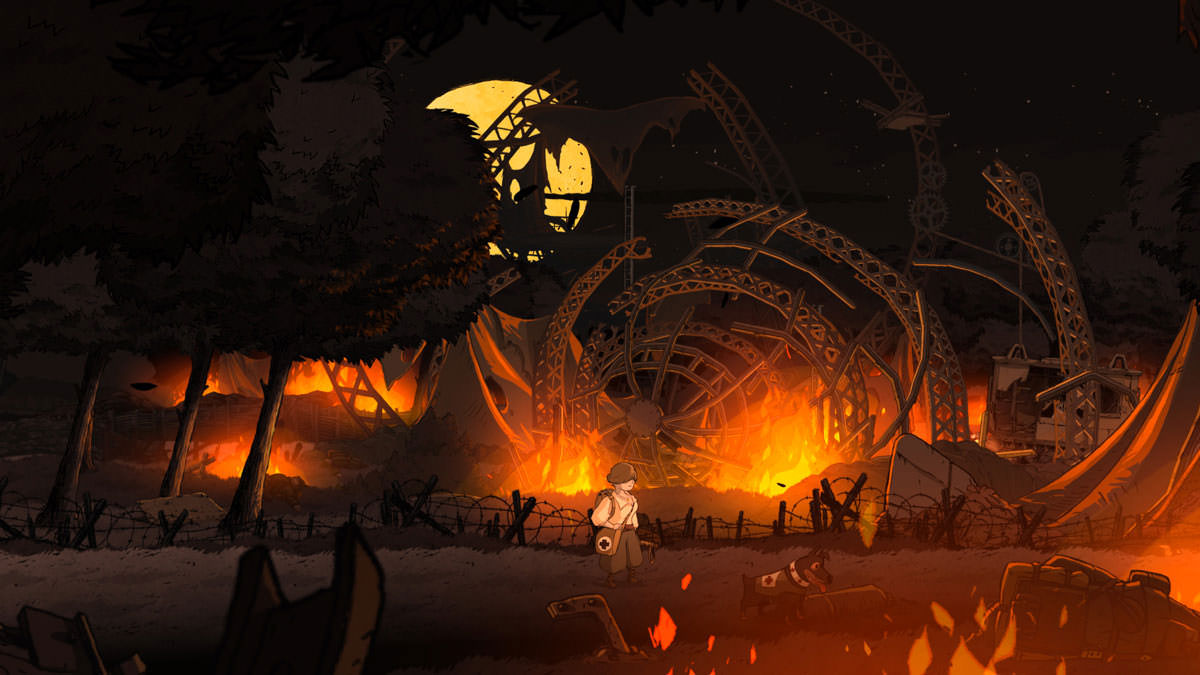
I have no real complaints about the visuals or sound design, even if one or two effects stood out as slightly odd. The game features beautiful hand-drawn environments, a wide range of vistas, and well-judged moods. A narrator’s voice carries the story from chapter to chapter, while the characters themselves communicate through murmured phrases rather than spoken dialogue. This approach to voice acting works well stylistically, and I liked it.
For this moving, though not deeply unsettling, experience, I give Valiant Hearts: The Great War 70 points out of 100.
Availability
Valiant Hearts: The Great War is available for Windows, PlayStation, Xbox, Android, and iOS.