
The Black Mirror (2003)
Released in 2003, The Black Mirror by the Czech studio Future Games is a competent horror adventure. It leans heavily on genre staples, both in its narrative and in its audiovisual effects. It is evident throughout that the five-person development team invested serious effort into the project, yet the end result is neither flawless nor particularly original.
The game received two sequels, Black Mirror II: Reigning Evil (2009) and Black Mirror III: Final Fear (2011). These were not developed by the same studio. Future Games ceased operations in 2011 after releasing seven games in total. The Black Mirror remains their most successful title.
I picked up The Black Mirror at a substantial discount because I wanted to challenge myself, but in a gentle way. I am not, by nature, a fan of the horror genre. Its imagery feels worn out to me, and I have little patience for cheap jump scares. I usually keep my distance from outright horror games. Despite its strong atmosphere, The Black Mirror never managed to startle me, and its familiar imagery was used with a certain elegance. The story took centre stage, and the castle settings and other old buildings provided visually pleasing scenery.
The premise
The player controls Samuel Gordon, a man in his thirties and a descendant of a noble English family. The year is 1981. Following the death of his grandfather, Samuel returns to his childhood home, Black Mirror Castle, after twelve years away. His grandfather’s death is assumed to have been a suicide, but Samuel does not believe this explanation.
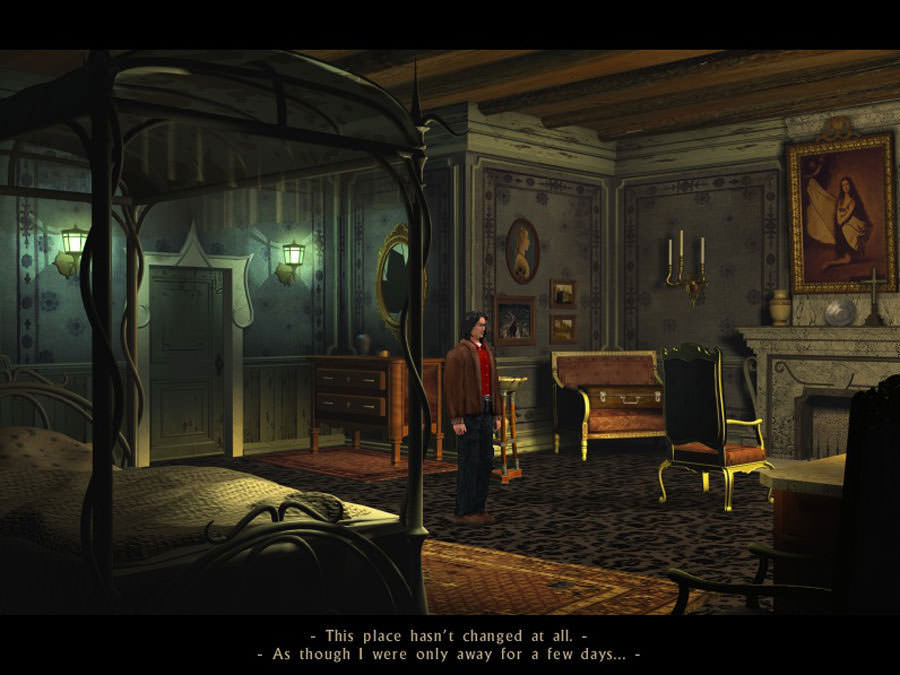
Samuel originally left the castle after the tragic death of his fiancée in a fire, and these events still haunt him. He is also troubled by a sense that something is deeply wrong in the present as well. Other characters seem to perceive the same unease, which is further reinforced by the game’s gloomy weather and nocturnal atmosphere.
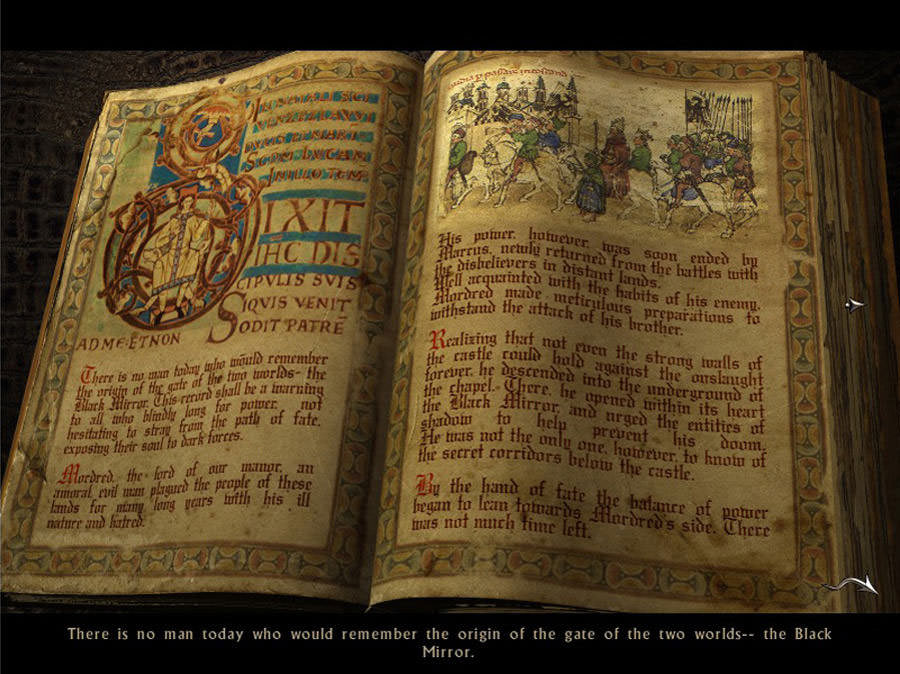
Samuel suffers from severe headaches and ominous, prophetic nightmares. These have an unexplained yet clear connection to a series of murders taking place in the area. The killings are brutal and ritualistic, and the victims range from innocent bystanders to people who may themselves bear guilt. Samuel decides to investigate the murders on his own, seeing a link between them and his grandfather’s death. In doing so, the player is forced to interfere heavily with police investigations, withhold evidence, and break both rules and moral boundaries. As the investigation progresses, Samuel delves into his family’s dark history, and elements pointing towards black magic begin to surface.
Tasks
The Black Mirror features a large number of locked doors and chests, and a significant portion of the tasks revolve around opening them. Locks are a classic adventure game trope, and this game has plenty of them. In my view, they suit the theme and setting well, and I do not consider them a sign of a lack of imagination. Other tasks are mostly practical and technical in nature, grounded in a realistic environment and generally straightforward, such as using tools.
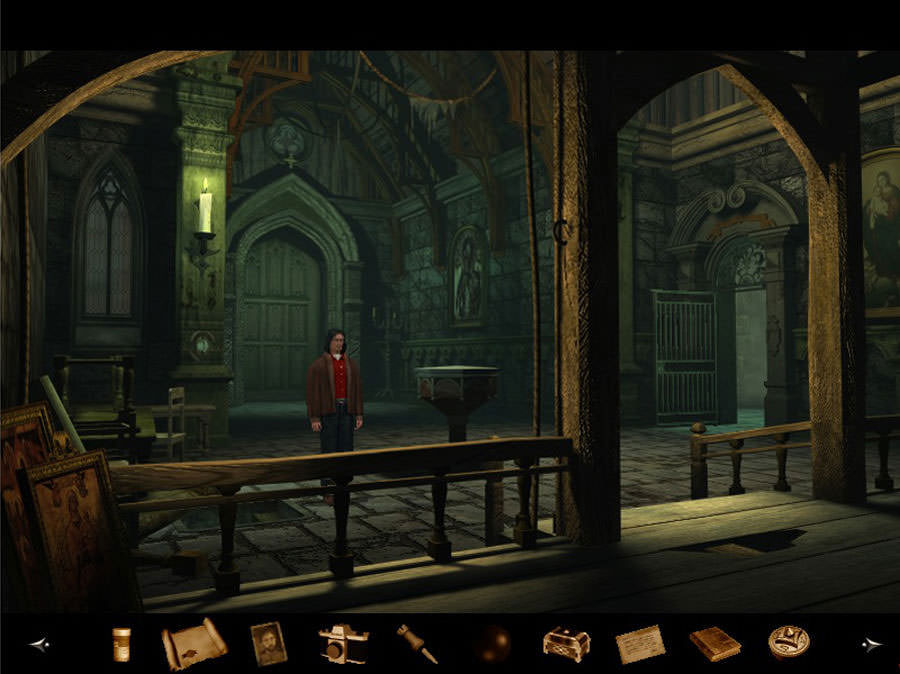
The game also includes a few puzzle-like tasks, though none of them are particularly difficult.
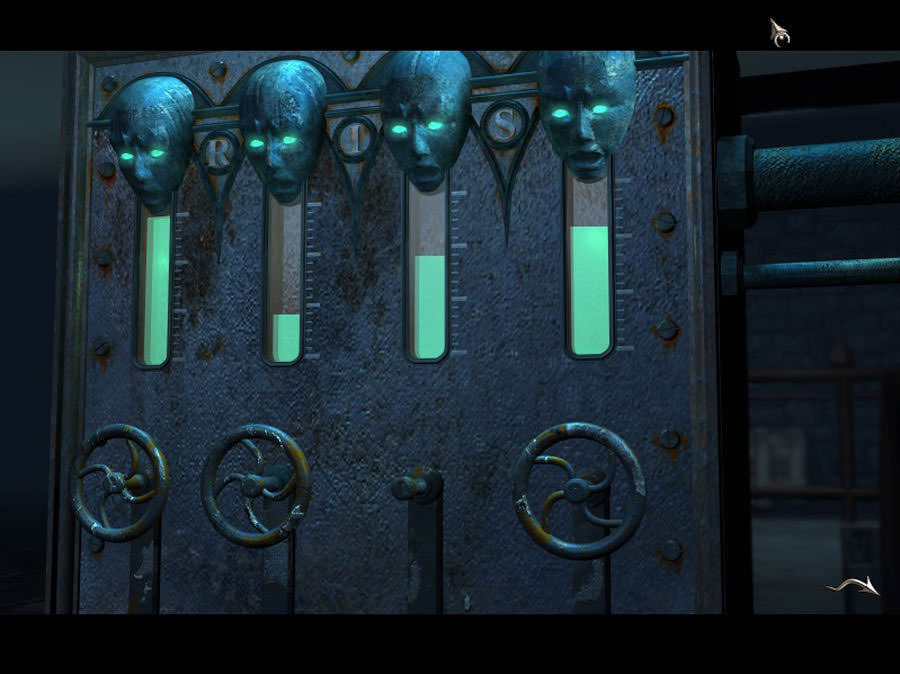
I would have appreciated an in-game clock, as progress sometimes required “passing time”. Wandering aimlessly from place to place just to make time advance was frustrating, especially without knowing how much time had passed. Time does not progress in real time, but only through movement.
The protagonist
A defining feature of The Black Mirror is the protagonist’s peculiar relationship with other characters. Samuel is oddly dependent on them. Many actions are impossible unless he first asks or informs someone. At times this results in direct ping-ponging between characters, which makes Samuel come across as naive. His somewhat stiff, upright walk reinforces this impression and adds an air of self-importance. I doubt this was the developers’ intention, and if it was, I consider it a poor choice.
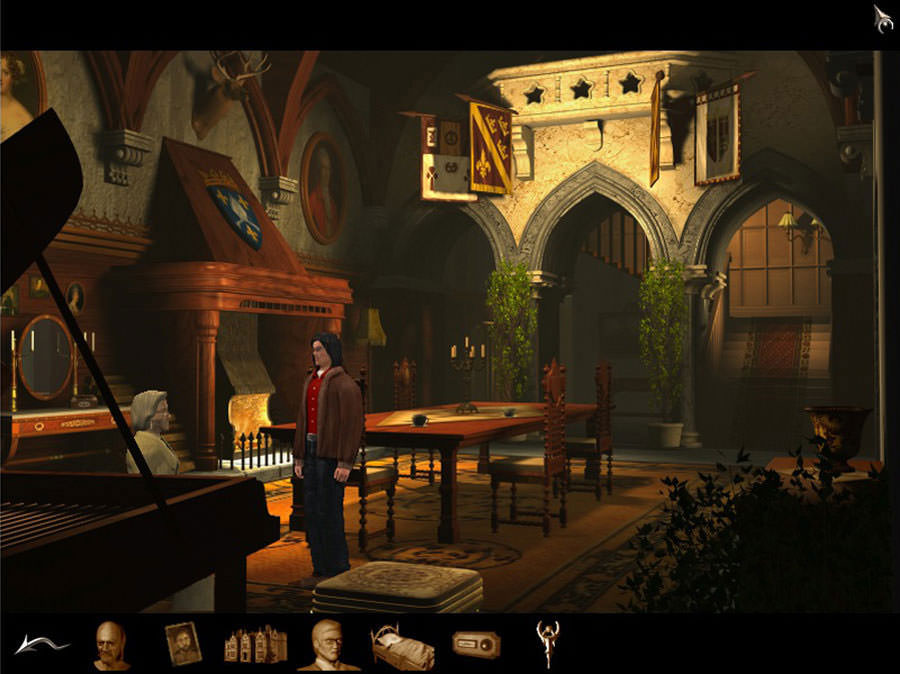
Samuel’s noble background and wealth are reflected in his behaviour, such as attempts to bribe others or gain special privileges. Characters from lower social classes are portrayed as coarse and often rude, while Samuel himself is simultaneously polite and ruthless.
I did not find Samuel particularly likeable or relatable. He remained distant and puppet-like throughout the game. I never formed a clear picture of his personality, nor did he feel convincing within a story as serious as The Black Mirror.
Audiovisual presentation
In terms of graphics and sound design, The Black Mirror excels. Exceptional care has been taken in crafting the environments and atmosphere. The visual style aims for photographic realism without being based on manipulated photographs. It is rich and detailed. Whether locations such as the morgue or the mental asylum are truly realistic is another matter. Unfortunately, the graphics also suffer from their age. At a resolution of 800 × 600, the finer details do not shine on modern displays. On my monitor, the game appeared almost postcard-sized.
I would probably have preferred the game to be set in the Czech lands rather than in the heavily overused England of historical castles. This may simply be my impression, but the game carries a distinctly Central European feel that does not entirely suit its English setting.
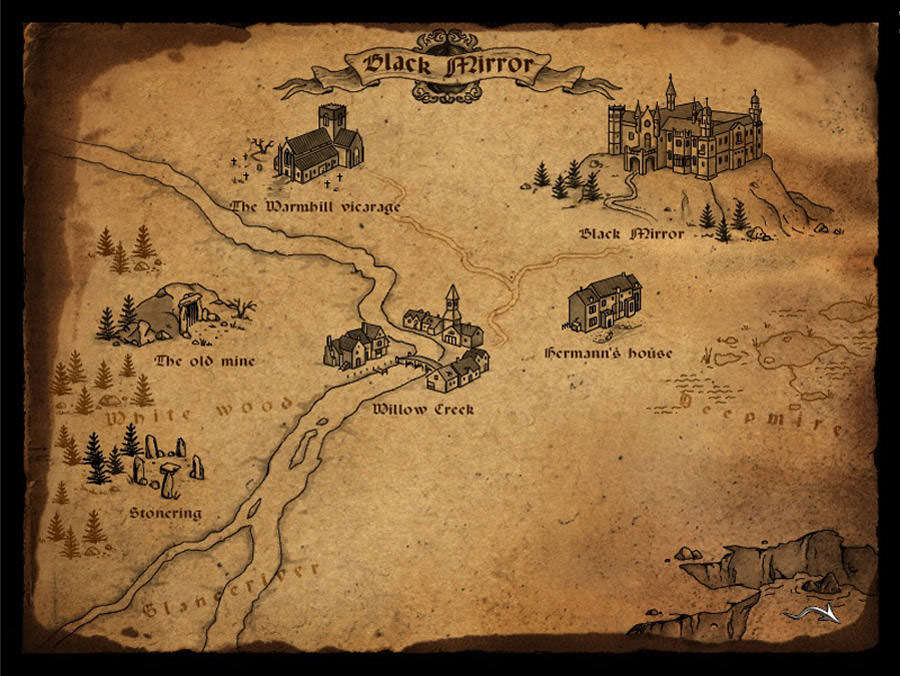
The ambient sound effects are excellent, but the music plays a relatively minor role.
Some critics have complained about the voice acting, but I do not share that view. I found the performances reasonably solid, and they helped bring life to characters whose models are stiff and coarse compared to the environments. The protagonist’s voice could be described as annoyingly schoolmaster-like, but this reinforces his pedantic nature and therefore fits the character, even if it is not pleasant. Stylistically, it reminded me of the protagonist from Loom, previously reviewed on the blog.
Verdict
The Black Mirror is full of clichés, both in its story and in its environments and effects. This does not mean the story is bad, even though many have criticised its ending. I found the conclusion a consistent resolution to everything that had occurred and been revealed. I see wasted potential in the protagonist. Had the player been able to truly identify with him, the ending would have carried far greater weight. It feels as if the developers were afraid of this. As it stands, the experience remains distant, as though I were a tourist admiring the locations while casually dealing with a family’s dark secret.
The developers clearly believed in their story and gave the project their best, even if a few holes remain in the script. These caused me no more than mild annoyance. I do not wish to be overly harsh, and I give The Black Mirror an overall score of 70 out of 100.
Availability
The Black Mirror is available for Windows, for example on Steam and GOG.com.