
The Silent Age (2015)
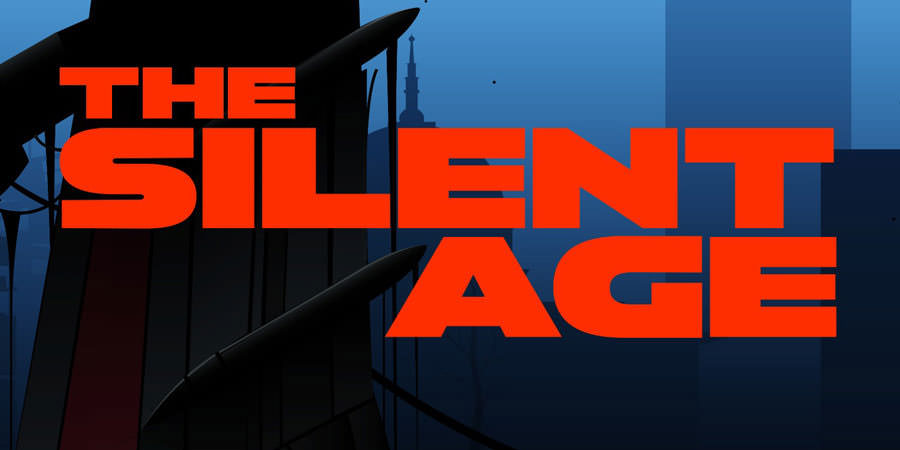
The Silent Age is a simple and elegant adventure in every respect: visually, mechanically and in its interface. What drew my interest most was its time-shift mechanic, which brings a puzzle dimension into the otherwise streamlined experience. Originally released for mobile devices in two parts (2012 and 2014), it quickly became popular. In spring 2015 it made the leap to larger, non-touch platforms with Windows and Mac OS X versions.
The Silent Age is developed by the Danish studio House on Fire and designed by Thomas Ryder. Ryder has served as lead designer on more than twenty games, contributed graphics to even more and created levels for dozens of titles. I have not played his other work, yet this is very likely his crowning piece.
From loser to unlikely hero
Joe, in his red overalls, is timid and understated. He works as a janitor and maintenance man in a research company conducting high-level scientific work far beyond his understanding. Everyone orders him around, and few consider him bright. Still, fate places him at the centre of events: Joe becomes responsible for preventing human extinction.
The year is 1972, Nixon-era America. The Soviet Union is not just a competitor but a feared threat. Science serves the military. At Archon, Joe’s workplace, time-travel research is underway at immense cost, funded by the Department of Defense. The goal is advantage — perhaps through biological or conventional weapons. Yet the future does not look promising, and time travel triggers an unforeseen chain of events.
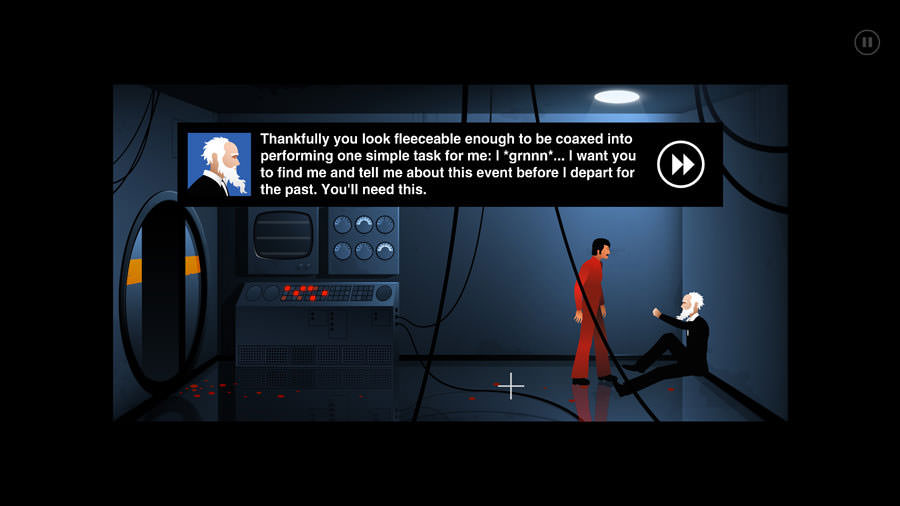
One morning Joe notices blood on the lab floor. Following the trail, he encounters a dying time traveller who hands him an amulet and a strange request: Joe must find this same man younger, in the present. Instead of mopping floors, Joe soon finds himself arrested for suspected murder. As he tries to escape, the player learns how time travel works.
Beautiful simplicity
The game is built on a clear concept. Joe uses a handheld, solar-powered device that switches between the present and the future. Puzzles involve both inventory logic and time traversal. The same location appears drastically different in another era, and Joe can bring items across timelines. Doorways open or close depending on the time period, and progression is often about finding the right moment rather than the right object.
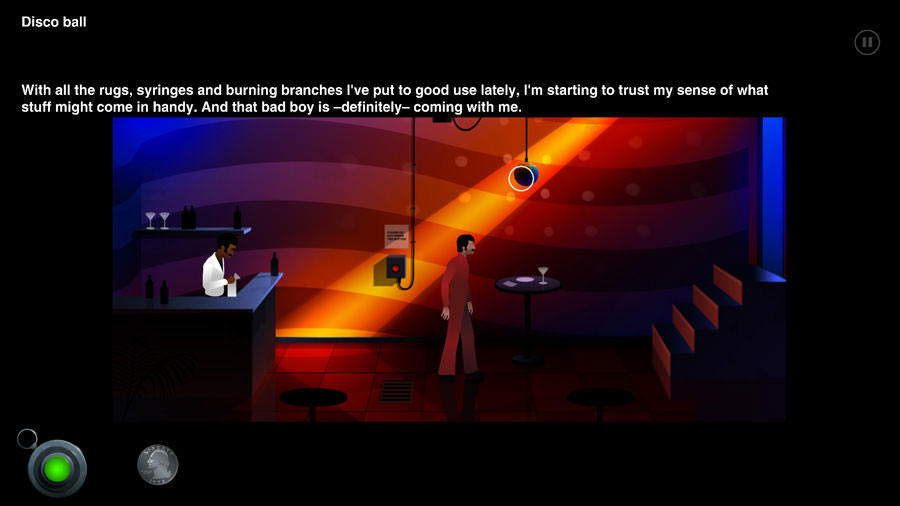
The future is a museum of horrors. Humanity is gone, seemingly in an instant, and vegetation consumes buildings. Locations remain recognisable, yet the contrast to the 1970s is startling despite the short gap between eras. The visual and mechanical identity of the game rests firmly on this contrast.
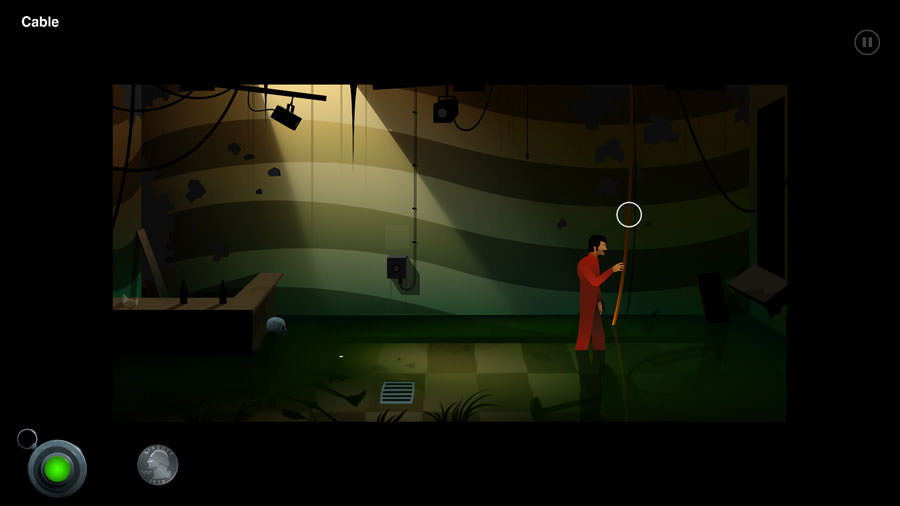
The execution is minimal but smooth, and puzzles are straightforward and practical. The inventory is small, tasks are compact and quick to complete. Environments contain few interactable objects, yet the restraint suits the aesthetic and does not feel lacking. The game’s mobile roots are clearly visible. My full run took roughly four hours.
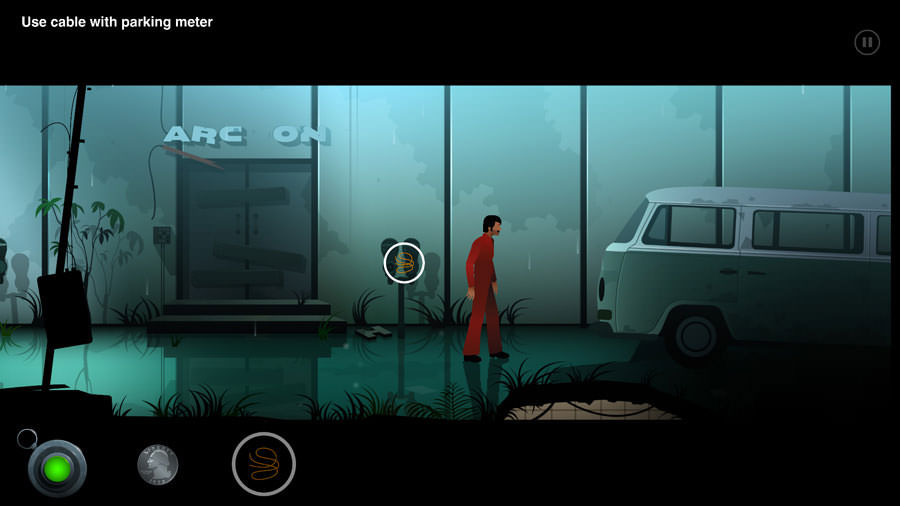
Time-shifting elevates the experience and is inseparable from it. The narrative itself revolves around time travel and its destructive implications. Story, mechanics and audiovisual design form a unified whole.
Notes
I also tried the game on iPad, and for touch controls it is excellent — almost a model case. Playing on desktop works equally well: HD graphics look crisp and mouse interaction is reliable. The only real drawback was the slight delay before object descriptions appeared.
The desktop release reportedly includes voice acting. Even so, I experienced the game largely in silence, which suits Joe's solitude and the emptiness of the future world.
Verdict
The Silent Age is a sleek modern adventure that treats the player gently. Its sci-fi narrative is adequate and fits Joe’s experience. Time travel folds like a Möbius strip, and the ending twist both explains and surprises. It is not a profound work, and I am unsure how well it will stay with me over time. Yet the time-shift mechanic is clever in its simplicity and — more importantly — it works.
My overall score for the desktop experience is 71 out of 100.
Availability
The Silent Age is available for Windows, Mac OS X, iOS, Android, Windows Phone and Kindle Fire. The first part is free on mobile platforms. I could not find a demo for desktop at a glance.