
The Last Express (1997)
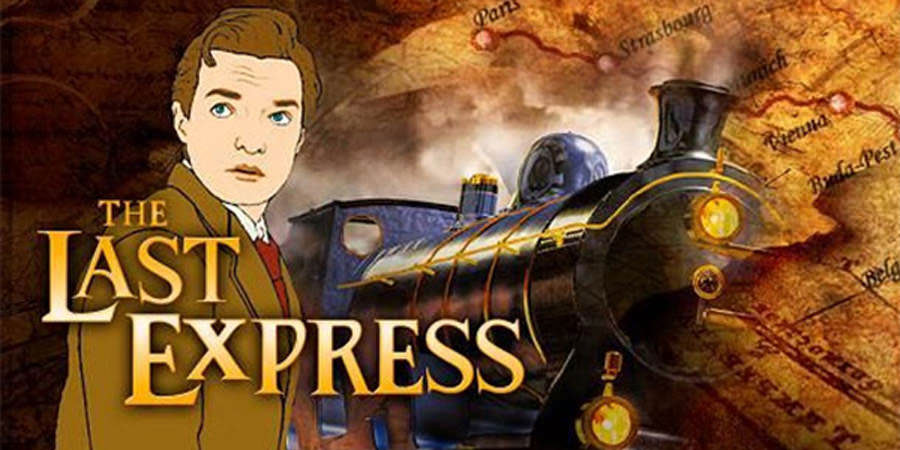
Released in 1997, The Last Express stands as a highly distinctive adventure game. Several unusual design choices interact to create something memorable and unique. Breaking conventions always entails risk, and reactions have been divided since day one — many praise The Last Express while others find it deeply frustrating. For me, it required crossing a certain threshold of understanding before I could fully appreciate it.
A troubled project
The game’s designer, Jordan Mechner (born 1964), is widely known for the Prince of Persia series. Beyond game design he has work to his name as an author, screenwriter and filmmaker.
Development of The Last Express lasted five years with a budget exceeding five million dollars — a large production for the mid-1990s, arguably one of the peaks of the multimedia era. Critics welcomed it warmly at launch, yet it still crashed commercially. Publishers who had once competed for distribution rights later withdrew, and marketing ended up being minimal. The initial print run — three CDs — sold out within a year and was never reprinted. Smoking Car Productions, Mechner’s studio employing up to 60 people, shut down soon after.
Even so, The Last Express retained its reputation. Later digital re-releases have allowed entirely new audiences to discover it, and today it remains accessible across multiple platforms.
Tension on the Orient Express
In The Last Express you control Robert Cath, a young American doctor on the run. His friend — involved in questionable dealings — has asked for help and hinted at a discovery that would interest Cath. They agree to meet aboard the Orient Express, and Cath boards at the last moment as the train is already moving. Immediately he finds his friend murdered. There’s no time for shock — hesitation risks arrest. The player must quickly inhabit Cath’s calm and analytical mindset.
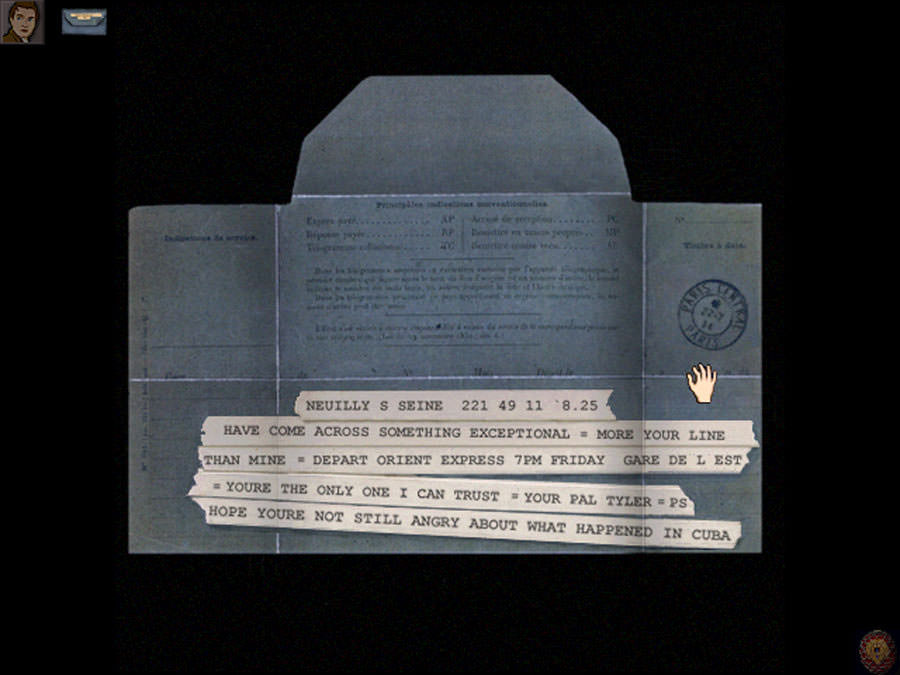
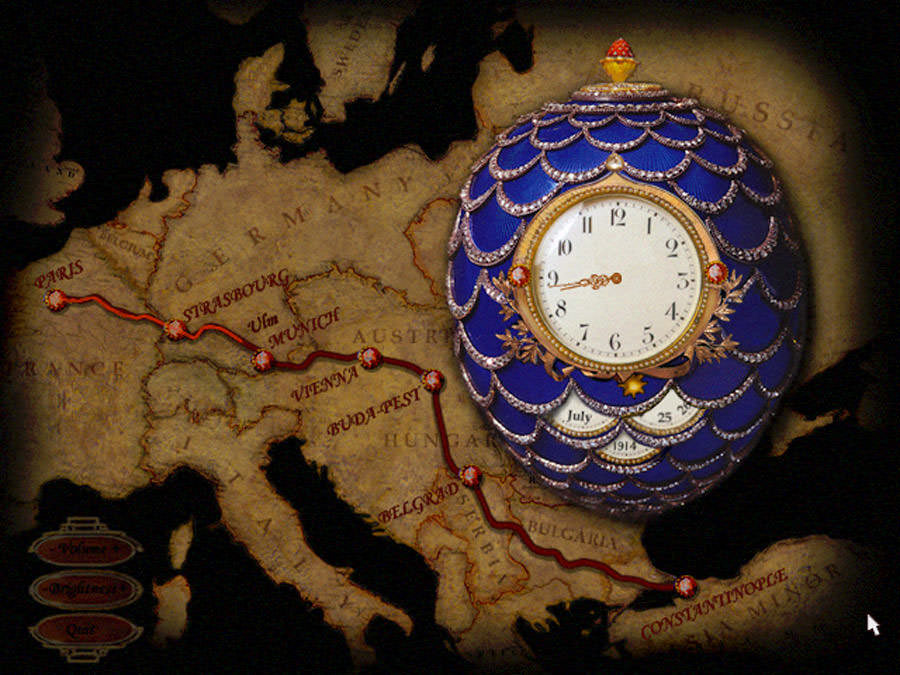
The legendary Orient Express ran between Paris and Constantinople from 1883 until 1977, interrupted only by the World Wars. The game is set in 1914, on the eve of the First World War. The depiction of the train is meticulously historical — from its fittings to its multinational passenger list and crew.
With so many nationalities represented, languages play an important role. The story, characters and visual presentation build a distinctive atmosphere, concentrated within just seven carriages. The Last Express has an absorbing pull — provided the player lets go of standard expectations for how an adventure game should behave.
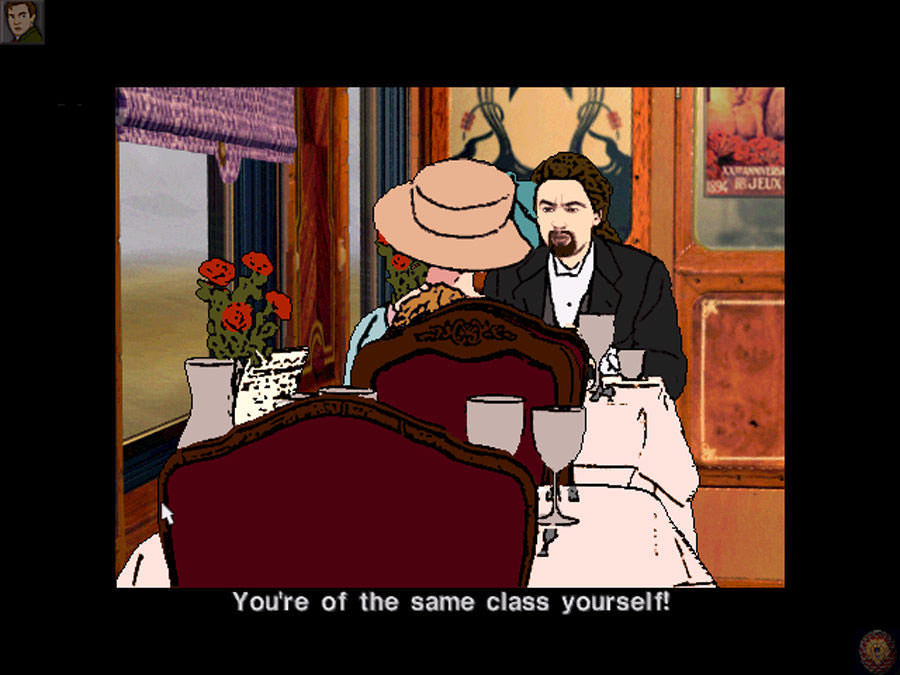
Beneath the train’s elegant décor lies more than one ticking bomb — figuratively and literally. Around 30 AI-driven characters fill the cars: a German arms dealer, Serbian revolutionaries, a Russian anarchist, a secret agent, and an Arabian prince with a taste for art and antiquities. Their interactions weave a dense narrative web, and the player faces frequent confusion. The Last Express may demand several playthroughs not only to succeed but to grasp what is truly going on.
Time is the enemy
What sets The Last Express apart mechanically is real-time progression, running at roughly six times normal speed. Idling is dangerous. Unlike most adventures, you cannot linger indefinitely; important events happen whether you witness them or not. Yet paradoxically the game also includes stretches of downtime, and patience becomes as necessary as initiative — one sequence, a concert, lasts a full twenty minutes in real time.
For many players this structure is the core frustration. Success requires being in the right place at the right time, with little assistance. You must roam the cars constantly, follow people, and most often eavesdrop unnoticed. Combined with the absence of manual saves, this means repeating large sections — sometimes nearly the whole game. Failure is always close.
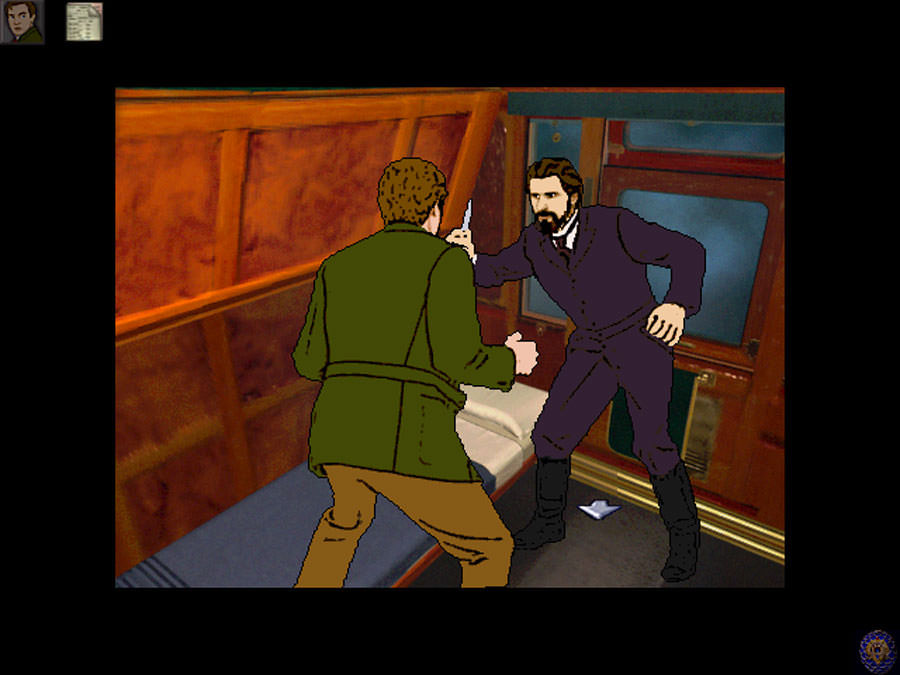
It is said the game holds as many as 35 different endings, with only four considered fortunate — and only one truly successful. Since characters are AI-driven and react to your behaviour, no playthrough unfolds the same way. Adventure games are typically linear and predictable; The Last Express is neither. Its difficulty rises accordingly.
Visual elegance
The visual style draws from early-20th-century Art Nouveau and is produced through rotoscoping. Live actors were costumed, filmed enacting every gesture and posture, then frames were extracted, colour removed, outlines generated, and finally hand-coloured. The result is distinctive and striking. Animation is choppy by design, more stylistic than limiting.
For accuracy, the team even acquired an original wooden sleeping car from the period — possibly the last of its kind.
Difficulty and playability
My experience was challenging and often bewildering. I felt the game could have offered more guidance, and additional rewind points would have eased the strain — the stretch between Munich and Vienna felt particularly punishing. I repeatedly backtracked too far and eventually resorted to a walkthrough.
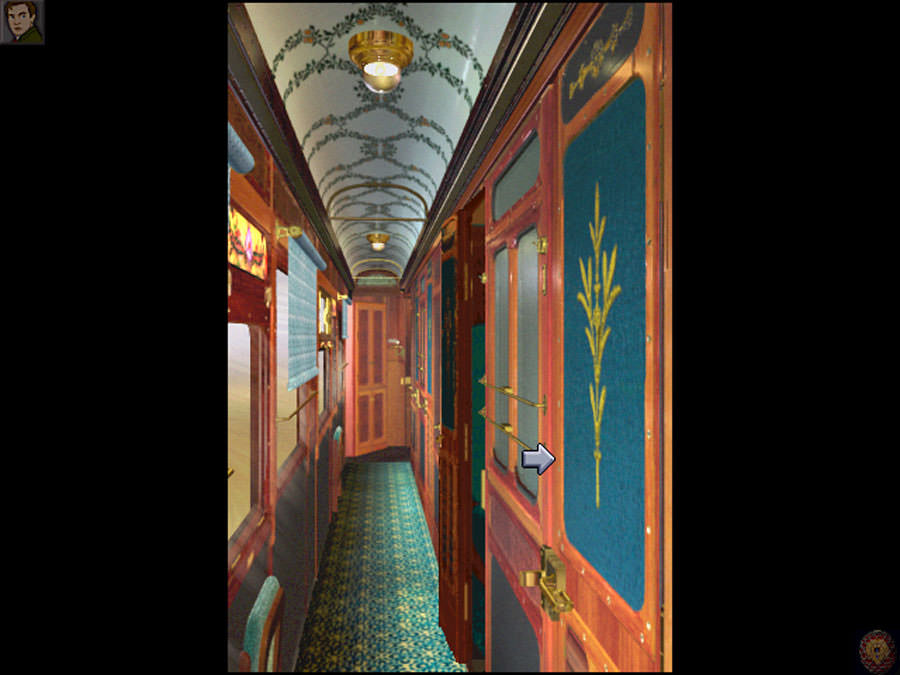
Movement occurs mostly through a first-person view. During cinematic sequences control is removed and perspective shifts outward. The inventory system is somewhat clumsy but serviceable. Personally I rarely enjoy first-person adventures, and navigation here often felt disorienting — two sleeping cars appeared almost identical, and cabin numbers were only readable when directly aligned. I became lost in the luggage car repeatedly, and camera orientation sometimes spun unexpectedly.
Verdict
In one sense The Last Express is a bold attempt to reinvent adventure design — and a flawed one. Yet it is also among the most haunting, unforgettable games I have played. Mechner has stated he regrets nothing, and I respect that. The Last Express holds a special, difficult-to-replace position in the history of the genre. With mixed feelings, I score it 74 out of 100.
Availability
The Last Express is available for Windows and macOS, as well as iOS and Android devices.