
Overclocked: A History of Violence (2008)
The 2008 adventure game Overclocked: A History of Violence tackles violence less through action than from a psychological angle. It is a serious, sombre game that made me reflect on its subject matter at least somewhat deeply. In the story, violent behaviour appears to stem not only from high testosterone levels but also from deliberate manipulation — its exact nature left unclear.
The game was created by the German studio House of Tales, which has since disappeared following a merger. Writer Martin Ganteföhr tends to approach serious themes with a serious tone. His background includes studies in literature and civilian service at a psychiatric hospital. Other games he has designed include The Moment of Silence (2004) and 15 Days (2009).
A psychiatrist’s case
A string of strange incidents hits New York: five young adults are found around the city at roughly the same time, in severe shock, half-dressed and carrying handguns. They are curled in on themselves and appear to remember nothing of what happened. In Overclocked the player controls a psychiatrist called in to help. He has previous experience treating post-traumatic stress disorder within the U.S. army. A police detective works alongside him.
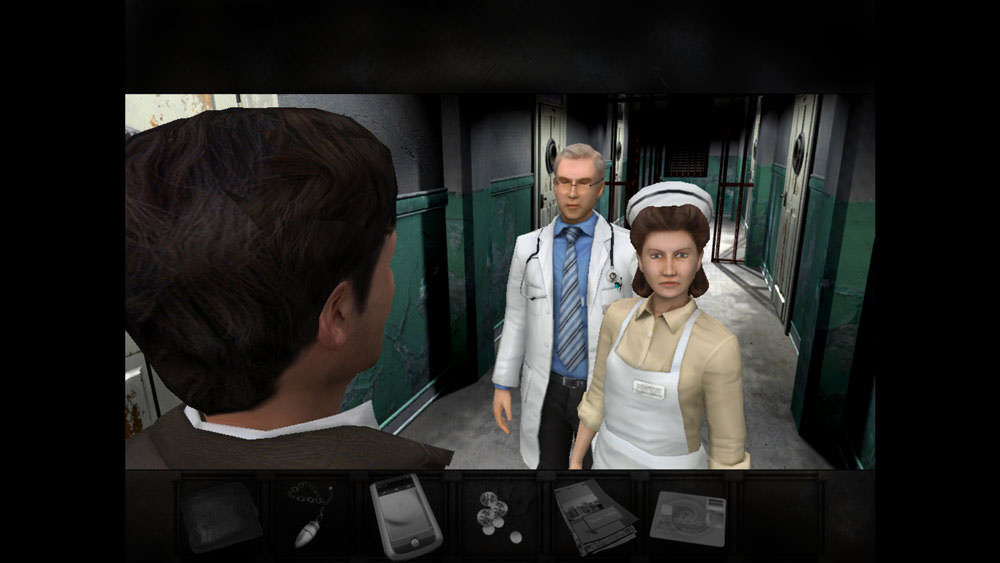
Three young men and two women are confined to a dilapidated psychiatric hospital on Staten Island. The psychiatrist has to cross by ferry every morning. Throughout the in-game days a storm rages over the city, lending a gloomy tone. Stylistically, Overclocked aims for realism, blending real New York locations with fiction.
3D graphics on a 2D screen just do not work
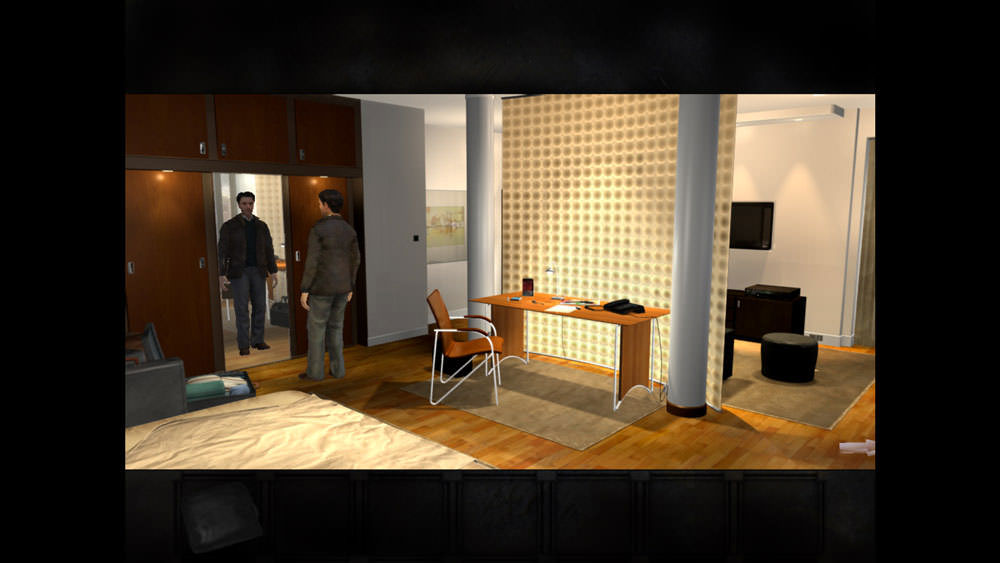
I am not fond of 3D graphics, and this game shows why. For a 2008 release the visuals and animation are probably decent, and Overclocked has been marketed on its realistic characters and natural environments. To me they felt unsettling, and I had to consciously focus on the story and watch much of the rest through my fingers. I especially avoided looking characters in the face because of their unnaturalness and preferred to rely on the voice acting.
3D adventures also tend to control awkwardly. Moving from place to place is laborious and confusing thanks to shifting camera angles. You are trying to move yourself at a distance without any sense of your own body. It feels as if you are performing animations more than actually solving tasks, and the gameplay can come across as thin. Once 3D adventure games reach full realism and are played in virtual reality by moving your own body instead of clicking a mouse, that goal may be fulfilled — but until then, 2D graphics work much better.
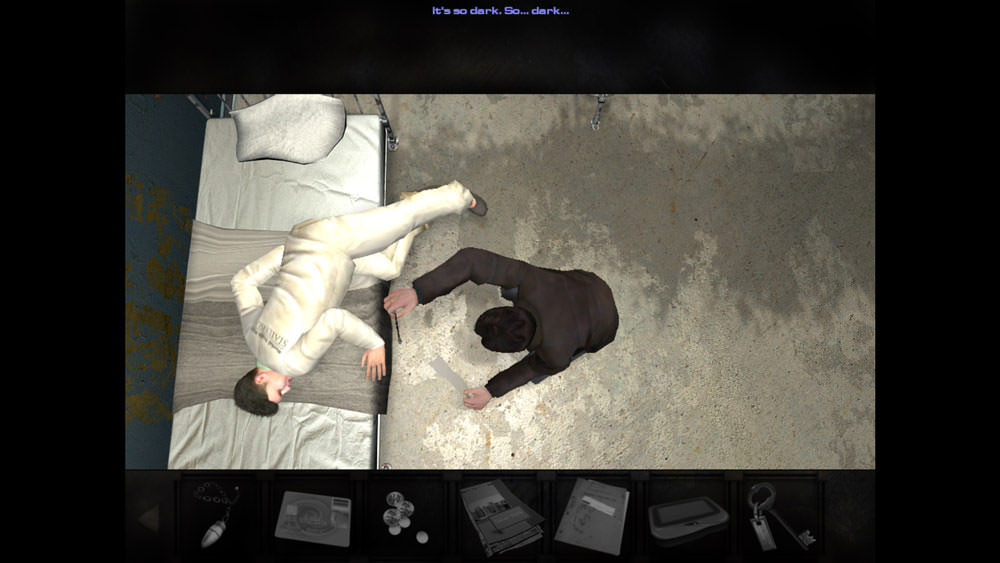
Overclocked is known for its cinematic elements. In my view the filmic parallels work well, and the differing camera perspectives add variety. Still, its lasting value lies less in image or sound — or in the tasks themselves — than in the story and how it is presented.
Dialogue between past and present
Overclocked is primarily a thriller told in reverse chronological order. The psychiatrist must get his patients to open up and remember. What has happened to these young people? Why do they all feel they are fleeing something, and what or whom are they running from? Where did they come from?
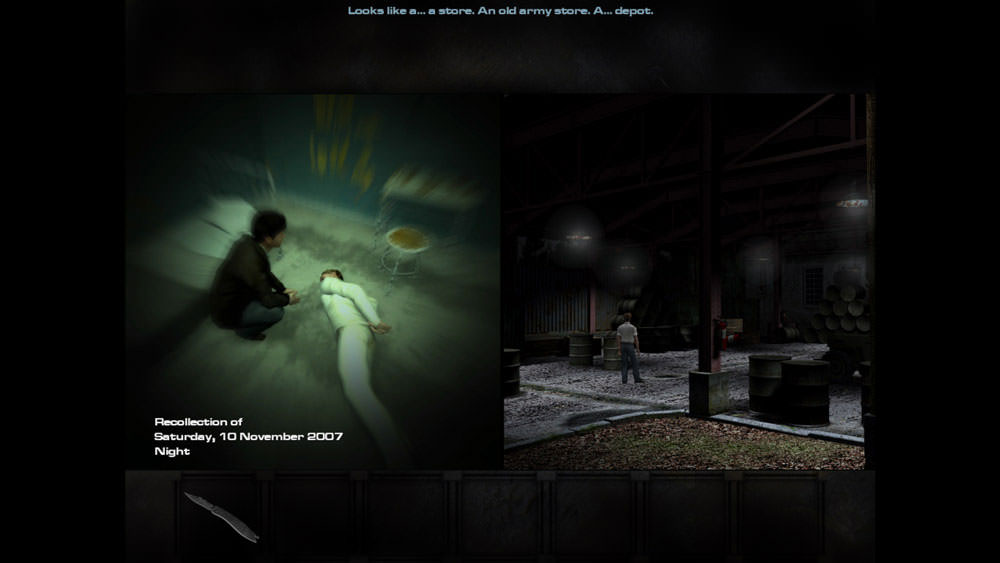
The psychiatrist’s main tools are his recordings. Sessions are captured on a handheld computer, then played back to patients to trigger recollections. Gameplay consists largely of shuttling between patients. That movement is strictly linear: you cannot address them in any order you like. At times I found it frustrating that several investigative avenues seemed plausible, yet only one would advance the plot. Hints towards the intended path felt too subtle.
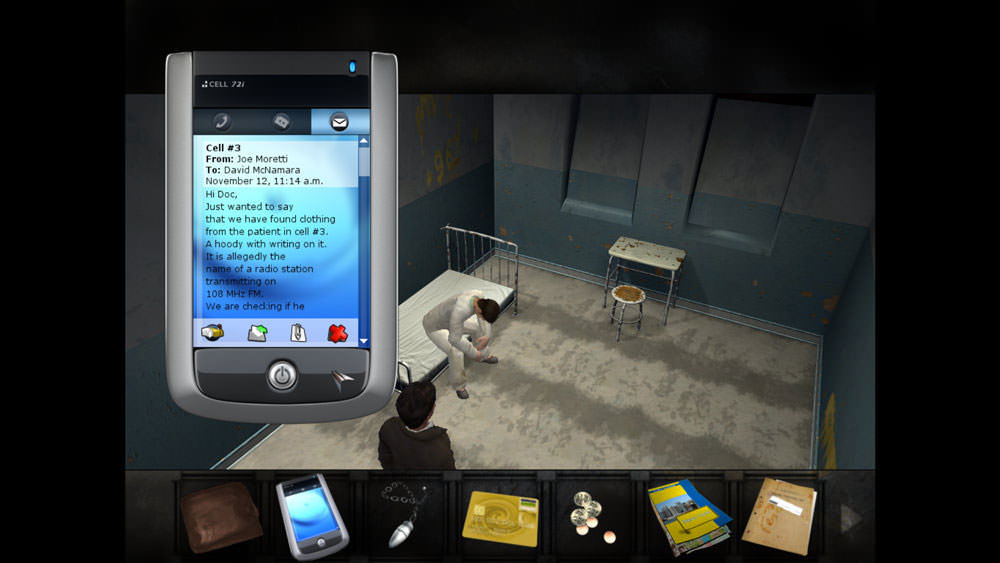
Overclocked sat installed on my machine for a long time before I truly committed to it. The first ten minutes did not seem especially promising, but when the first memory sequence activated, I snapped to attention and was drawn in. These sessions are presented in a neat film-like cross-cutting style: the camera moves from the present in the hospital (the psychiatrist’s point of view) to the past (the patient’s perspective). In the past, actions are naturally constrained — the player is reconstructing events.
Tasks and inventory use, whether in past or present, did not strike me as particularly inventive. They are mostly practical and environment-based — logical enough, but I personally enjoy more creative solutions. Overclocked’s pull lies almost entirely in its story and its serious approach. Having played Ganteföhr’s The Moment of Silence as well, I cannot quite shake the feeling that games might in fact be the wrong medium for him — that literature would suit him better.
Verdict
As an adventure-game experience I give Overclocked a score of 62/100. In terms of content it was thought-provoking, and I value its elegant way of juxtaposing past and present and building suspense around gradually revealed information.
It would be unfair to call the design of Overclocked poor; in its own way it is convincing. Yet time has passed its multimedia by in a way that risks consigning the game to oblivion.
Availability
Overclocked: A History of Violence is available for Windows PCs from, for example, GOG.com, the Humble Store and Steam.