
Déjà Vu: A Nightmare Comes True (1985)
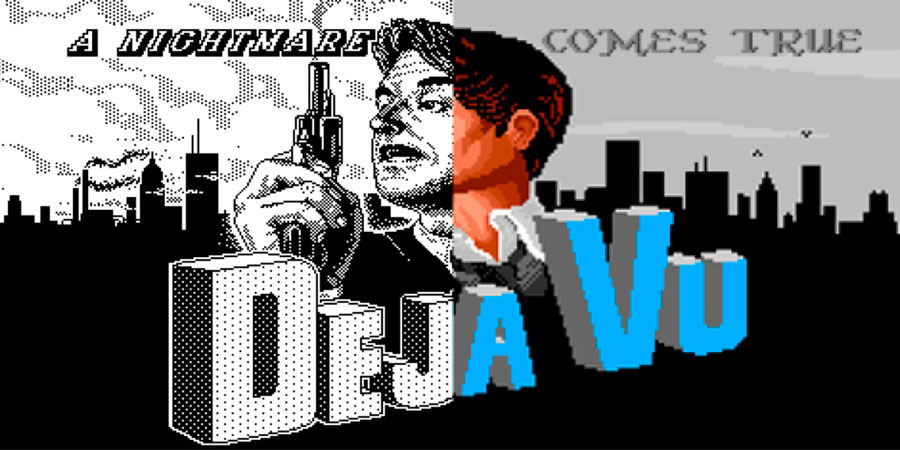
The 1985 release Déjà Vu, originally developed for the Macintosh, is one of the pioneers of point-and-click adventures. Its interface mirrors the graphical operating system of the time with multiple separate windows and icons, and everything is controlled by clicking, dragging and dropping objects with a mouse. It may initially sound clumsy and even confusing, yet this first entry in the MacVenture series works surprisingly well and logically. It is historically significant and thoughtfully designed.
Back in the 1980s, graphical adventures still carried strong traces of earlier text adventures, and keyboard or joystick control remained the norm. My own gaming background is mainly on the Commodore 64 and Amiga 500, and I only became familiar with the Mac ecosystem in the early 2000s. Today I mainly play on Mac, yet I have no personal history with the earliest Macintosh games. That curiosity led me to Déjà Vu, re-released by Zojoi in early 2015 for modern Windows and macOS systems. The package includes both the original monochrome Macintosh version and the Apple IIGS colour version. I played the black-and-white one.
Story turned upside-down
You awaken in the shoes of a man who has lost his memory, regaining consciousness in the restroom of a bar. The objective is to figure out what has happened — and more crucially, who the protagonist even is. When he looks into a mirror, he sees a stranger.
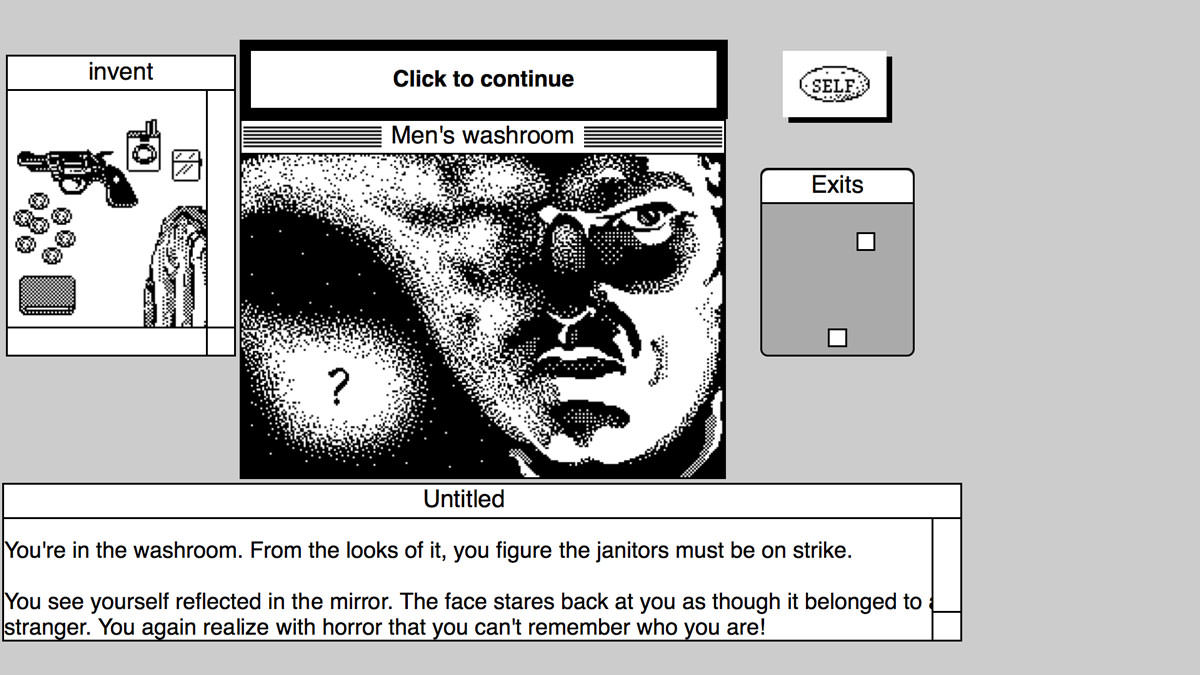
In Déjà Vu, you move from place to place, examine your surroundings and draw conclusions. Direct action also plays a role, but it mostly feels like an obstacle that demands patient saving and reloading. In typical old-school fashion, sudden death and complete failure lurk constantly in the background and strike partly at random.
The story adopts the classic hard-boiled detective style of the 1940s. Déjà Vu throws the player into a large theatrical setup and asks them to reconstruct the past from what they see. It challenges the mind. For a game of its time, it feels surprisingly broad and mature, although the actual writing is fairly routine. It undoubtedly made a serious impression when it launched — and it is still a fascinating and genuinely successful attempt to merge a game with the general desktop metaphor of the computer.
Windows in order and disorder
What stands out in Déjà Vu is the sheer number of separate windows. Their size and position can be freely modified.
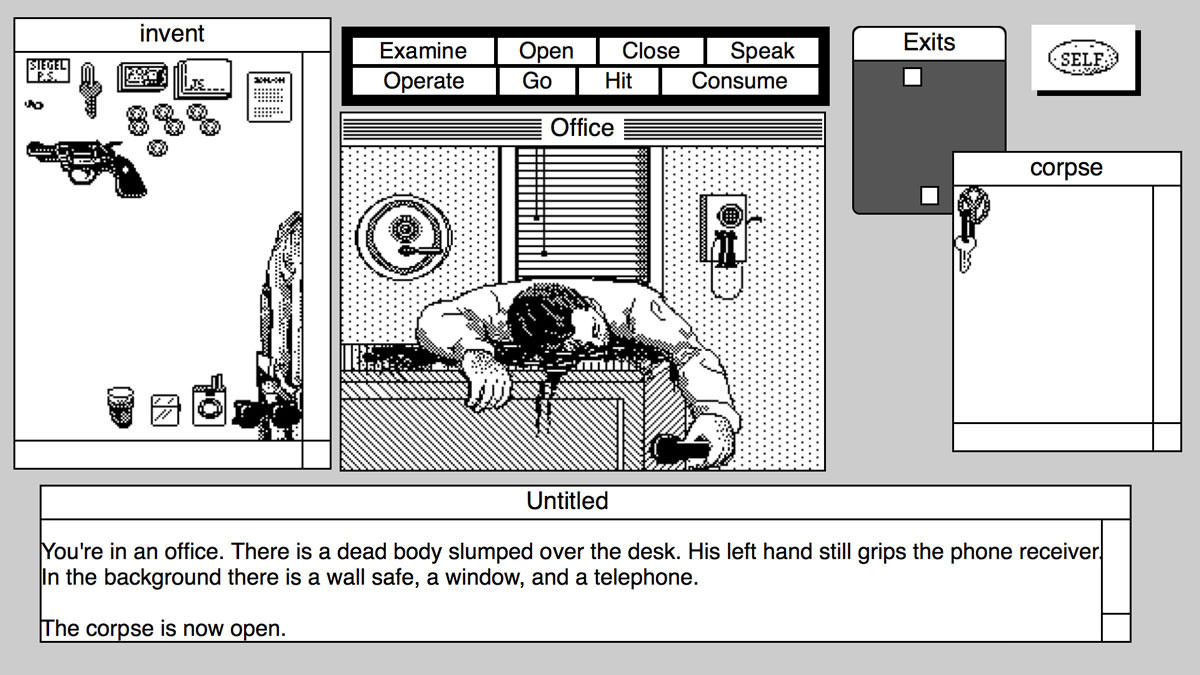
One major window displays a graphical scene of the current location — usually static, occasionally animated, and fully interactive. A second window is reserved for text output such as descriptions, character lines and narrative progression. A third window serves as the inventory. Items are dragged from the graphical view into the inventory, which is bottomless and wonderfully chaotic — and dragging also works in the opposite direction. A fourth window handles navigation — a map-like visualisation of all available exits. Movement happens either by clicking this “map” or by clicking an exit in the graphical view.
At the top of the screen sits a row of functional buttons, which serve as verb commands. You select a button and then pick a target either in the graphical view or the inventory. Talking to characters also happens through a button, which opens a text parser for manual input. The game does not really include dialogue — the only meaningful moment is giving the cab driver a destination — so the parser poses no challenge and is actually a relief to a modern player.
Black-and-white silence — stylish and functional
Considering the graphical and memory limitations of the time, the implementation is impressive. Scenes and objects are detailed, though slightly fuzzy due to the low resolution. The monochrome look is genuinely stylish.
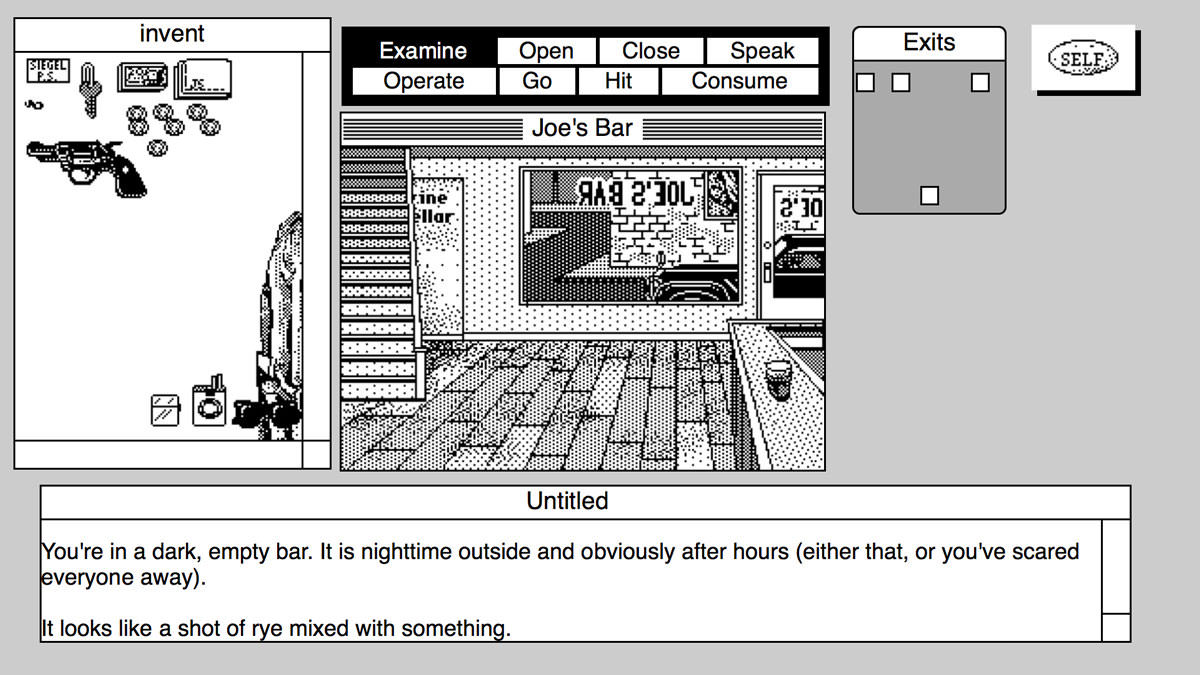
Ports on other platforms look substantially different. I once tried the DOS version briefly and found it cumbersome. Here, with the original Macintosh presentation, I did not struggle with the controls — I adapted quickly to windows and mouse-based interaction.
There is no music at all — not during gameplay and not even a title theme. A few sound effects exist, mostly gunshots, but nothing is lost by muting the audio entirely.
Verdict
Déjà Vu earns my respect. It is cleverly constructed and technically well executed, and the early “shoebox Mac” platform it runs on must have been quite something. I still need time to absorb it, because I lack the historical frame of reference. It is unlike every other 1980s game I have played. In one sense it is ahead of its time — in another, completely off to the side. Sierra and later LucasArts took point-and-click adventures in a very different direction.
From this position — after only a few hours of uninterrupted play — I give the original Déjà Vu a score of 79 out of 100. No higher, because the story was cliché enough that I cannot say I truly enjoyed it. Still, this new kind of retro experience feels like a fitting way to end my gaming year 2015.
Availability
Zojoi’s modern re-release of Déjà Vu is available for Windows and macOS on Steam at an affordable price. Historically, it has been published on numerous platforms and may be found for free in some places — yet I recommend experiencing the original version to everyone.