
The Detective (1986)
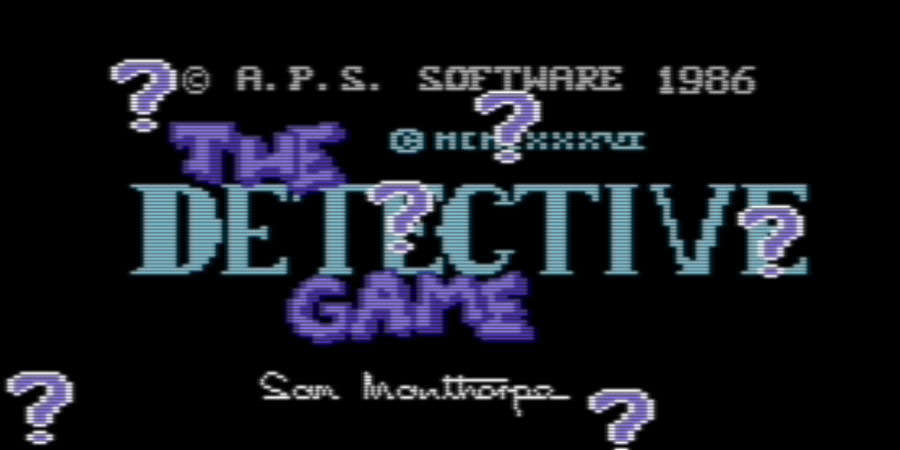
Released in 1986 and designed by Sam Manthorpe, The Detective is a fine graphical murder mystery for the Commodore 64. Like many games of its era, it is a purifying experience — a return to the roots rather than a mere historical curiosity. In games this old, the skeleton of the adventure genre is still clearly visible. Due to technical limitations, everything is simplified to the essentials.
The unbearable difficulty of playing
By the late 1980s, however, the adventure genre was no longer a clumsy prototype. Its fundamentals — certain elements and conventions — had already settled. The legacy of text adventures evolved into graphical adventures with a certain formula, where the unnecessary frills were gone. That undoubtedly made them easier for players to follow.
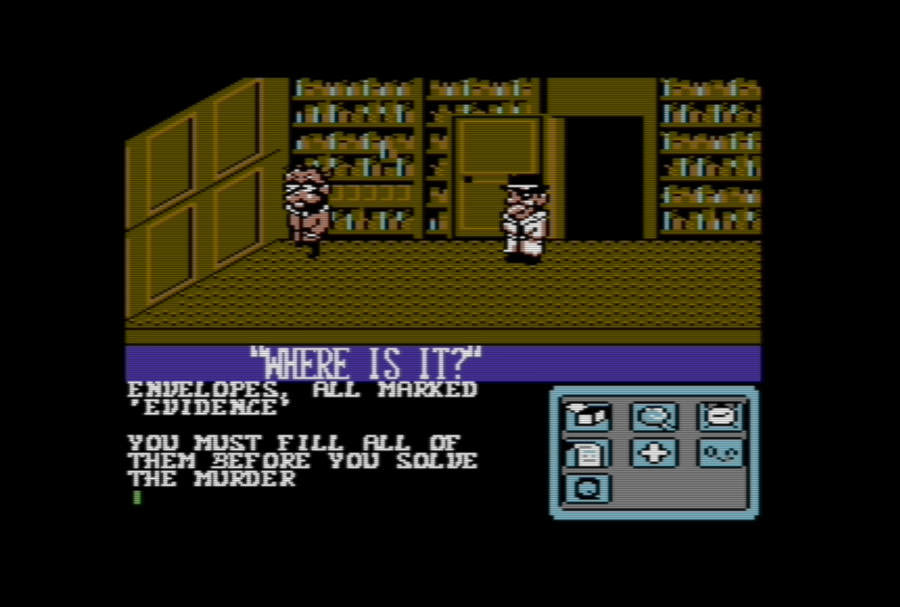
But those first graphical adventures were anything but easy! Games from the 1980s are infamous for their punishing difficulty — and in the pre-Internet era, walkthroughs were not a click away. The Detective is one of those games that haunted me for years, left unfinished. Now, more than twenty years later, I finally decided to look up a guide from the start — and at last managed to arrest the murderer.
A detective with pockets full of evidence
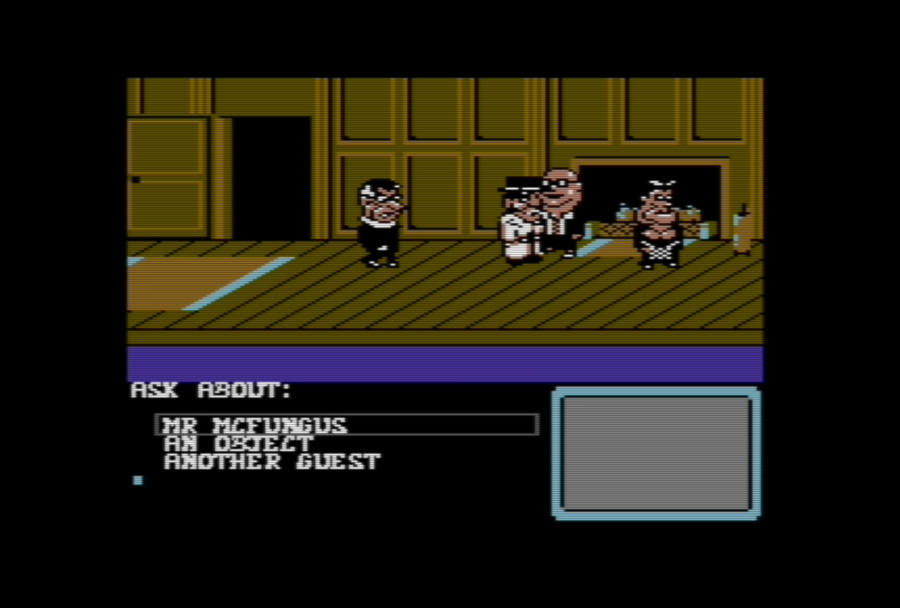
In The Detective, the player controls Scotland Yard inspector Snide, who arrives to investigate the death of a wealthy landowner. Besides Snide, there are nine other people in the mansion, three of whom will be eliminated as the story unfolds. The game takes place in real time, and Snide has only the morning to solve the case — while also avoiding becoming a victim himself.
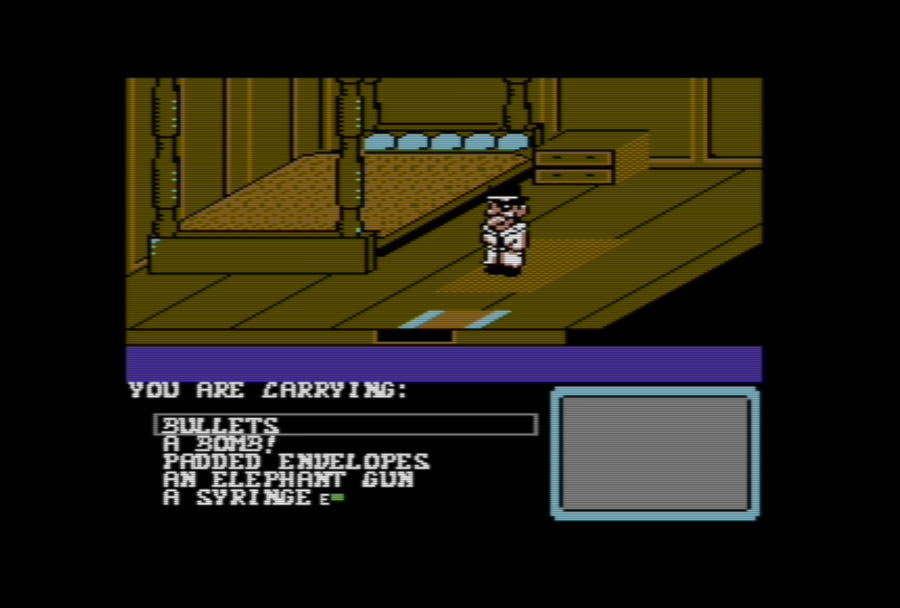
Snide has an inventory, and items are central to the investigation. Before accusing anyone, the inspector must collect ten pieces of physical evidence. Besides the murder weapon, these include items such as a will and a medallion. Identifying evidence is mostly easy, as they’re marked with an “E” — though not all. Snide himself is also on the hit list, and to stay alive he must rearrange certain objects to thwart the killer’s plans. The inventory has space for only six items, so carrying things requires judgment. Fortunately, some items can contain others, which helps a little.
Endearingly clumsy
Aside from the short intro music, there’s no soundtrack, and sound effects are scarce. Yet despite the silence, the game has atmosphere. Perhaps the anticipation of the next murder provides enough tension. The graphics rely heavily on repetition: similar bedrooms, recurring layout elements, a limited colour palette. Modern games feel unlimited in contrast, but this old title brings you back to the fundamentals. Even when played through an emulator, its offline stillness feels oddly soothing.
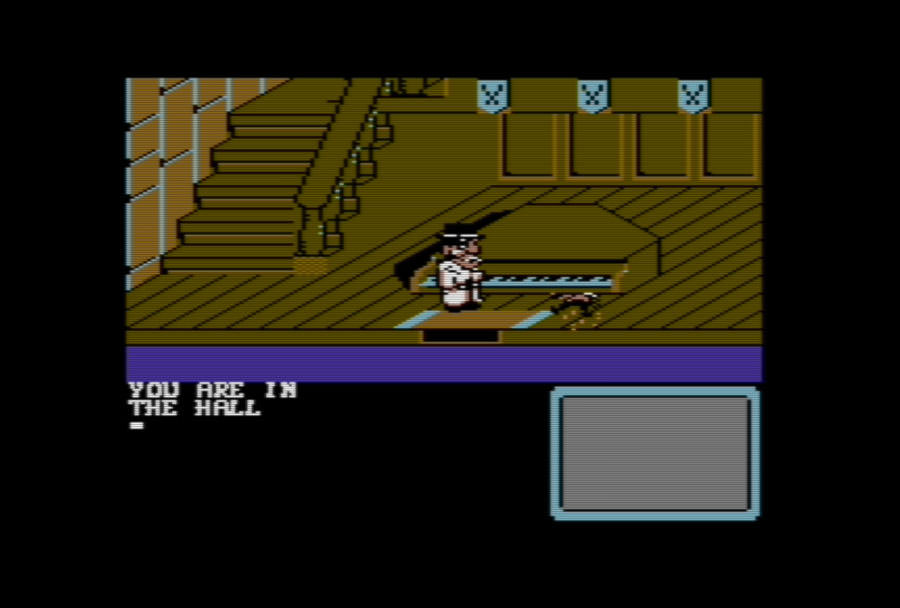
The Detective contains elements that can be seen as design flaws. The logic is not always airtight, and the story itself isn’t particularly ingenious. Yet the game and its cast made a lasting impression on me. Looking back, its clumsiness feels almost touching — like watching a child’s unpolished movements. It lacks finesse, but you can’t help feeling affection for it.
Verdict
My old curiosity finally found closure, and I realised what this game truly is: quite nice, really. Considering the hardware limitations of the time — and the young state of the adventure genre itself — I give The Detective an overall score of 67 out of 100.
Availability
The Detective can be played not only on an original Commodore 64 but also via modern emulators such as the free VICE emulator. The game files can be found online, for instance here and here. As for legality, that’s unclear — but few creators of these ancient titles seem to be chasing their rights anymore. And for those who need them: the walkthrough guides.