
Defender of the Crown (1986)
I dug out the legendary Amiga game Defender of the Crown, in which the player seeks to conquer Britain in the early Middle Ages. It was the first release from the renowned Cinemaware, and it occupies a special place in Amiga history as a showcase for the computer’s groundbreaking multimedia capabilities. Audiences accustomed to 8-bit machines were astonished by such impressive graphics in the mid-1980s. The music was equally novel, based on samples and making use of four-channel sound. Defender of the Crown, like Cinemaware’s other productions, was guided by the idea of interactive movies. There are no video sequences, which only became common in games during the 1990s, but the concept is reflected in the scene-by-scene narrative and the game’s dramatic atmosphere. Defender of the Crown is a strategy game, although its strategic depth is fairly limited. The game relies heavily on randomness, and victory is by no means guaranteed.
The American studio Cinemaware operated between 1986 and 1991. Attempts have been made to revive the brand in the 2000s, but its glory days are long gone. During its five-year existence, the company produced fifteen games, including Sinbad and the Throne of the Falcon (1987), The Three Stooges (1987), Rocket Ranger (1988) and Wings (1990), all inspired by films. I previously covered It Came from the Desert (1989), the giant-ant invasion adventure, on Samooja. Credit for Defender of the Crown belongs to designer Kellyn Beeck, artist James D. Sachs and composer Jim Cuomo.
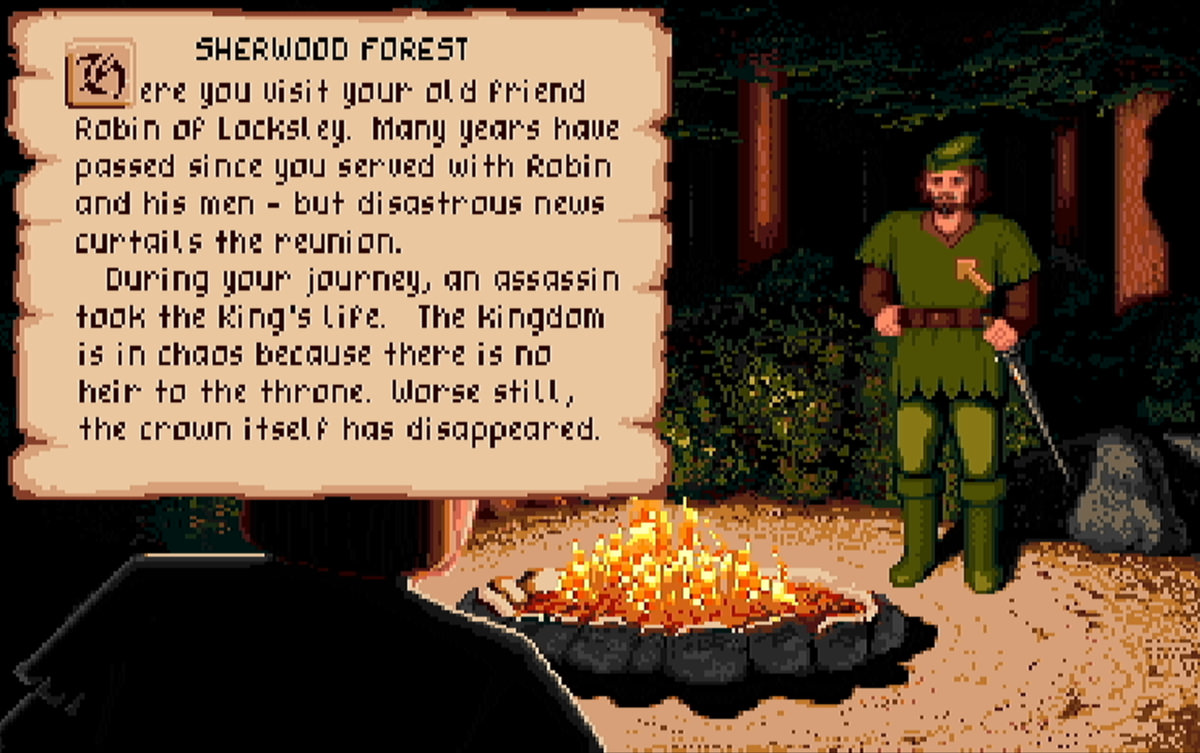
The game was ported to numerous platforms including the Commodore 64, Amstrad CPC, Atari ST, ZX Spectrum, Macintosh and NES. Of these, the Atari ST version is closest to the original, while the Commodore 64 version is often regarded as superior in gameplay terms. Later reinterpretations also appeared in the early 2000s: the 3D game Robin Hood: Defender of the Crown and the lighter Defender of the Crown: Heroes Live Forever. And now, in 2026, yet another adaptation is on the way: Defender of the Crown: The Legend Returns.
Who Is the Mightiest in the Land?
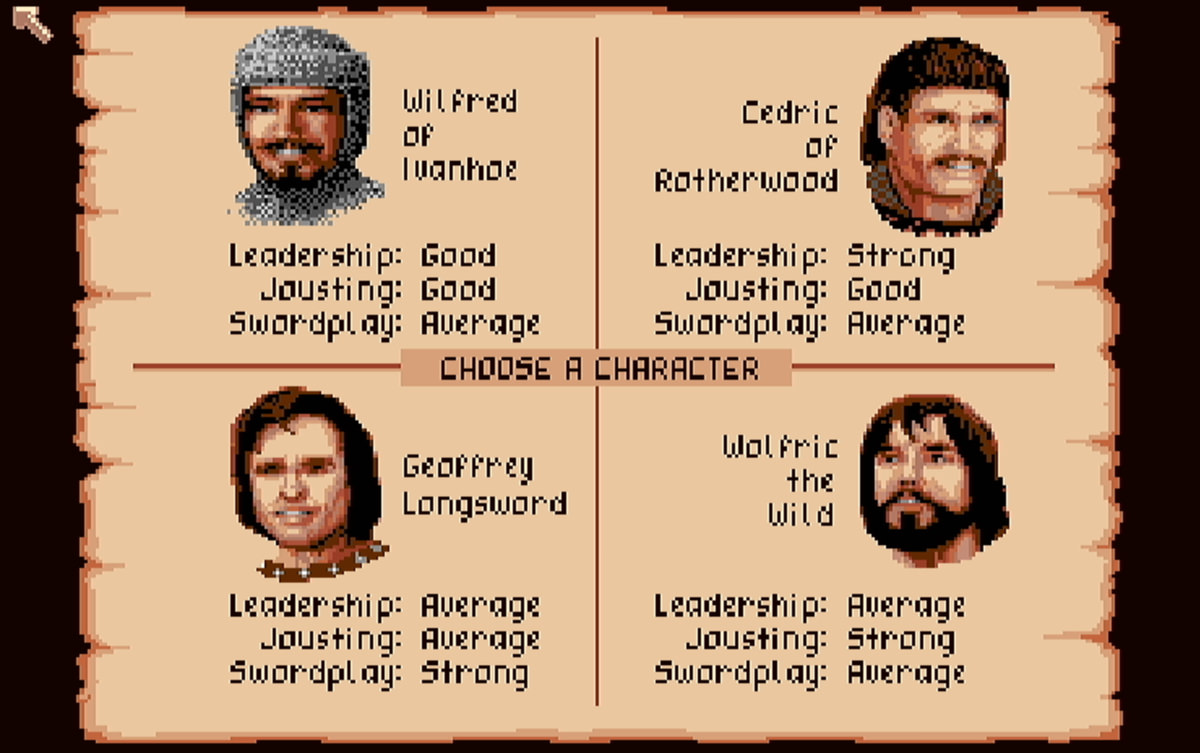
Defender of the Crown casts the player as a Saxon lord. One of four characters may be selected according to portrait, amusing name or abilities. There are three attributes – leadership, jousting skill and swordsmanship – each rated as average, good or strong. The choice of character certainly seems to matter, although dice rolls operate behind the scenes.
The player inherits a home castle and the surrounding territory. The map shows which regions belong to rival lords and which remain unconquered. Time to get started. The objective is to conquer all of Britain. Rival lords are either Norman invaders or fellow Saxons. In the end, everyone must be defeated, and naturally this is achieved through military force. At first the army is almost non-existent, but it must be expanded as quickly as possible. More soldiers, knights, catapults and castles can be purchased with money collected through taxation. The more territories under your control, the greater the tax revenue.
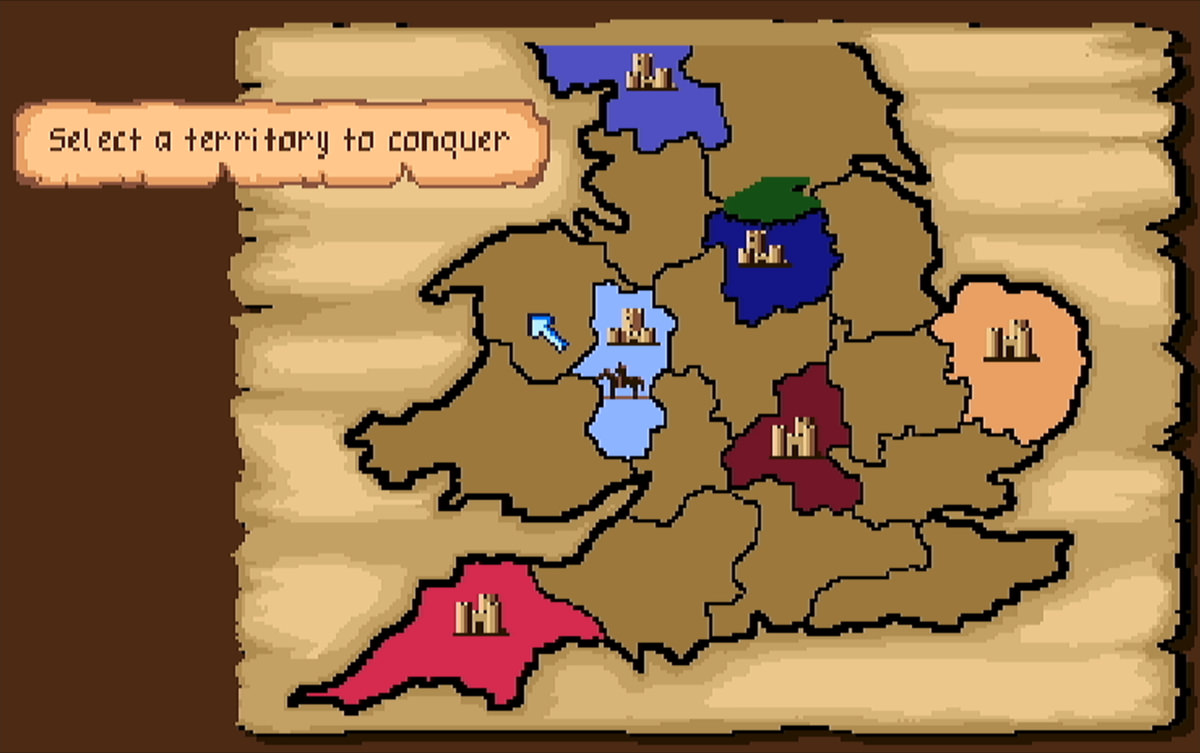
The structure of the game is both repetitive and varied. Conquest is the central activity repeated every turn, but Defender of the Crown also includes random events such as tournaments, maiden rescues and raids.
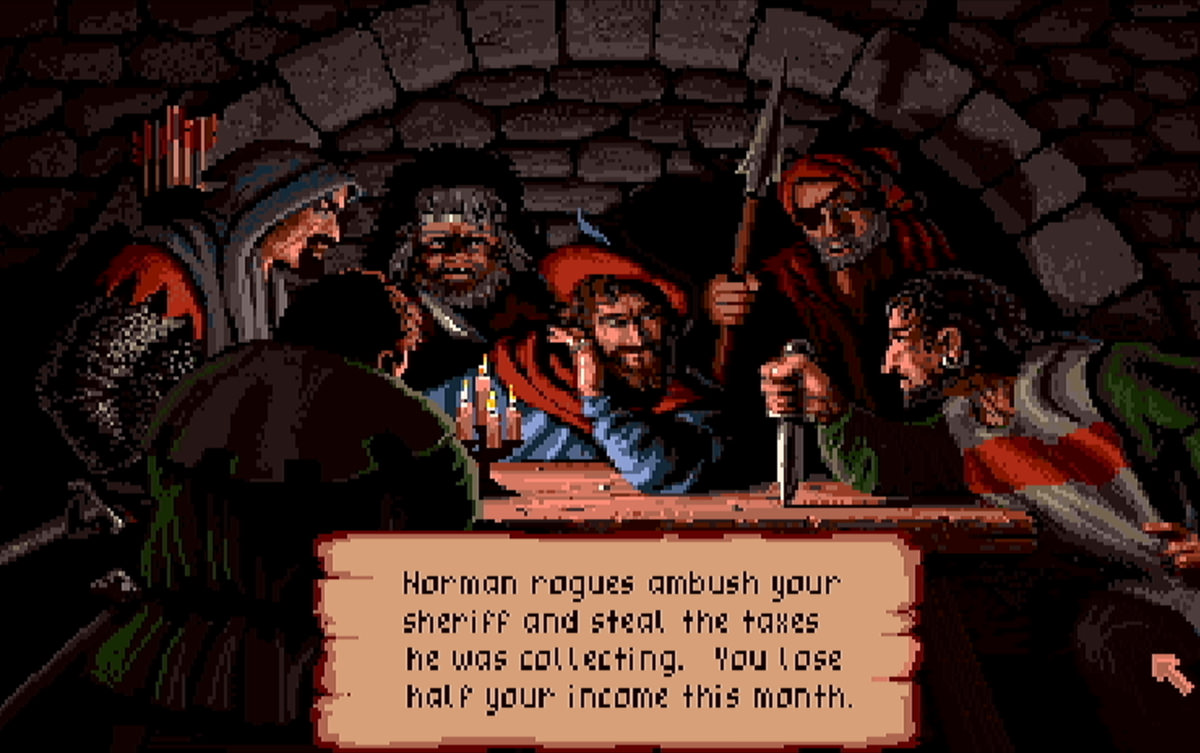
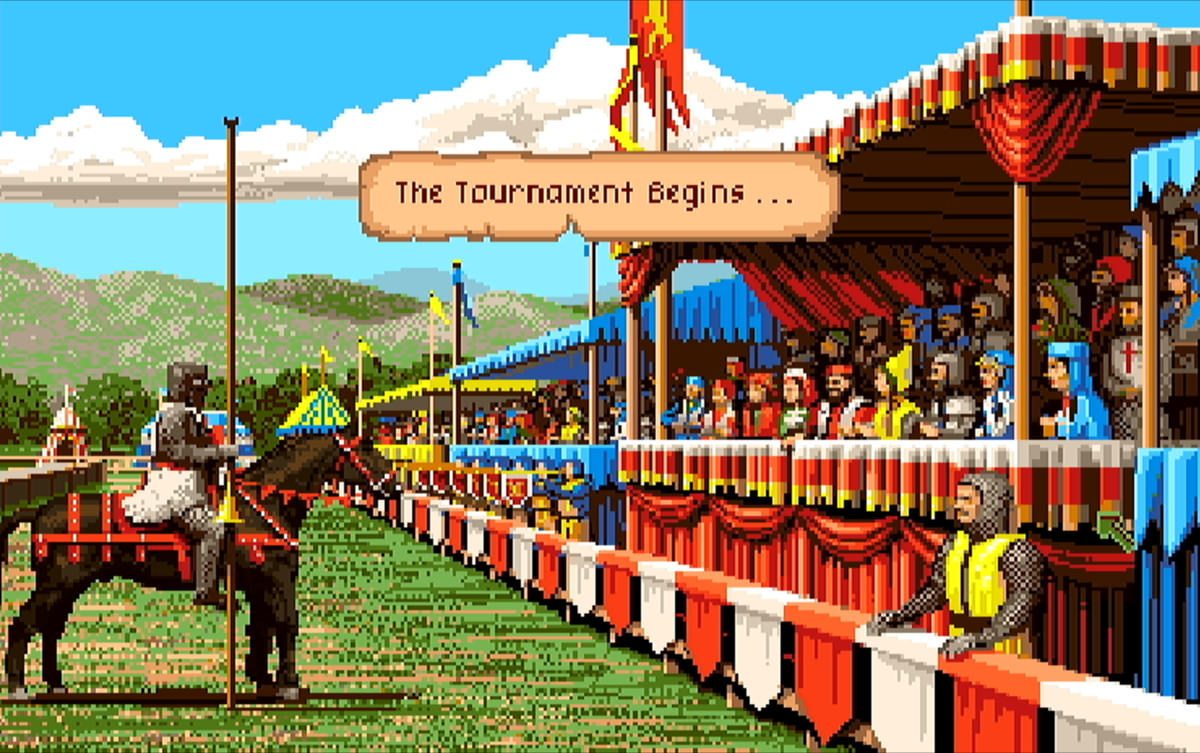
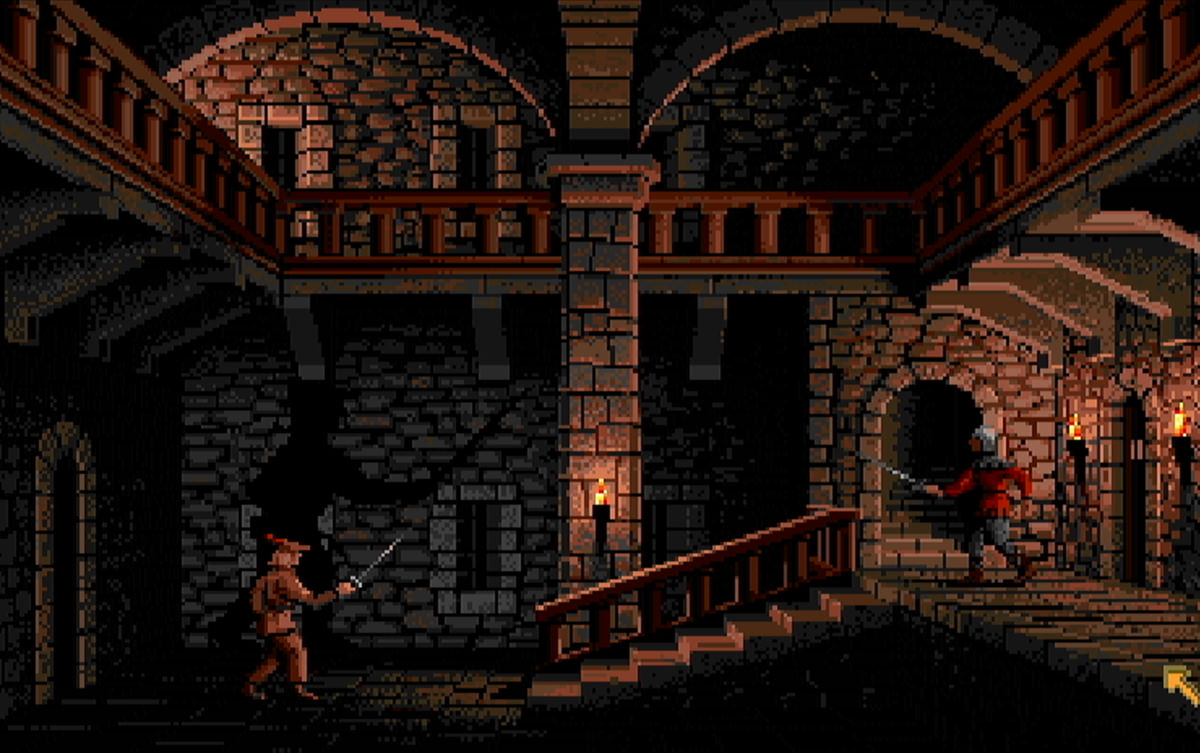
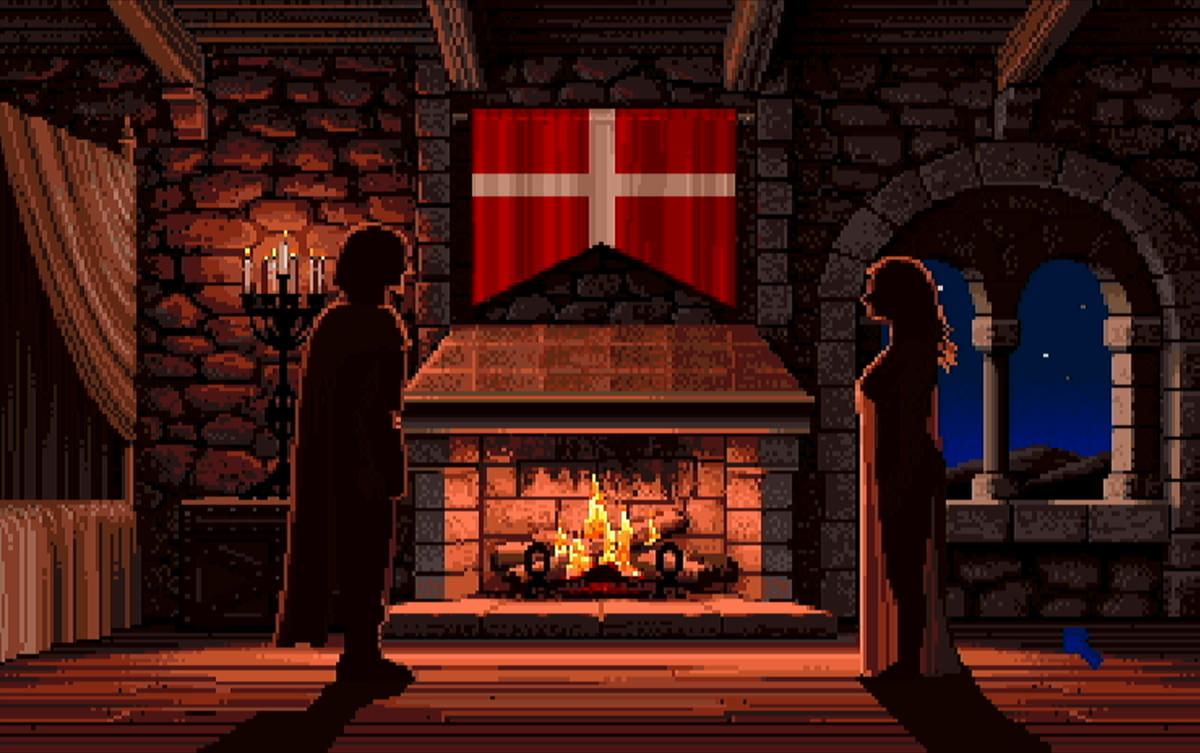
Tournaments are grand occasions, yet the jousting contest – the only event available – is notoriously difficult to win. If one discovers the trick to striking an opponent, it is even possible to win a territory. I preferred to compete only for prestige rather than risk losing my own lands through lack of skill. Maiden rescues, meanwhile, give the lord an opportunity to marry. Success triggers a romantic scene and adds the maiden’s portrait and name beside the character card. In practical terms, however, the spouse provides no advantage. Raids are events beyond the player’s control and may result in the loss of catapults and money. On the other hand, it is also possible to attempt a raid on a rival castle under cover of darkness.
At a Hectic Pace
The game progresses in turns. Once the player has made a move, the computer-controlled lords take theirs. A relentless struggle is fought over territories, and a newly conquered region can be lost to another lord in the very next round. I found that the most aggressive strategy worked best. Falling behind is not an option, nor is sitting back and waiting. The game also demands quick reflexes, as the pace is brisk and decisions cannot be pondered for long. If you hesitate, the game chooses on your behalf – though not necessarily unwisely.
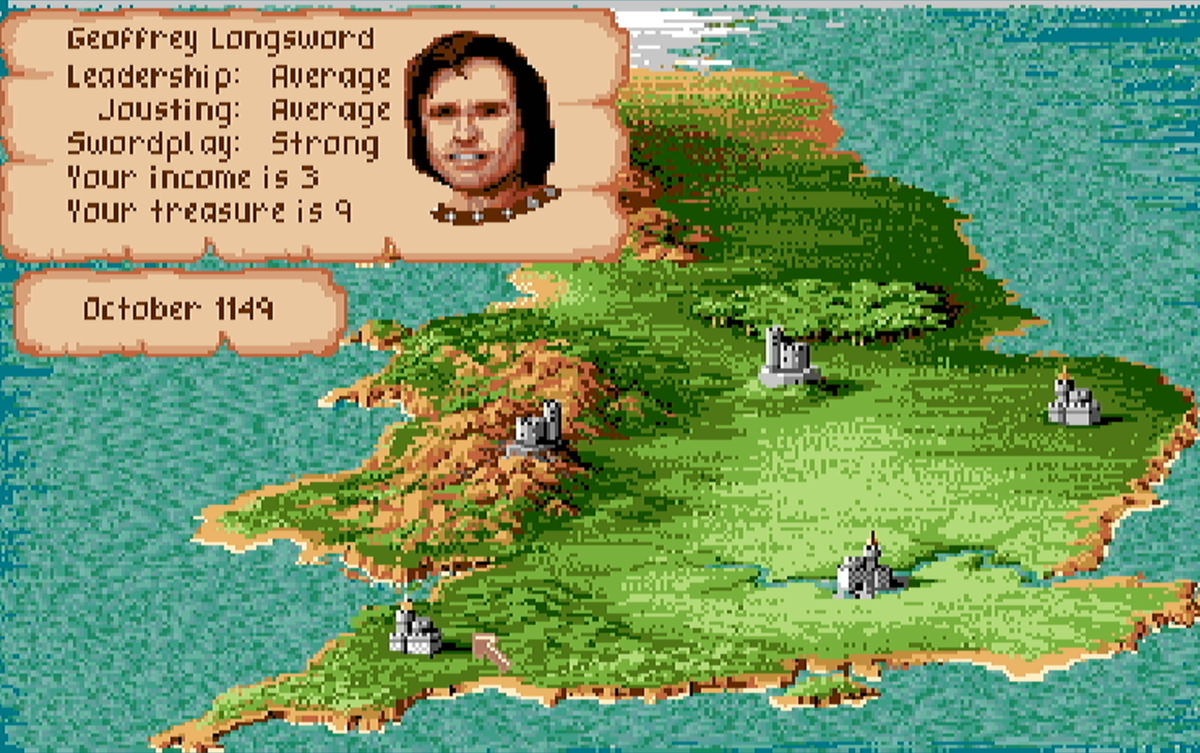
I found the speed of Defender of the Crown rather clumsy. Perhaps the short loading times were once regarded as proof of the Amiga’s speed and generous memory, but the abrupt, rapid-fire flow of events felt unpolished to me, almost unfinished. The game rushed forward like a demo. In my view, a strategy game should allow time to weigh alternatives rather than force decisions within a couple of seconds. Yet Defender of the Crown hurries the player along, as though the conquest of Britain absolutely had to be squeezed into less than half an hour.
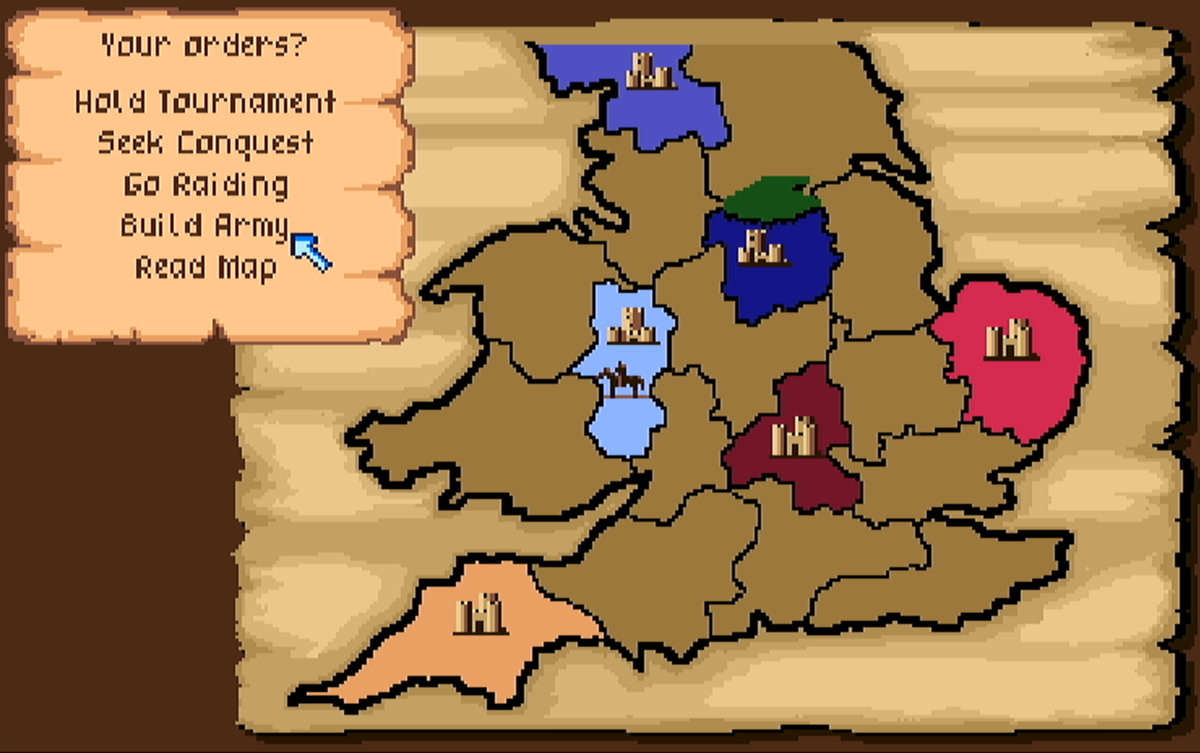
The impression of incompleteness is supported by developer interviews, though for a different reason. The original plans called for substantially more content and deeper strategy. Cinemaware, however, was under pressure to release the game quickly because funds were running low and the prevailing market wisdom was that the early bird catches the worm. The Amiga was a brand-new machine, and the excitement surrounding it had to be exploited. Although the game was therefore released in a reduced form, it still generated enormous interest, sold well and secured its place in gaming legend.
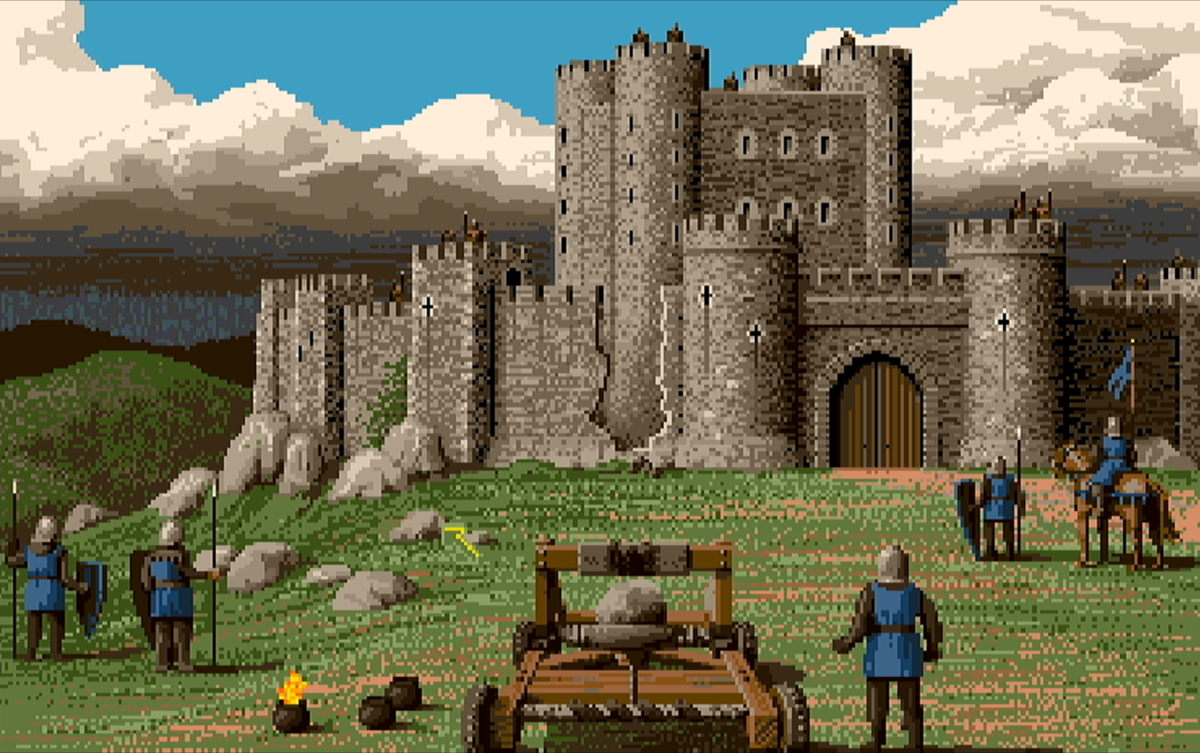
Atmosphere is one of Defender of the Crown’s greatest strengths, perhaps its greatest. Yet the game never lingers over its moments. Even tournaments rush by despite the obvious effort invested in their visuals, with multiple illustrated scenes appearing in succession. Fanfare-like music accompanies the action, but the saying “brevity is the soul of wit” applies here too. Perhaps this relentless pace is why the notion persists that the game deserves a new and definitive version.
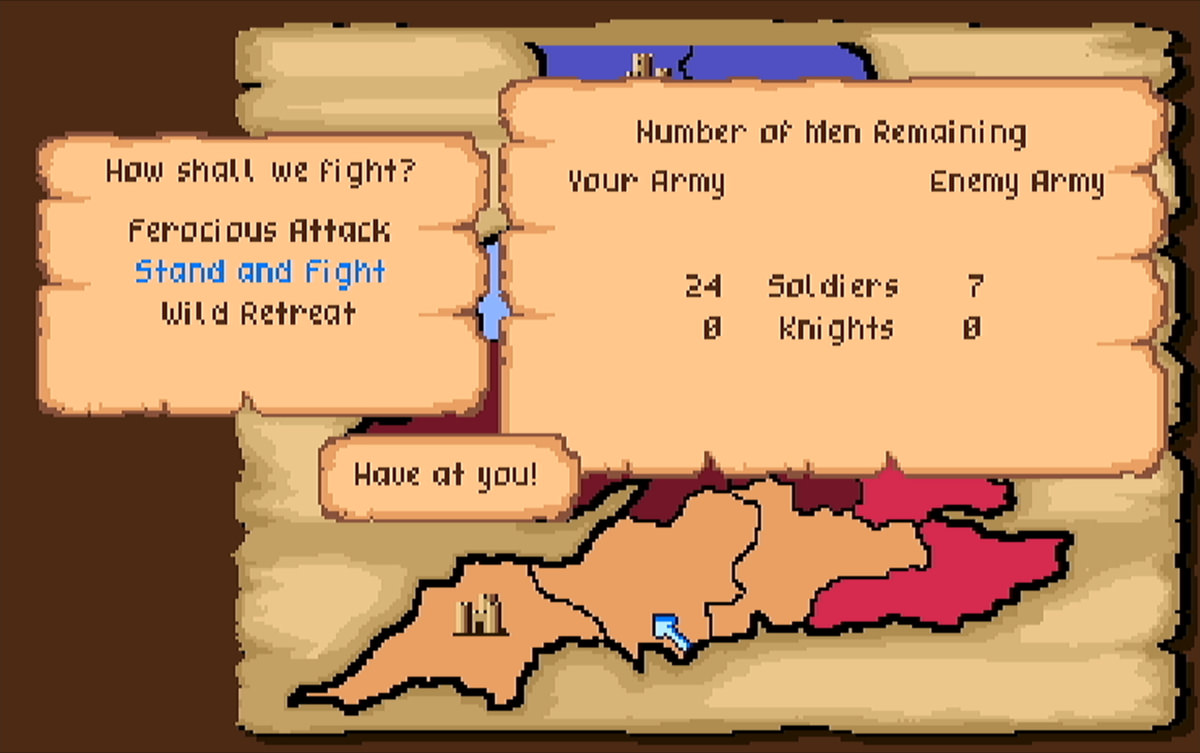
The combination of graphics and music nevertheless works well in Defender of the Crown. It felt exciting to engage in swordplay under cover of darkness, and attempts to capture enemy castles are likewise accompanied by atmospheric music and imagery. The graphics have often been described as painterly and the music as symphonic. It is still pixel art and four-channel computer music, but the leap beyond the 8-bit era is unmistakable. The pages of history seemed to rustle, and players began imagining what the games of the future might become.
Verdict
The original Amiga version of Defender of the Crown is a formulaic strategy game driven largely by randomness, drawing upon the medieval imagery of Ivanhoe by Walter Scott, complete with Robin Hood and all the familiar trappings. Historical scenes sweep by at a frantic pace while fanfares ring out.
The game resembles a mechanical toy. Its exterior is astonishing, yet beneath the surface the gears are comparatively simple. Defender of the Crown is charming and attractive, but closer inspection reveals an experience that feels regrettably unfinished and somewhat abrupt. Nevertheless, everything works.
I award my experience with the game an overall score of 60 out of 100.
Availability
The original Amiga version of Defender of the Crown can be played both on genuine Amiga hardware and through emulators. Lemon Amiga lists websites under “Possible Download Sites” where the game files may be found. The Amiga version is also included in the Windows-compatible Cinemaware Anthology.