
Darkmere: The Nightmare's Begun (1994)
Darkmere is an interesting Amiga game that somehow feels both ahead of its time and already outdated. Although it was released in 1994, it resembles the experimental hybrid games of the late 1980s more than the direction PC gaming was moving towards in the mid-1990s. It combines adventure, action and dungeon-crawling role-playing elements inside a large isometric world, and its ambitions are obvious throughout. At the same time, 3D action adventures on PC were already beginning to leave games like this behind. In that sense, Darkmere almost feels as though it arrived too late. The game was entirely new to me, as I never encountered it during my own Amiga years in the 1990s. Playing it today was both fascinating and impressive, though also undeniably clumsy at times.
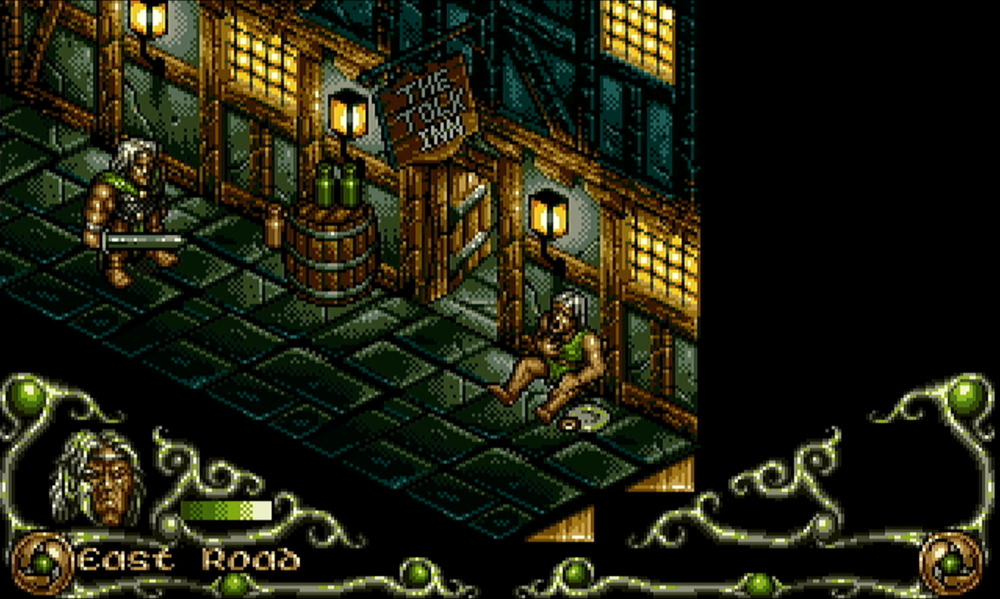
Darkmere was designed by the British developer Mark K. Jones, who was also heavily responsible for the graphics. Tolkien's influence can clearly be seen in the fantasy world. There is a sword resembling Sting that glows green when orcs are nearby, as well as an inn called The Tolk Inn. The story itself is nevertheless very much its own creation.
Jones reportedly spent a couple of years planning Darkmere before development support and a publisher were finally secured through the short-lived Zero Hour Software and Core Design. Production suffered delays, however, and the final game did not entirely match Jones's original vision. Even so, Darkmere pushes the Amiga hardware surprisingly hard. At one stage the developers even considered adding speech, but there simply was not enough memory available.
The story also leaves room for continuation. A planned sequel eventually became the standalone game Dragonstone, which appeared later the same year. Jones is also known for several other dark fantasy games from the 1980s and 1990s.
The Prince's Mission
The player controls Prince Ebyrn, son of the elf king Gildorn, a famous dragon slayer. Ebyrn grew up without his mother, who vanished shortly after his birth. Her disappearance shattered Gildorn, and he gradually neglected his kingdom. Orcs, dragons and brigands have overrun the land, while a sinister force known as the darkmere has spread everywhere. People constantly disappear and die.
As Gildorn approaches death himself, he gives his son a magic sword and an ultimate task: Ebyrn must locate and destroy the source from which the evil originates.
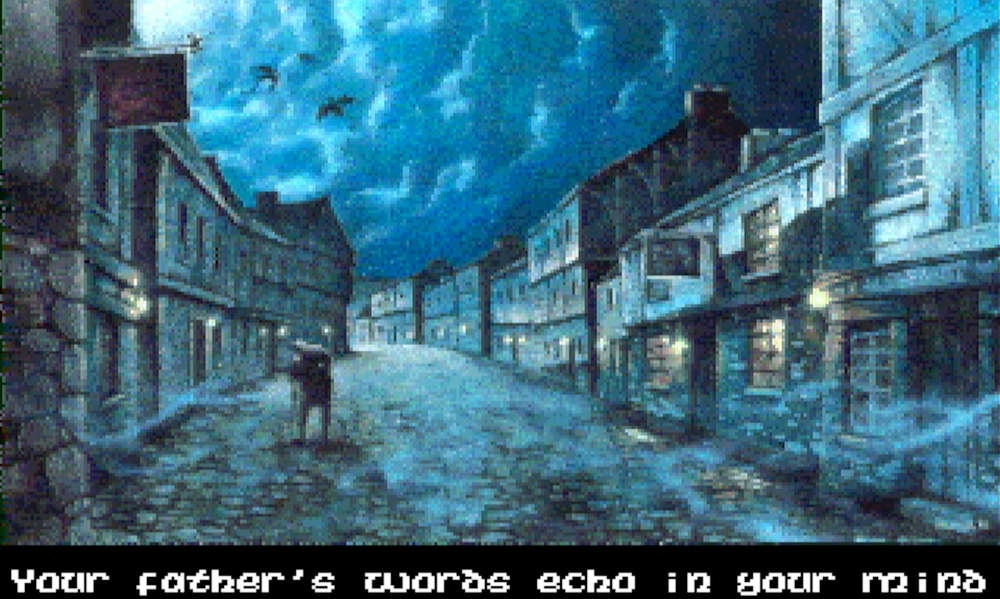
Ebyrn materialises in the city in a nicely animated sequence. By exploring his surroundings, talking to NPCs, collecting items and completing smaller tasks, the player gradually uncovers clues about the origin of the evil. Progression eventually leads from the city into the forest and finally into the dungeon beneath. Hostile creatures regularly interrupt the wandering, forcing Ebyrn either to fight with his sword or flee.
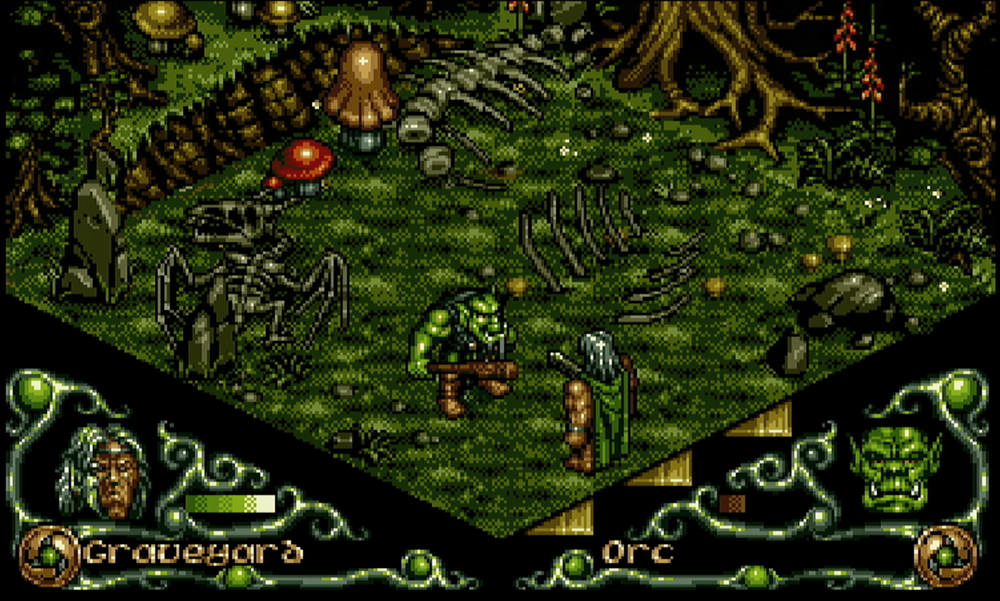
From the start it is clear that Darkmere aims for a strong audiovisual impression. The pixel art is rich and detailed, while the sound design places particular emphasis on ambient soundscapes and effects. Dramatic music accompanies the opening, but elsewhere the game relies on environmental audio. Wind whistles through half-deserted streets, birds sing in the forest, and some sounds even grow louder or quieter depending on the player's position.
Labyrinthine Worlds
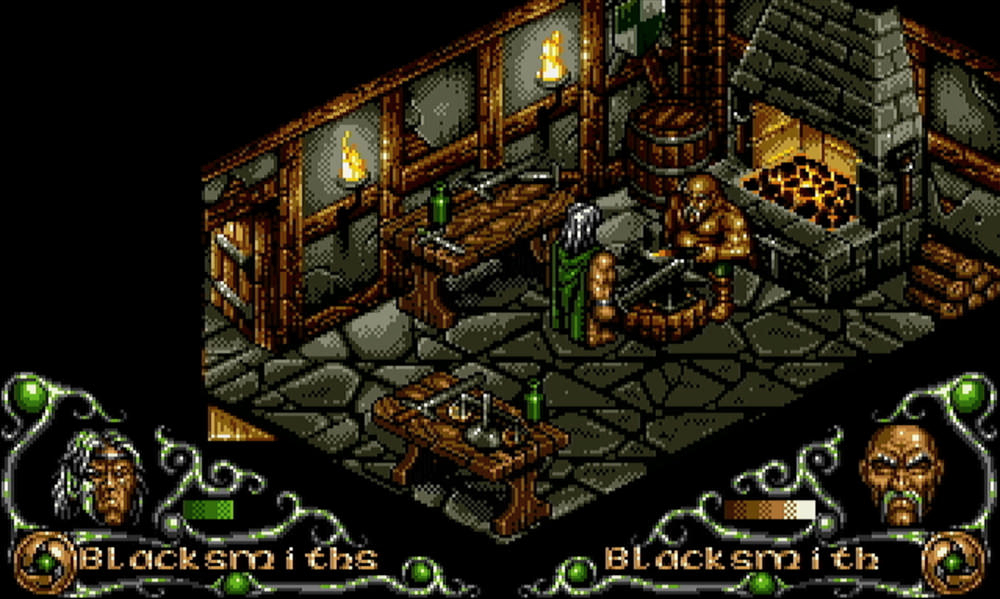
Darkmere contains three major environments: the city, the forest and the dungeon. Together they create a world that feels enormous and at times rather disorienting, especially because many graphical elements repeat constantly. I initially tried to play without external maps, since the game itself provides none, but eventually gave up and turned to the fan-made maps available online. Without them, exploration becomes unnecessarily time-consuming.
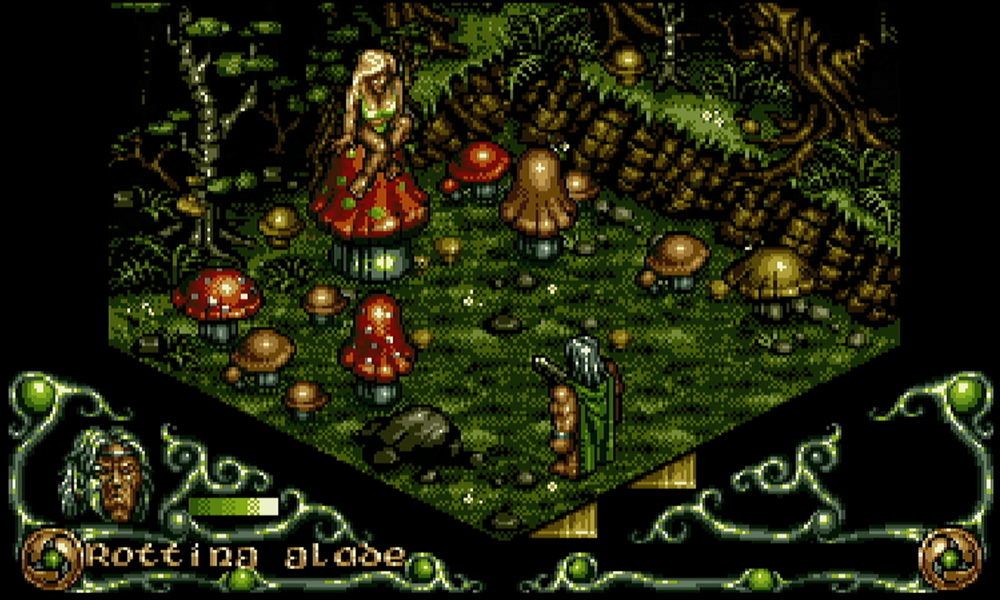
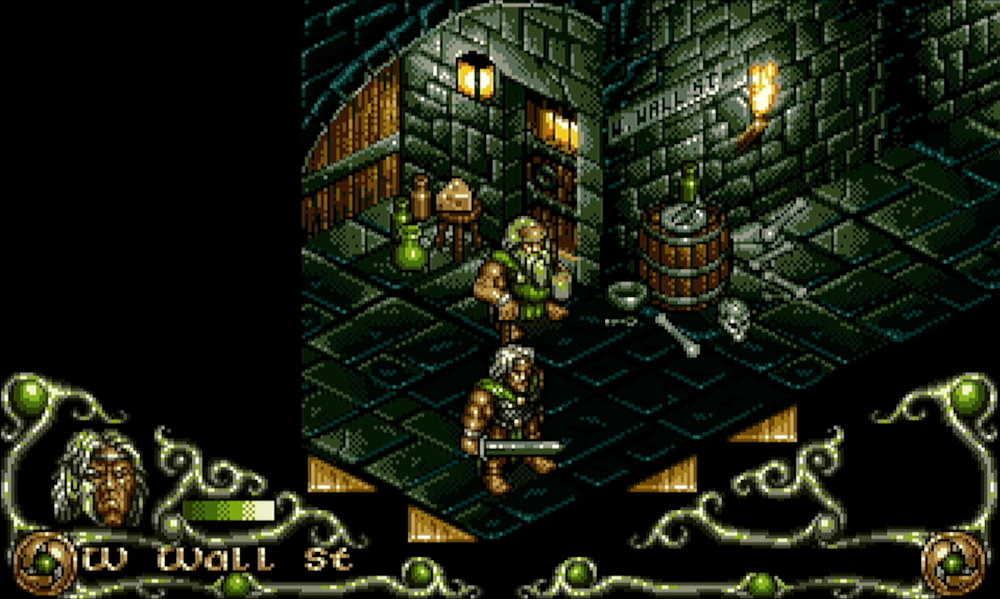
The three locations nevertheless create a convincing sense of progression. The city consists of named stone streets and numbered buildings with multiple floors and rooms. The forest is flatter and more open, though still maze-like. The dungeon, meanwhile, is the most maze-like area of them all. Locations are named, but the same names repeat frequently, and genuinely memorable places are relatively rare.
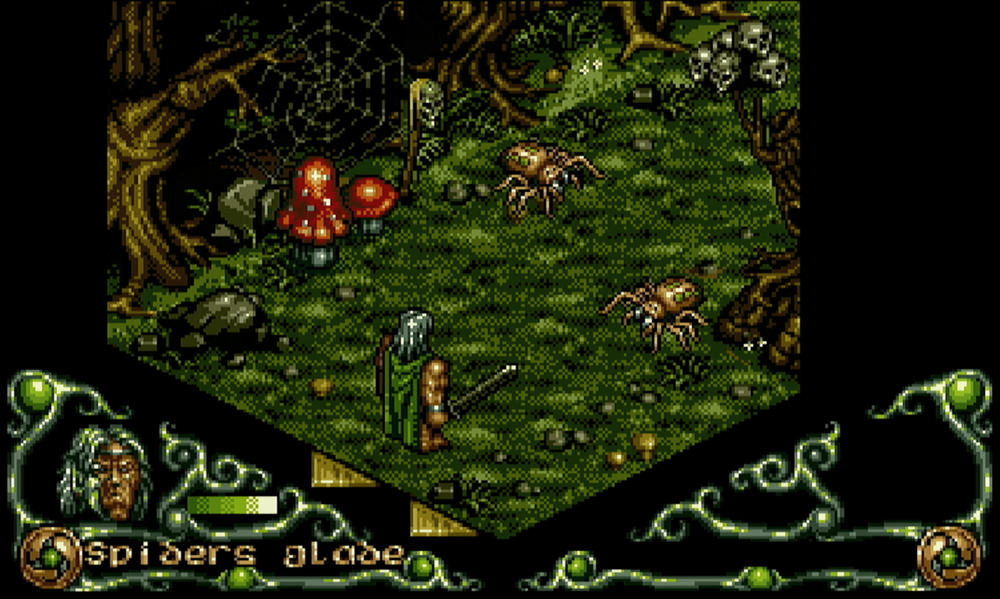
The overall visual style is very dark and macabre. Skeletons and remains are scattered throughout the world. At times the atmosphere becomes unintentionally strange, since houses still appear inhabited — fires burn in fireplaces and meals sit on tables — despite their owners having apparently died long ago.
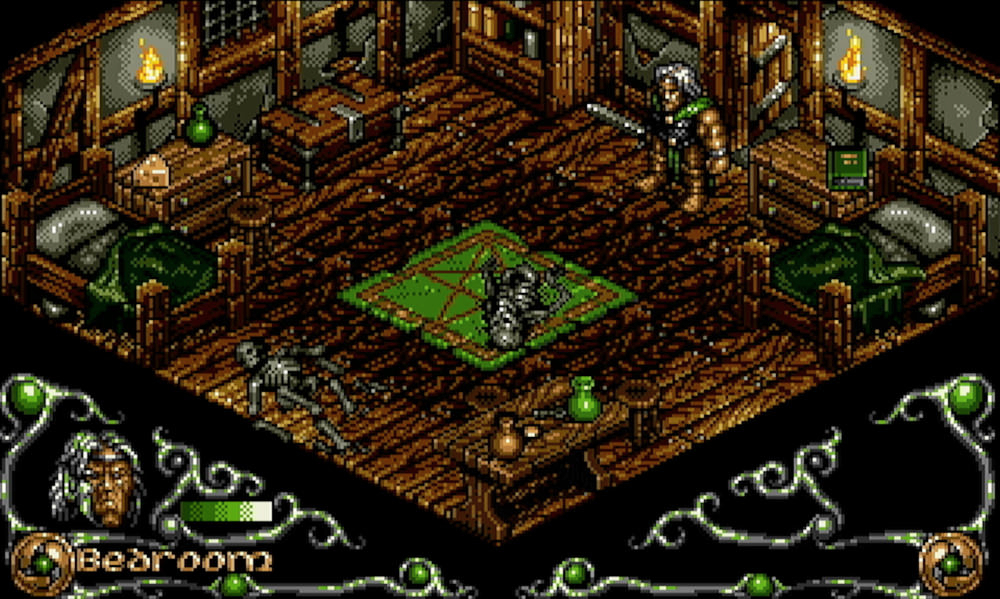
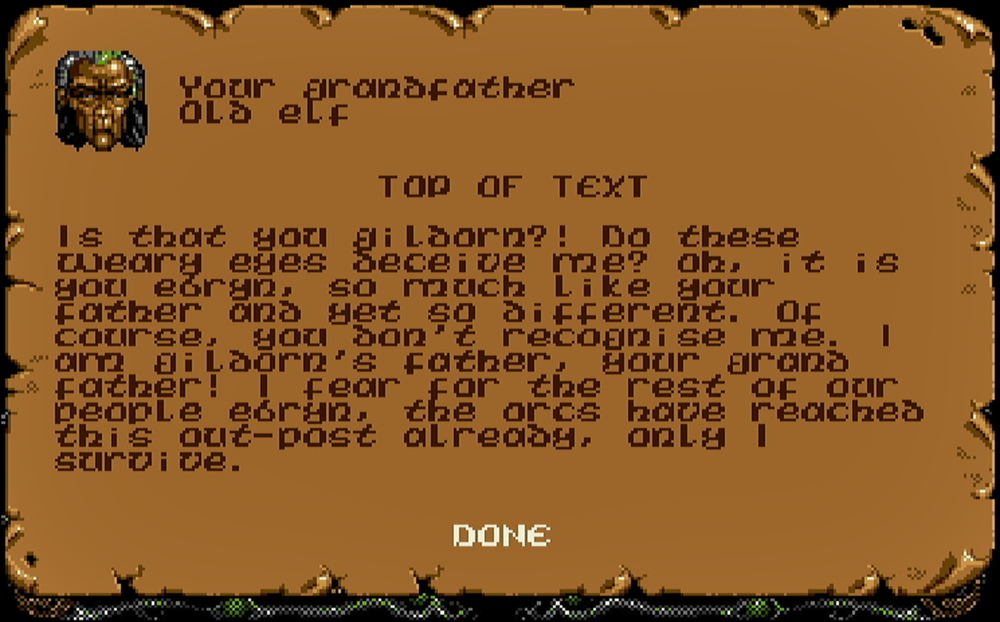
The forest ended up being my favourite environment. Its brighter colours and fairy-tale elements — including nymphs and a unicorn — give the game a welcome sense of wonder. It is also where Ebyrn encounters both his grandfather and the mage Malthar, one of the game's most important characters.
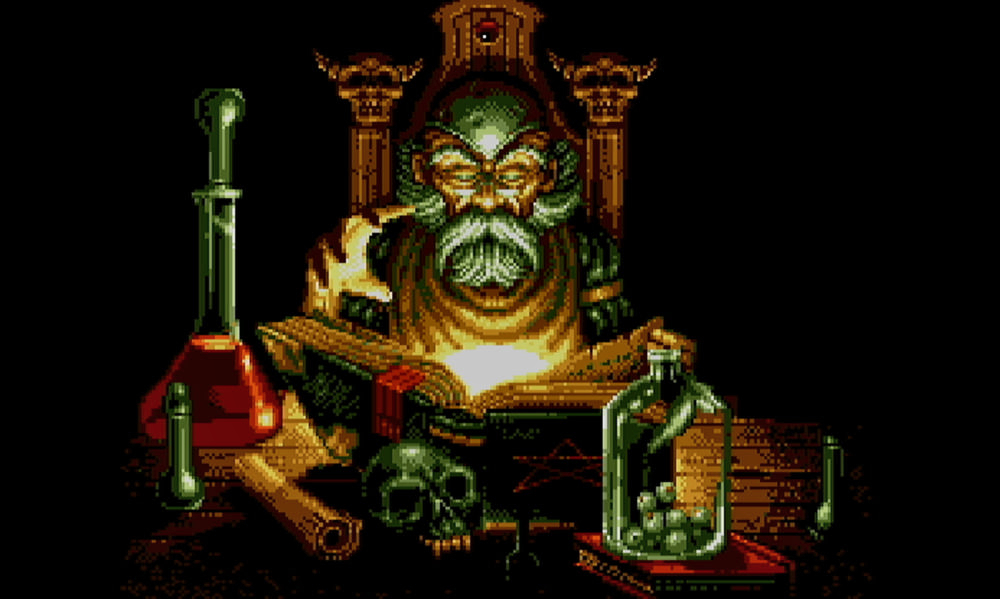
The Art and Pain of Combat
Ebyrn fights using only a sword, which has four different attacks or stances: a forward strike, slashes from both directions and a defensive horizontal block. In practice, combat mostly consists of awkward repetitive swinging. Enemy variety at least helps somewhat. The player faces orcs, skeletons, giants, spiders, dragons and rats, with the rats being the easiest and flying dragons particularly troublesome.
Ironically, my worst experience involved the rats. I encountered a bug where two of them trapped me in a corner so completely that I could neither attack nor escape to another screen. At that point I had no choice but to reload an earlier save.
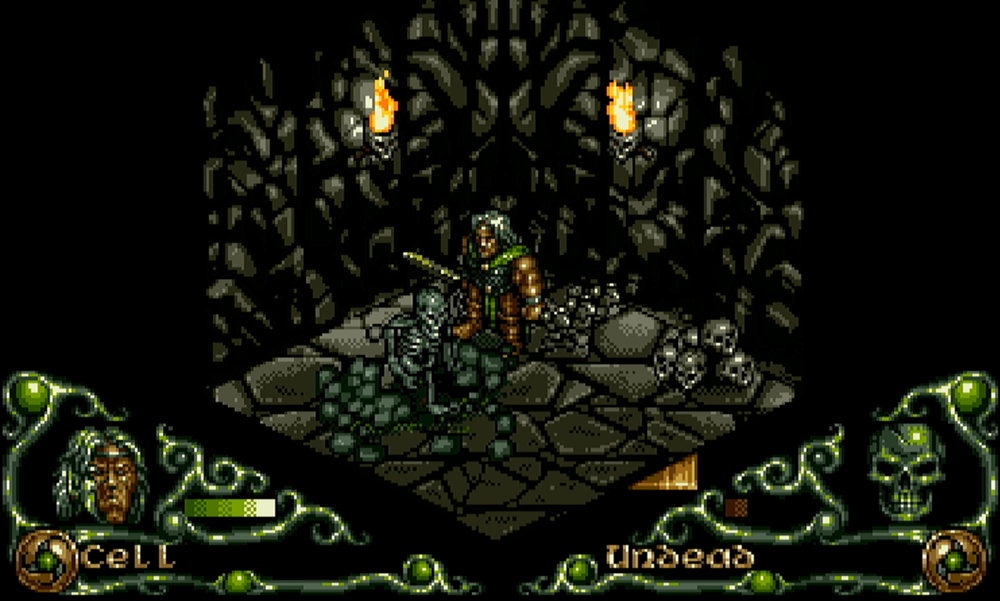
Darkmere is not really a role-playing game in the traditional sense, as the player character never develops statistically. Health can nevertheless be lost in combat and restored with food and drink. There are several different potions in the game. Some of them are useful — such as the strength potion, invisibility potion and time reverse potion — while others remain mysterious unless the player experiments.
I eventually gave in and selected invulnerability from a cracked version of the game, and honestly I did not regret it. Without it, survival would have required constant saving and much greater patience with the combat system. I would not actually recommend the cracked version, however, because it introduced several game-breaking bugs in addition to the infamous rat incident. I strongly suspect the original release was more stable.
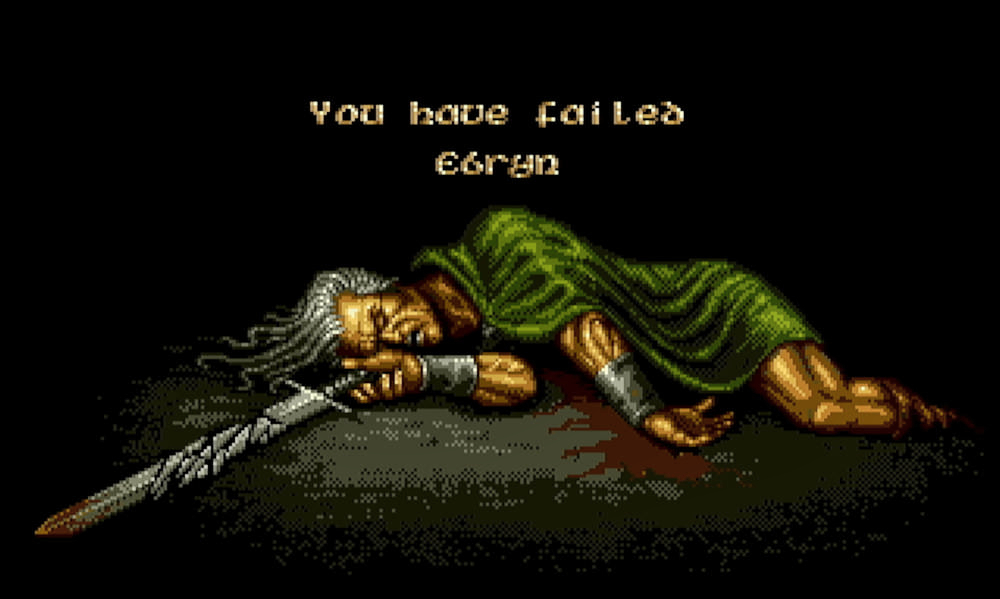
Saving works through the use of time reverse potions, which are limited in number throughout the game world. Since I played with my Mini Amiga, I mostly relied on emulator save states instead.
The Tyranny of Menus
I would not actually describe Darkmere as difficult. Exhausting is probably the better word. Much of this feeling comes from the text-heavy menu system through which many basic actions are performed. Opening menus constantly slows the pace, and every transition between screens introduces another small delay.
Over time, however, the movements began to settle into muscle memory and even my own breathing gradually adapted to Darkmere's slower flow. It is worth noting that players criticised these menus already back in the 1990s, so this is not simply a modern reaction.
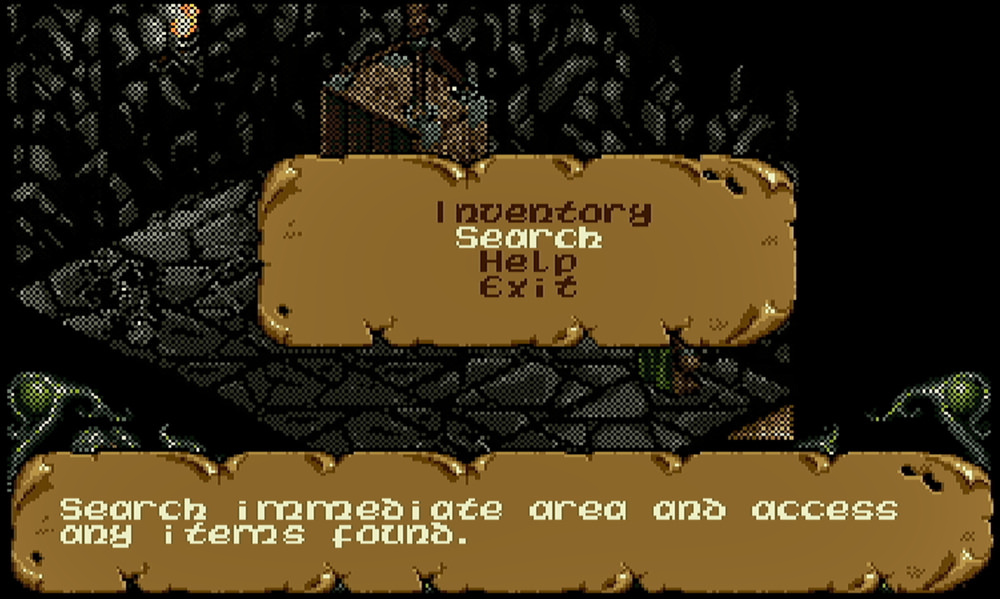
Darkmere was designed for joystick controls, as most action-oriented Amiga games were. I played it successfully with the console-style controller included with the Mini Amiga. In practice, only movement and a single button are required.
The menu system handles conversations, inventory management and sensory actions such as listening or smelling. Eventually the player develops routines: every new room becomes an excuse to open the menu and select “take” in order to grab whatever items might be hidden nearby. This becomes especially important in the dungeon's prison section, where important keys are nearly invisible against the floor graphics.
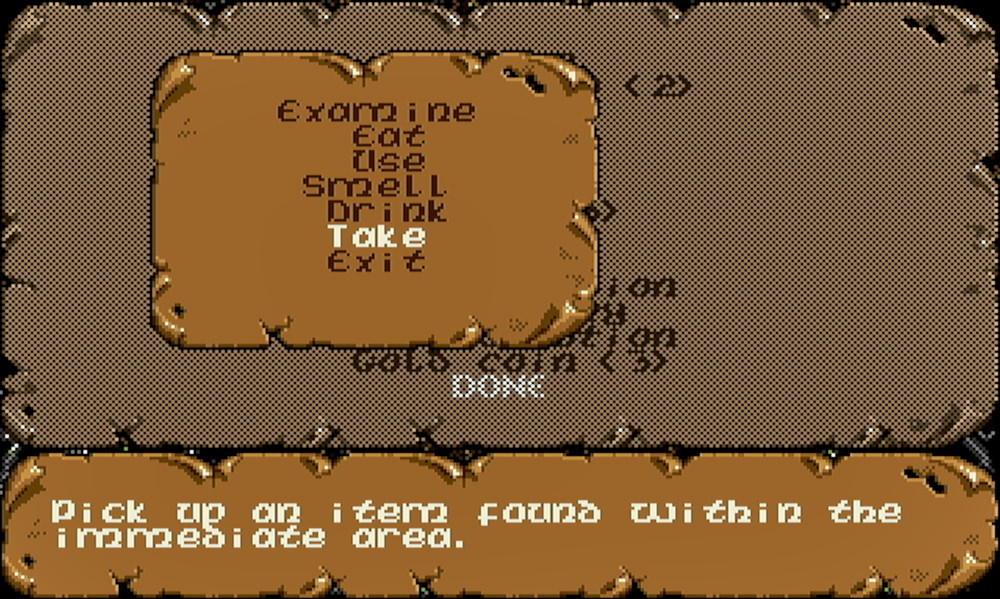
The game is at least considerate when it comes to keys. Once an important key has been identified, Darkmere automatically offers it in the correct location instead of forcing the player to scroll through the inventory.
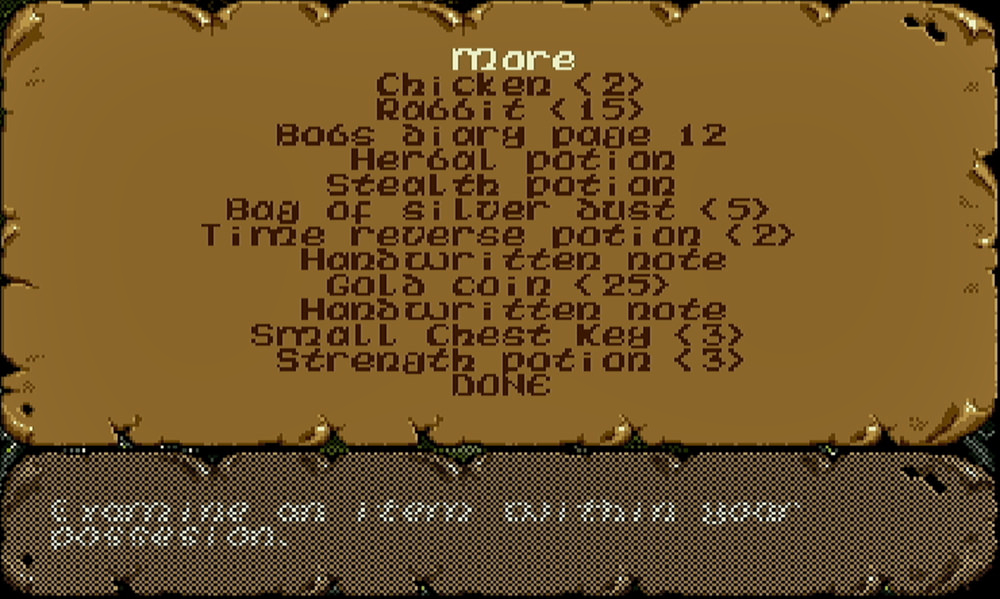
My inventory became absurdly large. At one point I discovered a “bottomless sack”, which effectively encouraged unlimited hoarding. The text-based inventory system ultimately makes sense, though, since a fully visual equivalent would probably have been impossible on the hardware.
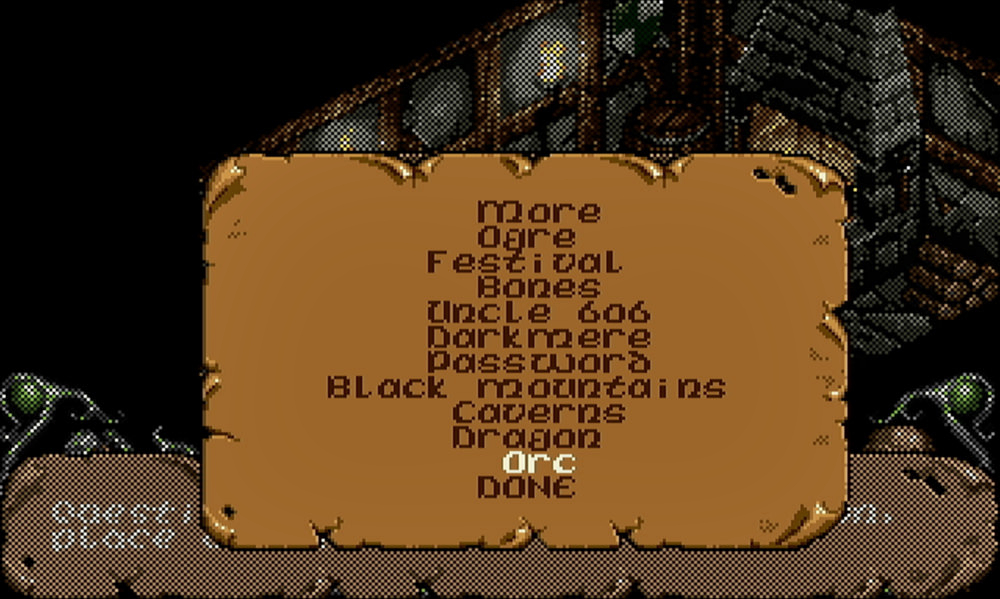
Conversations with NPCs are equally important. To speak to a character, you need to select "question" which opens a topic-based dialogue menu. New discussions may gradually unlock entirely new subjects. This gives the player reason to revisit earlier NPCs later in the game.
Verdict
Darkmere turned out to be a genuinely fascinating discovery. Historically, it stands as an early example of action-adventure genre experimentation during the transition between the late 1980s and early 1990s. Not everything had yet become refined, and the hardware limitations are obvious throughout, but the game's ambitions remain impressive. Its isometric pixel graphics and hybrid structure place it alongside other Amiga fantasy games from the same era, including Cadaver (1990), The Immortal (1990) and Heimdall (1991).
The dark story, effective atmosphere and striking audiovisual presentation carried me through the entire ten-hour experience despite the bugs, awkward combat and exhausting menu systems. The game gradually stopped frustrating me and instead pulled me into its peculiar rhythm. The smaller side tasks encouraged exploration, and I especially liked the game's fairy-tale qualities. Even so, I kept wishing for slightly more elegance. The interface and gameplay systems often feel rough, and that ultimately prevents Darkmere from becoming truly great.
I give my overall experience with the game 71 points out of 100.
Availability
Darkmere can be played either on original Amiga hardware or through emulation. The game files are available from several different sites — the Lemon Amiga page includes a list of “Possible Download Sites”. I recommend using the lha version, since the adf release requires constant disk swapping. It is also wise to save frequently because bugs can occasionally break progress.