
Mystery Case Files: Prime Suspects (2006)

I continue from the previous post by returning to the early entries of the Mystery Case Files series. Prime Suspects followed the commercially successful Huntsville in less than half a year in 2006. It closely resembles its predecessor, though some development is clearly visible. Prime Suspects is longer, the mini-game-like crime computer now produces three different puzzle types, and the searching introduces a new flashlight/X-ray variation. The game managed to wear me down, though not to the point of outright boredom, which may simply have been due to my not taking a long enough break after Huntsville.
Prime Suspects is the second entry in the Mystery Case Files series and was developed by Big Fish Games’ own internal studio, with Adrian Woods as designer. The player investigates a diamond theft set in a fictional London, giving the game a distinct British flavour. The language is curious and, at least for me, somewhat demanding in terms of vocabulary and idioms, almost slang-like, though this had no real impact on gameplay. Prime Suspects features 20 suspects who must be cleared or placed among the main suspects. Compared to Huntsville, the characters are developed a little further. In Huntsville, briefings present individual crimes, whereas Prime Suspects introduces multiple suspects connected to the same case.
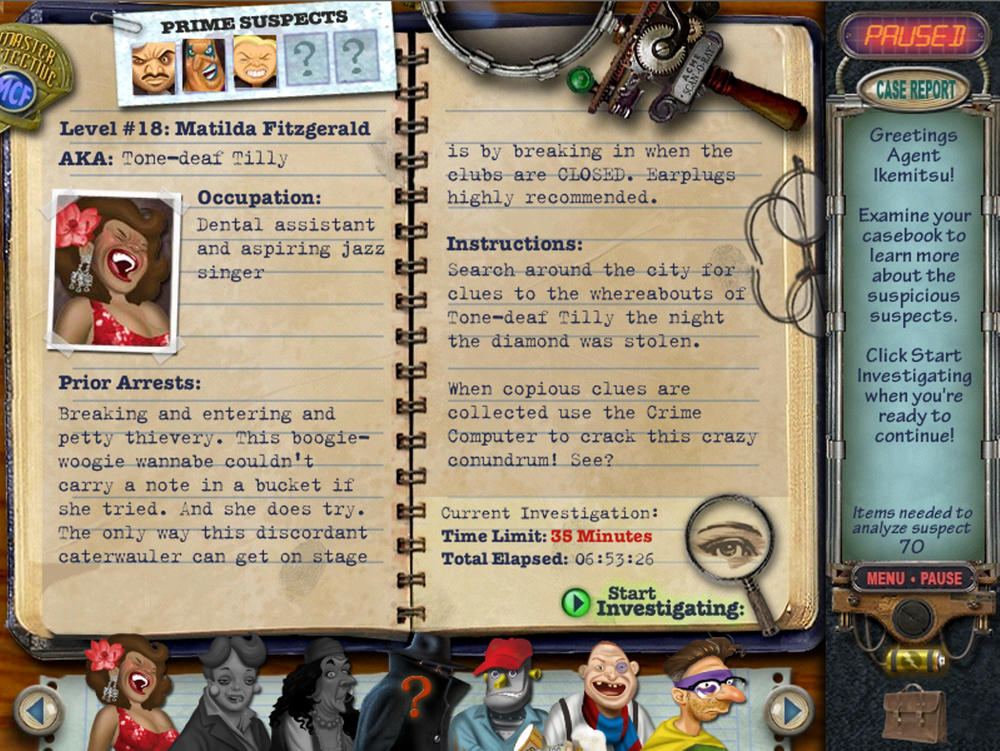
Searching in light and low light
As in Huntsville, the briefing is followed directly by the map view and the search for evidence. Each suspect has their own set of locations where items are sought either in their favour or against them. The evidence itself is largely arbitrary, and it is difficult to see how it meaningfully relates to the crime. The same locations are revisited frequently, often searching for items with the same names, though not always the same appearance.
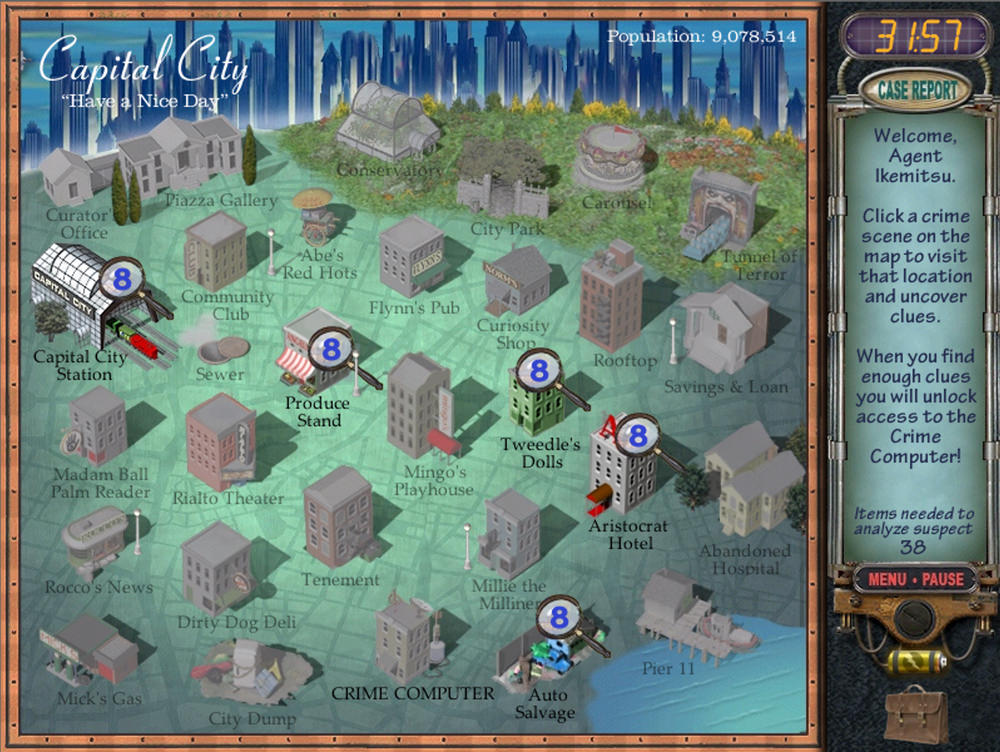
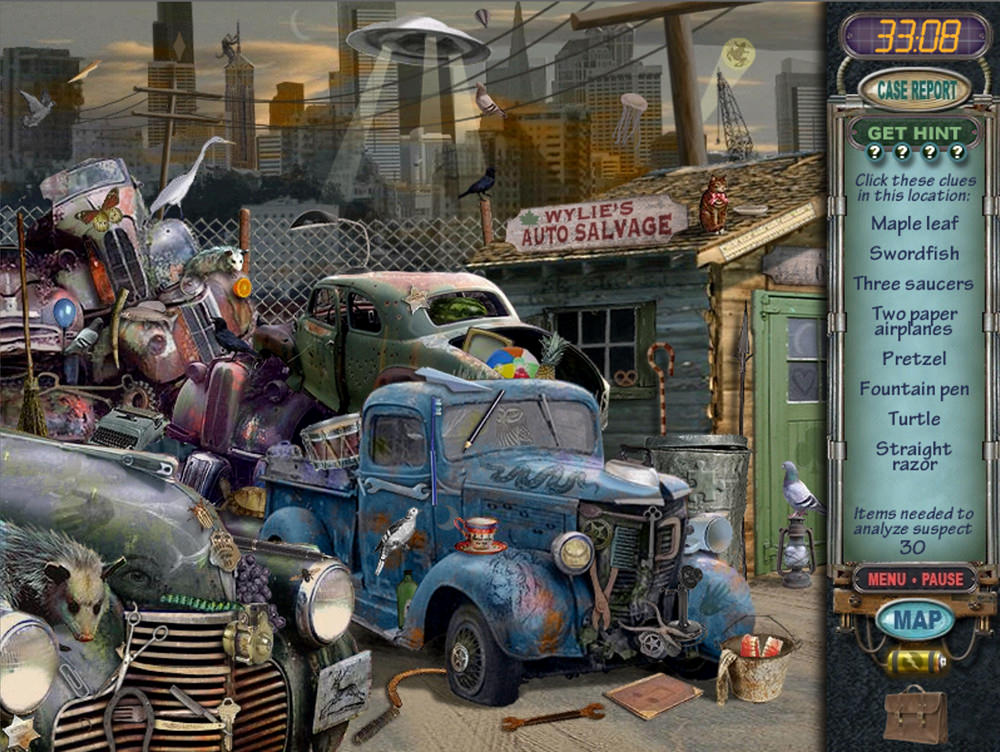
The challenge and satisfaction of finding objects form the core of Prime Suspects, as one would expect from a hidden object game. The slightly hazy graphics add an extra layer of difficulty, but never prevented me from recognising items. Locations differ clearly from one another and make use of varied soundscapes. The same music track plays throughout, which eventually became grating over a total playtime of more than nine hours. The music itself is muffled and low-fi, though it does include appealing elements that contribute to a sense of mystery.
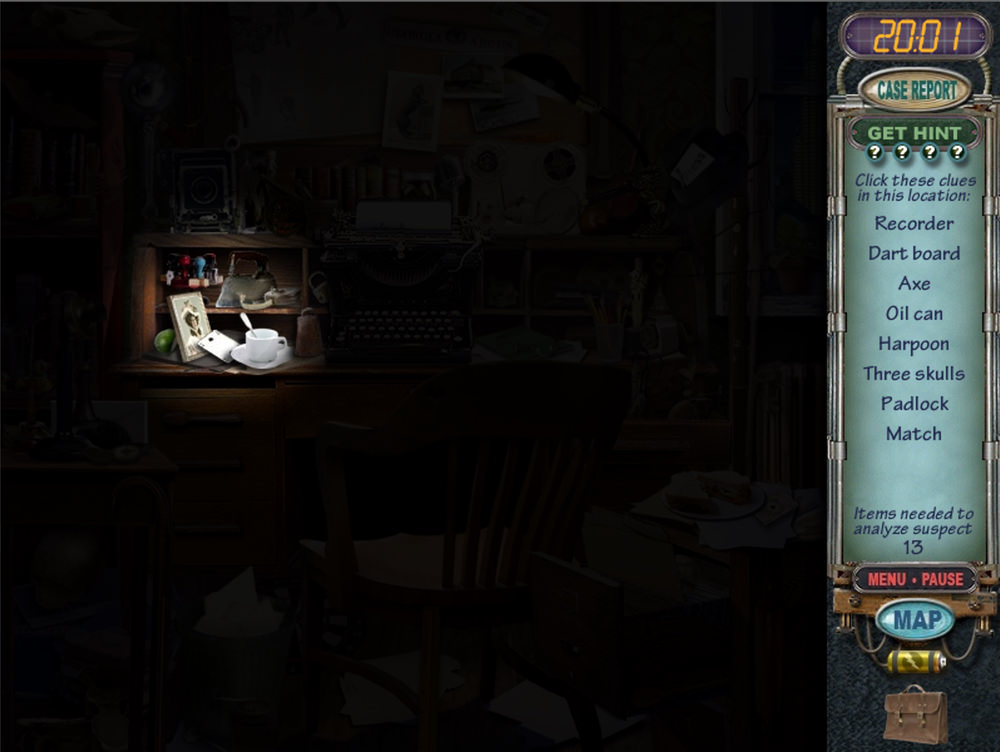
Prime Suspects is long rather than broad, as there is little variation in its mechanics. One notable addition introduces darkened locations where searching is done with a flashlight beam or via an X-ray-like device that reveals objects through walls. The flashlight/X-ray tool also requires maintenance, as a new battery must be found on each map, potentially anywhere among the available locations. My initial reaction to these sections was resistant, though in practice they were no more difficult than fully lit scenes. Whether this mechanic represents a meaningful improvement is debatable — personally, I did not enjoy it.
The crime computer, version 2
Prime Suspects also expands the crime computer segment. Alongside the familiar cube puzzle, a memory card game and a word grid have been added. The extra variety feels welcome, even if the structure remains rigid and highly formulaic.
The cube puzzle works exactly as in Huntsville. By arranging the pieces correctly, the player discovers where the suspect was at the time of the diamond theft. If no alibi is found, the suspect is placed among the main suspects examined at the end of the game.
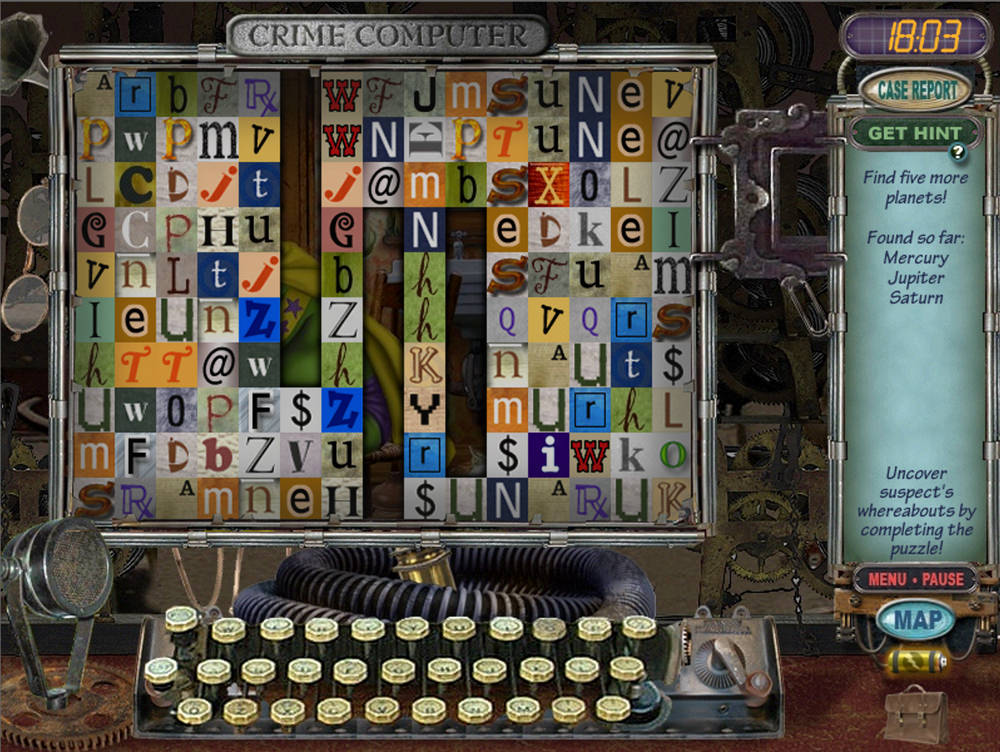
I enjoyed the word grid puzzle the most. Even players with a limited English vocabulary need not worry, as the words always belong to a single familiar category, such as planets or gemstones, and the grid itself is compact. I remember enjoying word puzzles especially in Madame Fate, the game that originally sparked my interest in the Mystery Case Files series and which I have previously covered on Samooja.
The memory card game is visually surprising and, due to its imagery, occasionally challenging. The cards use unedited photographs of unrelated subjects, and some images are deceptively similar. Practice helps. As the game progressed, I became steadily more efficient both in object hunting and in solving the crime computer’s puzzles.
Easy once you know it — and you do learn
Neither Huntsville nor Prime Suspects becomes more difficult as it progresses. Both maintain a consistent level of challenge throughout. Their structure reliably produces a sense of improvement. Although these are puzzle games, they do not challenge the player intellectually so much as reward learning through repetition. That is hardly a flaw. They are casual games with a low threshold for entry and minimal demands on commitment. Playing them allows the mind to drift free.
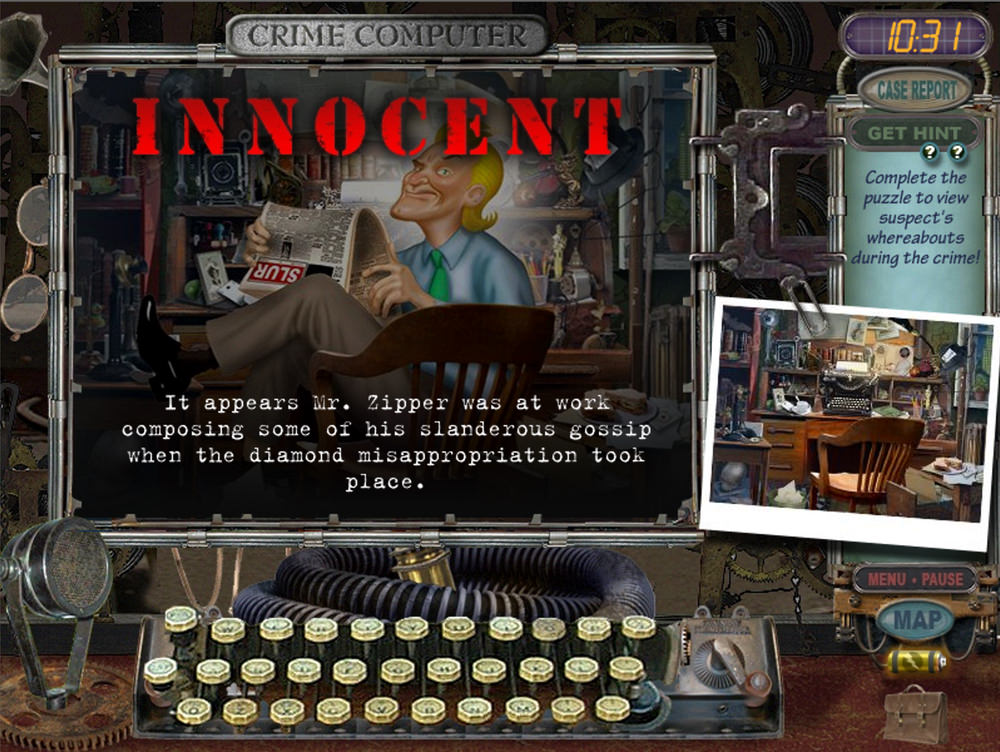
Prime Suspects places little strain on the intellect, emotions, or motor skills, apart from the occasionally pixel-precise clicking required to select objects. Even that only demands modest, focused concentration. Careful cursor control supports the game’s ability to detach the player from everyday reality in a simple, light, and distinctly casual way.
Verdict
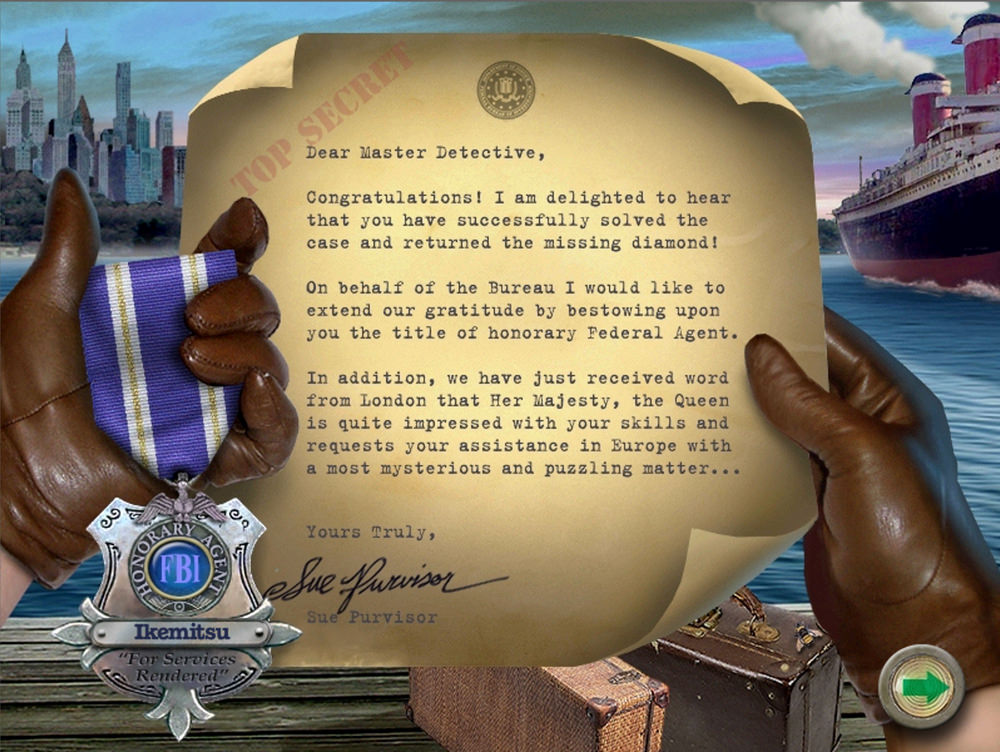
Although Prime Suspects is more developed than the first entry in the Mystery Case Files series, Huntsville, it did not give me greater enjoyment. A playtime exceeding nine hours took its toll, and I felt clear relief when the diamond thief was finally caught and the gem recovered. Ultimately, this repetition-driven game repeats itself too much, even recycling graphics from its predecessor. I cannot imagine replaying it, even knowing that the culprit would be different next time. That said, anyone choosing between Huntsville and Prime Suspects should opt for Prime Suspects, as it is the more developed and varied experience. It is best not to play them back to back. I rate my gameplay experience at 58/100.
Availability
Mystery Case Files: Prime Suspects is available for Windows and macOS computers, as well as for the Nintendo DS.