
The Cat Lady (2012)
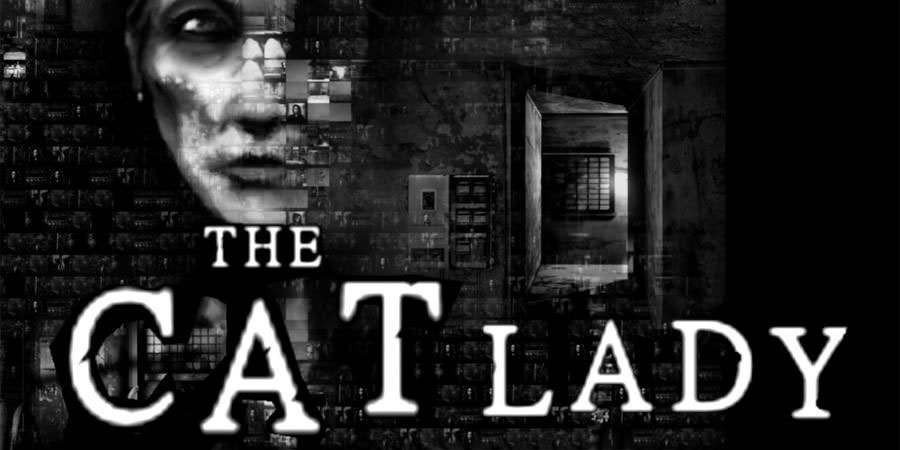
Released in December 2012, The Cat Lady is a horror-adventure exploring depression and suicidal thinking. Serial killers drive the narrative, and death is a constant presence. I found the experience sickening and unsettling, and could only play in short sessions. Many players, however, have described it as therapeutic.
I continued my personal horror-game challenge after The Black Mirror, this time with something entirely different — an indie title built around ugliness as aesthetic, exposing its characters and subject matter without mercy. It was designed by Remigiusz Michalski, a Polish-born developer living in England; his earlier and debut work, Downfall, also examined mental health through horror. This is not a shallow spectacle of “madness” — the tone is serious and grounded. In an interview, Michalski discusses The Cat Lady and how it connects to his own life.
On both sides of death
The player controls Susan Ashworth, a woman in her early forties whose only companions are cats. Exhausted by life, she attempts suicide by overdose. Yet death brings no release — she is forced back into life, this time unable to die. No matter what happens, she wakes again — a true nightmare for someone who only wishes to disappear.
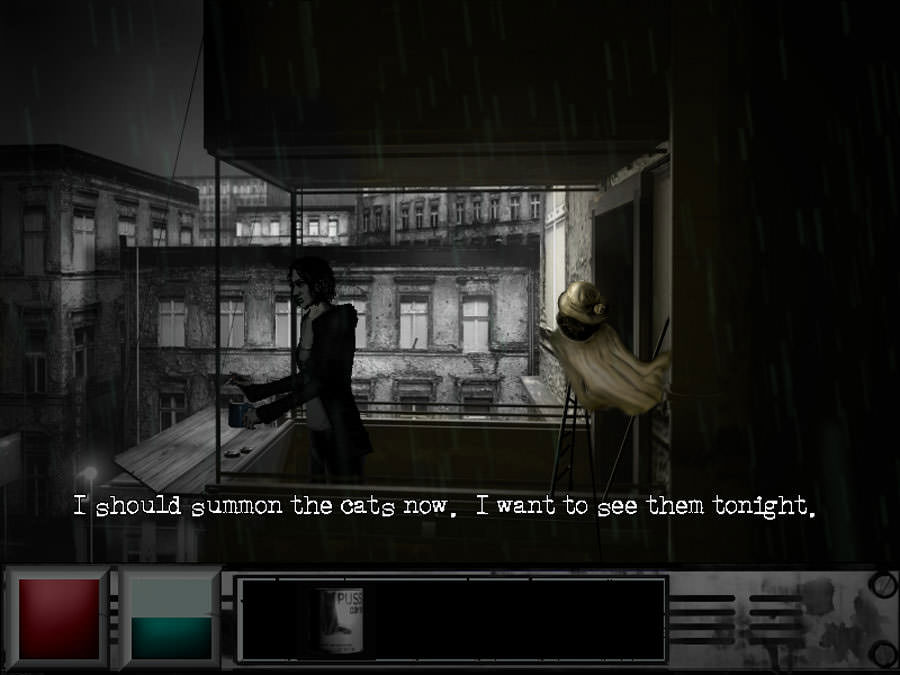
The game shifts across layers of reality, with some sections unfolding as narrative flashbacks. Movement between worlds is natural, whether through sedation, unconsciousness, dreams, or death. I never found the structure confusing; the pieces fit together well. This narrative variation is, to me, one of The Cat Lady’s greatest strengths.
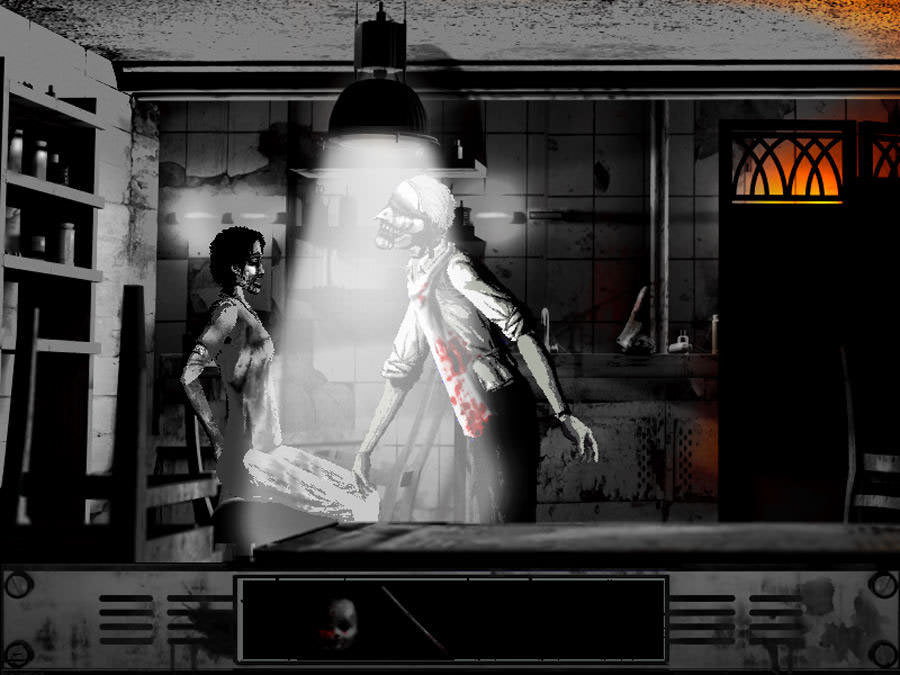
The Queen of Maggots assigns Susan a mission: eliminate five “parasites” — only then can she regain mortality. These parasites turn out to be serial killers. That disappointed me; I had hoped for something less conventional and more conceptually daring. In reality there are other forces and people who drain others dry, often far more common than killers — invisible, internal, hard to recognise. Still, murder suits the game’s tone: serial killers awaken in Susan a reason to live and defend the lives of others, granting life the value she once denied it.
Gameplay and puzzles
The game is played entirely with the keyboard — simple and clear. Arrow keys move and select, Enter confirms, Space speeds through text. Movement, interaction, observing, inventory use, and dialogue all run through this scheme.
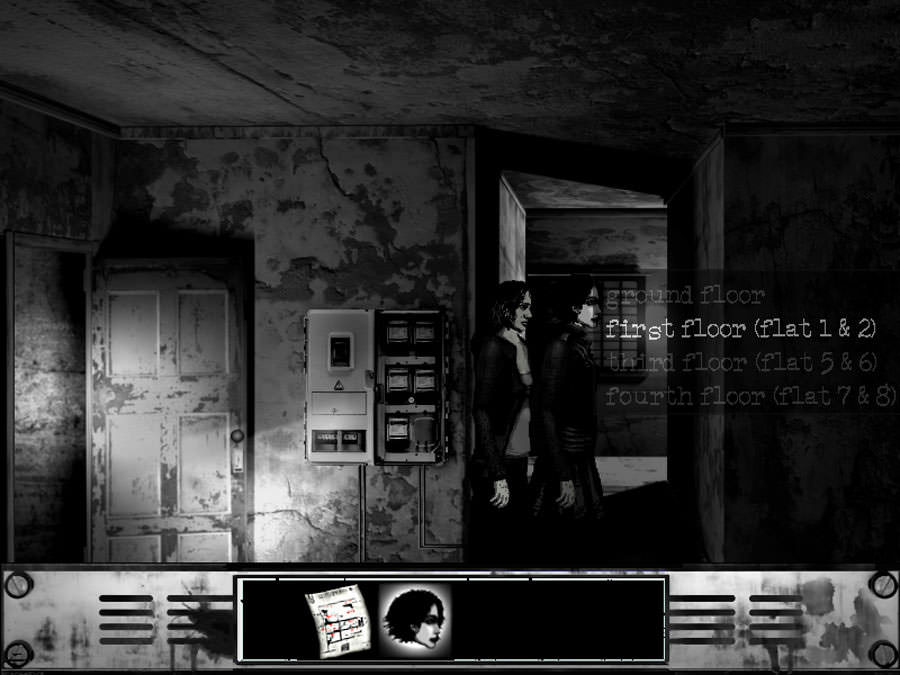
The Cat Lady contains extensive dialogue and many non-interactive, cinematic scenes.
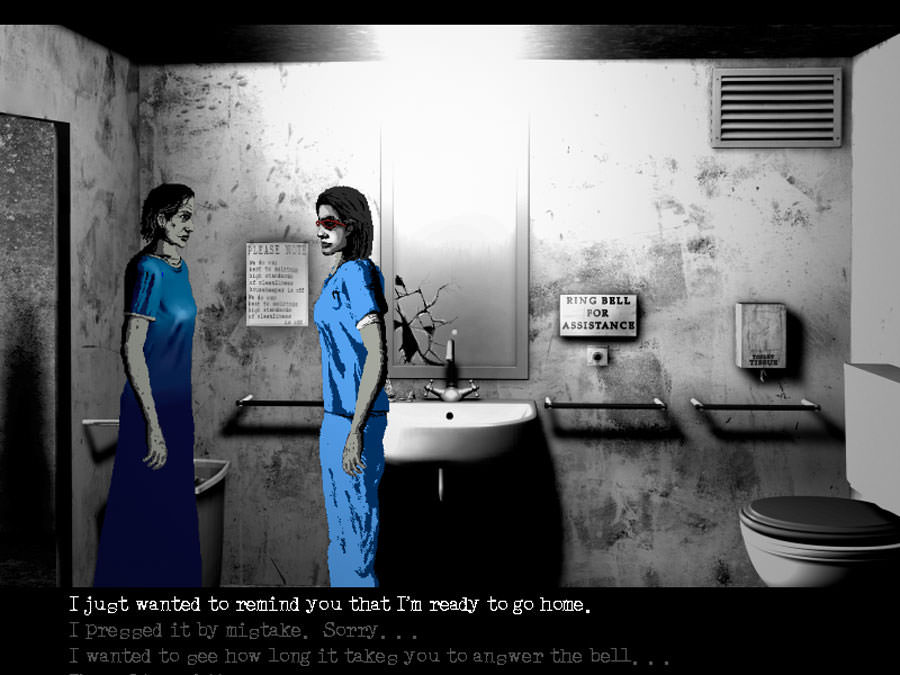
Puzzles are straightforward, and usually only one objective can be pursued at a time — this makes progression highly linear. Despite frequent scenes outside “reality”, I found the logic sound. In this respect, the design works well.
Inventory management is simple — items are used with a basic “use” command.
Audiovisual style
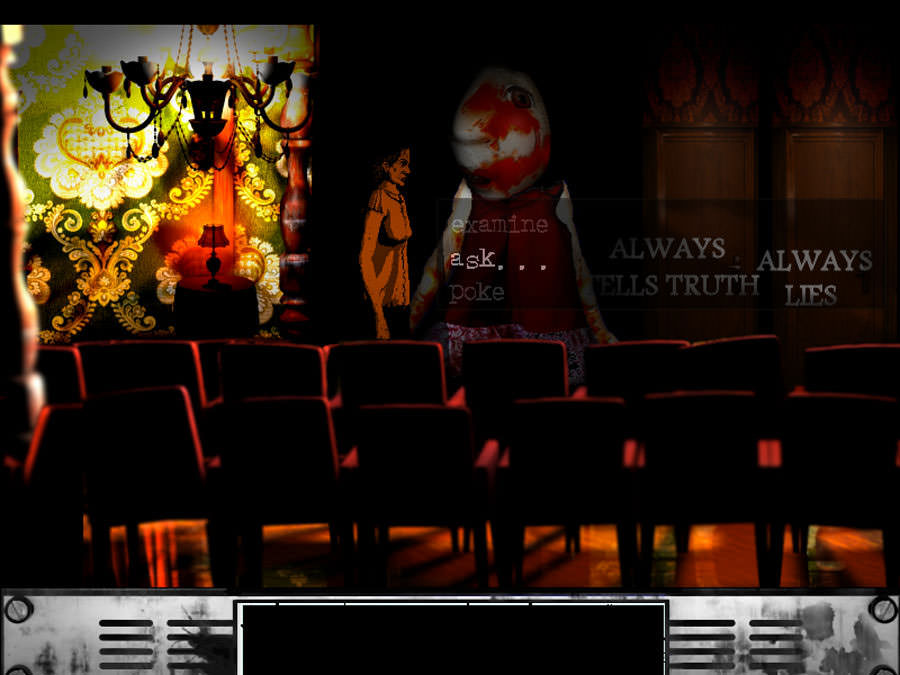
The Cat Lady uses a mixed-media visual approach combining photography, hand-drawn elements, and heavy post-processing. The result is collage-like — ugly, disturbing, yet striking in its own aesthetic logic.
Sound effects could have been more varied. Ambient audio works but rarely impresses. I didn’t care much for the music, though its alternative-rock tone fits the world reasonably well. For some reason I always expect electronic soundtracks in games, and vocals in particular feel jarring to me unless carefully placed.
The voice acting is excellent — it gives the characters weight and humanity, making even average dialogue enjoyable. By average I mean predictable, rarely reaching deeper insight. Realism explains this to a point, yet I believe a game about such themes should illuminate rather than merely reflect the obvious. I also don’t understand revenge as a route out of depression.
Verdict
The Cat Lady is a bleak story, yet a faint light emerges near the end through Susan’s young companion — a character I found genuinely positive. Even so, she too is doomed to die. The game reportedly has multiple endings. In mine, Susan regained her will to live despite the loss.
As entertainment, this is either disturbingly dark or deeply serious. Anyone who plays it should expect several hours of intense, possibly distressing, yet varied experience.
My score for The Cat Lady is 72 out of 100.
Availability
The Cat Lady is available for Windows.