
Labyrinth City: Pierre the Maze Detective (2021)
I picked up Humble Bundle’s Visual Delight game pack some time ago without knowing what to expect. From the selection, the 2021 hidden-object puzzle walking simulator Labyrinth City: Pierre the Maze Detective felt like the most approachable. The learning curve proved suitably gentle. The game is based on a popular international activity book for children aged 8–12, first known in English as Pierre the Maze Detective. The adaptation to game form is unusually successful, and it genuinely lifted my spirits. Despite the constant bustle and chaos of the game world, the hunt for a stolen maze stone felt like balm for the nerves — focused, refreshing and calming all at once.
Labyrinth City: Pierre the Maze Detective was developed by the French studio Darjeeling. I already knew them from their 3D walking simulator Californium, inspired by American sci-fi author Philip K. Dick. Its premise of drug-hazed writer’s block promised mind-bending ideas, but the experience never clicked for me. In truth, it was a complete flop — I simply had no idea what I was supposed to do in Californium. Labyrinth City, by contrast, communicates its goals clearly. There is a main objective, intermediate checkpoints, and you move briskly through the mazes in defined directions.
Paris made in Japan
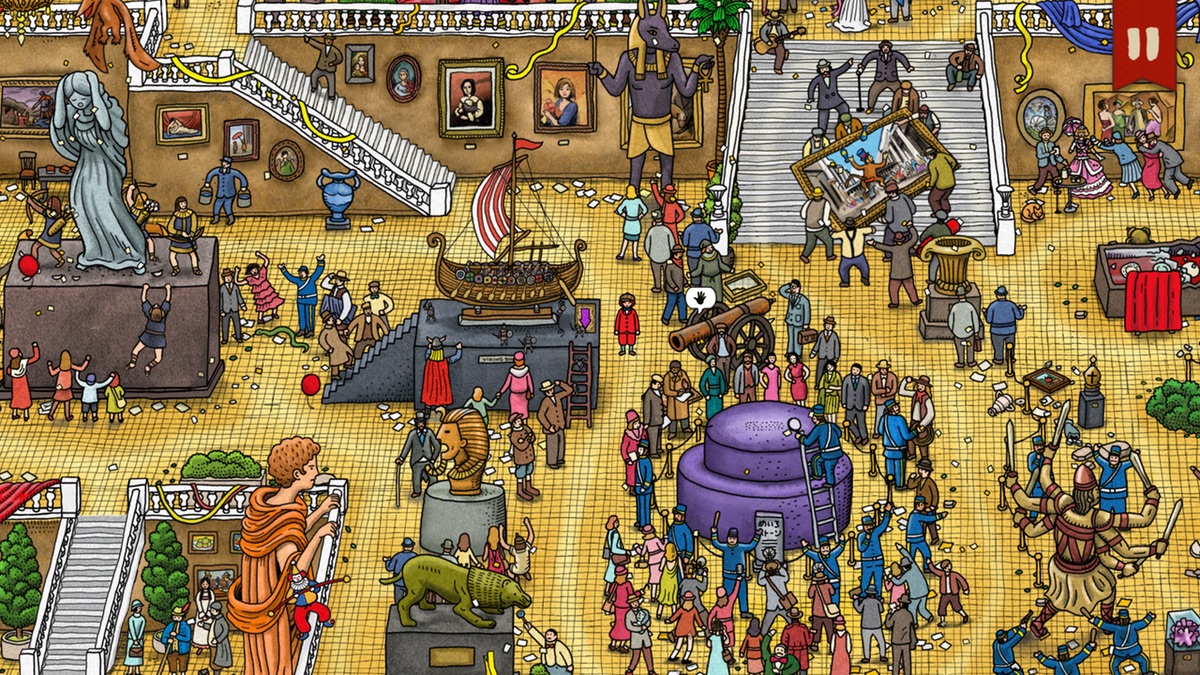
The graphics of Labyrinth City evoke the great cities of 1920s Europe and North America — Pierre’s French name only reinforces the impression. Yet the original activity book is Japanese, created by illustrator Hiro Kamigaki and his four-person studio IC4DESIGN. Kamigaki speaks almost no English, but aimed ambitiously at the international market and succeeded. In 2015, London-based Laurence King Publishing released the first Pierre the Maze Detective book in English and has since overseen the series’ continued expansion.
In a video, Kamigaki appears cheerfully childlike. In an interview, he explains how he had to remove alcohol references from the illustrations to “avoid issues in foreign markets”. In Hiroshima, where he grew up, drinking is part of everyday life, so censoring it had never occurred to him — beer bottles were replaced with hot dogs. The game, however, still includes all kinds of characters: hustlers, dancers, eccentrics — and I am fairly sure I spotted partygoers passed out as well. The tone is markedly liberal.
When the journey is the point — and arriving only marks the start of another
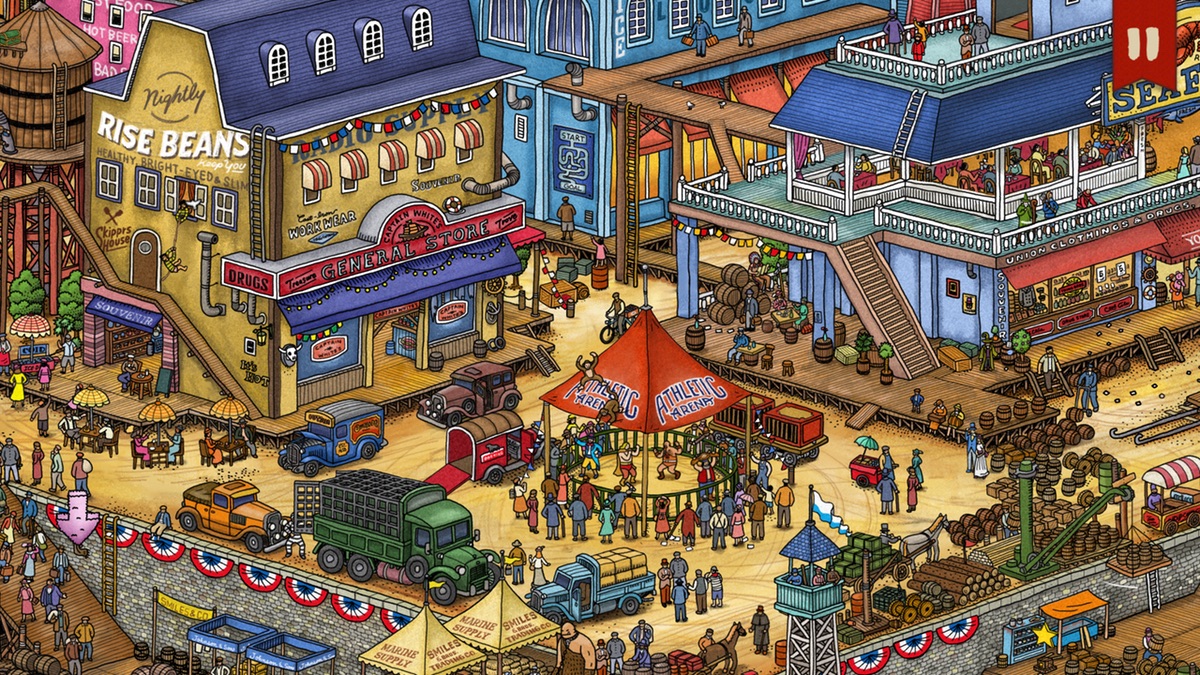
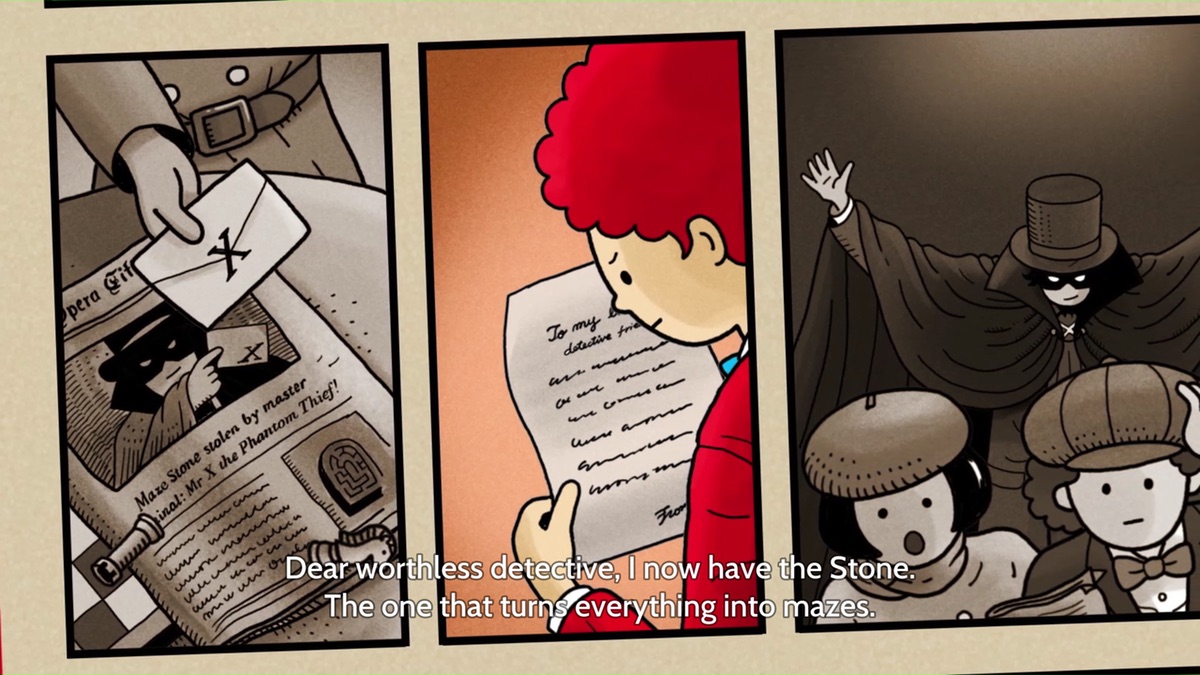
Put simply, Labyrinth City is a chase after Mr X, who has stolen a maze stone from a museum. The stone has the power to turn places into labyrinths, and Mr X naturally misuses it. Pierre is joined in the pursuit by Carmen, who often finds her way to Mr X even before Pierre and simply waits. I am unsure what role Carmen has in the books, but in the game her presence felt somewhat directionless. Each of the ten mazes grows gradually more complex. The goal is always to reach Mr X — who inevitably escapes again, even at the very end, despite the stone being recovered.
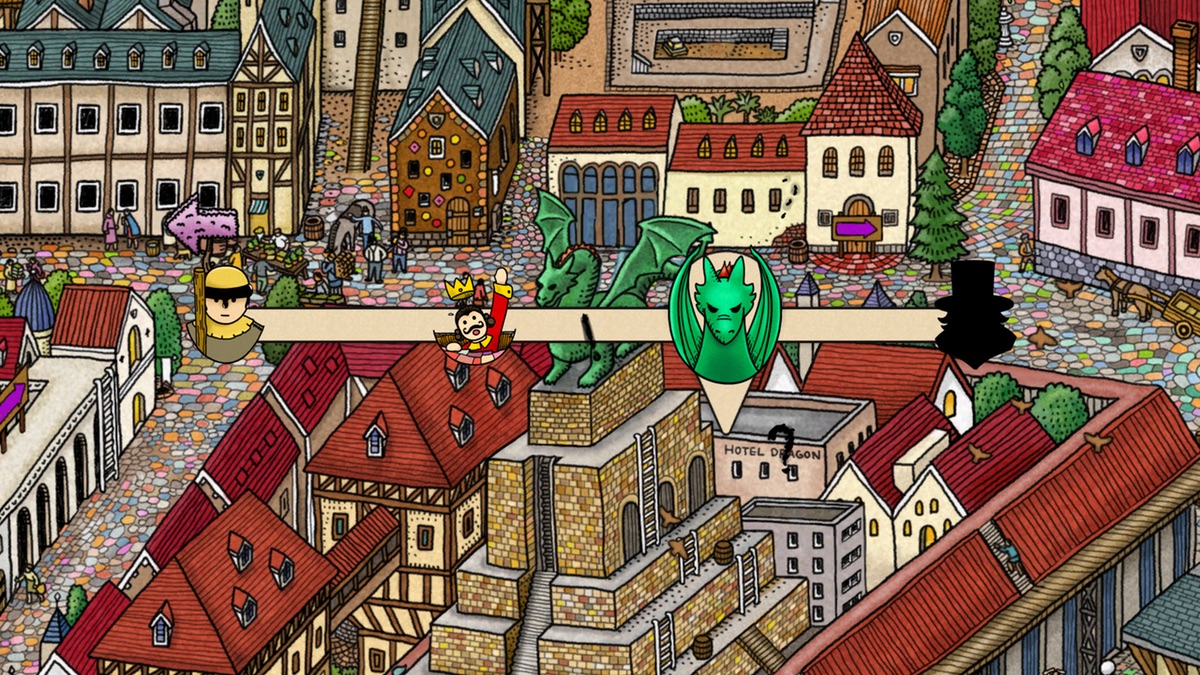
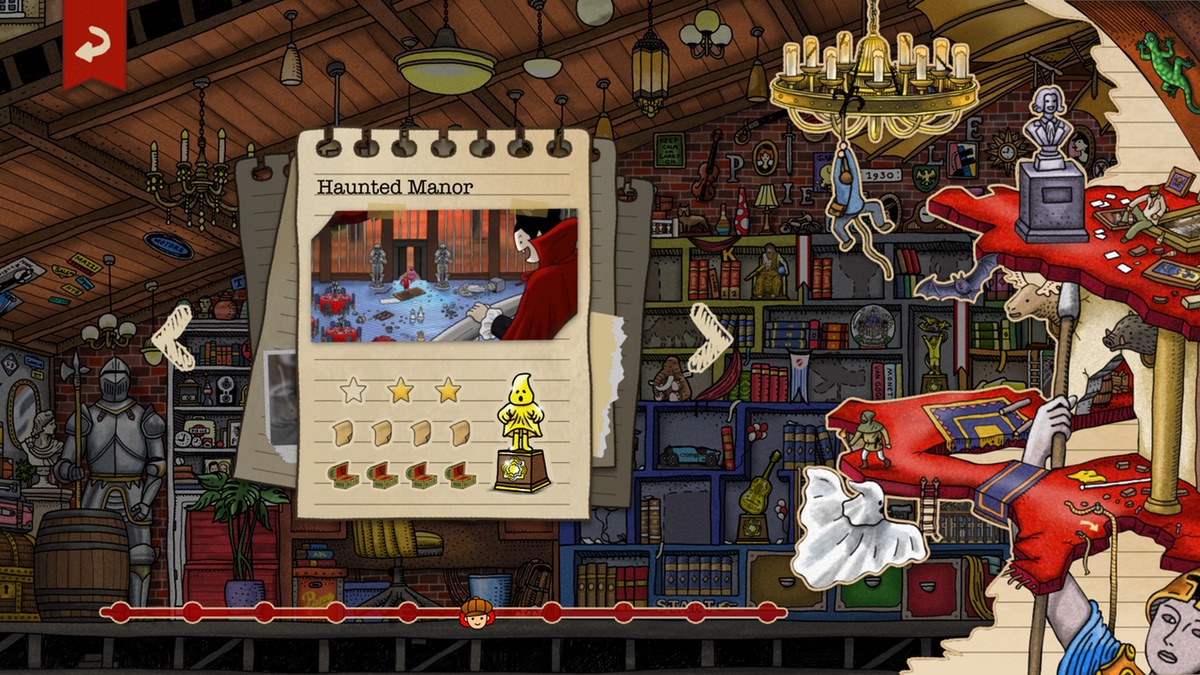
Reaching Mr X requires zig-zagging through these stages. Each level contains three to four characters you must meet before confronting him. They have information — or know someone who does. Violet arrows guide you back on track if needed. Dead ends are part of the fun, and often hold rewards. There is no time pressure, so there is no reason to rush. Thorough exploration reveals hidden areas and lets you appreciate the artwork fully. I especially liked the various lookout points — climb up, and the camera pulls back to reveal the city in miniature.
There are also small mini-puzzles scattered throughout the maze. I found them more playful than taxing. Some maze segments include portal-like exits that pop Pierre out elsewhere, adding to the complexity.

Sound design to match the art
The hyper-detailed art has appealed to both adults and children. Each book spread becomes an isometric, explorable maze where Pierre dashes about freely. The visuals scale cleanly to large screens, sharp and pleasantly hand-drawn. Interactions trigger animations and sound effects. Characters emit clipped vocal grunts, and tapping them opens speech bubbles — comedic, occasionally tiring in their nonsense.
The soundtrack is upbeat, each level with its own theme — at times reminiscent of calypso. Local soundscapes complement the visuals. Voice acting is minimal, limited to comic-strip-style cutscenes with a narrator who sounds like a young girl. Overall, the audio design serves the game well.
Verdict
An adult might feel sheepish admitting to playing Labyrinth City solo for more than six hours — without a child as an excuse. Yet the fact that one might do exactly that says a great deal. I have kept returning post-completion to improve runs and collect missing trinkets. The game offers visual charm, jaunty music and easygoing flow. Story is almost incidental — more a patchwork of digressions and side curiosities than a narrative arc. Labyrinth City compares poorly to most games reviewed on Samooja so far, but for its relaxed, effortless experience I give it 60 out of 100.
Availability
Labyrinth City: Pierre the Maze Detective is available for Windows, iOS and Nintendo Switch.